
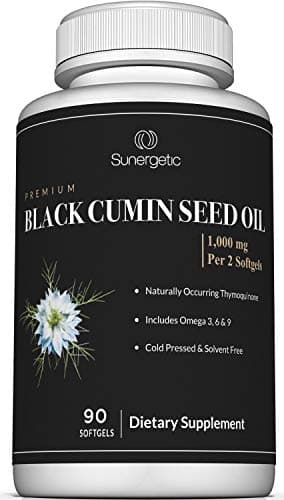
Sunergetic Black Cumin Seed Oil 1000mg
$0.17 / count
Price verified Oct 21, 2026
As an Amazon Associate, we earn from qualifying purchases · Not evaluated by the FDA · Individual results may vary · Consult a healthcare provider before use
Our verdict
1,000mg black seed oil per 2-softgel serving; 45 servings per bottle of Black Cumin Seed Oil (Nigella sativa) 1,000mg + Thymoquinone per softgel from Sunergetic. Best for users seeking cold-pressed…
Why we recommend this
Cold-pressed Nigella sativa oil is one of the more research-supported traditional remedies with published trials on blood glucose, blood pressure, and immune markers. 1,000mg daily matches the lower end of clinical doses. Strong 1,277-review track record.
Check for interactions
Already taking other supplements or prescription medications? Add them below to check for documented interactions, severity, and clinical guidance.
Our database currently documents 137+ supplement and drug-category interaction pairs. Combinations not flagged here may still interact — always consult your healthcare provider before combining supplements, especially with prescription medications.
What to watch out for
Without disclosed thymoquinone percentage standardization, buyers cannot verify the concentration of the key bioactive. Black seed oil has a distinctive peppery-bitter taste that some users notice even through softgel delivery, particularly with reflux.
Dose & form
- Serving
- 1,000mg black seed oil per 2-softgel serving; 45 servings per bottle
- Form
- Softgel
- Clinical range
- 1-3g/day black seed oil in most trials; thymoquinone: 0.5-1% of oil content typically
- Dose adequacy
- Partial
- Supply
- 90 servings · $0.17 / count
- UPC
- 852207008576
Who it's best for
Users seeking cold-pressed black cumin seed oil with thymoquinone and natural omegas for immune, inflammatory, and metabolic support
Who should skip it
Users preferring liquid oil over softgels or needing standardized thymoquinone content disclosure
Pros
- Cold-pressed extraction preserves thermally sensitive thymoquinone
- Softgel format protects the oil from oxidation better than loose oil
- 1,277 reviews at 4.3 stars demonstrates strong consumer track record
- 90-softgel bottle at $14.95 provides outstanding value per serving
Cons
- Third-party testing not publicly disclosed — no published COAs on the brand site
- Thymoquinone percentage not disclosed — cannot verify standardization
- Some users report the characteristic black seed oil taste despite softgel format
What customers say
4.3★ across 1,277 Amazon reviews. The most common questions from shoppers: re any potential interactions with medications, re any side effects from long-term use, and cause any digestive issues or side effects. Full answers in the FAQ below.
Frequently Asked Questions
What is the clinical dose for Black Cumin Seed Oil (Nigella sativa) 1,000mg + Thymoquinone?
What is the clinical dose for Black Cumin Seed Oil (Nigella sativa) 1,000mg + Thymoquinone?
Clinical trials typically use 1-3g/day black seed oil in most trials; thymoquinone: 0.5-1% of oil content typically. Sunergetic Black Cumin Seed Oil 1000mg delivers 1,000mg black seed oil per 2-softgel serving; 45 servings per bottle, which we classify as Partial relative to that range.
How does Sunergetic Black Cumin Seed Oil 1000mg compare to similar Softgel?
How does Sunergetic Black Cumin Seed Oil 1000mg compare to similar Softgel?
See the "Also consider" section below for two alternatives. Choose based on form preference (Softgel vs alternatives), dose adequacy, and third-party testing.
Is Sunergetic Black Cumin Seed Oil 1000mg third-party tested?
Is Sunergetic Black Cumin Seed Oil 1000mg third-party tested?
Yes — GMP manufactured; third-party testing not publicly disclosed. Third-party testing verifies ingredient identity and label accuracy.
Does this work with Amazon Subscribe & Save?
Does this work with Amazon Subscribe & Save?
Yes — Amazon Subscribe & Save is available for this product. Enrolling locks in a recurring delivery at a reduced per-unit price.
Are there any potential interactions with medications?
Are there any potential interactions with medications?
Black seed oil can lower blood pressure and blood glucose — monitor carefully if on antihypertensive or diabetes medications. Thymoquinone has mild blood-thinning effects and may enhance warfarin. Black seed oil can interact with sedatives (enhancing effect) and beta-blockers. Consult your physician before starting.
Are there any side effects from long-term use?
Are there any side effects from long-term use?
Black seed oil has a centuries-long history of traditional use. Modern clinical trials up to 12 months show favorable long-term safety. Thymoquinone has favorable toxicological profiles. No known long-term organ toxicity at supplement doses.
Does it cause any digestive issues or side effects?
Does it cause any digestive issues or side effects?
Generally well tolerated. Some users experience mild acid reflux or characteristic peppery taste in burps. Take with food to minimize GI effects. Rare reports of allergic reactions to Nigella sativa. Reduce dose if GI symptoms persist.
Can it be taken with other supplements or vitamins?
Can it be taken with other supplements or vitamins?
Pairs well with omega-3 fish oil, turmeric, and Vitamin D for anti-inflammatory stacks. Avoid combining with multiple blood pressure-lowering supplements to prevent compounded effects. Good synergy with antioxidants like Vitamin E.
Are there any specific instructions for taking it safely?
Are there any specific instructions for taking it safely?
Take 2 softgels daily with a meal containing fat. Store tightly capped to prevent oil oxidation. Monitor blood pressure and glucose if on relevant medications. Consult physician before starting if pregnant or nursing. Discontinue if any allergic reactions occur.
How long until benefits are typically experienced?
How long until benefits are typically experienced?
Metabolic and inflammatory benefits typically emerge within 4-8 weeks of daily use. Blood pressure improvements in clinical trials emerged at 8 weeks (Fallah Huseini et al., 2013). Blood glucose benefits in diabetics emerged at 12 weeks. Immune markers shift over 2-3 months.

