SupplementScience
Vitamin D3 supplement
Fat-Soluble Vitamin

Vitamin D3: Benefits, Dosage, Forms & Research

Fat-Soluble Vitamin

DJP
Reviewed by , MD, Board Certified Internal Medicine

This content is for informational purposes only and does not constitute medical advice. Consult your healthcare provider before starting any supplement. Full disclaimer

TL;DR — Quick Answer

Vitamin D3 is essential for bone health, immune function, and mood regulation. An estimated 42% of U.S. adults are deficient. Most adults benefit from 1,000-4,000 IU daily, and a 2017 meta-analysis found supplementation reduced the risk of acute respiratory infections by 12%.

Key Facts

  • What it is: A fat-soluble vitamin that functions as a hormone in 200+ genes
  • Primary benefits:
    • Supports calcium absorption and bone density
    • Strengthens immune defense
    • Improves mood and reduces depression risk
    • May reduce risk of certain cancers
    • Supports muscle function
  • Typical dosage: 1,000-4,000 IU daily (25-100 mcg)
  • Evidence level: Strong
  • Safety: Generally Safe

What the Research Says

Vitamin D has one of the largest evidence bases of any supplement. The landmark VITAL trial (2019, NEJM, n=25,871) found that while vitamin D3 at 2,000 IU/day did not significantly reduce overall cancer incidence, it reduced cancer mortality by 25% in follow-up analysis. A 2017 BMJ individual participant data meta-analysis of 25 RCTs demonstrated that vitamin D supplementation reduced acute respiratory infections, with the greatest benefit in those with baseline 25(OH)D levels below 25 nmol/L. Bone health benefits are well-established by decades of research.

Benefits of Vitamin D3

  • Bone health and calcium absorption — vitamin D3 increases intestinal calcium absorption by 30-40%, and deficiency is a primary driver of osteoporosis and fractures
  • Immune system support — a 2017 BMJ meta-analysis of 25 RCTs (n=11,321) found daily or weekly vitamin D supplementation reduced the risk of acute respiratory tract infections by 12% overall and 70% in those with severe deficiency
  • Mood and depression — a 2014 meta-analysis of 7 RCTs found vitamin D supplementation had a statistically significant effect on depression, comparable to mild antidepressant effects
  • Cancer risk reduction — the VITAL trial (n=25,871) found vitamin D3 at 2,000 IU/day reduced cancer mortality by 25% over 5 years in subgroup analysis
  • Muscle strength — deficiency is associated with sarcopenia, and supplementation in deficient adults improves lower-body strength and reduces fall risk by 19%

Forms of Vitamin D3

FormBioavailabilityBest For
Vitamin D3 (Cholecalciferol)HighGeneral supplementation — 87% more effective at raising serum levels than D2
Vitamin D2 (Ergocalciferol)ModerateVegan option — plant-derived but less potent per IU
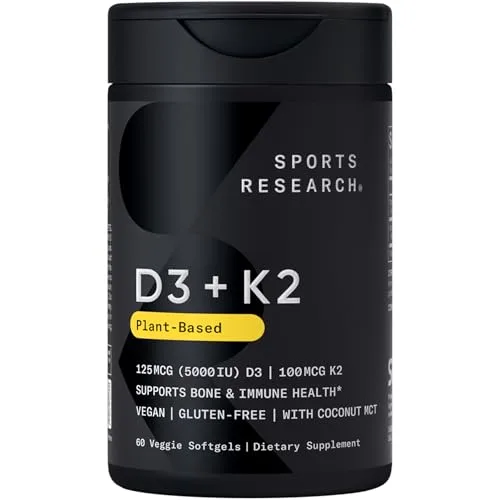
Vitamin D3 + K2 (MK-7)HighBone health, cardiovascular protection — K2 directs calcium to bones
Liquid Vitamin D3HighFlexible dosing, those who dislike pills — easy absorption with fats
Microencapsulated D3HighSustained release, improved stability in supplements

Dosage Recommendations

General recommendation: 1,000-4,000 IU (25-100 mcg) daily with a fat-containing meal

Timing: With the largest meal of the day for optimal absorption • Take with food for best absorption.

Dosage by Condition

ConditionRecommended DoseEvidence
Bone health1,000-2,000 IU daily with calciumStrong
Immune support1,000-4,000 IU dailyStrong
Depression2,000-4,000 IU dailyModerate
Deficiency correction5,000-10,000 IU daily for 8 weeks, then maintenanceStrong

Upper limit: 4,000 IU/day (NIH Upper Tolerable Intake Level); up to 10,000 IU short-term under medical supervision

Side Effects and Safety

Safety profile: Generally Safe

Potential Side Effects

  • Hypercalcemia at chronic high doses (>10,000 IU/day)
  • Nausea and vomiting with excessive intake
  • Kidney stones in susceptible individuals at very high doses
  • Constipation or digestive discomfort
  • Metallic taste at toxic levels

Drug & Supplement Interactions

  • Thiazide diuretics may increase calcium levels when combined with vitamin D
  • Corticosteroids reduce calcium absorption and may impair vitamin D metabolism
  • Statins — some forms of vitamin D may affect statin metabolism
  • Orlistat and cholestyramine reduce vitamin D absorption
BenefitsDosage GuideSide EffectsTypes & FormsResearchFAQ

Related Conditions

Related Research

Related Supplements

Looking for the best vitamin d3 supplement?

We analyzed and ranked the top products based on form, dosage, third-party testing, and value.

See Our Top Picks

Frequently Asked Questions

How much vitamin D3 should I take daily?

Most adults benefit from 1,000-4,000 IU daily. If you are deficient (serum 25(OH)D below 30 ng/mL), a healthcare provider may recommend 5,000-10,000 IU for 8-12 weeks to restore levels, followed by a maintenance dose. The optimal blood level is 40-60 ng/mL according to the Endocrine Society.

Should I take vitamin D3 with vitamin K2?

Combining D3 with K2 (specifically MK-7) is recommended for bone health. Vitamin D increases calcium absorption, while K2 activates proteins that direct calcium into bones and teeth rather than arteries. This combination may reduce the cardiovascular risk associated with calcium supplementation.

What is the difference between vitamin D2 and D3?

Vitamin D3 (cholecalciferol) is the form produced by human skin and found in animal sources. D2 (ergocalciferol) comes from plant and fungal sources. Research shows D3 is 87% more effective at raising and maintaining serum 25(OH)D levels compared to D2, making it the preferred supplement form for most people.

Can I get enough vitamin D from sunlight alone?

It depends on latitude, skin tone, age, and sun exposure. At latitudes above 37 degrees N (most of the U.S.), UVB rays are insufficient for vitamin D synthesis from November through February. People with darker skin tones require 3-6x more sun exposure. Most dermatologists recommend supplementation over relying on sun exposure due to skin cancer risk.

References

  1. (). Vitamin D supplementation to prevent acute respiratory tract infections: systematic review and meta-analysis of individual participant data. BMJ. DOI
  2. (). Vitamin D Supplements and Prevention of Cancer and Cardiovascular Disease. New England Journal of Medicine. DOI
  3. (). Vitamin D deficiency and depression in adults: systematic review and meta-analysis. British Journal of Psychiatry. DOI
  4. (). Comparison of vitamin D2 and vitamin D3 supplementation in raising serum 25-hydroxyvitamin D status: a systematic review and meta-analysis. American Journal of Clinical Nutrition. DOI