SupplementScience
Calcium supplement
Essential Macromineral

Calcium: Benefits, Dosage, Forms & Research

Essential Macromineral

This content is for informational purposes only and does not constitute medical advice. Consult your healthcare provider before starting any supplement. Full disclaimer

TL;DR — Quick Answer

Calcium is essential for bone strength and muscle function. Adults need 1,000-1,200mg daily from food and supplements combined. Calcium citrate is better absorbed than carbonate, especially on an empty stomach. Always pair with vitamin D and K2 for optimal bone benefit.

Key Facts

What it is
The most abundant mineral in the body, critical for bone structure and cellular signaling
Primary benefits
  • Maintains bone density and reduces fracture risk
  • Supports muscle contraction
  • Essential for nerve signal transmission
  • Plays a role in blood clotting
Typical dosage
500-600mg supplemental calcium, 1-2 times daily
Evidence level
Strong
Safety profile
Safe with Caution

What the Research Says

Calcium supplementation has a large evidence base, primarily for bone health. The Women's Health Initiative (Jackson et al., 2006, n=36,282) demonstrated that calcium + vitamin D reduced hip fracture risk in adherent participants. However, a 2015 BMJ meta-analysis by Bolland et al. raised concerns about potential cardiovascular risks with calcium supplements exceeding 1,000mg/day, though this remains debated. Current consensus from the National Osteoporosis Foundation supports supplementation to reach 1,000-1,200mg total daily intake when dietary intake is insufficient, always paired with vitamin D.

Benefits of Calcium

  • Bone density preservation — the WHI trial (n=36,282) found calcium + vitamin D supplementation reduced hip fracture risk by 29% in adherent women over 60
  • Fracture prevention — a 2015 meta-analysis in BMJ (Bolland et al.) of 59 RCTs found calcium supplements modestly increase bone mineral density at all sites
  • Muscle function — calcium ions trigger actin-myosin cross-bridge cycling, making it essential for every muscle contraction
  • Colon health — a meta-analysis of 10 studies found calcium supplementation associated with a 22% reduced risk of colorectal adenomas
  • Blood pressure — modest reductions in systolic blood pressure (1-2 mmHg) observed in meta-analyses of calcium supplementation trials
Did you know?

Calcium supplementation has a large evidence base, primarily for bone health.

Forms of Calcium

FormBioavailabilityBest For
Calcium CitrateHighGeneral supplementation — absorbs well with or without food; best for those on acid-reducing medications
Calcium CarbonateModerateBudget option — highest elemental calcium per pill, but requires stomach acid for absorption
Microcrystalline Hydroxyapatite (MCHC)Moderate-HighBone health — contains calcium in its natural bone matrix with collagen and growth factors
Calcium MalateHighWell-tolerated option with good solubility

Dosage Recommendations

General recommendation: 500-600mg elemental calcium per dose, up to 1,000-1,200mg daily total (diet + supplements)

Timing: Split doses for best absorption; calcium carbonate with meals, calcium citrate any time • Take with food for best absorption.

Dosage by Condition

ConditionRecommended DoseEvidence
Osteoporosis prevention1,000-1,200mg total daily (diet + supplements) with vitamin DStrong
Bone density maintenance500-600mg supplemental calcium twice dailyStrong
PMS symptoms1,200mg dailyModerate

Upper limit: 2,500mg/day total from all sources (NIH UL); do not exceed 500-600mg per dose for optimal absorption

Our Top Calcium Pick

Our recommendations are based on published research, not commission rates. Some links below are affiliate links — we may earn a commission at no extra cost to you. How we evaluate products

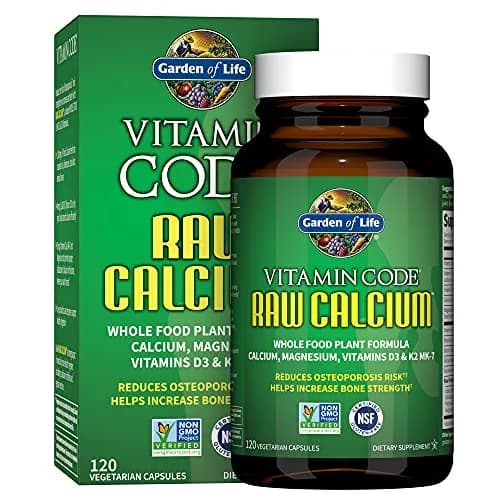
Garden of Life Raw Calcium

Garden of Life Raw Calcium

Garden of Life

9.1/10
Best overall plant-based calcium with full cofactors$0.68/serving

Side Effects and Safety

Safety profile: Safe with Caution

Potential Side Effects

  • Constipation (most common, especially with calcium carbonate)
  • Bloating and gas
  • Potential increased cardiovascular risk at high supplemental doses (>1,000mg/day) — controversial, debated in literature
  • Kidney stone risk may increase with high-dose supplements without adequate hydration

Drug & Supplement Interactions

  • Reduces absorption of thyroid medications (levothyroxine) — separate by 4 hours
  • Reduces absorption of bisphosphonates — separate by 2 hours
  • Reduces absorption of tetracycline and quinolone antibiotics
  • Competes with iron, zinc, and magnesium for absorption — take at different times
  • Vitamin D enhances calcium absorption — always co-supplement
Check Calcium interactions with other supplements →
BenefitsDosage GuideSide EffectsTypes & FormsResearchFAQ

Related Conditions

Related Supplements

Frequently Asked Questions

Is calcium citrate better than calcium carbonate?

Calcium citrate is generally preferred because it absorbs well with or without food and does not require stomach acid. This makes it ideal for older adults and those on proton pump inhibitors. Calcium carbonate has more elemental calcium per pill and is cheaper, but must be taken with food for adequate absorption.

Can calcium supplements cause heart problems?

Some meta-analyses have suggested a modest increase in cardiovascular events with high-dose calcium supplements (>1,000mg/day), but this remains controversial. The American Society for Bone and Mineral Research concluded that calcium supplements at recommended doses are safe. To minimize any theoretical risk, get calcium from food first and keep supplemental doses at 500-600mg.

Should I take calcium with vitamin D?

Yes. Vitamin D increases intestinal calcium absorption from about 10-15% to 30-40%. Without adequate vitamin D, even high calcium intake may not effectively support bone density. Most bone health experts recommend 1,000-2,000 IU vitamin D3 daily alongside calcium supplementation.

References

  1. (). Calcium plus vitamin D supplementation and the risk of fractures. New England Journal of Medicine. DOI
  2. (). Calcium intake and risk of fracture: systematic review. BMJ. DOI
  3. (). Calcium intake and bone mineral density: systematic review and meta-analysis. BMJ. DOI