SupplementScience
Collagen supplement
Structural Protein

Collagen: Benefits, Dosage, Forms & Research

Structural Protein

This content is for informational purposes only and does not constitute medical advice. Consult your healthcare provider before starting any supplement. Full disclaimer

TL;DR — Quick Answer

Collagen peptides (hydrolyzed collagen) provide the amino acids glycine, proline, and hydroxyproline needed for connective tissue repair. A 2019 meta-analysis found collagen supplementation significantly improved skin elasticity and reduced joint pain in osteoarthritis. Standard dosing is 5-15g hydrolyzed collagen daily, with type-specific targeting: type I/III for skin, type II for cartilage.

Key Facts

What it is
The most abundant structural protein in the human body, available as hydrolyzed peptides for supplementation
Primary benefits
  • Supports skin elasticity and hydration
  • Reduces joint pain and stiffness
  • Strengthens tendons and ligaments
  • May improve bone mineral density
  • Supports gut lining integrity
Typical dosage
5-15g hydrolyzed collagen peptides daily
Evidence level
Moderate
Safety profile
Generally Safe

What the Research Says

Collagen supplementation has a growing evidence base, particularly for skin and joint outcomes. A 2019 meta-analysis by de Miranda et al. in the International Journal of Dermatology pooled 11 RCTs and found statistically significant improvements in skin elasticity and hydration with collagen peptide supplementation. For joints, a landmark 2017 study by Shaw et al. in the American Journal of Clinical Nutrition showed that 15g collagen with vitamin C before exercise doubled the collagen synthesis rate in tendons and ligaments. Clark et al. (2008) demonstrated that 10g collagen hydrolysate daily reduced activity-related joint pain in athletes. Undenatured type II collagen (UC-II) works through a different mechanism — oral tolerance via immune modulation — and has shown superiority to glucosamine/chondroitin for knee osteoarthritis in a 2016 RCT.

Benefits of Collagen

  • Skin health — a 2019 meta-analysis of 11 RCTs found collagen supplementation significantly improved skin elasticity, hydration, and dermal collagen density after 8-12 weeks of use
  • Joint pain relief — a 2017 systematic review concluded that hydrolyzed collagen (10g daily) reduced osteoarthritis pain and improved physical function, with effects comparable to glucosamine in some studies
  • Tendon and ligament support — collagen peptide supplementation combined with vitamin C before exercise increased collagen synthesis markers in tendons and ligaments in a 2017 RCT by Shaw et al.
  • Bone health — a 2018 postmenopausal women trial showed 5g collagen peptides daily for 12 months significantly increased bone mineral density at the femoral neck and spine vs placebo
  • Gut barrier support — glycine and glutamine from collagen peptides support intestinal mucosal integrity, though direct clinical trials for gut health remain limited
Did you know?

Collagen supplementation has a growing evidence base, particularly for skin and joint outcomes.

Forms of Collagen

FormBioavailabilityBest For
Hydrolyzed Collagen Peptides (Type I/III)HighSkin, hair, nails, and general connective tissue — the most common and versatile form
Undenatured Type II Collagen (UC-II)Low dose, immune mechanismJoint cartilage specifically — works through immune modulation at just 40mg daily, not amino acid supply
Marine CollagenHigh (smaller peptides)Skin focus — derived from fish, predominantly type I collagen with potentially superior absorption due to smaller peptide size
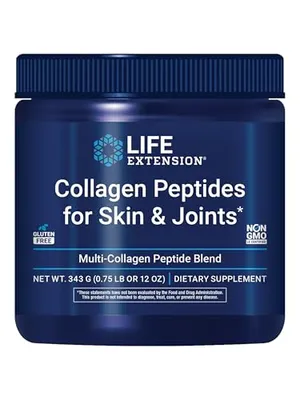
Multi-Collagen Blend (Types I, II, III, V, X)Moderate-HighBroad coverage — combines multiple collagen types from bovine, chicken, fish, and eggshell membrane sources

Dosage Recommendations

General recommendation: 5-15g hydrolyzed collagen peptides daily, or 40mg UC-II for joint-specific benefits

Timing: Any time for skin and general benefits; 30-60 minutes before exercise with vitamin C for tendon/ligament support

Dosage by Condition

ConditionRecommended DoseEvidence
Skin elasticity and hydration5-10g hydrolyzed collagen daily for 8-12 weeksModerate
Joint pain (osteoarthritis)10g hydrolyzed collagen or 40mg UC-II dailyModerate
Tendon/ligament recovery15g collagen + 50mg vitamin C, 30-60 min before exerciseModerate
Bone density5g collagen peptides daily for 12+ monthsEmerging

Upper limit: No established upper limit; doses up to 30g daily studied without adverse effects

Our Top Collagen Pick

Our recommendations are based on published research, not commission rates. Some links below are affiliate links — we may earn a commission at no extra cost to you. How we evaluate products

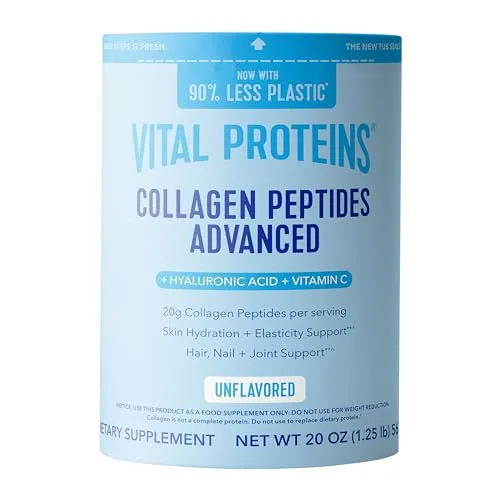
Vital Proteins Collagen Peptides

Vital Proteins Collagen Peptides

Vital Proteins

9.3/10
Overall / Skin and hair$1.40/serving

Side Effects and Safety

Safety profile: Generally Safe

Potential Side Effects

  • Generally very well tolerated with minimal side effects
  • Mild bloating or feeling of fullness at higher doses (>15g)
  • Unpleasant taste in unflavored marine collagen products
  • Rare: allergic reaction in individuals with fish or shellfish allergies (marine collagen)
  • May leave a lingering aftertaste

Drug & Supplement Interactions

  • No significant drug interactions known for collagen peptides
  • May need to separate from calcium supplements as both compete for absorption
Check Collagen interactions with other supplements →
BenefitsDosage GuideSide EffectsTypes & FormsResearchFAQ

Related Conditions

Related Supplements

Looking for the best collagen supplement?

We analyzed and ranked the top products based on form, dosage, third-party testing, and value.

See Our Top Picks

Frequently Asked Questions

Which collagen type should I take?

It depends on your primary goal. Type I collagen (found in bovine and marine sources) is best for skin, hair, and nails. Type II collagen (from chicken cartilage) targets joint cartilage specifically. Types III, V, and X support blood vessels, cell surfaces, and cartilage growth plates respectively. A multi-collagen blend provides broad coverage, while UC-II (undenatured type II) is the best studied form for joint pain at just 40mg daily.

Does collagen actually work, or does your body just digest it like any protein?

Hydrolyzed collagen peptides are broken down into specific di- and tripeptides (especially prolyl-hydroxyproline and hydroxyprolyl-glycine) that are absorbed intact and accumulate in skin and joint tissue. Research using radiolabeled collagen has shown these peptides reach target tissues and stimulate fibroblasts to produce new collagen. So while the body does digest collagen, the specific peptide fragments act as both building blocks and signaling molecules for collagen synthesis.

Should I take vitamin C with collagen?

Yes, vitamin C is essential for collagen synthesis — it serves as a cofactor for the enzymes that stabilize the collagen triple helix. The Shaw et al. (2017) study showing doubled collagen synthesis used collagen combined with 50mg vitamin C. Many collagen supplements include vitamin C for this reason. If yours does not, taking it with a food containing vitamin C (citrus, berries, bell peppers) or a small vitamin C supplement is recommended.

References

  1. (). Effects of hydrolyzed collagen supplementation on skin aging: a systematic review and meta-analysis. International Journal of Dermatology. DOI
  2. (). Vitamin C-enriched gelatin supplementation before intermittent activity augments collagen synthesis. American Journal of Clinical Nutrition. DOI
  3. (). Twenty-four-week study on the use of collagen hydrolysate as a dietary supplement in athletes with activity-related joint pain. Current Medical Research and Opinion. DOI
  4. (). Undenatured type II collagen (UC-II) for joint support: a randomized, double-blind, placebo-controlled study in healthy volunteers. Journal of the International Society of Sports Nutrition. DOI