SupplementScience
Vitamin C supplement
Water-Soluble Vitamin

Vitamin C: Benefits, Dosage, Forms & Research

Water-Soluble Vitamin

This content is for informational purposes only and does not constitute medical advice. Consult your healthcare provider before starting any supplement. Full disclaimer

TL;DR — Quick Answer

Vitamin C is a powerful antioxidant essential for immune function, collagen production, and iron absorption. A Cochrane meta-analysis of 29 trials found regular supplementation reduces cold duration by 8%. Most adults benefit from 500-2,000 mg daily, with the Linus Pauling Institute recommending at least 400 mg.

Key Facts

What it is
A water-soluble essential vitamin and antioxidant humans cannot produce
Primary benefits
  • Strengthens immune defense and reduces cold duration
  • Potent antioxidant that neutralizes free radicals
  • Essential for collagen synthesis and wound healing
  • Enhances non-heme iron absorption by up to 67%
  • Supports cardiovascular health by improving endothelial function
Typical dosage
500-2,000 mg daily
Evidence level
Strong
Safety profile
Generally Safe

What the Research Says

Vitamin C has a robust evidence base spanning decades of research. The landmark 2013 Cochrane review by Hemilä and Chalker analyzed 29 trials (n=11,306) and found that regular vitamin C supplementation (≥200 mg/day) reduced cold duration by 8% in adults but did not reduce cold incidence in the general population. However, five trials in participants under heavy physical stress (marathon runners, soldiers, skiers) showed a 52% reduction in cold incidence. Carr and Maggini (2017) reviewed vitamin C's role in immune function, demonstrating it supports both innate and adaptive immunity through multiple mechanisms including neutrophil function, lymphocyte proliferation, and antibody production.

Benefits of Vitamin C

  • Immune defense — a 2013 Cochrane review of 29 RCTs (n=11,306) found regular vitamin C supplementation reduced cold duration by 8% in adults and 14% in children, with greater benefit in those under physical stress
  • Antioxidant protection — vitamin C is the primary water-soluble antioxidant in plasma, scavenging reactive oxygen species and regenerating vitamin E, reducing oxidative damage linked to chronic disease
  • Collagen synthesis — vitamin C is an essential cofactor for prolyl and lysyl hydroxylase, enzymes required for collagen cross-linking; deficiency causes scurvy with impaired wound healing within weeks
  • Iron absorption enhancement — co-ingestion of 100 mg vitamin C with a meal increases non-heme iron absorption by up to 67%, making it critical for those at risk of iron deficiency
Did you know?

Vitamin C has a robust evidence base spanning decades of research.

Forms of Vitamin C

FormBioavailabilityBest For
Ascorbic AcidHighGeneral supplementation — most studied and cost-effective form
Sodium AscorbateHighSensitive stomachs — buffered, non-acidic form that reduces GI discomfort
Liposomal Vitamin CVery HighEnhanced absorption — phospholipid encapsulation improves oral bioavailability
Ester-C (Calcium Ascorbate)HighGentle on stomach — pH-neutral with enhanced retention over 24 hours
Whole Food Vitamin CModerateWhole food enthusiasts — includes bioflavonoids and cofactors from acerola or camu camu

Dosage Recommendations

General recommendation: 500-2,000 mg daily, divided into 2-3 doses for optimal absorption

Timing: Divided doses throughout the day for sustained plasma levels

Dosage by Condition

ConditionRecommended DoseEvidence
Immune support500-1,000 mg dailyStrong
Cold treatment (acute)1,000-2,000 mg daily at onsetModerate
Antioxidant protection500-1,000 mg dailyStrong
Iron absorption100-200 mg with iron-rich mealsStrong

Upper limit: 2,000 mg/day (NIH Upper Tolerable Intake Level); higher doses may cause GI distress

Our Top Vitamin C Pick

Our recommendations are based on published research, not commission rates. Some links below are affiliate links — we may earn a commission at no extra cost to you. How we evaluate products

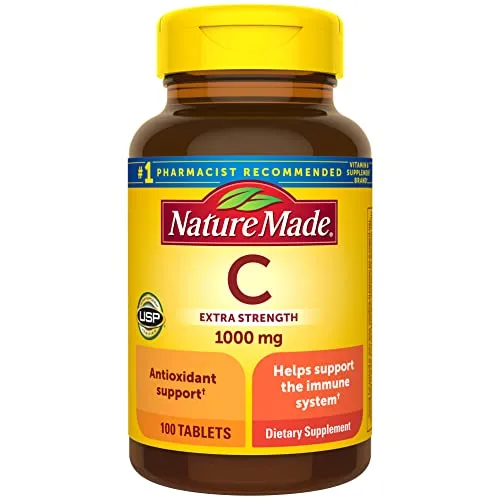
Nature Made Vitamin C 1000mg

Nature Made Vitamin C 1000mg

Nature Made

9/10
Overall best for most people$0.06/serving

Side Effects and Safety

Safety profile: Generally Safe

Potential Side Effects

  • Gastrointestinal discomfort (diarrhea, nausea, cramps) at doses above 2,000 mg
  • Increased oxalate excretion, potentially raising kidney stone risk in susceptible individuals
  • May cause false readings on certain blood glucose monitors
  • Iron overload risk in individuals with hemochromatosis due to enhanced absorption

Drug & Supplement Interactions

  • May increase iron absorption — use caution in those with hemochromatosis or iron overload
  • High doses may interfere with warfarin anticoagulant therapy
  • May reduce effectiveness of certain chemotherapy agents (consult oncologist)
  • Aluminum-containing antacids — vitamin C increases aluminum absorption
Check Vitamin C interactions with other supplements →
BenefitsDosage GuideSide EffectsTypes & FormsResearchFAQ

Related Conditions

Related Supplements

Frequently Asked Questions

What is the best form of vitamin C to take?

For most people, standard ascorbic acid is effective and well-studied. If you experience stomach sensitivity, sodium ascorbate or Ester-C are gentler buffered options. Liposomal vitamin C offers higher bioavailability and is worth considering for doses above 1,000 mg, as standard oral absorption plateaus around 200-500 mg per dose.

Does vitamin C actually prevent colds?

Regular vitamin C supplementation does not prevent colds in the general population, according to a 2013 Cochrane review. However, it reduces cold duration by 8% in adults and 14% in children. For people under intense physical stress (athletes, military), regular supplementation reduced cold incidence by 52%. Taking vitamin C after cold symptoms start has minimal benefit.

How much vitamin C should I take daily?

The Linus Pauling Institute recommends at least 400 mg daily for disease prevention, based on pharmacokinetic data showing near-complete plasma saturation at this dose. Most clinical trials use 500-2,000 mg daily. Divide doses of 1,000 mg or more throughout the day, as absorption efficiency decreases with larger single doses.

Can you take too much vitamin C?

The NIH Upper Tolerable Intake Level is 2,000 mg/day for adults. Doses above this commonly cause diarrhea, nausea, and abdominal cramps. Chronic high-dose intake may increase kidney stone risk in susceptible individuals. Vitamin C is water-soluble, so excess is excreted in urine, but megadosing beyond 2,000 mg offers diminishing returns with increasing side effect risk.

References

  1. (). Vitamin C for preventing and treating the common cold. Cochrane Database of Systematic Reviews. DOI
  2. (). Vitamin C and Immune Function. Nutrients. DOI
  3. (). Vitamin C as an antioxidant: evaluation of its role in disease prevention. Journal of the American College of Nutrition. DOI
  4. (). The role of vitamin C in iron absorption. International Journal for Vitamin and Nutrition Research Supplement.