SupplementScience
Melatonin supplement
Neurohormone

Melatonin: Benefits, Dosage, Forms & Research

Neurohormone

This content is for informational purposes only and does not constitute medical advice. Consult your healthcare provider before starting any supplement. Full disclaimer

TL;DR — Quick Answer

Melatonin is the most well-studied natural sleep supplement, shown in a meta-analysis of 19 RCTs to reduce sleep onset latency by 7-12 minutes and improve sleep quality. Importantly, more is NOT better — doses as low as 0.5mg can be as effective as 5mg for sleep onset. It is also the best-evidenced supplement for jet lag.

Key Facts

What it is
A neurohormone produced by the pineal gland that regulates the sleep-wake cycle (circadian rhythm)
Primary benefits
  • Reduces sleep onset latency by 7-12 minutes (meta-analysis)
  • Improves overall sleep quality
  • Resets circadian rhythm and treats jet lag (Cochrane review)
  • Antioxidant properties — scavenges free radicals
  • May support immune function
Typical dosage
0.5-5mg taken 30-60 minutes before bed
Evidence level
Strong
Safety profile
Generally Safe

What the Research Says

Melatonin is one of the most extensively studied sleep supplements. Ferracioli-Oda et al. (2013) published a pivotal meta-analysis of 19 RCTs involving 1,683 subjects, demonstrating that melatonin significantly reduces sleep onset latency (weighted mean difference -7.06 min), increases total sleep time (+8.25 min), and improves overall sleep quality. Herxheimer & Petrie (2002) conducted a Cochrane review of 10 trials confirming melatonin's efficacy for jet lag prevention and treatment. Brzezinski et al. (2005) meta-analyzed 17 studies confirming melatonin's sleep-promoting effects and noted that efficacy did not diminish with continued use over weeks. A key finding across the literature is the absence of a clear dose-response relationship — Zhdanova et al. (2001) demonstrated that physiological doses (0.3mg) were as effective as pharmacological doses (3mg) for improving sleep in older adults with insomnia.

Benefits of Melatonin

  • Sleep onset — a 2013 meta-analysis of 19 RCTs (Ferracioli-Oda et al.) found melatonin supplementation significantly reduced sleep onset latency by a weighted mean of 7.06 minutes compared to placebo, with improvements in total sleep time and sleep quality
  • Sleep quality — melatonin improved subjective sleep quality scores across studies, with benefits most pronounced in primary sleep disorders and delayed sleep-wake phase disorder
  • Jet lag treatment — a 2002 Cochrane systematic review (Herxheimer & Petrie) of 10 trials found melatonin remarkably effective for preventing or reducing jet lag, particularly when crossing 5 or more time zones and traveling eastward
  • Circadian rhythm resetting — melatonin acts as a chronobiotic, shifting the phase of the circadian clock, making it the treatment of choice for delayed sleep-wake phase disorder and shift work sleep difficulties
  • Antioxidant effects — melatonin is a potent direct free radical scavenger and also stimulates antioxidant enzymes (superoxide dismutase, glutathione peroxidase), providing neuroprotective effects beyond sleep
Did you know?

Melatonin is one of the most extensively studied sleep supplements.

Forms of Melatonin

FormBioavailabilityBest For
Immediate-Release MelatoninModerate (15%)Sleep onset difficulties — releases quickly to signal the brain that it is time for sleep
Extended-Release (Sustained-Release) MelatoninModerateSleep maintenance — releases gradually over 6-8 hours to mimic natural melatonin secretion patterns
Sublingual MelatoninHigh (bypasses first-pass metabolism)Fastest onset — dissolves under the tongue for rapid absorption, ideal for acute use
Liposomal MelatoninHighEnhanced absorption — lipid-encapsulated for improved bioavailability and sustained release

Dosage Recommendations

General recommendation: 0.5-5mg taken 30-60 minutes before bed; start with the lowest effective dose

Timing: 30-60 minutes before desired sleep time. For jet lag, take at destination bedtime. Keep lights dim after taking melatonin.

Dosage by Condition

ConditionRecommended DoseEvidence
Sleep onset difficulty0.5-3mg, 30-60 minutes before bedStrong
Jet lag (eastward travel)0.5-5mg at destination bedtime for 2-5 daysStrong
Delayed sleep-wake phase disorder0.5-3mg, 3-5 hours before desired bedtimeModerate
Shift work sleep support1-3mg before daytime sleepModerate

Upper limit: 10mg/day (higher doses are not more effective and may cause morning grogginess)

Our Top Melatonin Pick

Our recommendations are based on published research, not commission rates. Some links below are affiliate links — we may earn a commission at no extra cost to you. How we evaluate products

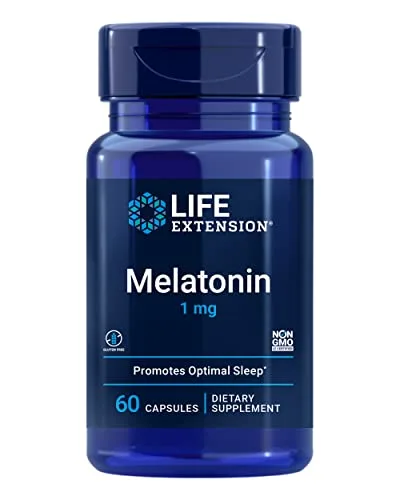
Life Extension Melatonin 1mg

Life Extension Melatonin 1mg

Life Extension

9.2/10
Overall best at an evidence-based dose$0.05/serving

Side Effects and Safety

Safety profile: Generally Safe

Potential Side Effects

  • Generally very well tolerated at standard doses
  • Morning drowsiness or grogginess (more common at higher doses >3mg)
  • Vivid dreams or nightmares (uncommon)
  • Headache (uncommon)
  • Mild dizziness (rare)
  • Temporary feelings of depression (rare, at higher doses)
  • May suppress endogenous production temporarily with long-term high-dose use (though evidence for this is weak)

Drug & Supplement Interactions

  • Sedative medications (benzodiazepines, zolpidem) — additive sedation effects, use caution
  • Anticoagulants (warfarin) — melatonin may increase bleeding risk
  • Immunosuppressants — melatonin has immunostimulatory properties that may counteract immunosuppression
  • Diabetes medications — melatonin may affect blood sugar levels
  • Fluvoxamine — strongly inhibits melatonin metabolism (CYP1A2), dramatically increasing melatonin levels
  • Caffeine — may reduce melatonin production; avoid caffeine after 2 PM
Check Melatonin interactions with other supplements →
BenefitsDosage GuideSide EffectsTypes & FormsResearchFAQ

Related Conditions

Related Research

Related Supplements

Frequently Asked Questions

Is melatonin safe for long-term use?

Current evidence suggests melatonin is safe for long-term use at standard doses (0.5-5mg). Unlike prescription sleep aids, melatonin does not cause dependence, withdrawal symptoms, or rebound insomnia. A 2015 review of long-term studies found no significant adverse effects with extended use. However, some experts recommend periodic breaks and using the lowest effective dose. Melatonin is not FDA-regulated as a drug in the US, so quality varies — choose brands with USP or NSF certification.

What dose of melatonin should I take?

Start with the lowest dose — 0.5mg to 1mg — taken 30-60 minutes before bed. Research shows that more is NOT better: a landmark study (Zhdanova 2001) found 0.3mg was as effective as 3mg for improving sleep onset. Higher doses (3-5mg) may actually cause morning grogginess without additional benefit. If 0.5mg is not effective after one week, gradually increase to 1mg, then 2mg. Most people find their optimal dose between 0.5-3mg.

Does melatonin help with anxiety or stress?

Melatonin is primarily a sleep and circadian rhythm supplement, not an anxiolytic. However, improving sleep quality can indirectly reduce stress and anxiety. Some studies show melatonin reduces pre-operative anxiety, but this is likely through its sedative properties. For stress and anxiety specifically, supplements like ashwagandha, L-theanine, or magnesium have stronger evidence.

Can I take melatonin with other sleep supplements?

Melatonin can be safely combined with most natural sleep supplements, including magnesium (which supports natural melatonin production), L-theanine (which promotes relaxation through a different mechanism), and saffron extract. These combinations are common in sleep formulas. However, avoid combining melatonin with prescription sleep medications without medical supervision, as effects can be additive.

References

  1. (). Meta-analysis: melatonin for the treatment of primary sleep disorders. PLoS ONE. DOI
  2. (). Melatonin for the prevention and treatment of jet lag. Cochrane Database of Systematic Reviews. DOI
  3. (). Effects of exogenous melatonin on sleep: a meta-analysis. Sleep Medicine Reviews. DOI
  4. (). Melatonin treatment for age-related insomnia. Journal of Clinical Endocrinology & Metabolism. DOI