SupplementScience
Saffron Extract supplement
Botanical Extract

Saffron Extract: Benefits, Dosage, Forms & Research

Botanical Extract

This content is for informational purposes only and does not constitute medical advice. Consult your healthcare provider before starting any supplement. Full disclaimer

TL;DR — Quick Answer

Saffron extract is one of the most clinically validated natural mood-support supplements, with multiple RCTs showing efficacy comparable to SSRIs for mild-to-moderate depression. The standardized extract affron at 28mg daily improved mood scores by 33% vs placebo. Saffron also shows emerging benefits for sleep quality and PMS symptoms.

Key Facts

What it is
A botanical extract from Crocus sativus containing active compounds crocin and safranal
Primary benefits
  • Improves mood and reduces depressive symptoms
  • Comparable to low-dose SSRIs in clinical trials
  • Enhances sleep quality
  • May reduce PMS symptoms
  • Supports healthy serotonin and dopamine signaling
Typical dosage
28-30mg standardized saffron extract daily
Evidence level
Strong
Safety profile
Generally Safe

What the Research Says

Saffron has one of the strongest evidence bases among botanical mood supplements. Hausenblas et al. (2013) published a meta-analysis of 6 RCTs confirming saffron's significant antidepressant effects compared to placebo, with a large effect size. Multiple head-to-head trials by Akhondzadeh et al. (2004, 2005) demonstrated that 30mg saffron extract was as effective as 20mg fluoxetine (Prozac) for mild-to-moderate depression. Lopresti & Drummond (2014) specifically studied the affron extract and found 28mg daily improved mood, stress, and sleep quality in adults with self-reported low mood. The mechanism involves modulation of serotonin reuptake, GABA potentiation, and anti-inflammatory effects in the CNS.

Benefits of Saffron Extract

  • Mood support — a 2019 meta-analysis of 11 RCTs in the Journal of Integrative Medicine found saffron supplementation significantly reduced depression scores compared to placebo, with effect sizes comparable to conventional antidepressants
  • SSRI-comparable efficacy — multiple head-to-head RCTs have compared 30mg saffron extract to fluoxetine (20mg) and citalopram (20mg), finding no significant difference in efficacy for mild-to-moderate depression, with fewer sexual side effects in the saffron group
  • Sleep quality — a 2020 RCT found 28mg affron saffron extract improved sleep quality scores by 36% in adults with self-reported sleep complaints, likely through GABAergic and serotonergic mechanisms
  • Anxiety reduction — saffron's effect on GABA and serotonin pathways provides mild anxiolytic activity alongside its antidepressant effects, making it useful for the common overlap of anxiety and low mood
  • PMS and emotional wellbeing — a 2008 RCT in the British Journal of Obstetrics and Gynaecology found saffron significantly reduced PMS symptoms including mood changes, irritability, and discomfort
Did you know?

Saffron has one of the strongest evidence bases among botanical mood supplements.

Forms of Saffron Extract

FormBioavailabilityBest For
affron (Standardized Extract, 3.5% Lepticrosalides)HighMood and sleep — most clinically validated form, effective at just 28mg daily
Standardized Saffron Extract (2% crocin)Moderate-HighGeneral mood support — common standardization used in many clinical trials at 30mg daily
Whole Stigma SaffronModerateTraditional use — less standardized, higher doses needed (up to 100mg daily)
Crocin IsolateHighTargeted antioxidant effects — isolated active compound, less studied for mood than whole extract

Dosage Recommendations

General recommendation: 28-30mg standardized saffron extract daily (affron or equivalent)

Timing: Morning for mood support; evening for sleep benefits. Can be split into two 14-15mg doses.

Dosage by Condition

ConditionRecommended DoseEvidence
Mood support / mild depression28-30mg standardized extract dailyStrong
Sleep quality28mg affron daily, taken in the eveningModerate
PMS symptoms30mg saffron extract daily through the luteal phaseModerate
Anxiety30mg dailyEmerging

Upper limit: 100mg/day of standardized extract (doses up to 200mg studied short-term without toxicity, but no additional benefit)

Our Top Saffron Extract Pick

Our recommendations are based on published research, not commission rates. Some links below are affiliate links — we may earn a commission at no extra cost to you. How we evaluate products

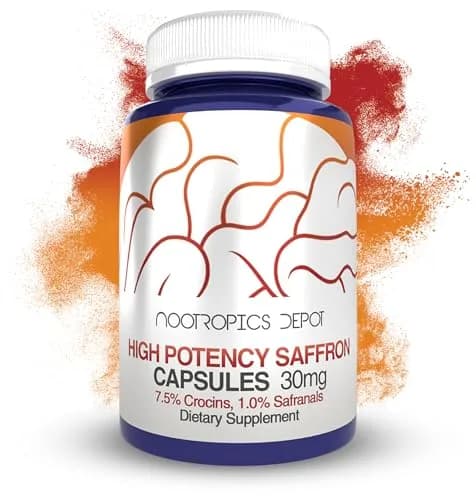
Nootropics Depot affron Saffron Extract

Nootropics Depot affron Saffron Extract

Nootropics Depot

9.2/10
Most clinically validated form for mood support$0.42/serving

Side Effects and Safety

Safety profile: Generally Safe

Potential Side Effects

  • Generally very well tolerated at standard doses
  • Mild nausea or appetite changes (uncommon)
  • Headache (rare)
  • Dry mouth (rare)
  • Very high doses (>200mg) may cause dizziness and drowsiness
  • Toxic at culinary-spice megadoses (>5g) — not relevant to supplement use

Drug & Supplement Interactions

  • SSRIs and other antidepressants — saffron has serotonergic activity; combining with SSRIs may increase serotonin syndrome risk (consult physician)
  • Anticoagulants — saffron has mild antiplatelet activity at very high doses
  • Blood pressure medications — saffron may mildly lower blood pressure
  • Avoid during pregnancy at supplemental doses (traditional culinary use is fine)
Check Saffron Extract interactions with other supplements →
BenefitsDosage GuideSide EffectsTypes & FormsResearchFAQ

Related Conditions

Related Supplements

Looking for the best saffron extract supplement?

We analyzed and ranked the top products based on form, dosage, third-party testing, and value.

See Our Top Picks

Frequently Asked Questions

Is saffron really as effective as antidepressants?

For mild-to-moderate depression, yes — multiple randomized controlled trials have found 30mg saffron extract comparable to 20mg fluoxetine (Prozac) and 20mg citalopram (Celexa) in reducing depression scores. However, saffron has not been tested against higher SSRI doses or for severe depression. It should not replace prescribed medication without medical supervision, but it represents a legitimate evidence-based option for mild mood complaints.

How quickly does saffron work for mood?

Most clinical trials show significant improvements in mood scores within 4-6 weeks, similar to the timeline for conventional antidepressants. Some people report subjective improvements in outlook and sleep quality within the first 2 weeks. The affron extract (28mg) showed statistically significant mood improvements at 4 weeks in multiple trials.

What is the difference between saffron extract and cooking saffron?

Saffron extract supplements are standardized to contain specific concentrations of the active compounds crocin and safranal — typically 3.5% Lepticrosalides (affron) or 2% crocin. Cooking saffron threads vary widely in potency, and you would need to consume impractical amounts to match a standardized extract dose. Additionally, supplement-grade saffron is tested for purity, whereas culinary saffron is frequently adulterated with cheaper spices.

References

  1. (). Saffron (Crocus sativus L.) and major depressive disorder: a meta-analysis of randomized clinical trials. Journal of Integrative Medicine. DOI
  2. (). Comparison of Crocus sativus L. and imipramine in the treatment of mild to moderate depression: a pilot double-blind randomized trial. BMC Complementary and Alternative Medicine. DOI
  3. (). Saffron (Crocus sativus) for depression: a systematic review of clinical studies and examination of underlying antidepressant mechanisms of action. Human Psychopharmacology. DOI
  4. (). Crocus sativus L. (saffron) in the treatment of premenstrual syndrome: a double-blind, randomised and placebo-controlled trial. BJOG: An International Journal of Obstetrics and Gynaecology. DOI