SupplementScience
Turmeric / Curcumin supplement
Plant Extract / Polyphenol

Turmeric / Curcumin: Benefits, Dosage, Forms & Research

Plant Extract / Polyphenol

This content is for informational purposes only and does not constitute medical advice. Consult your healthcare provider before starting any supplement. Full disclaimer

TL;DR — Quick Answer

Curcumin is the primary bioactive in turmeric with strong evidence for reducing joint pain (comparable to ibuprofen in meta-analysis), lowering inflammatory markers, and supporting gut and brain health. Standard curcumin absorbs poorly (~1%); choose enhanced forms like Meriva phytosome (29x), Longvida (65x free curcumin), or piperine-boosted C3 Complex (20x) for clinically relevant blood levels. Typical effective dose: 500-1500mg curcumin daily with an absorption enhancer.

Key Facts

What it is
A polyphenolic compound extracted from turmeric root (Curcuma longa) with potent anti-inflammatory and antioxidant properties
Primary benefits
  • Joint pain and stiffness reduction (comparable to ibuprofen in RCTs)
  • Systemic anti-inflammatory via NF-kB and COX-2 inhibition
  • Supports gut barrier integrity and microbiome balance
  • Neuroprotective — may improve working memory and reduce neuroinflammation
  • Potent antioxidant via direct scavenging and Nrf2 pathway upregulation
Typical dosage
500-1500mg curcumin daily (with piperine or as enhanced formulation)
Evidence level
Strong
Safety profile
Generally Safe

What the Research Says

Curcumin is one of the most studied natural compounds in PubMed, with over 17,000 published papers. The clinical evidence is strongest for joint health: Daily et al. (2016) conducted a definitive meta-analysis of 8 RCTs concluding that curcumin (~1000mg/day) was comparable to ibuprofen for arthritis symptom relief with a superior GI safety profile. For bioavailability, the landmark work by Shoba et al. (1998) demonstrated a 2000% increase in curcumin absorption with piperine co-administration, while Cuomo et al. (2011) showed Meriva phytosome achieved 29-fold higher plasma curcumin than unformulated extract. In neurological research, Small et al. (2018) published a rigorous 18-month RCT in the American Journal of Geriatric Psychiatry demonstrating that Theracurmin improved memory, attention, and mood while reducing amyloid and tau deposition on brain PET scans — one of the first supplement trials to show such imaging biomarker changes. Hewlings & Kalman (2017) published a comprehensive review in Foods covering curcumin's mechanisms including NF-kB inhibition, COX-2 suppression, and Nrf2-mediated antioxidant upregulation.

Benefits of Turmeric / Curcumin

  • Joint pain and arthritis relief — a 2016 meta-analysis by Daily et al. of 8 RCTs (n=606) found curcumin at ~1000mg/day significantly reduced arthritis symptoms with efficacy comparable to ibuprofen and fewer gastrointestinal side effects
  • Systemic anti-inflammatory — curcumin is a potent inhibitor of NF-kB, the master transcription factor orchestrating chronic inflammation, and suppresses COX-2 and lipoxygenase enzymes, reducing prostaglandin and leukotriene synthesis
  • Gut health support — a 2020 systematic review found curcumin modulates the gut microbiome by increasing Bifidobacterium and Lactobacillus populations, supporting intestinal barrier function, and reducing gut inflammation markers in IBS and IBD trials
  • Cognitive and neuroprotective effects — a 2018 double-blind RCT by Small et al. (American Journal of Geriatric Psychiatry) found 90mg Theracurmin twice daily improved memory and attention over 18 months and reduced amyloid and tau accumulation on PET scans
  • Antioxidant defense — curcumin neutralizes free radicals directly and upregulates endogenous antioxidant enzymes (SOD, catalase, glutathione peroxidase) through Nrf2 pathway activation
Did you know?

Curcumin is one of the most studied natural compounds in PubMed, with over 17,000 published papers.

Forms of Turmeric / Curcumin

FormBioavailabilityBest For
Standard Curcumin Extract (95% Curcuminoids)Very Low (~1% without enhancer)Budget baseline — inexpensive but must be paired with piperine or fat for any meaningful absorption; most generic turmeric capsules use this form
Meriva (Curcumin Phytosome)Very High (29x increase over standard)Joint health and inflammation — phospholipid-bound curcumin with the most clinical trial data for osteoarthritis; effective at lower doses (500mg)
C3 Complex with BioPerineHigh (20x increase with piperine)Research-grade standardization — 95% curcuminoids combined with patented piperine extract; the most widely used form in clinical studies
CurcuWIN (UltraSOL)Very High (46x increase over standard)High absorption per milligram — gamma-cyclodextrin molecular dispersion technology delivers among the highest relative bioavailability of any curcumin form
Longvida (Solid Lipid Curcumin Particle)Very High (65x increase in free curcumin)Cognitive and mood support — engineered for blood-brain barrier penetration using solid lipid particle technology; studied for memory and neuroprotection
Theracurmin (Nanoparticle Curcumin)Very High (27x increase over standard)Rapid high plasma levels — submicron colloidal dispersion for fast absorption; used in the landmark Small et al. brain-aging RCT

Dosage Recommendations

General recommendation: 500-1500mg curcumin daily with piperine or as an enhanced-bioavailability formulation

Timing: With meals containing dietary fat to enhance absorption; phytosome and nanoparticle forms may be taken without food • Take with food for best absorption.

Dosage by Condition

ConditionRecommended DoseEvidence
Joint pain and arthritis1000mg curcumin daily with BioPerine, or 500mg Meriva phytosomeStrong
General anti-inflammatory support500-1000mg curcumin daily with absorption enhancerStrong
Gut health and IBS symptoms500-1000mg curcumin daily with mealsModerate
Cognitive support and neuroprotection180mg Theracurmin or 400mg Longvida dailyModerate
Antioxidant and general wellness500mg curcumin dailyModerate

Upper limit: Up to 8g/day curcuminoids studied safely short-term; 1500mg daily with enhancer is sufficient for most clinical benefits

Our Top Turmeric / Curcumin Pick

Our recommendations are based on published research, not commission rates. Some links below are affiliate links — we may earn a commission at no extra cost to you. How we evaluate products

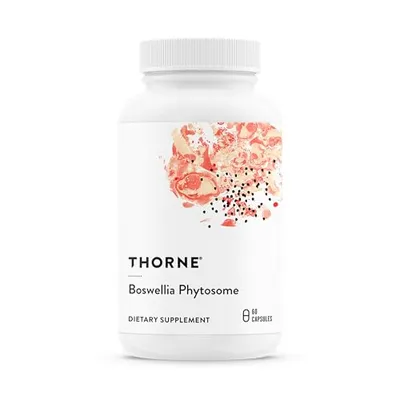
Thorne Meriva-SF Curcumin Phytosome

Thorne Meriva-SF Curcumin Phytosome

Thorne

9.3/10
Overall best curcumin for joint and inflammation support$0.42/serving

Side Effects and Safety

Safety profile: Generally Safe

Potential Side Effects

  • Mild GI discomfort (nausea, diarrhea, bloating) reported at doses above 1500mg, particularly without food
  • Yellow staining of teeth, skin, and clothing with powder forms
  • May increase oxalate levels — use caution in individuals with a history of calcium oxalate kidney stones
  • Iron absorption may be modestly reduced with chronic high-dose use due to iron chelation
  • Headache reported rarely, typically at higher doses

Drug & Supplement Interactions

  • Blood thinners (warfarin, aspirin, clopidogrel) — curcumin has antiplatelet and mild anticoagulant activity; may increase bleeding risk
  • Diabetes medications (metformin, sulfonylureas, insulin) — curcumin may lower blood glucose; monitor closely to avoid hypoglycemia
  • Piperine/BioPerine drug interactions — piperine inhibits CYP3A4, CYP2D6, and P-glycoprotein, potentially increasing plasma levels of many medications including statins, SSRIs, and immunosuppressants
  • Chemotherapy agents — curcumin may interact with certain chemotherapy drugs (both synergistically and antagonistically); always consult an oncologist before combining
  • Pre-surgery — discontinue curcumin supplements 2 weeks before elective surgery due to antiplatelet effects
Check Turmeric / Curcumin interactions with other supplements →
BenefitsDosage GuideSide EffectsTypes & FormsResearchFAQ

Related Conditions

Related Research

Related Supplements

Looking for the best turmeric / curcumin supplement?

We analyzed and ranked the top products based on form, dosage, third-party testing, and value.

See Our Top Picks

Frequently Asked Questions

What is the best form of turmeric/curcumin to take?

It depends on your primary goal. For joint pain and general inflammation, Meriva (curcumin phytosome) has the deepest clinical trial data and absorbs 29x better than standard curcumin. For brain health and cognition, Longvida or Theracurmin are designed to cross the blood-brain barrier. For a budget-friendly option, C3 Complex with BioPerine (piperine) provides 20x improved absorption at a lower price point. The one form to avoid is plain curcumin extract without any absorption enhancer — only about 1% will reach your bloodstream.

Can turmeric supplements replace ibuprofen for joint pain?

A 2016 meta-analysis found curcumin at ~1000mg/day was statistically equivalent to ibuprofen for reducing osteoarthritis pain scores, with significantly fewer GI side effects. However, curcumin works gradually over 4-8 weeks by addressing underlying inflammation, whereas ibuprofen provides acute relief within hours. For chronic joint issues, curcumin is a viable long-term alternative. For acute pain flares, ibuprofen remains faster-acting. Always consult your doctor before replacing any prescribed anti-inflammatory medication.

Why does curcumin need black pepper or special formulations?

Standard curcumin has notoriously poor bioavailability — roughly 1% of an oral dose makes it into the bloodstream because the liver rapidly metabolizes it via glucuronidation. Piperine from black pepper (sold as BioPerine) inhibits this liver metabolism, keeping curcumin circulating 20x longer. Other formulations solve the problem differently: Meriva wraps curcumin in phospholipids, Longvida uses solid lipid particles, and Theracurmin uses nanoparticle dispersion. Each approach dramatically improves absorption through a distinct mechanism.

Is turmeric good for gut health?

Emerging evidence suggests yes. Curcumin has been shown to modulate the gut microbiome by promoting beneficial bacteria (Bifidobacterium, Lactobacillus), strengthening intestinal barrier integrity, and reducing gut inflammatory markers. Small clinical trials have found benefits in IBS and ulcerative colitis. Interestingly, even poorly absorbed curcumin may benefit the gut precisely because it remains in the GI tract longer. Take with meals to minimize any digestive discomfort.

How long does it take for curcumin to start working?

Unlike NSAIDs that provide relief within hours, curcumin builds up over time. Most clinical trials report meaningful reductions in joint pain and inflammatory markers after 4-8 weeks of daily supplementation. Some people notice improvements in joint stiffness within 2-3 weeks, particularly with highly bioavailable forms like Meriva or Longvida. For cognitive benefits, the Small et al. study assessed outcomes at 18 months, suggesting brain-health effects require longer-term use.

References

  1. (). Efficacy of Turmeric Extracts and Curcumin for Alleviating the Symptoms of Joint Arthritis: A Systematic Review and Meta-Analysis of Randomized Clinical Trials. Journal of Medicinal Food. DOI
  2. (). Curcumin: A Review of Its Effects on Human Health. Foods. DOI
  3. (). Memory and Brain Amyloid and Tau Effects of a Bioavailable Form of Curcumin in Non-Demented Adults: A Double-Blind, Placebo-Controlled 18-Month Trial. American Journal of Geriatric Psychiatry. DOI
  4. (). Influence of piperine on the pharmacokinetics of curcumin in animals and human volunteers. Planta Medica. DOI
  5. (). Comparative absorption of a standardized curcuminoid mixture and its lecithin formulation. Journal of Natural Products. DOI