
We reviewed 25+ calcium supplements across calcium form, dose, Vitamin D and K2 inclusion, third-party testing, and absorption data. Our picks prioritize well-absorbed forms that direct calcium to bones — not arteries — with essential cofactors included.
Best Calcium Supplements (2026)
Product pricing and availability checked
Methodology: Evidence-ranked evaluation
·
2,600+Clinical Studies Cited
·6Calcium products evaluated
This content is for informational purposes only and does not constitute medical advice. Statements about dietary supplements have not been evaluated by the FDA and are not intended to diagnose, treat, cure, or prevent any disease. Individual results may vary — consult your healthcare provider before starting any supplement. Full disclaimer
As an Amazon Associate, we earn from qualifying purchases. Some links below are affiliate links — this doesn't affect our editorial independence or product ratings. How we evaluate products
Our Verdict
Choose 500-600mg calcium per serving from citrate or algae-derived forms, with vitamin D3 and ideally K2 for calcium utilization.
Best By Category
The best calcium supplement for most adults is calcium citrate with vitamin D3, taken in divided doses of 500-600mg.
The best calcium supplement for most adults is calcium citrate with vitamin D3, taken in divided doses of 500-600mg. Calcium citrate absorbs well with or without food (unlike carbonate) and is gentler on the stomach. Adding Vitamin K2 helps direct calcium to bones rather than soft tissues. Algae-derived calcium is a premium plant-based option with a natural mineral matrix.
How We Chose These Products
Products are ranked using our published scoring methodology — evidence strength, dose adequacy, ingredient form, third-party testing signals, value, and clean-label factors are weighted across the 5 criteria below. Commercial relationships do not determine our editorial rankings.
Calcium Form & Absorption
30%Calcium citrate absorbs 22-27% better than carbonate in fasting conditions and does not require stomach acid. Algae-derived calcium provides a natural mineral matrix. Carbonate requires food/acid for absorption and causes more GI side effects.
Cofactor Inclusion (D3, K2)
25%Vitamin D3 is essential for calcium absorption (increases intestinal absorption by 30-40%). Vitamin K2 (MK-7) activates osteocalcin, directing calcium to bones and away from arteries. Products with both score highest.
Dose Appropriateness
20%The body absorbs calcium best in doses of 500mg or less at a time. Products providing 500-600mg per serving with instructions for divided dosing are preferred. Mega-dose products (1000mg+) in a single serving are penalized.
Third-Party Testing
15%Independent verification ensures calcium content, absence of lead contamination (a concern with bone meal and dolomite sources), and vitamin D accuracy.
Value
10%Cost per serving adjusted for form quality, cofactor inclusion, and absorption profile.
#1 Top Pick
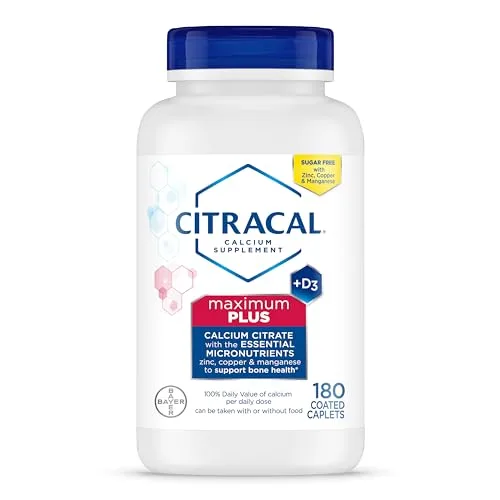
The gold standard calcium citrate supplement recommended by more doctors and pharmacists than any other calcium brand. USP Verified for label accuracy and dissolution. Calcium citrate absorbs 22-27% better than carbonate in fasting conditions and can be taken with or without food. Includes 500 IU vitamin D3 per serving for enhanced absorption. Excellent value.
IngredientCalcium Citrate + Vitamin D3
Dose630mg calcium (as citrate) + 500 IU vitamin D3 per serving (2 caplets)
FormCaplet
TestingUSP Verified
630mg calcium (as citrate) + 500 IU vitamin D3 per serving (2 caplets)Clinical range: 500-600mg supplemental calcium, 1-2 times daily
Clinical dose
$0.09 / count$15.68 · 180 Count
Pros
- USP Verified (gold standard)
- Calcium citrate (best-absorbed common form)
- Doctor and pharmacist recommended
Cons
- No vitamin K2 included
- Large caplets
Quick Comparison
#1Citracal Maximum Plus D3
9/10
CITRACAL
#1 Top Pick
10,261 Amazon reviews
Best for: calcium citrate with D3
Calcium Citrate + Vitamin D3 · 630mg calcium (as citrate) + 500 IU vitamin D3 per serving (2 caplets)
Caplet · USPUSP Verified
$15.68
$0.09 / count
#2Garden of Life Raw Calcium
9.1/10
Garden of Life
6,199 Amazon reviews
Best for: overall plant-based calcium with full cofactors
Plant-Based Calcium from Algae (Algas Calcareas) · 756mg calcium from algae + vitamin D3 (1,600 IU) + K2 + magnesium per serving
Capsule · Third-Party Tested, Non-GMO Project Verified
$38.09
$0.32 / count
#3New Chapter Bone Strength Take Care
8.8/10
New Chapter
83 Amazon reviews
Best for: calcium with K2 for bone targeting
Plant-Sourced Calcium + Vitamin D3 + Vitamin K2 (MK-7) · 770mg calcium (plant-sourced) + 1,000 IU D3 + 45mcg K2 per serving (3 slim tablets)
Slim Tablet · Non-GMO Project Verified, Third-Party Tested
$125.91
$0.35 / count
#4NOW Foods Calcium & Magnesium
8.3/10
NOW
6,140 Amazon reviews
Best for: budget calcium + magnesium combo
Calcium (Carbonate & Citrate) + Magnesium (Oxide & Citrate) · 500mg calcium + 250mg magnesium per serving (2 tablets)
Tablet · GMP Certified
$14.99
$0.06 / count
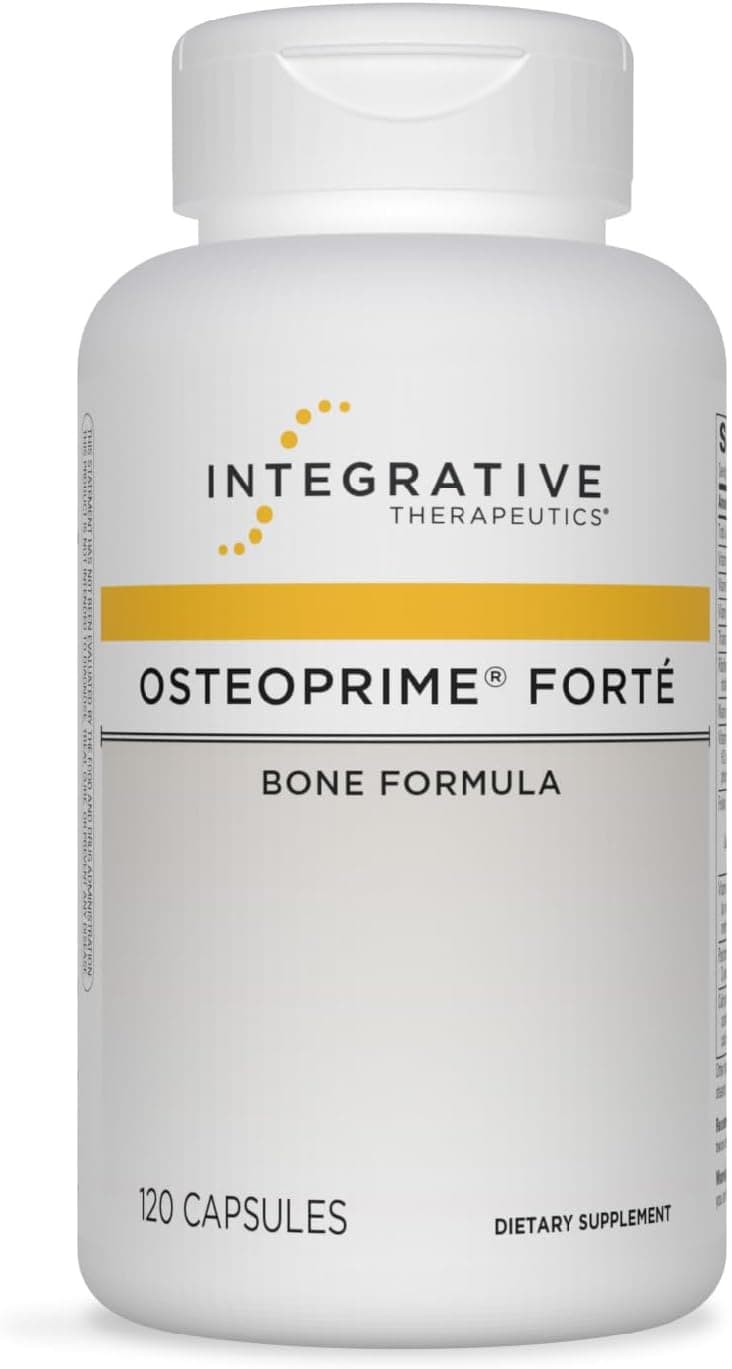
#5Integrative Therapeutics OsteoPrime Forte
7.8/10
Integrative Therapeutics
369 Amazon reviews
Best for: Adults seeking a comprehensive multi-calcium bone-health formula from a clinician-trusted, practitioner-grade brand
Multi-form calcium complex (calcium citrate and four additional calcium forms) · 4 capsules daily with a meal (can be split as 2 capsules twice daily with a meal)
Capsule · Third-Party Tested
$27.00
$0.23 / count
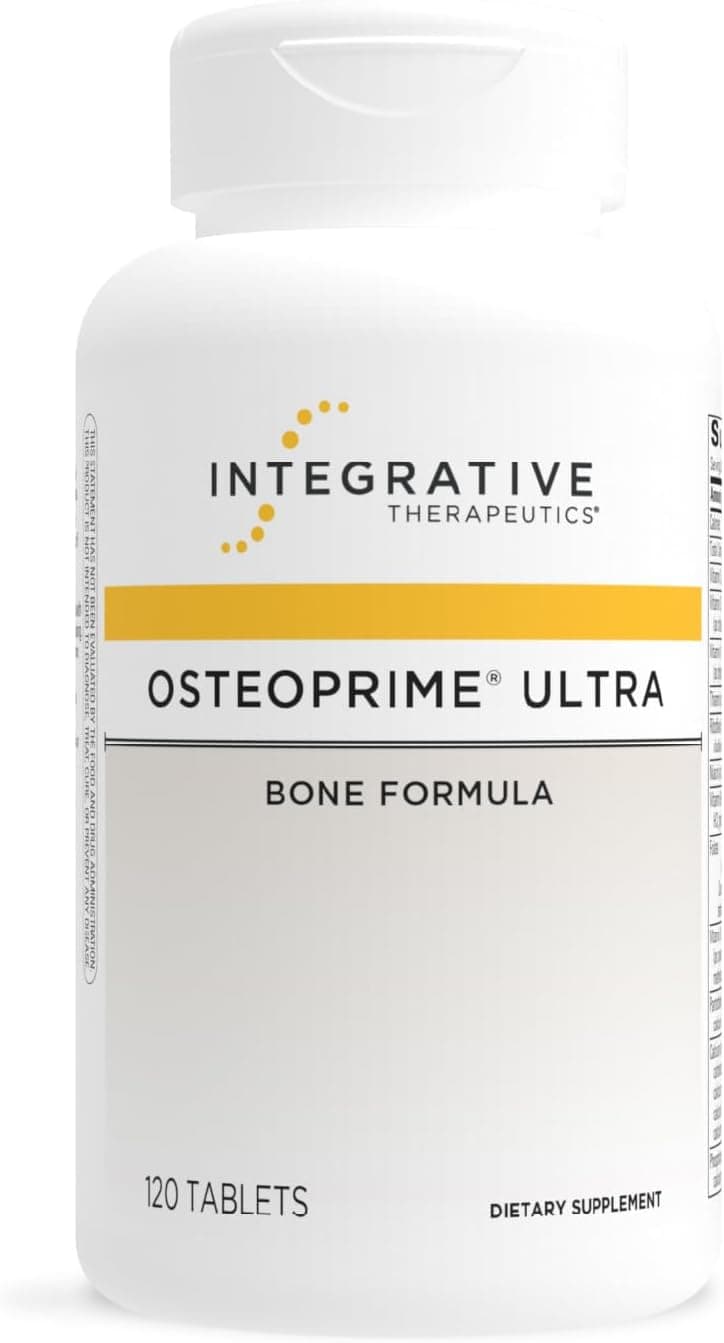
#6IT OsteoPrime Ultra Bone Support
7.8/10
Integrative Therapeutics
415 Amazon reviews
Best for: Adults wanting a comprehensive multi-nutrient bone support formula with calcium, vitamin D, zinc, and niacin in a single product
Calcium complex + Vitamin D + Magnesium + Zinc + Vitamin C · 4 tablets daily (120 tablets, 30 servings)
Tablet · GMP Certified
$34.50
$0.29 / count
| # | Product | Best For | Ingredient & Dose | Form & Testing | Price | Rating | |
|---|---|---|---|---|---|---|---|
| 1 | Citracal Maximum Plus D3 #1 Top Pick 10,261 Amazon reviews | calcium citrate with D3 | Calcium Citrate + Vitamin D3 630mg calcium (as citrate) + 500 IU vitamin D3 per serving (2 caplets) | Caplet 180 Count USPUSP Verified | $15.68 $0.09 / count | 9/10 | |
| 2 | Garden of Life Raw Calcium 6,199 Amazon reviews | overall plant-based calcium with full cofactors | Plant-Based Calcium from Algae (Algas Calcareas) 756mg calcium from algae + vitamin D3 (1,600 IU) + K2 + magnesium per serving | Capsule 120 Capsules Third-Party Tested, Non-GMO Project Verified | $38.09 $0.32 / count | 9.1/10 | |
| 3 | New Chapter Bone Strength Take Care 83 Amazon reviews | calcium with K2 for bone targeting | Plant-Sourced Calcium + Vitamin D3 + Vitamin K2 (MK-7) 770mg calcium (plant-sourced) + 1,000 IU D3 + 45mcg K2 per serving (3 slim tablets) | Slim Tablet Non-GMO Project Verified, Third-Party Tested | $125.91 $0.35 / count | 8.8/10 | |
| 4 | NOW Foods Calcium & Magnesium 6,140 Amazon reviews | budget calcium + magnesium combo | Calcium (Carbonate & Citrate) + Magnesium (Oxide & Citrate) 500mg calcium + 250mg magnesium per serving (2 tablets) | Tablet 250 Tablets GMP Certified | $14.99 $0.06 / count | 8.3/10 | |
| 5 | Integrative Therapeutics OsteoPrime Forte 369 Amazon reviews | Adults seeking a comprehensive multi-calcium bone-health formula from a clinician-trusted, practitioner-grade brand | Multi-form calcium complex (calcium citrate and four additional calcium forms) 4 capsules daily with a meal (can be split as 2 capsules twice daily with a meal) | Capsule 120 Count Third-Party Tested | $27.00 $0.23 / count | 7.8/10 | |
| 6 | IT OsteoPrime Ultra Bone Support 415 Amazon reviews | Adults wanting a comprehensive multi-nutrient bone support formula with calcium, vitamin D, zinc, and niacin in a single product | Calcium complex + Vitamin D + Magnesium + Zinc + Vitamin C 4 tablets daily (120 tablets, 30 servings) | Tablet 120.00 Count GMP Certified | $34.50 $0.29 / count | 7.8/10 |
Detailed Reviews
#1 Top Pick
Citracal Maximum Plus Calcium Supplement - Calcium Citrate with Vitamin D3, Zinc, & Essential Minerals for Bone Health Support, Ages 12+, 180 Count (Packaging May Vary)
CITRACAL
10,261 Amazon reviews
9/10
(10,261)
The gold standard calcium citrate supplement recommended by more doctors and pharmacists than any other calcium brand. USP Verified for label accuracy and dissolution. Calcium citrate absorbs 22-27% better than carbonate in fasting conditions and can be taken with or without food. Includes 500 IU vitamin D3 per serving for enhanced absorption. Excellent value.
IngredientCalcium Citrate + Vitamin D3
Dose630mg calcium (as citrate) + 500 IU vitamin D3 per serving (2 caplets)
FormCaplet
TestingUSP Verified
630mg calcium (as citrate) + 500 IU vitamin D3 per serving (2 caplets)Clinical range: 500-600mg supplemental calcium, 1-2 times daily
Clinical dose
$0.09 / count$15.68 · 180 Count
Ideal for: calcium citrate with D3
Not ideal for: Those wanting vitamin K2 included or avoiding large tablets.
Pros
- USP Verified (gold standard)
- Calcium citrate (best-absorbed common form)
- Doctor and pharmacist recommended
- Excellent value at $0.18/serving
Cons
- No vitamin K2 included
- Large caplets
- No magnesium
- Only 500 IU vitamin D3
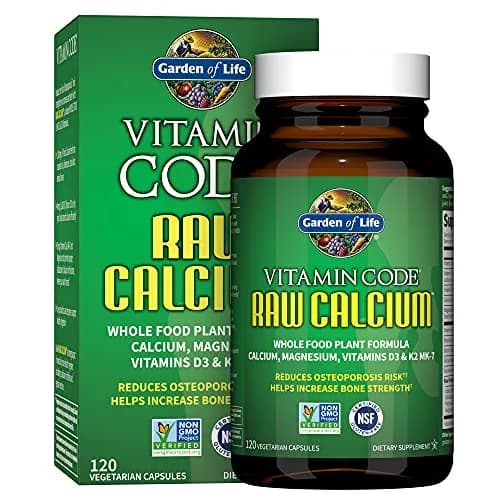
Garden of Life Raw Calcium Supplement for Women and Men - Vitamin Code Made from Whole Foods with Magnesium, K2, Vitamin D3 and Vitamin C plus Probiotics for Digestion, 120 Capsules
Garden of Life
6,199 Amazon reviews
9.1/10
(6,199)
Algae-derived calcium provides a whole-food mineral matrix with 73 trace minerals naturally present in the algae. Includes both vitamin D3 (1,600 IU) and vitamin K2 (MK-7) — the two most important cofactors for directing calcium to bones. Also includes magnesium, strontium, and vanadium for comprehensive bone support. Non-GMO Project Verified and third-party tested.
IngredientPlant-Based Calcium from Algae (Algas Calcareas)
Dose756mg calcium from algae + vitamin D3 (1,600 IU) + K2 + magnesium per serving
FormCapsule
TestingThird-Party Tested, Non-GMO Project Verified
756mg calcium from algae + vitamin D3 (1,600 IU) + K2 + magnesium per servingClinical range: 500-600mg supplemental calcium, 1-2 times daily
Clinical dose
$0.32 / count$38.09 · 120 Capsules
Ideal for: overall plant-based calcium with full cofactors
Not ideal for: Budget shoppers or those preferring a simple single-ingredient calcium.
Pros
- Algae-derived with 73 trace minerals
- Includes D3 + K2 + magnesium
- Non-GMO Project Verified
- Whole-food mineral matrix
Cons
- Requires 5 capsules per serving
- Premium price ($0.68/serving)
- Less absorption data than citrate
- High pill burden
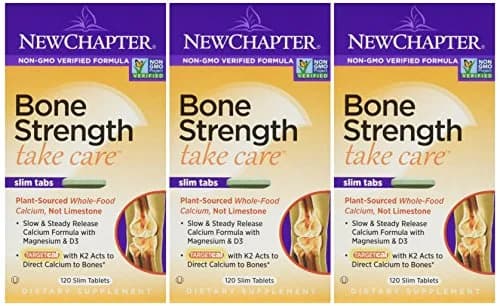
New Chapter Bone Strength Take Care 120 Tabs, 120 Tabs
New Chapter
83 Amazon reviews
8.8/10
(83)
One of the few calcium supplements that includes both vitamin D3 and vitamin K2 (MK-7) — the complete bone-targeting trio. Plant-sourced calcium from Lithothamnion algae provides a whole-food mineral profile. Slim tablet design improves swallowability. K2 activates osteocalcin and matrix Gla-protein, directing calcium to bones and away from arterial walls.
IngredientPlant-Sourced Calcium + Vitamin D3 + Vitamin K2 (MK-7)
Dose770mg calcium (plant-sourced) + 1,000 IU D3 + 45mcg K2 per serving (3 slim tablets)
FormSlim Tablet
TestingNon-GMO Project Verified, Third-Party Tested
770mg calcium (plant-sourced) + 1,000 IU D3 + 45mcg K2 per serving (3 slim tablets)Clinical range: 500-600mg supplemental calcium, 1-2 times daily
Clinical dose
$0.35 / count
Ideal for: calcium with K2 for bone targeting
Not ideal for: Budget-conscious shoppers or those wanting a one-pill-per-day option.
Pros
- Includes vitamin K2 (MK-7) for bone targeting
- Plant-sourced calcium from algae
- 1,000 IU vitamin D3
- Slim, easy-to-swallow tablets
Cons
- Requires 3 tablets per serving
- Premium price ($0.72/serving)
- K2 dose could be higher
- Less clinical data on algae calcium
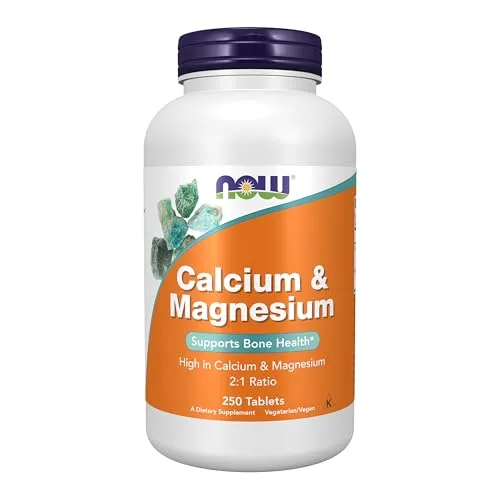
NOW Foods Supplements, Calcium & Magnesium 2:1 Ratio, High Potency, Supports Bone Health*, 250 Tablets
NOW
6,140 Amazon reviews
8.3/10
(6,140)
Combines calcium and magnesium at a 2:1 ratio — the ratio many nutritionists recommend for optimal mineral balance. At $0.08/serving, it is by far the most affordable option. GMP-certified facility. Includes both carbonate and citrate forms of each mineral. Good for users who also need magnesium supplementation.
IngredientCalcium (Carbonate & Citrate) + Magnesium (Oxide & Citrate)
Dose500mg calcium + 250mg magnesium per serving (2 tablets)
FormTablet
TestingGMP Certified
500mg calcium + 250mg magnesium per serving (2 tablets)Clinical range: 500-600mg supplemental calcium, 1-2 times daily
Therapeutic dose
$0.06 / count$14.99 · 250 Tablets
Ideal for: budget calcium + magnesium combo
Not ideal for: Those needing the best-absorbed forms or wanting vitamin D/K2 included.
Pros
- Best value at $0.08/serving
- 2:1 calcium:magnesium ratio
- GMP-certified facility
- Addresses two common mineral deficiencies
Cons
- Contains carbonate (less absorbed)
- No vitamin D3 or K2
- Magnesium oxide (poor bioavailability)
- Large tablets
Integrative Therapeutics Osteoprime Forte - Calcium Supplement for Bone Health Support* - Nutritional Supplement for Musculoskeletal Support* - Dairy-Free & Gluten-Free - 120 Capsules (30 Servings)
Integrative Therapeutics
369 Amazon reviews
7.8/10
(369)
Free of wheat, gluten, soy, dairy, and artificial colors or flavors
OsteoPrime Forte earns its place by going beyond plain calcium. The five-form calcium matrix plus vitamin K and magnesium mirrors what clinical nutrition literature identifies as the full cofactor profile for bone density support. Integrative Therapeutics' practitioner heritage and GMP standards since 1979 back the product's quality credibility, and the 4.7-star rating from nearly 370 reviewers confirms consistent customer satisfaction.
IngredientMulti-form calcium complex (calcium citrate and four additional calcium forms)
Dose4 capsules daily with a meal (can be split as 2 capsules twice daily with a meal)
FormCapsule
TestingThird-Party Tested
4 capsules daily with a meal (can be split as 2 capsules twice daily with a meal)Clinical range: 500-600mg supplemental calcium, 1-2 times daily
Blend formula
$0.23 / count$27.00 · 120 Count
Ideal for: Adults seeking a comprehensive multi-calcium bone-health formula from a clinician-trusted, practitioner-grade brand
Not ideal for: Those wanting a simple single-source calcium supplement or a chewable format
Pros
- Five forms of calcium for broader absorption coverage
- Includes key bone-building cofactors: vitamins D, K, B12, B6, C, magnesium, and zinc
- Practitioner-grade GMP manufacturing from a brand trusted since 1979
- Dairy-free and gluten-free with no artificial additives
Cons
- Requires 4 capsules per serving, which may be inconvenient for some users
- 30 servings per bottle means relatively frequent repurchasing
- Does not specify IU amounts for vitamin D in the listing, requiring label review for full dosing context
Integrative Therapeutics OsteoPrime Ultra - Supplement for Supporting Healthy Bones* - Supports Bones & Calcium Absorption* - Includes Essential Vitamins & Minerals - 120 Count (30 Servings)
Integrative Therapeutics
415 Amazon reviews
7.8/10
(415)
OsteoPrime Ultra reflects Integrative Therapeutics' clinical-design philosophy — using multiple calcium forms alongside absorption cofactors (D, C, zinc, niacin) rather than simple calcium carbonate alone. The practitioner-grade sourcing ensures ingredient quality appropriate for bone health support.
IngredientCalcium complex + Vitamin D + Magnesium + Zinc + Vitamin C
Dose4 tablets daily (120 tablets, 30 servings)
FormTablet
TestingGMP Certified
4 tablets daily (120 tablets, 30 servings)Clinical range: 500-600mg supplemental calcium, 1-2 times daily
Blend formula
$0.29 / count$34.50 · 120.00 Count
Ideal for: Adults wanting a comprehensive multi-nutrient bone support formula with calcium, vitamin D, zinc, and niacin in a single product
Not ideal for: Those who prefer capsules over tablets — the 4-tablet-per-day dose is a significant daily pill burden
Pros
- Comprehensive bone formula combining multiple nutrient types in one product
- Includes vitamin D to support calcium absorption
- Dairy-free and wheat-free for broad dietary compatibility
- 415 reviews at 4.5 stars — solid satisfaction for a multi-ingredient bone formula
Cons
- 4-tablet daily serving creates a high daily pill burden
- Only 30 servings per 120-count bottle — repurchase needed monthly
- Exact nutrient doses per serving not disclosed in product listing
Pairs Well With
Frequently taken together based on complementary benefits

Magnesium
Doctor's Best High Absorption Magnesium Glycinate
200mg elemental Mg per serving

How to Choose
Calcium Citrate vs Calcium Carbonate
Calcium citrate is the preferred form: it absorbs without stomach acid (important for older adults with reduced acid production), can be taken with or without food, and causes fewer GI side effects like bloating and constipation. Calcium carbonate is cheaper but requires food and stomach acid for absorption. It also provides more elemental calcium per gram, which is why it remains popular despite inferior absorption.
Why Vitamin K2 Matters
Vitamin K2 (specifically MK-7) activates two proteins: osteocalcin (which binds calcium to bones) and matrix Gla-protein (which prevents calcium from depositing in arterial walls). Without K2, supplemental calcium may accumulate in soft tissues rather than bones. The Rotterdam Study found that high K2 intake was associated with 52% lower risk of arterial calcification.
Who Should and Should Not Take Calcium Supplements
People at risk for osteoporosis, those with low dietary calcium intake, postmenopausal women, and individuals with malabsorption conditions may benefit from calcium supplementation. However, healthy adults with adequate dietary intake (1,000-1,200mg/day from food) may not need supplements. Excessive calcium supplementation has been linked to kidney stones and cardiovascular concerns — always aim for total intake (food + supplements) of 1,000-1,200mg daily.
Ready to Buy?
Citracal Maximum Plus D3
9/10$0.09 / countBest for: calcium citrate with D3
Choose 500-600mg calcium per serving from citrate or algae-derived forms, with vitamin D3 and ideally K2 for calcium utilization.
Evidence:RCT (1999) · high confidence[#1]. See full reference list below.Read Our Full Calcium Research Guide
Evidence level, dosage, side effects, and more →
Already taking supplements?
Check how Calcium fits with your current stack — interactions, timing, and optimization →
Related Supplements
MagnesiumStrong
Bottom line: For sleep support, magnesium glycinate is usually the most practical first-choice form. Start with 100-200mg elemental magnesium in the evening, adjust only if tolerated, and stay at or below 350mg/day from supplements unless a clinician recommends otherwise.
Top picks →Vitamin D3Strong
Bottom line: Most adults need vitamin D3 supplements — 42% are deficient. Take 1,000-4,000 IU daily with a fatty meal for immune, bone, and mood support.
Top picks →Related Conditions
Learn More
Frequently Asked Questions
What is the best calcium supplement to take?
What is the best calcium supplement to take?
The best calcium supplement for most adults is calcium citrate with vitamin D3, such as Citracal Maximum Plus D3 ($0.18/serving, USP Verified). For comprehensive bone support with K2, New Chapter Bone Strength Take Care adds vitamin K2 to direct calcium to bones. For a plant-based option, Garden of Life Raw Calcium provides algae-derived calcium with D3, K2, and magnesium.
Is calcium citrate better than calcium carbonate?
Is calcium citrate better than calcium carbonate?
Yes, for most people. Calcium citrate absorbs 22-27% better than carbonate, can be taken with or without food, and causes fewer GI side effects [1]. Calcium carbonate requires stomach acid for absorption (problematic for older adults and those on acid-reducing medications) and is more likely to cause constipation and bloating.
Evidence:RCT (1999) · high confidence[#1]. See full reference list below.How much calcium should I take per day?
How much calcium should I take per day?
The recommended daily intake is 1,000-1,200mg of total calcium (food + supplements). Most adults get 500-700mg from food, so a supplement of 500-600mg fills the gap. Never take more than 500-600mg at one time — absorption drops significantly above this threshold. Split larger doses into two servings taken 4+ hours apart.
Continue Reading
Supplement Guide
Magnesium
Bottom line: For sleep support, magnesium glycinate is usually the most practical first-choice form. Start with 100-200mg elemental magnesium in the evening, adjust only if tolerated, and stay at or below 350mg/day from supplements unless a clinician recommends otherwise.
Condition GuideJoint Pain
ArticleCalcium and Medication Timing
References
- RCTHeaney RP, Dowell MS, Barger-Lux MJ (1999). Absorption of calcium as the carbonate and citrate salts, with some observations on method. Osteoporosis International. DOI PubMed
- ObservationalGeleijnse JM, Vermeer C, Grobbee DE, et al. (2004). Dietary intake of menaquinone is associated with a reduced risk of coronary heart disease: the Rotterdam Study. Journal of Nutrition. DOI PubMed