Supplement ScienceSupplementScience
Bone Health

Best Supplements for Bone Health

Prevalence: 10 million Americans have osteoporosis; 44 million have low bone density (NOF)

·

This content is for informational purposes only and does not constitute medical advice. Statements about dietary supplements have not been evaluated by the FDA and are not intended to diagnose, treat, cure, or prevent any disease. Individual results may vary — consult your healthcare provider before starting any supplement. Full disclaimer

Calcium (1000-1200mg/day from diet + supplements) combined with vitamin D3 (1000-2000 IU/day) reduces fracture risk by...

Calcium (1000-1200mg/day from diet + supplements) combined with vitamin D3 (1000-2000 IU/day) reduces fracture risk by 15-30% in meta-analyses. Vitamin K2 (MK-7, 100-200mcg/day) directs calcium into bones rather than arteries and has been shown to reduce bone loss. All three work synergistically and should ideally be taken together.

Get the free evidence-based Bone Health guide — delivered in 60 seconds.

No spam. Unsubscribe anytime.

Overview

Osteoporosis affects 10 million Americans, while an additional 44 million have low bone density (osteopenia), increasing fracture risk. Bone is a dynamic tissue that requires specific nutrients for proper mineralization and remodeling. Clinical trials have established the importance of calcium, vitamin D, and vitamin K2 in maintaining bone mineral density and reducing fracture risk.
Understanding Bone Health

Most people think of bones as static, inert structures — like the girders in a building. In reality, bone is dynamic living tissue that is continuously being broken down (resorption by osteoclast cells) and rebuilt (formation by osteoblast cells) in a process called remodeling. You replace approximately 10% of your entire skeleton every year. Osteoporosis occurs when resorption outpaces formation, resulting in porous, fragile bones that fracture easily. The conventional approach — taking calcium alone — reflects a fundamental misunderstanding of bone biology. Calcium is the raw building material, but without vitamin D to absorb it from the gut, and without vitamin K2 to direct it into the bone matrix (rather than depositing in arteries), calcium supplementation alone is not only less effective but may actually increase cardiovascular risk. A controversial meta-analysis by Bolland et al. (2010) in the BMJ found that calcium supplements without vitamin D increased myocardial infarction risk by 30% — likely because unregulated calcium deposits in arterial walls. This is why the synergistic triad of calcium, vitamin D3, and vitamin K2 is essential: D3 gets calcium into your blood, K2 gets calcium into your bones, and calcium provides the mineral substrate. Weight-bearing exercise and adequate protein intake are equally critical, as mechanical loading and protein availability directly stimulate osteoblast activity.

What the Research Shows

Calcium remains foundational for bone health, but the evidence has evolved considerably from the "more is better" era. A meta-analysis by Tang et al. (2007) of 29 randomized controlled trials (n=63,897) found that calcium supplementation increased bone mineral density by 0.7-1.8% at the hip, spine, and forearm over 2+ years, with the greatest benefits in people with low baseline calcium intake and in those who also took vitamin D. The optimal dose is 1,000-1,200mg total daily from all sources (food plus supplements), and split dosing (500-600mg twice daily) improves absorption since the intestines saturate at approximately 500mg per dose. Calcium citrate is preferred over carbonate for people over 50 or those taking proton pump inhibitors, as citrate does not require stomach acid for absorption. Vitamin D3 is the linchpin of the bone health triad because calcium absorption falls dramatically without it — from approximately 30-40% to just 10-15%. A Cochrane review by Avenell et al. (2014) of 53 randomized trials found that vitamin D combined with calcium reduced hip fractures by 16% (RR 0.84) and non-vertebral fractures by 14%. Vitamin D3 (cholecalciferol) is 87% more effective than D2 (ergocalciferol) at raising and maintaining serum 25(OH)D levels. The Endocrine Society recommends maintaining blood levels of 30-50 ng/mL for optimal bone health, which typically requires 1,000-2,000 IU daily for most adults, though people with severe deficiency may need 4,000-5,000 IU initially. Vitamin K2 (specifically the MK-7 form, menaquinone-7) completes the triad by activating two critical proteins: osteocalcin (which binds calcium into the bone matrix) and matrix Gla protein (MGP, which prevents calcium from depositing in arteries). Knapen et al. (2013) published a 3-year double-blind RCT in Osteoporosis International showing that 180mcg/day of MK-7 significantly decreased the loss of bone mineral density and bone strength at the lumbar spine and femoral neck in healthy postmenopausal women. A separate study by the same group demonstrated that MK-7 also improved arterial flexibility, supporting the theory that K2 redirects calcium from soft tissues to bones. The MK-7 form is preferred over MK-4 because of its longer half-life (72 hours vs. 1-2 hours), allowing once-daily dosing and more consistent tissue levels.

What to Look For in Supplements

For calcium, citrate is the superior form for anyone over 50, on acid-reducing medications, or taking calcium between meals — it does not require stomach acid for absorption. Calcium carbonate is cheaper and fine for younger adults who take it with meals (stomach acid aids absorption). Check the elemental calcium amount on the Supplement Facts panel — calcium citrate is only 21% elemental calcium, meaning a "500mg calcium citrate" capsule may provide only 105mg of actual calcium. For vitamin D, always choose D3 (cholecalciferol) over D2 and look for products tested by third parties like USP or NSF. Oil-based softgels or liquid drops improve absorption over dry tablets since vitamin D is fat-soluble. For vitamin K2, MK-7 derived from natto fermentation (as MenaQ7) is the most studied form. Ensure the product specifies "MK-7" rather than just "vitamin K2" as some products use MK-4, which requires much higher doses (45mg vs. 100-200mcg).

What Doesn't Work (And Why)

Calcium supplements taken without vitamin D provide minimal bone benefit and may increase cardiovascular risk according to the Bolland et al. (2010) meta-analysis. This is the most common and most consequential bone supplement mistake. Coral calcium, marketed at premium prices, is simply calcium carbonate from coral with no proven advantage over standard calcium carbonate. Strontium ranelate was promoted for bone density but was withdrawn in several markets due to cardiovascular safety concerns, and strontium supplements artificially inflate DEXA scan readings by substituting into bone matrix in place of calcium — the measured density increase is partly an artifact, not stronger bone. Silicon or silica supplements for bone health have extremely limited clinical evidence — one small trial showed modest bone density improvements, but it has never been replicated. Ipriflavone, a synthetic isoflavone, showed promise in early trials but a large 3-year RCT (Alexandersen et al., 2001) found no benefit for bone density and concerning lymphocytopenia in 29% of participants. Collagen peptides are increasingly marketed for bone health but the evidence is preliminary and mostly from industry-funded studies.

Combination Protocol

The bone health triad combines calcium citrate (500-600mg elemental, taken twice daily with meals — morning and evening), vitamin D3 (2,000 IU daily with breakfast or the largest meal, adjusted to maintain serum 25(OH)D of 40-60 ng/mL), and vitamin K2 MK-7 (180-200mcg daily, taken with any fat-containing meal). Calcium provides the mineral substrate. Vitamin D3 ensures calcium absorption from the gut. Vitamin K2 activates osteocalcin to direct calcium into bone and matrix Gla protein to prevent arterial calcification. Take calcium separate from iron, zinc, or thyroid medications (2-hour gap) as calcium impairs their absorption. If on warfarin or other vitamin K-sensitive anticoagulants, consult your physician before adding K2 as it may alter INR. Add weight-bearing exercise (minimum 30 minutes, 3x/week) for the mechanical loading that stimulates osteoblast activity.

Top Evidence-Based Supplements for Bone Health

#SupplementTypical DoseEvidence
1Calcium500-600mg twice daily (with meals)Strong
See top calcium picks →
2Vitamin D31000-2000 IU dailyStrong
See top vitamin d3 picks →
3Vitamin K2 (MK-7)100-200mcg dailyModerate
See top vitamin k2 (mk-7) picks →

Top Product Picks

As an Amazon Associate, we earn from qualifying purchases. Some links below are affiliate links — this doesn't affect our editorial independence or product ratings. How we evaluate products

Garden of Life Raw Calcium

Garden of Life Raw Calcium

Garden of Life

9.1/10
Best overall plant-based calcium with full cofactors$1.24/serving
NatureWise Vitamin D3 5000 IU

NatureWise Vitamin D3 5000 IU

NatureWise

9/10
Best value vitamin D3$0.04/serving
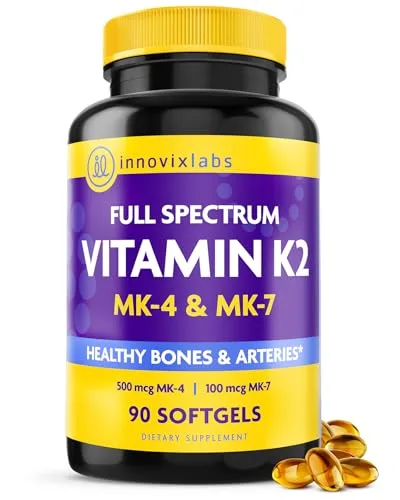
Innovix Labs Full Spectrum Vitamin K2

Innovix Labs Full Spectrum Vitamin K2

InnovixLabs

9.1/10
Best full-spectrum K2 with both MK-4 and MK-7$0.30/serving

Detailed Ingredient Guides

Calcium
Essential Macromineral
Calcium is essential for bone strength and muscle function. Adults need 1,000-1,200mg daily from food and supplements combined. Calcium citrate is better absorbed than carbonate, especially on an empty stomach. Always pair with vitamin D and K2 for optimal bone benefit.
Vitamin D3
Fat-Soluble Vitamin
Vitamin D3 is essential for bone health, immune function, and mood regulation. An estimated 42% of U.S. adults are deficient. Most adults benefit from 1,000-4,000 IU daily, and a 2017 meta-analysis found supplementation reduced the risk of acute respiratory infections by 12%.
Vitamin K2 (MK-7)
Fat-Soluble Vitamin
Vitamin K2 (especially MK-7) directs calcium to bones and away from arteries by activating osteocalcin and matrix Gla protein. MK-7 has a longer half-life than MK-4 and only needs once-daily dosing. Most adults benefit from 100-200 mcg MK-7 daily, especially when supplementing vitamin D and calcium.
Red Clover
Phytoestrogen / Herbal Extract
Red clover provides isoflavone phytoestrogens that weakly bind estrogen receptors. Clinical evidence for hot flash reduction is mixed but favorable at 40-80mg isoflavones daily. It preferentially binds ERβ, which may offer a better safety profile than direct estrogen. Effects develop over 4-12 weeks.
Cod Liver Oil
Fish Oil
Cod liver oil provides a unique combination of omega-3s (EPA/DHA), vitamin A, and vitamin D3 in a single supplement. Strong evidence supports benefits for bone health, moderate evidence for cardiovascular protection and immune function.

Related Conditions

Related Research

Learn More

Frequently Asked Questions

What supplements are best for bone health?

The three most important supplements for bone health are calcium (1000-1200mg/day), vitamin D3 (1000-2000 IU/day), and vitamin K2 (MK-7, 100-200mcg/day). These work synergistically: vitamin D enhances calcium absorption, and vitamin K2 activates osteocalcin, the protein that directs calcium into bones. Meta-analyses show this combination reduces fracture risk by 15-30% [1], and a 3-year RCT confirmed MK-7 significantly reduces bone mineral density loss [2].

Evidence:Study (2014)[#1]. See full reference list below.

How much calcium do I need for strong bones?

Adults need 1000-1200mg of calcium daily from all sources (diet + supplements). Most people get 400-600mg from food, so a supplement of 500-600mg fills the gap. Split doses are better absorbed than single large doses. Calcium citrate is preferred over carbonate for people with low stomach acid or those taking acid-reducing medications. Always take calcium with vitamin D for optimal absorption.

Does vitamin D prevent osteoporosis?

Vitamin D alone has modest effects on bone density, but combined with calcium it significantly reduces fracture risk. A Cochrane review of 53 trials found the combination reduced hip fractures by 16%. Vitamin D3 (cholecalciferol) is preferred over D2 for raising serum 25(OH)D levels. Most experts recommend maintaining blood levels of 30-50 ng/mL for optimal bone health.

What does vitamin K2 do for bones?

Vitamin K2 (particularly the MK-7 form) activates osteocalcin, a protein that binds calcium into the bone matrix. A 3-year randomized trial found that 180mcg/day of MK-7 significantly reduced age-related bone mineral density loss in postmenopausal women. K2 also activates matrix Gla protein, which prevents calcium from depositing in arteries. This makes K2 an important companion to calcium supplementation.

Built from 2,400+ clinical studies. Join the weekly research brief.

No spam. Unsubscribe anytime.

Continue Reading

References

  1. Avenell A, Mak JCS, O'Connell D (2014). Vitamin D and vitamin D analogues for preventing fractures in post-menopausal women and older men. Cochrane Database of Systematic Reviews. DOI PubMed
  2. Knapen MHJ, Drummen NE, Smit E, et al. (2013). Three-year low-dose menaquinone-7 supplementation helps decrease bone loss in healthy postmenopausal women. Osteoporosis International. DOI PubMed