
What the Research Says
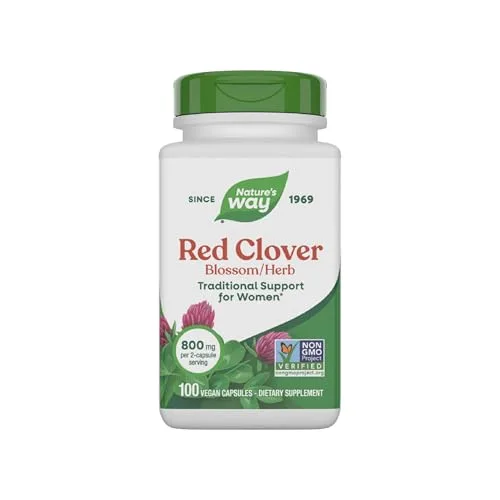
Red Clover is a natural source of isoflavones that has been extensively studied for its effects on menopausal symptoms. Research indicates that red clover isoflavones may modestly reduce hot flash frequency, though results vary across studies. A systematic review and meta-analysis by Kanadys et al. (2021) found a significant reduction in daily hot flushes (-1.73 compared to placebo, p=0.0292) in perimenopausal and postmenopausal women. Similarly, Ghazanfarpour et al. (2016) reported a modest reduction in hot flash frequency (MD -1.99, p=0.067) across 8 studies involving 794 women.
In addition to its effects on menopausal symptoms, red clover isoflavones have been associated with beneficial lipid profile changes. A meta-analysis by Luís et al. (2018) of 12 RCTs involving 1284 women found significant improvements in lipid profiles, including reductions in total cholesterol, LDL-C, and triglycerides, as well as an increase in HDL-C. Furthermore, Kanadys et al. (2020) conducted a systematic review and meta-analysis of 10 studies (n=910) and found that red clover isoflavones significantly reduced total cholesterol in perimenopausal and postmenopausal women.
The preferential binding of red clover isoflavones to estrogen receptor beta (ERβ) may contribute to its beneficial effects on bone and vascular tissue while minimizing risks associated with estrogen receptor alpha (ERα) activation. This characteristic distinguishes red clover from other phytoestrogens and suggests potential benefits for cardiovascular and skeletal health in menopausal women.