SupplementScience
DIM (Diindolylmethane) supplement
Phytochemical / Estrogen Metabolism

DIM (Diindolylmethane): Benefits, Dosage, Forms & Research

Phytochemical / Estrogen Metabolism

This content is for informational purposes only and does not constitute medical advice. Consult your healthcare provider before starting any supplement. Full disclaimer

TL;DR — Quick Answer

DIM shifts estrogen metabolism toward the favorable 2-hydroxyestrone pathway and away from 16α-hydroxyestrone. At 100-200mg daily (as enhanced-absorption forms like BioResponse DIM), it measurably alters estrogen metabolite ratios. Evidence is moderate for estrogen metabolism modulation, with emerging research for hormone-dependent conditions.

Key Facts

What it is
A bioactive metabolite of indole-3-carbinol from cruciferous vegetables that modulates estrogen metabolism pathways
Primary benefits
  • Shifts estrogen metabolism toward 2-hydroxyestrone
  • May support healthy estrogen balance
  • Potential anti-proliferative properties
  • May reduce estrogen-dominant symptoms
Typical dosage
100-200mg enhanced-absorption DIM daily
Evidence level
Moderate
Safety profile
Generally Safe

What the Research Says

DIM research has focused on its ability to modulate estrogen metabolism, particularly the 2:16α-OHE1 ratio. Dalessandri et al. (2004) conducted a dose-finding study in postmenopausal women with early-stage breast cancer history, finding that 108mg of enhanced-absorption DIM (BioResponse) daily significantly increased the urinary 2:16α-OHE1 ratio. Thomson et al. (2017) confirmed these findings in a larger trial. The preferential shift toward 2-hydroxylation is considered potentially protective because 2-OHE1 has weak estrogenic activity and may have anti-proliferative properties, while 16α-OHE1 is a potent estrogen metabolite. In vitro and animal studies support anti-cancer mechanisms, but large-scale clinical cancer prevention trials are still needed.

Benefits of DIM (Diindolylmethane)

  • Estrogen metabolism modulation — Dalessandri et al. (2004) demonstrated that DIM supplementation significantly increased the urinary 2:16α-OHE1 ratio in postmenopausal women with a history of breast cancer, indicating a shift toward less proliferative estrogen metabolites
  • Hormonal balance — by promoting the 2-hydroxylation pathway, DIM may help reduce symptoms associated with relative estrogen excess, including PMS, fibrocystic breast changes, and hormonal acne
  • Anti-proliferative potential — in vitro studies consistently show DIM inhibits cell proliferation in estrogen-sensitive cell lines, though clinical translation is still being studied
  • Cruciferous vegetable benefits — DIM provides the estrogen-modulating benefits associated with high cruciferous vegetable intake in a concentrated supplement form
Did you know?

DIM research has focused on its ability to modulate estrogen metabolism, particularly the 2:16α-OHE1 ratio.

Forms of DIM (Diindolylmethane)

FormBioavailabilityBest For
Enhanced-Absorption DIM (BioResponse or similar)HighClinical use — DIM has poor native bioavailability; enhanced-absorption formulations using starch complexation or microencapsulation are essential for therapeutic effect
Standard DIM CapsulesLowBudget option — significantly lower absorption than enhanced forms; higher doses may be needed

Dosage Recommendations

General recommendation: 100-200mg enhanced-absorption DIM daily (e.g., BioResponse DIM or equivalent)

Timing: With a meal containing some fat for optimal absorption • Take with food for best absorption.

Dosage by Condition

ConditionRecommended DoseEvidence
Estrogen metabolism support100-200mg enhanced-absorption DIM dailyModerate
Hormonal acne / PMS100-150mg enhanced-absorption DIM dailyEmerging
Post-menopausal estrogen balance108mg enhanced-absorption DIM dailyModerate

Upper limit: 200mg enhanced-absorption DIM daily; higher doses may cause GI disturbance and are not well-studied

Our Top DIM (Diindolylmethane) Pick

Our recommendations are based on published research, not commission rates. Some links below are affiliate links — we may earn a commission at no extra cost to you. How we evaluate products

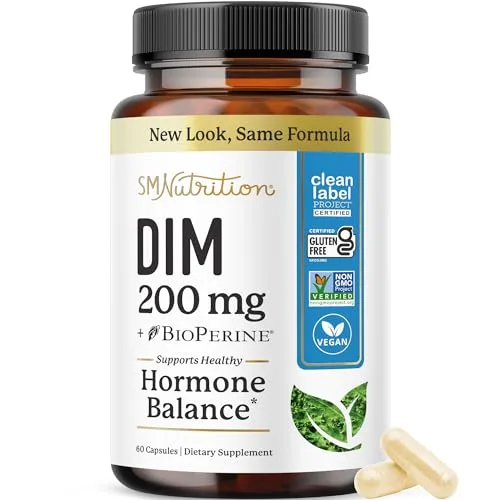
Smoky Mountain Naturals DIM 200mg

Smoky Mountain Naturals DIM 200mg

Smoky Mountain Naturals

9/10
Best overall DIM with BioPerine absorption boost$0.17/serving

Side Effects and Safety

Safety profile: Generally Safe

Potential Side Effects

  • Darkened urine — a harmless discoloration due to DIM metabolites; often startling but not dangerous
  • GI symptoms — nausea, gas, or changes in bowel movements
  • Headache (uncommon)
  • Menstrual changes — cycle length or flow may shift as estrogen metabolism adjusts; usually normalizes

Drug & Supplement Interactions

  • Estrogen-sensitive medications (tamoxifen, aromatase inhibitors) — DIM modulates estrogen metabolism; consult oncologist before combining
  • Hormonal contraceptives — potential interaction with estrogen metabolism; efficacy impact unknown
  • CYP1A2 substrates — DIM may induce CYP1A2 enzyme activity; may affect caffeine, theophylline metabolism
  • Thyroid medications — some reports of DIM affecting thyroid hormone levels; monitor thyroid function
Check DIM (Diindolylmethane) interactions with other supplements →
BenefitsDosage GuideSide EffectsTypes & FormsResearchFAQ

Related Conditions

Related Supplements

Frequently Asked Questions

What is the difference between DIM and I3C supplements?

DIM is actually a metabolite of I3C — when you consume I3C (from supplements or cruciferous vegetables), your stomach acid converts it into several compounds, with DIM being the most important for estrogen metabolism. Taking DIM directly bypasses this conversion step, providing a more predictable and consistent dose. I3C conversion is variable and also produces other metabolites. Most experts now recommend DIM over I3C for more reliable estrogen metabolism modulation.

Why does DIM change urine color?

DIM and its metabolites are chromophores (colored compounds). When excreted in urine, they produce a darker amber-to-brownish color that can be alarming but is completely harmless. This discoloration confirms that DIM is being absorbed and metabolized. The color change is more noticeable with enhanced-absorption forms due to higher bioavailability. It does not indicate kidney problems or dehydration.

Can men take DIM?

Yes. While DIM is often marketed toward women, men also metabolize estrogen, and the 2:16α-OHE1 ratio is relevant to men's health. DIM may help men maintain healthy estrogen metabolism, particularly those concerned about estrogen dominance or using testosterone replacement therapy. Some practitioners recommend DIM for men on TRT to help manage estrogen conversion. The typical dose for men is the same — 100-200mg enhanced-absorption DIM daily.

References

  1. (). Pilot study: effect of 3,3'-diindolylmethane supplements on urinary hormone metabolites in postmenopausal women with a history of early-stage breast cancer. Nutrition and Cancer. DOI
  2. (). A randomized, placebo-controlled trial of diindolylmethane for breast cancer biomarker modulation in patients taking tamoxifen. Breast Cancer Research and Treatment. DOI