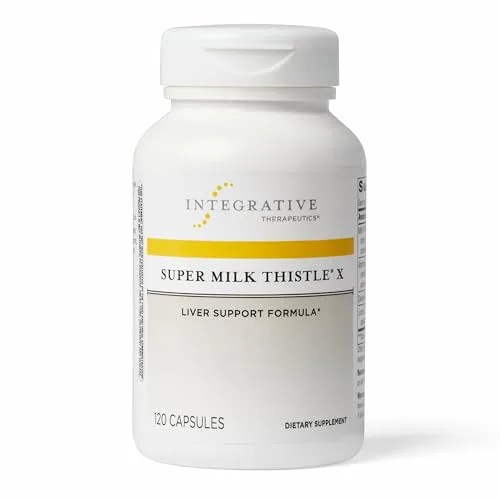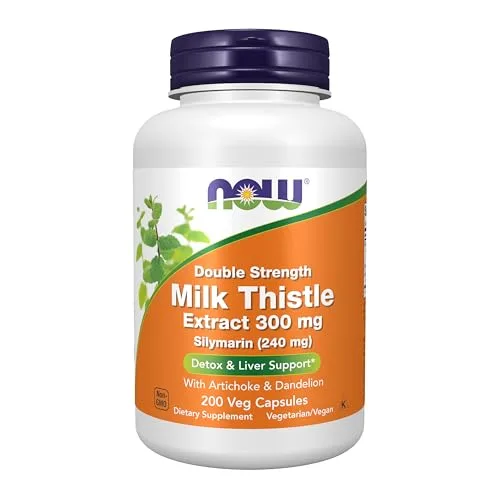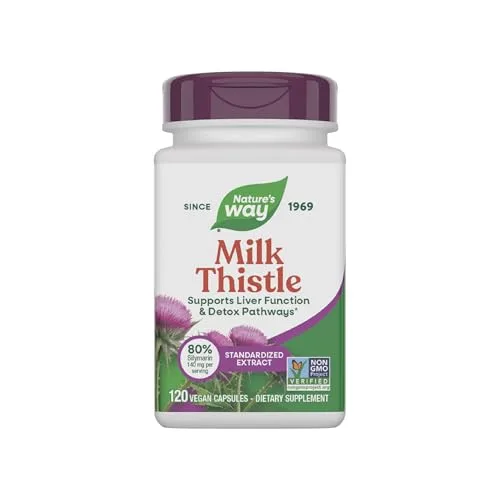
SupplementScience
Milk Thistle (Silymarin) supplement
Herbal Extract

Milk Thistle (Silymarin): Benefits, Dosage, Forms & Research

Herbal Extract

This content is for informational purposes only and does not constitute medical advice. Consult your healthcare provider before starting any supplement. Full disclaimer

TL;DR — Quick Answer

Milk thistle (silymarin) is the most evidence-backed herbal liver protectant. Clinical trials show it reduces liver enzymes (ALT/AST), protects against toxin-induced liver damage, and may slow fibrosis progression. Standard dosing is 420-600mg silymarin daily in divided doses.

Key Facts

What it is
A flavonolignan complex extracted from the seeds of Silybum marianum with potent hepatoprotective properties
Primary benefits
  • Protects hepatocytes from oxidative damage
  • Reduces elevated liver enzymes (ALT/AST)
  • Promotes liver cell regeneration
  • May slow progression of liver fibrosis
Typical dosage
420-600mg silymarin daily (divided into 2-3 doses)
Evidence level
Strong
Safety profile
Generally Safe

What the Research Says

Milk thistle is the most extensively researched herbal hepatoprotectant. The landmark Ferenci et al. (1989) RCT demonstrated that 420mg/day silymarin significantly improved survival in patients with alcoholic cirrhosis over a 2-year period. Saller et al. (2001) conducted a systematic review confirming silymarin's hepatoprotective effects across multiple liver conditions. More recently, Zhong et al. (2017) published a meta-analysis specifically evaluating silymarin in NAFLD, finding significant reductions in liver enzymes. The HALT-C trial (2012, n=1049) tested silymarin at higher doses (420mg and 700mg three times daily) in hepatitis C patients, finding dose-dependent reductions in ALT. While silymarin's poor oral bioavailability has been a limitation, phytosome formulations (silymarin-phosphatidylcholine complex) have demonstrated 4-10x improved absorption in pharmacokinetic studies.

Benefits of Milk Thistle (Silymarin)

  • Hepatoprotection via antioxidant activity — silymarin scavenges reactive oxygen species (ROS) and inhibits lipid peroxidation in hepatocytes, reducing oxidative damage. A systematic review by Saller et al. (2001, n=452 across 7 RCTs) found significant reductions in liver-related mortality in cirrhosis patients.
  • Liver enzyme reduction — a meta-analysis by Zhong et al. (2017, n=587) demonstrated silymarin significantly reduced ALT and AST levels in NAFLD patients compared to placebo, with mean reductions of 9.5 U/L and 7.3 U/L respectively.
  • Anti-fibrotic effects — silymarin inhibits hepatic stellate cell activation and reduces collagen deposition. Ferenci et al. (1989, n=170) showed improved survival in alcoholic cirrhosis patients treated with 420mg/day silymarin over 2 years.
  • Protein synthesis stimulation — silybin stimulates ribosomal RNA polymerase I in hepatocytes, accelerating protein synthesis and promoting regeneration of damaged liver tissue (Sonnenbichler & Zetl, 1986).
  • Anti-inflammatory properties — silymarin inhibits NF-κB activation and reduces TNF-α, IL-1β, and IL-6 production in liver tissue, attenuating hepatic inflammation (Polyak et al., 2010).
Did you know?

Milk thistle is the most extensively researched herbal hepatoprotectant.

Forms of Milk Thistle (Silymarin)

FormBioavailabilityBest For
Standardized Silymarin Extract (70-80%)Low-Moderate (20-50% absorption)Standard supplementation — most studied form, affordable and widely available
Silymarin-Phosphatidylcholine Complex (Siliphos/Silipide)High (4-10x greater absorption)Enhanced absorption — phytosome technology dramatically improves oral bioavailability of silybin
Silybin Meglumine (Legalon SIL)High (IV formulation)Clinical/hospital use — intravenous form used for acute mushroom poisoning (Amanita phalloides)

Dosage Recommendations

General recommendation: 420-600mg silymarin daily, divided into 2-3 doses

Timing: Divide into 2-3 doses throughout the day, 30 minutes before meals for best absorption

Dosage by Condition

ConditionRecommended DoseEvidence
General liver support140-280mg silymarin dailyModerate
NAFLD/fatty liver420mg silymarin daily (3x 140mg)Strong
Alcoholic liver disease420-600mg silymarin dailyStrong
Drug-induced liver protection420mg silymarin dailyModerate

Upper limit: 900mg silymarin/day (higher doses used in some clinical trials without adverse effects)

Our Top Milk Thistle (Silymarin) Pick

Our recommendations are based on published research, not commission rates. Some links below are affiliate links — we may earn a commission at no extra cost to you. How we evaluate products

Jarrow Formulas Milk Thistle 150mg

Jarrow Formulas Milk Thistle 150mg

Jarrow Formulas

9/10
Best overall milk thistle for daily liver support$0.12/serving

Side Effects and Safety

Safety profile: Generally Safe

Potential Side Effects

  • Mild GI discomfort (bloating, diarrhea, nausea) in ~2-10% of users
  • Rare allergic reactions, particularly in people allergic to Asteraceae/Compositae family plants (ragweed, daisies)
  • Mild laxative effect at higher doses
  • Rare headache

Drug & Supplement Interactions

  • May inhibit CYP2C9 and CYP3A4 at high doses — potential interaction with warfarin, statins, and certain medications metabolized by these enzymes
  • May lower blood glucose — monitor closely if taking diabetes medications
  • May reduce effectiveness of oral contraceptives through UGT enzyme induction
  • Theoretical interaction with immunosuppressants (cyclosporine, tacrolimus) — consult physician
Check Milk Thistle (Silymarin) interactions with other supplements →
BenefitsDosage GuideSide EffectsTypes & FormsResearchFAQ

Related Conditions

Related Supplements

Frequently Asked Questions

How long does milk thistle take to lower liver enzymes?

Most clinical trials show measurable reductions in ALT and AST within 4-8 weeks of consistent daily supplementation at 420mg silymarin. However, meaningful clinical improvement in liver conditions typically requires 3-6 months of continuous use. If you are monitoring liver enzymes, retest after 8-12 weeks of supplementation.

Is milk thistle safe for daily long-term use?

Yes, milk thistle has an excellent safety profile even with long-term use. Clinical trials lasting up to 41 months have reported no serious adverse effects. The most common side effects are mild GI symptoms (loose stools, bloating) in about 2-10% of users. It is one of the few herbal supplements with a well-established safety record in both healthy individuals and those with liver disease.

Should I take milk thistle as a standardized extract or phytosome form?

The phytosome form (silymarin-phosphatidylcholine complex, sold as Siliphos or Meriva) delivers 4-10x more silybin to the bloodstream compared to standard extracts. If you are taking milk thistle for active liver support, the phytosome form is recommended. For general prevention, a standardized extract (70-80% silymarin) at adequate doses is effective and more affordable.

References

  1. (). Randomized controlled trial of silymarin treatment in patients with cirrhosis of the liver. Journal of Hepatology. DOI
  2. (). The use of silymarin in the treatment of liver diseases. Drugs. DOI
  3. (). The therapeutic effect of silymarin in the treatment of nonalcoholic fatty disease: A meta-analysis (PRISMA) of randomized control trials. Medicine. DOI
  4. (). Identification of hepatoprotective flavonolignans from silymarin. Proceedings of the National Academy of Sciences. DOI