Supplement ScienceSupplementScience
Menopause Support

Best Supplements for Menopause Support

Prevalence: Approximately 1.3 million women enter menopause each year in the US

·

This content is for informational purposes only and does not constitute medical advice. Statements about dietary supplements have not been evaluated by the FDA and are not intended to diagnose, treat, cure, or prevent any disease. Individual results may vary — consult your healthcare provider before starting any supplement. Full disclaimer

Black cohosh (20–40 mg daily) can reduce hot flash frequency by 26% and severity by 36%.

Black cohosh (20–40 mg daily) can reduce hot flash frequency by 26% and severity by 36%. Red clover isoflavones (40–80 mg daily) may reduce hot flash frequency by 2–3 per day. Evening primrose oil (500 mg–2 g daily) provides emerging evidence for hot flash relief and improved sleep quality.

Get the free evidence-based Menopause Support guide — delivered in 60 seconds.

No spam. Unsubscribe anytime.

Overview

Menopause brings hormonal shifts that cause hot flashes, night sweats, mood changes, and sleep disruption. While hormone replacement therapy remains the most effective treatment, several botanical supplements have demonstrated meaningful symptom relief in clinical trials for women who prefer non-hormonal options.
Understanding Menopause Support

Menopause results from the progressive decline and eventual cessation of ovarian estradiol production. The hypothalamus, which relies on estrogen feedback to regulate the thermoregulatory center, becomes destabilized — narrowing the thermoneutral zone and triggering vasomotor symptoms (hot flashes, night sweats) in response to minor core temperature fluctuations. Declining estrogen also reduces serotonin synthesis, disrupts sleep architecture, accelerates bone mineral density loss (up to 3–5% per year in the first 5 years), and alters lipid metabolism toward atherogenic profiles. Hormone replacement therapy (HRT) remains the most effective intervention for vasomotor symptoms, but risk-benefit considerations (breast cancer risk, thromboembolism) leave many women seeking alternatives. Botanical supplements that interact with estrogen receptors — phytoestrogens from soy and red clover, selective estrogen receptor modulators from black cohosh — can partially compensate for declining endogenous estrogen. Their effects are modest compared to HRT but meaningful for women with mild-to-moderate symptoms or those for whom HRT is contraindicated.

What the Research Shows

Black cohosh (Cimicifuga racemosa) has the most extensive trial data for menopausal vasomotor symptoms. Osmers et al. (2005) conducted a 12-week RCT with 304 women and found that 40 mg of isopropanolic black cohosh extract (Remifemin) reduced the Menopause Rating Scale score by 50% versus 19.6% for placebo. A meta-analysis by Shams et al. (2010) pooled 9 RCTs and found black cohosh significantly reduced hot flash frequency and severity compared to placebo. Notably, black cohosh does not appear to act as a phytoestrogen — its mechanism likely involves serotonergic modulation and central thermoregulatory effects, meaning it does not carry the same theoretical breast cancer concerns as estrogenic compounds. Red clover isoflavones (genistein, daidzein, biochanin A) are phytoestrogens that bind estrogen receptor beta with modest affinity. A meta-analysis by Lethaby et al. (2007) in the Cochrane Database found variable results, but a more targeted analysis of trials using 40–80 mg total isoflavones daily showed a reduction of 1–3 hot flashes per day. The Promensil extract standardized to 40 mg isoflavones is the most studied formulation. Efficacy may depend on the gut microbiome — women who produce equol (a daidzein metabolite) tend to respond better, and only 25–30% of Western women are equol producers. Evening primrose oil provides gamma-linolenic acid (GLA), an omega-6 fatty acid with anti-inflammatory properties. Farzaneh et al. (2013) found that 500 mg daily for 6 weeks significantly reduced hot flash severity, duration, and frequency compared to placebo in a 56-woman RCT. The evidence is more limited than for black cohosh, but GLA may also benefit the vaginal dryness and skin changes associated with menopause. Vitamin E at 400 IU daily showed modest hot flash reduction in a trial by Barton et al. (1998) among breast cancer survivors, reducing hot flash frequency by about one episode per day — a clinically small but statistically significant effect.

What to Look For in Supplements

For black cohosh, choose isopropanolic or ethanolic extracts standardized to triterpene glycosides. Remifemin (20 mg isopropanolic extract twice daily) is the most clinically validated brand. Duration should be limited to 6 months initially, with liver function monitoring, due to rare hepatotoxicity reports. For red clover, Promensil (40 mg total isoflavones daily) is the best-studied formulation. For evening primrose oil, look for cold-pressed products providing at least 8–10% GLA content at 500 mg–2 g daily. All menopause supplements should carry third-party testing verification. Women with a history of hormone-receptor-positive breast cancer should avoid red clover and soy isoflavones due to their estrogenic activity, and consult an oncologist before starting any supplement — black cohosh is generally considered safer in this context due to its non-estrogenic mechanism.

What Doesn't Work (And Why)

Soy isoflavone supplements have yielded inconsistent results for hot flashes — a 2012 Cochrane review by Lethaby et al. found no overall significant benefit when pooling all soy supplement trials, though dietary soy intake (as consumed in Asian populations) may have different effects than concentrated supplements. Dong quai, a traditional Chinese herb frequently marketed for menopause, showed no benefit over placebo in the only rigorous RCT by Hirata et al. (1997). Wild yam cream, despite containing diosgenin (a precursor to progesterone in industrial synthesis), cannot be converted to progesterone in the human body — Komesaroff et al. (2001) found no effect on menopausal symptoms or hormonal levels. Maca root has limited and low-quality evidence — positive trials are small, short, and predominantly from a single research group. DHEA supplements are sometimes promoted for menopause, but evidence for vasomotor symptoms is weak, and unsupervised use of a hormone precursor carries risks of androgenic side effects.

Combination Protocol

For vasomotor symptoms, start with black cohosh (20 mg Remifemin twice daily) as the primary intervention — it has the broadest evidence and works through non-estrogenic pathways. If hot flashes remain bothersome after 8 weeks, add red clover isoflavones (40 mg daily) for additional phytoestrogenic support. Evening primrose oil (1 g daily) can be added for skin and vaginal dryness. For sleep disruption, which compounds vasomotor symptoms, consider adding magnesium glycinate (200–400 mg before bed) — see /stacks/sleep-optimization for a full sleep protocol. Calcium (1,000–1,200 mg daily from diet plus supplement) and vitamin D (2,000 IU daily) are essential adjuncts for the accelerated bone loss of perimenopause and early menopause. Track hot flash frequency with a simple daily log to objectively assess response.

Top Evidence-Based Supplements for Menopause Support

#SupplementTypical DoseEvidence
1Black Cohosh20–40 mg daily (standardized to 2.5% triterpene glycosides)Moderate
See top black cohosh picks →
2Red Clover40–80 mg isoflavones dailyModerate
See top red clover picks →
3Evening Primrose Oil500 mg–2 g dailyEmerging
See top evening primrose oil picks →

Top Product Picks

As an Amazon Associate, we earn from qualifying purchases. Some links below are affiliate links — this doesn't affect our editorial independence or product ratings. How we evaluate products

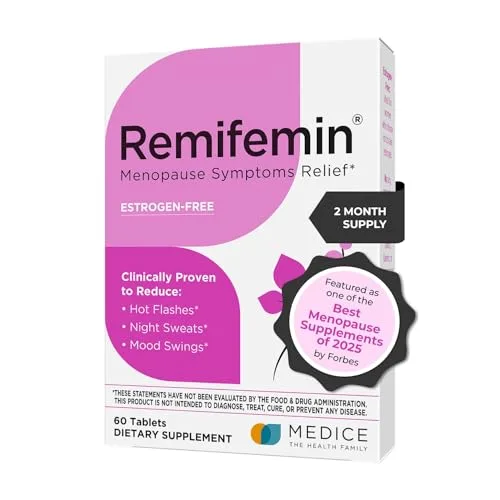
Remifemin Menopause Relief

Remifemin Menopause Relief

Remifemin

9.2/10
Most clinically studied black cohosh for menopause$0.30/serving
NOW Foods Red Clover 375mg

NOW Foods Red Clover 375mg

NOW Foods

8/10
Budget-friendly whole-flower red clover$0.08/serving
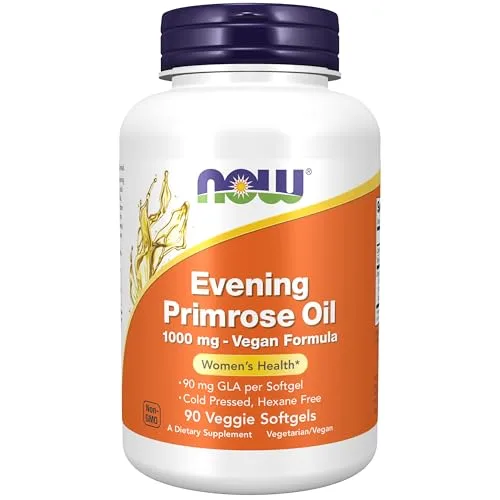
NOW Foods Evening Primrose Oil 1000mg

NOW Foods Evening Primrose Oil 1000mg

NOW Foods

9/10
Best overall value and quality EPO$0.19/serving

Detailed Ingredient Guides

Black Cohosh
Herbal Extract
Black cohosh is the most clinically studied herbal remedy for menopausal hot flashes. The Remifemin extract at 20-40mg daily has been shown to reduce hot flash frequency by 26-56% in clinical trials. It does not appear to act as a phytoestrogen. Effects are typically seen within 4-8 weeks.
Red Clover
Phytoestrogen / Herbal Extract
Red clover provides isoflavone phytoestrogens that weakly bind estrogen receptors. Clinical evidence for hot flash reduction is mixed but favorable at 40-80mg isoflavones daily. It preferentially binds ERβ, which may offer a better safety profile than direct estrogen. Effects develop over 4-12 weeks.
Evening Primrose Oil
Essential Fatty Acid
Evening primrose oil provides gamma-linolenic acid (GLA), an anti-inflammatory omega-6 fatty acid that supports skin barrier function. Research shows mixed but promising results for eczema and dry skin at doses of 2-6 g daily (providing 160-480 mg GLA). Benefits are most notable in individuals with confirmed GLA deficiency or atopic skin conditions.
Maca Root
Adaptogenic Root
Maca root is a Peruvian adaptogen with moderate evidence for improving sexual desire, fertility, mood, and menopausal symptoms. It works differently from other adaptogens — not primarily through cortisol modulation. Standard dose is 1.5-3g gelatinized maca powder daily.
Shatavari
Adaptogenic Herb
Shatavari is an Ayurvedic adaptogen primarily used for women's reproductive health, hormonal balance, and lactation support. It has emerging clinical evidence for these uses and for its anti-ulcer and immunomodulatory properties. Standard dose is 500-1000mg root extract twice daily.

Related Conditions

Related Research

Frequently Asked Questions

Are menopause supplements a safe alternative to HRT?

Black cohosh and red clover are generally well-tolerated and may be appropriate for women with mild to moderate symptoms or those who cannot use HRT due to breast cancer history or cardiovascular risk [1][2]. However, they are typically less effective than HRT for severe vasomotor symptoms. The decision should be individualized with your healthcare provider.

Evidence:Meta-analysis (2012) · 16 RCTs · n=2,027 · moderate confidence[#1]. See full reference list below.

Is black cohosh safe for women with a history of breast cancer?

Current evidence suggests black cohosh does not have estrogenic activity and does not stimulate breast tissue. The North American Menopause Society considers it a reasonable option for breast cancer survivors experiencing hot flashes. However, discuss with your oncologist before starting.

Can red clover isoflavones affect thyroid function?

At standard supplemental doses of 40–80 mg/day, clinical studies have not shown clinically significant effects on thyroid function in euthyroid women. Women with existing thyroid conditions should have levels monitored and take red clover at least 2 hours apart from thyroid medications.

How long should I take menopause supplements?

Most clinical trials evaluated these supplements for 3–12 months. Black cohosh is approved in Germany for up to 6 months of continuous use. Many women take these throughout the menopausal transition (average 4–8 years) with periodic reassessment. Annual review with your healthcare provider is recommended.

Continue Reading

References

  1. Meta-analysisLeach MJ, Moore V (2012). Black cohosh (Cimicifuga spp.) for menopausal symptoms. Cochrane Database of Systematic Reviews. DOI PubMed
  2. Meta-analysisGhazanfarpour M, Sadeghi R, Roudsari RL, et al. (2016). Red clover for treatment of hot flashes and menopausal symptoms: a systematic review and meta-analysis. Journal of Obstetrics and Gynaecology. DOI PubMed