SupplementScience
Evening Primrose Oil supplement
Fatty Acid / Plant Oil

Evening Primrose Oil: Benefits, Dosage, Forms & Research

Fatty Acid / Plant Oil

This content is for informational purposes only and does not constitute medical advice. Consult your healthcare provider before starting any supplement. Full disclaimer

TL;DR — Quick Answer

Evening primrose oil provides gamma-linolenic acid (GLA), an omega-6 fatty acid with anti-inflammatory properties. It has moderate evidence for cyclical breast pain (mastalgia) at 3-4g daily and is commonly used for PMS symptoms, though PMS evidence is mixed. Benefits develop gradually over 2-4 months.

Key Facts

What it is
Seed oil from Oenothera biennis containing 8-10% gamma-linolenic acid (GLA), an omega-6 anti-inflammatory fatty acid
Primary benefits
  • Reduces cyclical mastalgia (breast pain)
  • Anti-inflammatory prostaglandin modulation
  • May improve PMS symptoms
  • Skin hydration and barrier support
Typical dosage
1-4g evening primrose oil daily (providing 80-360mg GLA)
Evidence level
Moderate
Safety profile
Generally Safe

What the Research Says

Evening primrose oil has been studied extensively for mastalgia and PMS since the 1980s. The Cardiff Mastalgia Clinic pioneered its clinical use, finding that 3g daily provided meaningful relief in cyclical breast pain. Pruthi et al. (2010) conducted a more recent placebo-controlled trial and confirmed EPO's efficacy for mastalgia. For PMS, the evidence is more equivocal — Budeiri et al. (1996) performed a meta-analysis of 7 controlled trials and found that while individual studies showed benefit, the overall evidence was limited by small sample sizes and methodological issues. The GLA mechanism is well-established biochemically: GLA → DGLA → PGE1, shifting the prostaglandin balance away from pro-inflammatory pathways.

Benefits of Evening Primrose Oil

  • Cyclical mastalgia — Pruthi et al. (2010) and earlier studies from Cardiff Mastalgia Clinic demonstrated that 3g of EPO daily reduced cyclical breast pain severity in approximately 45% of women; EPO was the standard first-line treatment at UK breast clinics for decades
  • Anti-inflammatory action — GLA is converted to DGLA and then to prostaglandin E1 (PGE1), which has anti-inflammatory and vasodilatory effects; this mechanism underlies most of EPO's clinical benefits
  • PMS support — several small studies suggest EPO may reduce bloating, irritability, and breast tenderness associated with PMS, though systematic reviews show mixed results overall
  • Skin health — GLA deficiency is associated with impaired skin barrier function; supplementation with EPO has shown benefits in atopic dermatitis and general skin hydration in some trials
Did you know?

Evening primrose oil has been studied extensively for mastalgia and PMS since the 1980s.

Forms of Evening Primrose Oil

FormBioavailabilityBest For
Softgel Capsules (cold-pressed oil)HighStandard supplementation — convenient and most commonly used form; look for cold-pressed to preserve GLA content
Liquid OilHighFlexible dosing or topical use — can be taken orally or applied to skin; requires refrigeration after opening

Dosage Recommendations

General recommendation: 1-4g evening primrose oil daily, providing approximately 80-360mg of GLA

Timing: Split into 2-3 doses with meals throughout the day for optimal GLA absorption • Take with food for best absorption.

Dosage by Condition

ConditionRecommended DoseEvidence
Cyclical mastalgia3-4g EPO daily for 3-6 monthsModerate
PMS symptoms1.5-3g EPO dailyEmerging
Skin health / atopic dermatitis2-4g EPO dailyEmerging

Upper limit: 6g daily has been used in some studies; 3-4g is the standard therapeutic range

Our Top Evening Primrose Oil Pick

Our recommendations are based on published research, not commission rates. Some links below are affiliate links — we may earn a commission at no extra cost to you. How we evaluate products

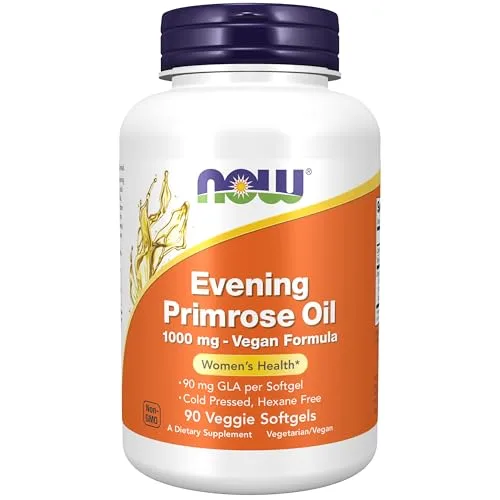
NOW Foods Evening Primrose Oil 1000mg

NOW Foods Evening Primrose Oil 1000mg

NOW Foods

9/10
Best overall value and quality EPO$0.13/serving

Side Effects and Safety

Safety profile: Generally Safe

Potential Side Effects

  • Mild GI symptoms — nausea, soft stools, or stomach upset (most common)
  • Headache (occasional, usually transient)
  • Rare: may lower seizure threshold in susceptible individuals

Drug & Supplement Interactions

  • Blood thinners (warfarin, aspirin) — GLA may have mild antiplatelet effects; monitor for increased bleeding
  • Anticonvulsants — EPO may theoretically lower seizure threshold; use with caution in epilepsy
  • NSAIDs — additive anti-inflammatory effects; generally not harmful but monitor GI symptoms
Check Evening Primrose Oil interactions with other supplements →
BenefitsDosage GuideSide EffectsTypes & FormsResearchFAQ

Related Conditions

Related Supplements

Frequently Asked Questions

How long does evening primrose oil take to work for breast pain?

Most clinical studies report improvements in cyclical mastalgia after 2-4 months of consistent daily use. The effect builds gradually as tissue fatty acid profiles shift toward higher GLA and DGLA levels. The Cardiff Mastalgia Clinic recommended a minimum 4-month trial before evaluating efficacy. It is not a fast-acting pain reliever — think of it as a nutritional intervention that gradually modulates inflammation.

Is evening primrose oil effective for PMS?

The evidence for EPO and PMS is mixed. Some smaller studies show improvements in breast tenderness, bloating, and mood symptoms, but a 1996 meta-analysis found the overall evidence inconclusive. EPO appears most helpful for the physical symptoms of PMS (particularly breast tenderness) rather than mood changes. If PMS is your primary concern, vitex (chasteberry) has stronger clinical evidence, though many women use both together.

Can I take evening primrose oil during pregnancy?

Evening primrose oil should not be taken during pregnancy without medical supervision. While it has been traditionally used near term to prepare for labor, there is insufficient safety data from controlled studies. Some concern exists about its effects on prostaglandin balance and potential to influence uterine contractions. Discuss with your OB-GYN before use during pregnancy or breastfeeding.

References

  1. (). Vitamin E and evening primrose oil for management of cyclical mastalgia: a randomized pilot study. Alternative Medicine Review.
  2. (). Is evening primrose oil of value in the treatment of premenstrual syndrome?. Controlled Clinical Trials. DOI