Supplement ScienceSupplementScience
Maca Root supplement
Adaptogenic Root

Maca Root — Research Profile

Evidence:Moderate
·

This content is for informational purposes only and does not constitute medical advice. Statements about dietary supplements have not been evaluated by the FDA and are not intended to diagnose, treat, cure, or prevent any disease. Individual results may vary — consult your healthcare provider before starting any supplement. Full disclaimer

Maca root is a Peruvian adaptogen with moderate evidence for improving sexual desire, fertility, mood, and menopausal...

Maca root is a Peruvian adaptogen with moderate evidence for improving sexual desire, fertility, mood, and menopausal symptoms. It works differently from other adaptogens — not primarily through cortisol modulation. Standard dose is 1.5-3g gelatinized maca powder daily.

Bottom line: Maca is best for libido, hormonal balance, and energy. Take 1.5-3g gelatinized powder daily — black maca for men, red for women.

Evidence:RCT (2002) · n=57 · moderate confidence[#1]. See full reference list below.

Key Facts

What it is
A cruciferous root vegetable (Lepidium meyenii) from the Peruvian Andes with adaptogenic properties
Primary benefits
  • Improves sexual desire and libido
  • Supports fertility in men and women
  • Reduces menopausal symptoms
  • Enhances energy and mood
  • May improve exercise performance
Typical dosage
1.5-3g gelatinized maca powder daily
Evidence level
Moderate
Safety profile
Generally Safe

Get the free evidence-based Maca Root guide — delivered in 60 seconds.

No spam. Unsubscribe anytime.

Time to Effect

Hours
Days
Weeks
Months
4-8 weekstypical onset

Hormonal balancing and libido effects typically require 4-8 weeks. Energy improvements may be noticed earlier, within 2-3 weeks.

What the Research Says

Maca has a moderate evidence base, primarily from research by Gonzales and colleagues at Universidad Peruana Cayetano Heredia. The most robust finding is for libido enhancement — Shin et al. (2010) conducted a systematic review of 4 RCTs and found sufficient evidence for sexual desire improvement. For fertility, the evidence is promising but limited to small studies. A 2016 BMC Complementary and Alternative Medicine review concluded maca has potential for menopausal symptoms but called for larger, more rigorous trials. Notably, maca does not appear to alter testosterone, estrogen, or other hormone levels directly, suggesting its effects may be mediated through other mechanisms (possibly macamides acting on the endocannabinoid system).
Benefits of Maca Root

  • Libido enhancement — Gonzales et al. (2002, n=57) conducted a 12-week RCT showing maca (1.5-3g/day) significantly increased sexual desire by week 8 independent of testosterone or estradiol levels
  • Male fertility — Gonzales et al. (2001) found that 1.75g/day maca for 4 months increased sperm count by 20% and motility by 14% in healthy men
  • Menopausal symptom relief — Brooks et al. (2008, n=14) showed 3.5g/day maca reduced anxiety, depression, and sexual dysfunction scores in postmenopausal women
  • Mood and energy — Stojanovska et al. (2015, n=29) found maca reduced depression and blood pressure in postmenopausal women over 6 weeks
  • Exercise performance — Stone et al. (2009) showed maca extract improved cycling time trial performance in trained male cyclists

Our Top Maca Root Picks

As an Amazon Associate, we earn from qualifying purchases. Some links below are affiliate links — this doesn't affect our editorial independence or product ratings. How we evaluate products

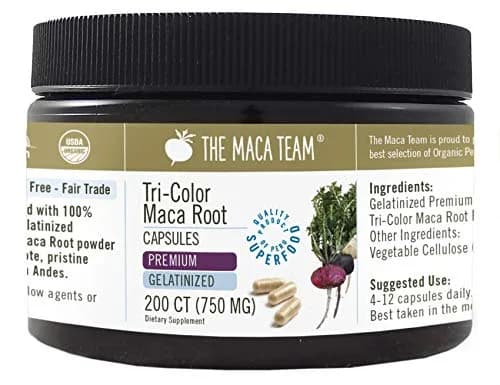
The Maca Team Gelatinized Black Maca Capsules
The Maca Team
#1 Top Pick
Best OverallForm: CapsulePrice: $0.60/serving
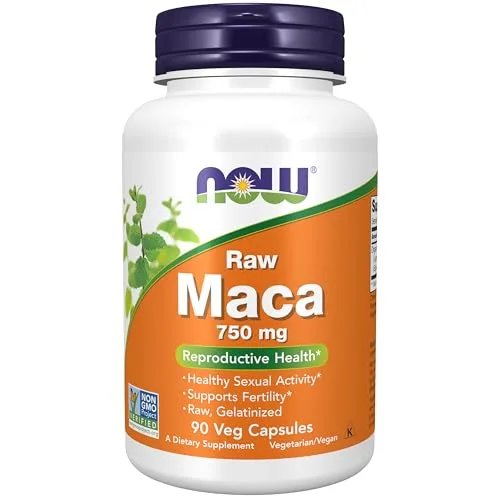
NOW Foods Maca 750mg
NOW Foods
Best Value CapsuleForm: CapsulePrice: $0.16/serving
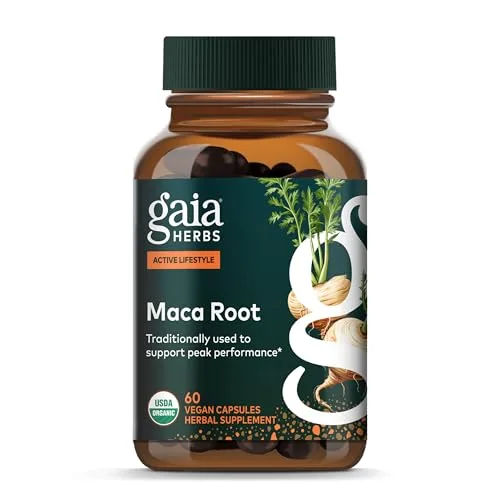
Gaia Herbs Maca Root
Gaia Herbs
Best Liquid/HerbalForm: Liquid Phyto-CapPrice: $0.36/serving
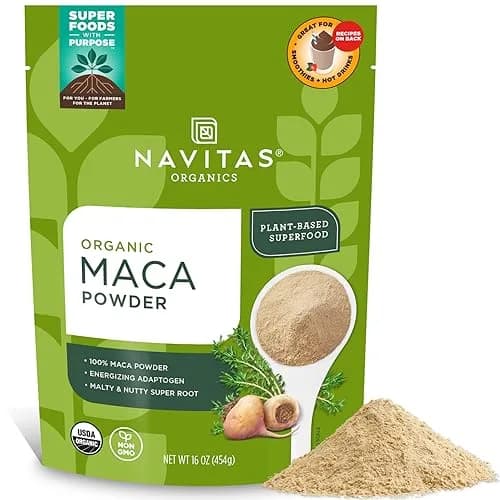
Navitas Organics Maca Powder
Navitas Organics
Best PowderForm: PowderPrice: $0.38/serving
Did you know?

Maca has a moderate evidence base, primarily from research by Gonzales and colleagues at Universidad Peruana Cayetano Heredia.

Forms of Maca Root

Maca Root supplement forms compared by bioavailability and best use
FormBioavailabilityBest For
Gelatinized Maca PowderHighGeneral use — starch removed for better absorption and digestion
Raw Maca PowderModerateSmoothies and food — less concentrated, may cause digestive issues
Maca Extract (concentrated)HighCapsule form — concentrated 4:1 or 10:1 extracts

Dosage Recommendations

General recommendation: 1.5-3g gelatinized maca powder daily (or 450-900mg concentrated extract)

Timing: Morning with breakfast; can split into two doses • Take with food for best absorption.

Dosage by Condition

Libido
1.5-3g gelatinized maca dailyModerate
Male fertility
1.75-3g daily for 3-4 monthsModerate
Menopausal symptoms
2-3.5g daily (red maca preferred)Emerging
Energy/mood
1.5-3g dailyEmerging

Upper limit: 5g/day of powder (traditional Peruvian consumption can exceed this)

Side Effects and Safety

Safety profile: Generally Safe

Potential Side Effects

  • Mild digestive upset with raw maca powder (gelatinized form is better tolerated)
  • Insomnia if taken in the evening
  • Jitteriness at high doses
  • Hormonal effects are subtle but possible — monitor with hormone-sensitive conditions

Drug & Supplement Interactions

  • Theoretical interaction with hormone-sensitive conditions (breast, uterine, ovarian cancer; endometriosis)
  • May interact with thyroid medications (maca contains goitrogens as a cruciferous plant)
  • Generally safe to combine with other adaptogens
  • No well-documented drug interactions at standard doses

Do not exceed: 5g/day of powder (traditional Peruvian consumption can exceed this)

Check Maca Root interactions with other supplements →
BenefitsDosage GuideSide EffectsTypes & FormsResearchFAQ

Related Conditions

Commonly Taken Together

Form Comparisons

Related Guides

Related Research

Related Supplements

Looking for the best maca root supplement?

We analyzed and ranked the top products based on form, dosage, third-party testing, and value.

See Our Top Picks

Frequently Asked Questions

What color maca is best?

Different colors have different strengths. Black maca is best for male fertility, energy, and cognitive function. Red maca is best for prostate health, bone density, and menopausal symptoms. Yellow maca is the most common and most studied for general libido and mood. For comprehensive benefits, some products offer a tri-color blend.

Does maca affect hormones?

Despite being commonly called a "hormonal balancer," clinical studies consistently show maca does NOT significantly alter testosterone, estrogen, FSH, or LH levels [1][2]. Its effects on libido, fertility, and menopausal symptoms appear to work through other mechanisms, possibly via macamides acting on the endocannabinoid system or through effects on neurotransmitters.

Evidence:RCT (2002) · n=57 · moderate confidence[#1]. See full reference list below.

Why is gelatinized maca better than raw?

Gelatinization is a heat-extrusion process that removes the starch from maca, concentrating the bioactive compounds and making it much easier to digest. Raw maca can cause bloating and gas in many people due to its high starch content. Gelatinized maca is also more bioavailable, meaning you absorb more of the active compounds per gram.

What is the best form of Maca Root to take?

Gelatinized maca, cooked to reduce starch for easier digestion, is the form used in most trials that reported benefits for sexual desire and menopausal symptoms. Raw powder has also been studied with similar outcomes, but no trial has directly compared gelatinized against raw, so a single best form cannot be claimed on evidence. Ecotype (yellow, red, or black) may matter biochemically but lacks comparative clinical testing.

Evidence:RCT (2002) · n=57 · moderate confidence[#1]. See full reference list below.

What are the proven benefits of Maca Root?

The best-supported effect is a modest improvement in sexual desire in healthy men, seen with 1,500-3,000 mg/day of gelatinized maca and occurring without any change in testosterone or estradiol. A systematic review rated the overall evidence for sexual function as limited, with positive results in menopausal women and men but null results in cyclists. Separate reviews of menopause trials found favorable effects on Kupperman and Greene symptom scores while also judging the evidence limited and the safety unproven.

Evidence:RCT (2002) · n=57 · moderate confidence[#1]. See full reference list below.

How much Maca Root should I take per day?

No standard dose is established. Trials showing a libido benefit in men used 1,500 mg or 3,000 mg/day of gelatinized maca, and menopause studies have used around 3-3.5 g/day, so most research clusters at roughly 1.5-3.5 g daily. Higher intakes have not shown added benefit and begin to raise tolerability concerns.

Evidence:RCT (2002) · n=57 · moderate confidence[#1]. See full reference list below.

When is the best time to take Maca Root?

Timing of maca has not been directly studied; trials simply gave a fixed daily dose without comparing morning versus evening. Taking it with food is reasonable, since the main reported complaint is mild gastrointestinal upset. No evidence supports one time of day over another.

Evidence:RCT (2002) · n=57 · moderate confidence[#1]. See full reference list below.

What are the side effects of Maca Root?

At about 3 g/day for 12 weeks, reported effects were transient and included gastrointestinal upset, headache, and irritability, and roughly 5 g/day of gelatinized maca produced mild GI disturbance. Isolated case reports describe vaginal bleeding, a manic episode, and restless legs syndrome, but these are rare and not clearly attributable to maca. Most trials found no effect on thyroid hormone panels.

Evidence:Review (2024) · moderate confidence[#3]. See full reference list below.

Does Maca Root interact with any medications?

Documented interaction data are very limited. The one notable report is a possible interaction with mianserin, a tetracyclic antidepressant, attributed to maca inhibiting the CYP3A4 enzyme, though concurrent medications clouded the picture. As a precaution, people taking drugs metabolized by CYP3A4 should raise maca with their prescriber before starting.

Evidence:Review (2024) · moderate confidence[#3]. See full reference list below.

Who should consider taking Maca Root?

Maca is most reasonable for men seeking modest support for sexual desire and for perimenopausal or postmenopausal women targeting vasomotor and related symptoms, since those are the populations where small trials showed benefit. It is not a hormone replacement and did not change testosterone or estradiol in men. Pregnant and breastfeeding women should avoid it because human safety data are lacking.

Evidence:RCT (2002) · n=57 · moderate confidence[#1]. See full reference list below.

How long does Maca Root take to show results?

In the one trial that tracked timing, 1,500-3,000 mg/day of gelatinized maca improved self-reported sexual desire in healthy men starting at 8 weeks, with no separation from placebo at 4 weeks. Most maca trials run 12 weeks or longer, so allow at least 6-8 weeks of daily use before judging an effect. Onset for menopausal or other uses has not been separately characterized.

Evidence:RCT (2002) · n=57 · moderate confidence[#1]. See full reference list below.

Is Maca Root safe for long-term daily use?

Controlled trials have dosed maca daily for about 12 weeks, with some running to four months and the longest reaching roughly nine months, and the pharmacological review describes a good safety profile with no fatal adverse events reported. The systematic review of maca for menopausal symptoms, however, explicitly states that its safety "has not been proved yet," because the trials were small and short-term. Memorial Sloan Kettering's herb monograph similarly lists only subjective complaints such as altered menstrual cycles, moodiness, cramps, gastritis, and insomnia and documents no established long-term data, so there is no controlled evidence on continuous daily use beyond about a year.

Evidence:Review (2024) · moderate confidence[#3]. See full reference list below.

Can you take too much Maca Root?

No human upper limit has been set. A tolerability study using 0.6 g/kg/day of maca powder for 90 days recorded a moderate rise in the liver enzyme AST and in diastolic blood pressure, and about 5 g/day of gelatinized maca has caused mild gastrointestinal upset. At the other extreme, 115 g/day of fresh maca for 60 days produced no liver or kidney toxicity, so typical supplement doses of 1.5-3 g stay well below any level of concern.

Evidence:Review (2024) · moderate confidence[#3]. See full reference list below.

Can I combine Maca Root with other supplements?

There is very little research on combining maca with other supplements, and no trial has tested a maca-plus-supplement stack for added benefit. Maca itself did not alter testosterone or estradiol in men, so it has no obvious hormonal conflict with other products. Because interaction data are thin, add it on its own first so any GI upset or blood-pressure change can be attributed correctly.

Evidence:RCT (2002) · n=57 · moderate confidence[#1]. See full reference list below.

What should I look for when buying a Maca Root supplement?

Maca has no official standardization marker, so products are not standardized to a defined active compound the way some botanicals are. Most positive sexual-function and menopause trials used gelatinized (pre-cooked, starch-reduced) maca rather than raw powder, and the yellow, red, and black ecotypes differ chemically without head-to-head clinical comparisons. Favor products that specify the form and ecotype and that carry third-party purity testing.

Evidence:RCT (2002) · n=57 · moderate confidence[#1]. See full reference list below.

Continue Reading

References

  1. RCTGonzales GF, Córdova A, Vega K, et al. (2002). Effect of Lepidium meyenii (MACA) on sexual desire and its absent relationship with serum testosterone levels in adult healthy men. Andrologia. DOI PubMed
  2. ReviewShin BC, Lee MS, Yang EJ, Lim HS, Ernst E (2010). Maca (L. meyenii) for improving sexual function: a systematic review. BMC Complementary and Alternative Medicine. DOI PubMed
  3. ReviewVarious (see PMC10910417) (2024). Exploring the chemical and pharmacological variability of Lepidium meyenii: a comprehensive review of the effects of maca. Frontiers in Pharmacology.
  4. ReviewLee MS, Shin BC, Yang EJ, Lim HJ, Ernst E (2011). Maca (Lepidium meyenii) for treatment of menopausal symptoms: A systematic review. Maturitas. PubMed
  5. ReviewMemorial Sloan Kettering Cancer Center (2024). Maca (Lepidium meyenii) - About Herbs, Integrative Medicine. Memorial Sloan Kettering Cancer Center, About Herbs database.