SupplementScience

Royal Jelly — Research Profile

Bee Product

Reviewed by·PharmD, BCPS

This content is for informational purposes only and does not constitute medical advice. Consult your healthcare provider before starting any supplement. Full disclaimer

Royal jelly is a bee-produced substance uniquely rich in 10-HDA, a fatty acid with hormonal, anti-inflammatory, and...

Royal jelly is a bee-produced substance uniquely rich in 10-HDA, a fatty acid with hormonal, anti-inflammatory, and immune-modulating properties. Emerging clinical evidence supports benefits for menopause symptoms, fertility, and skin health.

Key Facts

What it is
Nutrient-rich secretion from nurse bee glands, the exclusive food of queen bees, containing the unique fatty acid 10-HDA
Primary benefits
  • Contains 10-HDA, a unique fatty acid with estrogen-like and anti-inflammatory activity
  • Emerging evidence for menopausal symptom relief and hormonal balance
  • May improve fertility markers in both men and women
  • Demonstrates cholesterol-lowering effects in small clinical trials
  • Skin anti-aging properties via collagen synthesis stimulation
Typical dosage
300-3000mg daily
Evidence level
Emerging
Safety profile
Safe with Caution

Time to Effect

Hours
Days
Weeks
Months
2-12 weekstypical onset

Skin and energy improvements may be noticed within 2-4 weeks. Hormonal and menopausal symptom changes typically require 4-8 weeks. Fertility-related effects in clinical studies were measured over 8-12 weeks.

What the Research Says

Royal jelly research has been driven primarily by Japanese and East Asian researchers. The unique compound 10-hydroxy-2-decenoic acid (10-HDA) is the most studied bioactive, with demonstrated anti-inflammatory, immunomodulatory, and estrogen-like properties. Asama et al. (2018) published a randomized controlled trial in 42 menopausal women showing 800mg/day royal jelly significantly improved menopausal symptom scores over 12 weeks. Guo et al. (2007) found 6g/day reduced total cholesterol and LDL in a 6-week RCT of 36 mildly hypercholesterolemic adults. Morita et al. (2012) reported improved follicular development in IVF patients receiving royal jelly, though the study was small and non-blinded. For skin health, Park et al. (2011) demonstrated improved hydration and reduced wrinkle depth with oral supplementation. Sugiyama et al. (2012) elucidated immunomodulatory mechanisms including NF-kB inhibition. The major limitations include small sample sizes (typically 20-50 participants), predominance of Japanese populations, short study durations, and heterogeneity in royal jelly preparations and 10-HDA content. Allergy risk is the primary safety concern — multiple case reports document anaphylaxis including fatal outcomes.

Benefits of Royal Jelly

  • Hormonal balance — 10-HDA in royal jelly exhibits estrogen receptor binding activity, and clinical trials in menopausal women show improvements in anxiety, hot flashes, and quality of life scores (Asama et al., 2018)
  • Fertility support — Morita et al. (2012) demonstrated that royal jelly supplementation improved follicular development markers in women undergoing IVF, while animal studies show enhanced testosterone production and sperm quality in males via 10-HDA-mediated pathways
  • Anti-inflammatory and immune modulation — 10-HDA inhibits NF-kB signaling and reduces pro-inflammatory cytokines (TNF-alpha, IL-6) in both cell culture and animal models, with Sugiyama et al. (2012) confirming immunoregulatory effects in human immune cells
  • Cholesterol reduction — a randomized trial by Guo et al. (2007) found that 6 weeks of royal jelly supplementation (6g/day) significantly reduced total cholesterol and LDL in mildly hypercholesterolemic adults
  • Skin health — royal jelly stimulates collagen production and enhances skin moisture when consumed orally or applied topically; Park et al. (2011) found oral supplementation improved skin hydration and reduced wrinkle depth in a controlled study
Did you know?

Royal jelly research has been driven primarily by Japanese and East Asian researchers.

Forms of Royal Jelly

Royal Jelly supplement forms compared by bioavailability and best use
FormBioavailabilityBest For
Fresh (frozen raw)HighMaximum potency — fresh royal jelly preserves heat-sensitive 10-HDA and proteins; must be refrigerated or frozen; strong sour taste
Freeze-dried powder (capsules)Moderate-HighStandardized dosing and convenience — freeze-drying preserves most bioactives while offering shelf stability; look for standardized 10-HDA content
Softgels (in oil base)ModerateEasy consumption — royal jelly suspended in oil for improved palatability; may have slightly lower 10-HDA concentration per mg

Dosage Recommendations

General recommendation: 300-3000mg daily of fresh royal jelly equivalent (or 100-1000mg freeze-dried)

Timing: Best taken in the morning on an empty stomach for optimal absorption; can be split into two doses

Dosage by Condition

General health / anti-aging
300-1000mg fresh equivalent dailyEmerging
Menopausal symptom support
800-3000mg fresh equivalent dailyEmerging
Fertility support
1000-3000mg fresh equivalent dailyPreliminary
Cholesterol management
3000-6000mg fresh equivalent dailyEmerging
Skin health / collagen support
300-1000mg fresh equivalent dailyEmerging

Upper limit: 6000mg fresh equivalent daily (higher doses used in lipid trials without serious adverse effects)

Our Top Royal Jelly Picks

As an Amazon Associate, we earn from qualifying purchases. Some links below are affiliate links — this doesn't affect our editorial independence or product ratings. How we evaluate products

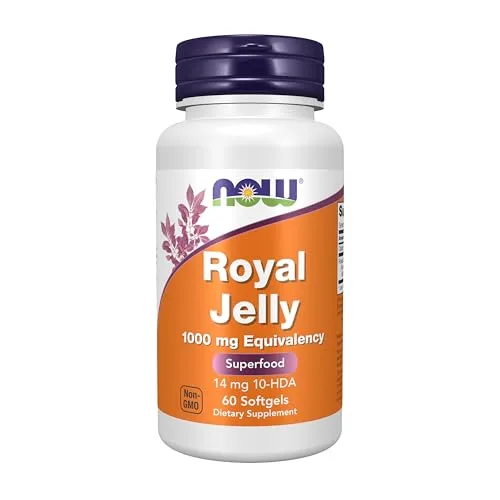
NOW Foods Royal Jelly 1000mg
NOW Foods
OverallForm: SoftgelPrice: $0.23/serving
Buy Now on Amazon
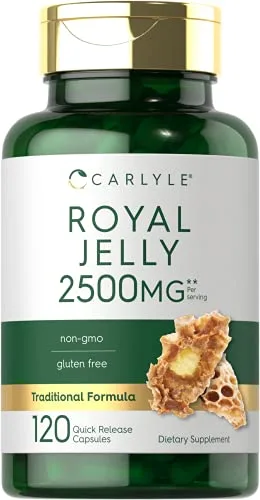
Carlyle Royal Jelly Capsule 120ct
Carlyle
Best BudgetForm: CapsulePrice: $0.14/serving
Buy Now on Amazon
HEALTHFARM Royal Jelly 1000mg
HEALTHFARM
Best ValueForm: SoftgelPrice: $0.10/serving
Buy Now on Amazon
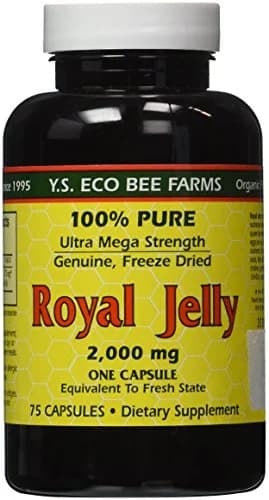
Y.S. Eco Bee Farms Royal Jelly 2000mg
Y.S. Eco Bee Farms
Highest DoseForm: CapsulePrice: $0.29/serving
Buy Now on Amazon
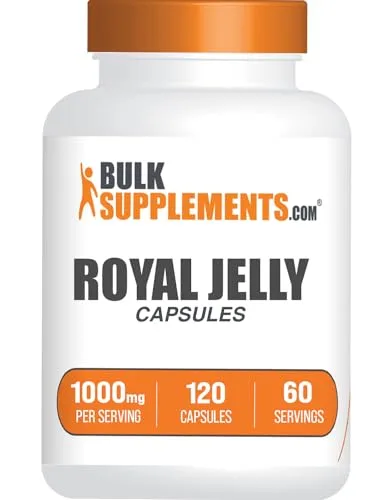
BulkSupplements Royal Jelly Capsules 500mg
BulkSupplements
Best Third-Party TestedForm: CapsulePrice: $0.40/serving
Buy Now on Amazon

Medication Interactions & Contraindications

Drug Interactions

Warfarin
moderate
Anticoagulant
Monitor INR closely. Royal jelly may enhance anticoagulant effects and increase bleeding risk. Report any unusual bruising or bleeding to your physician.
Estradiol / Hormone Replacement Therapy
moderate
Hormone therapy
Use with caution. 10-HDA in royal jelly binds estrogen receptors and may have additive estrogenic effects. Monitor for signs of estrogen excess (breast tenderness, bloating, mood changes).
Lisinopril
minor
ACE Inhibitor
Monitor blood pressure. Royal jelly contains ACE-inhibitory peptides that may have additive blood pressure-lowering effects. Dose adjustment of antihypertensive may be needed.
Tamoxifen
major
Selective estrogen receptor modulator
Avoid concurrent use. Royal jelly's estrogenic activity via 10-HDA may counteract tamoxifen's anti-estrogenic effects in estrogen receptor-positive breast cancer. Discuss with oncologist.

Who Should NOT Take This

Bee product allergy (bee stings, honey, propolis, bee pollen)(absolute)
Royal jelly contains proteins that cross-react with bee venom and pollen allergens. Severe anaphylaxis including fatal reactions have been documented. Must be strictly avoided in anyone with bee product allergies.
Estrogen receptor-positive breast cancer(absolute)
10-HDA in royal jelly has estrogen receptor binding activity that could stimulate estrogen-dependent tumor growth. Avoid in patients with hormone-sensitive cancers or on anti-estrogen therapy.
Asthma (especially atopic asthma)(relative)
Royal jelly has triggered severe bronchospasm and asthma exacerbations in sensitized individuals. Those with asthma, particularly allergic asthma, should use extreme caution or avoid entirely.
Pregnancy(relative)
Insufficient safety data exists for royal jelly during pregnancy. The estrogenic effects of 10-HDA and risk of allergic sensitization make it advisable to avoid during pregnancy unless specifically recommended by a healthcare provider.

This information is for educational purposes only. Always consult your healthcare provider before starting or stopping any supplement, especially if you take prescription medications.

Side Effects and Safety

Safety profile: Safe with Caution

Potential Side Effects

  • Allergic reactions — the most serious concern; ranges from contact dermatitis and GI upset to severe anaphylaxis, especially in individuals with bee product or pollen allergies
  • GI discomfort — nausea, stomach cramps, and diarrhea reported at higher doses
  • Asthma exacerbation — royal jelly has triggered bronchospasm and asthma attacks in sensitized individuals
  • Contact dermatitis when applied topically in allergic individuals
  • Hormonal effects — estrogenic activity may be undesirable for individuals with hormone-sensitive conditions

Drug & Supplement Interactions

  • Anticoagulants (warfarin) — royal jelly may have mild anticoagulant effects; monitor for increased bleeding
  • Hormone replacement therapy — additive estrogenic effects due to 10-HDA's estrogen receptor activity
  • Antihypertensives — royal jelly peptides may lower blood pressure; additive hypotensive effect possible
  • Immunosuppressants — royal jelly may modulate immune function; theoretical concern for transplant patients
Check Royal Jelly interactions with other supplements →
BenefitsDosage GuideSide EffectsTypes & FormsResearchFAQ

Related Conditions

Related Supplements

Frequently Asked Questions

What is 10-HDA and why is it important?

10-hydroxy-2-decenoic acid (10-HDA) is a medium-chain fatty acid found exclusively in royal jelly — it exists nowhere else in nature. Research shows 10-HDA binds to estrogen receptors (with weaker activity than estradiol), inhibits the NF-kB inflammatory pathway, and demonstrates antimicrobial properties. It is the primary quality marker for royal jelly products, and higher 10-HDA content generally indicates higher bioactivity. Look for products standardized to 10-HDA content (typically 1.4-6% in fresh royal jelly).

Can royal jelly help with menopause symptoms?

Emerging clinical evidence supports this use. Asama et al. (2018) found that 800mg/day of royal jelly significantly reduced menopausal symptoms including anxiety, hot flashes, and irritability over 12 weeks compared to placebo. The mechanism likely involves 10-HDA's mild estrogenic activity at estrogen receptors. However, trials are small and primarily conducted in Japanese populations. Royal jelly is not a replacement for hormone replacement therapy in severe menopausal symptoms but may be a complementary option.

Does royal jelly improve fertility?

Preliminary evidence is promising but limited. Morita et al. (2012) found improved follicular development markers in women undergoing IVF who consumed royal jelly. Animal studies show royal jelly can enhance testosterone production and sperm parameters in males. However, human fertility trials are small and unblinded, and the effects may be modest. It may be worth considering as part of a comprehensive fertility-support regimen, but should not replace standard fertility treatments.

Is royal jelly safe if I have asthma?

Royal jelly carries significant risk for asthma patients, particularly those with atopic (allergic) asthma. Multiple case reports document severe bronchospasm and asthma exacerbations triggered by royal jelly consumption. The protein content can induce IgE-mediated allergic responses in sensitized individuals. If you have asthma, especially allergic asthma, it is safest to avoid royal jelly entirely. If you do choose to try it, do so only with your physician's approval and with emergency medication accessible.

How do I know if a royal jelly product is high quality?

Key quality markers include: 10-HDA content (should be specified; fresh royal jelly naturally contains 1.4-6% 10-HDA), storage conditions (fresh must be frozen; freeze-dried should be sealed from moisture), third-party testing for contaminants, and the country of origin (China produces most of the world's supply; some premium products come from New Zealand, Hungary, or Japan). Avoid products that don't specify 10-HDA content, as it indicates the manufacturer hasn't tested for the primary bioactive compound.

Can men take royal jelly?

Yes. Despite its estrogenic properties, royal jelly has been studied in men for testosterone support, cholesterol reduction, and general health. The estrogenic activity of 10-HDA is mild compared to endogenous estradiol and is not expected to cause feminizing effects at standard supplemental doses. Animal studies actually show increased testosterone production. The cholesterol-lowering trial by Guo et al. included male participants with positive results.

What is the difference between royal jelly and bee pollen?

Royal jelly and bee pollen come from entirely different sources despite both being bee products. Bee pollen is collected from flowers by foraging bees and is primarily a protein and antioxidant source. Royal jelly is produced internally by nurse bees' glands and contains the unique compound 10-HDA with hormonal activity. Royal jelly is more targeted toward hormonal, fertility, and anti-aging benefits, while bee pollen is broader as a nutrient-dense antioxidant supplement. They have different allergy profiles and can be combined.

How should royal jelly be stored?

Fresh (raw) royal jelly must be stored frozen (-18C or below) for long-term storage or refrigerated (2-5C) for short-term use (up to a few months). It degrades quickly at room temperature. Freeze-dried royal jelly capsules are more shelf-stable and can be stored at room temperature in a cool, dry place away from direct sunlight. Once opened, freeze-dried products should be sealed tightly to prevent moisture absorption.

Continue Reading

References

  1. Asama T, Matsuzaki H, Fukushima S, Tatefuji T, Hashimoto K, Takeda T (2018). Royal jelly supplementation improves menopausal symptoms such as backache, low back pain, and anxiety in postmenopausal Japanese women. Evidence-Based Complementary and Alternative Medicine. DOI PubMed
  2. Guo H, Saiga A, Sato M, Miyazawa I, Shibata M, Takahata Y, Morimatsu F (2007). Royal jelly supplementation improves lipoprotein metabolism in humans. Journal of Nutritional Science and Vitaminology. DOI PubMed
  3. Morita H, Ikeda T, Kajita K, Fujioka K, Mori I, Okada H, Uno Y, Ishizuka T (2012). Effect of royal jelly ingestion for six months on healthy volunteers. Nutrition Journal. DOI PubMed
  4. Sugiyama T, Takahashi K, Mori H (2012). Royal jelly acid, 10-hydroxy-trans-2-decenoic acid, as a modulator of the innate immune responses. Endocrine, Metabolic & Immune Disorders Drug Targets. DOI PubMed
  5. Park HM, Cho MH, Cho Y, Kim SY (2011). Royal jelly increases collagen production in rat tendon fibroblasts in vitro and in vivo. Journal of Medicinal Food. DOI PubMed
  6. Kamakura M (2011). Royalactin induces queen differentiation in honeybees. Nature. DOI PubMed
  7. Thien FC, Leung R, Baldo BA, Weiner JA, Plomley R, Czarny D (1996). Asthma and anaphylaxis induced by royal jelly. Clinical & Experimental Allergy. DOI PubMed