SupplementScience

Bee Pollen — Research Profile

Bee Product

Reviewed by·PharmD, BCPS

This content is for informational purposes only and does not constitute medical advice. Consult your healthcare provider before starting any supplement. Full disclaimer

Bee pollen is a nutrient-dense bee product rich in proteins, flavonoids, and antioxidants.

Bee pollen is a nutrient-dense bee product rich in proteins, flavonoids, and antioxidants. Emerging evidence supports anti-inflammatory and immune-modulating properties, though most research is preclinical. Standard dose is 3-5 teaspoons of granules daily.

Key Facts

What it is
Granules of flower pollen collected by honeybees, mixed with nectar and bee enzymes, consumed as a whole-food supplement
Primary benefits
  • Rich source of flavonoids and phenolic acids with strong antioxidant activity
  • Anti-inflammatory properties demonstrated in animal and cell studies
  • Contains over 200 bioactive substances including complete protein
  • Flower pollen extracts show promise for lower urinary tract symptoms
  • Traditional use for allergy desensitization (limited clinical evidence)
Typical dosage
5-15g granules or 500-1500mg extract daily
Evidence level
Emerging
Safety profile
Safe with Caution

Time to Effect

Hours
Days
Weeks
Months
2-8 weekstypical onset

Energy and general wellness improvements often reported within 1-2 weeks. Anti-inflammatory and allergy-related effects may take 4-8 weeks. Traditional allergy desensitization protocols recommend starting months before allergy season.

What the Research Says

Bee pollen research is extensive in vitro and in animal models but limited in human clinical trials. Komosinska-Vassev et al. (2015) published a comprehensive review confirming bee pollen's broad pharmacological activities including antioxidant, anti-inflammatory, hepatoprotective, antimicrobial, and immunomodulatory effects, almost entirely based on preclinical data. Maruyama et al. (2010) provided mechanistic evidence showing bee pollen extract inhibits mast cell degranulation, which underlies its anti-allergy potential. Pascoal et al. (2014) demonstrated immune-enhancing effects in animal models. The allergy desensitization claim — consuming local bee pollen to build tolerance to local allergens — has weak clinical support; a small RCT by Rajan et al. (1986) found no benefit over placebo for hay fever. However, specific flower pollen extracts (Cernilton/Graminex) have shown efficacy for benign prostatic hyperplasia in human trials, though these are pharmaceutical-grade extracts rather than raw bee pollen. The major research limitation is compositional variability — bee pollen from different regions and seasons contains dramatically different bioactive profiles, making it difficult to standardize and compare studies.

Benefits of Bee Pollen

  • Antioxidant activity — bee pollen contains flavonoids (quercetin, kaempferol, isorhamnetin), phenolic acids, and carotenoids that demonstrate potent free radical scavenging capacity in vitro and in animal models, comparable to synthetic antioxidants (Komosinska-Vassev et al., 2015)
  • Anti-inflammatory effects — Maruyama et al. (2010) showed bee pollen extract inhibited mast cell degranulation and reduced inflammatory cytokine release in a dose-dependent manner, suggesting a mechanism for allergy symptom relief
  • Immune modulation — animal studies demonstrate bee pollen enhances macrophage activity, increases immunoglobulin production, and modulates Th1/Th2 balance, supporting both innate and adaptive immune function (Pascoal et al., 2014)
  • Liver protection — multiple animal studies show bee pollen's flavonoid content protects hepatocytes from oxidative damage induced by toxins, with Feás et al. (2012) confirming hepatoprotective effects in rats exposed to carbon tetrachloride
  • Nutrient density — bee pollen provides all essential amino acids, B-vitamins (especially B1, B2, B3, B6), vitamin C, iron, zinc, selenium, and essential fatty acids in a single whole-food source
Did you know?

Bee pollen research is extensive in vitro and in animal models but limited in human clinical trials.

Forms of Bee Pollen

Bee Pollen supplement forms compared by bioavailability and best use
FormBioavailabilityBest For
Granules (whole)ModerateWhole-food supplementation — sprinkled on food or blended into smoothies; outer shell may reduce nutrient absorption unless chewed thoroughly or ground
Powder (ground granules)Moderate-HighImproved absorption — grinding breaks the tough outer pollen wall (exine), releasing more nutrients; easily mixed into beverages or food
Capsules / Tablets (extract)HighStandardized dosing — concentrated extracts allow consistent flavonoid content per dose; best for targeted therapeutic use

Dosage Recommendations

General recommendation: 5-15g granules or 500-1500mg extract daily, starting with a small test dose

Timing: Best taken in the morning or before meals; always start with a tiny dose (a few granules) to test for allergic reaction • Take with food for best absorption.

Dosage by Condition

General health / antioxidant support
5-10g granules or 500mg extract dailyEmerging
Allergy support (desensitization)
Start with a few granules, gradually increase to 10-15g dailyPreliminary
Immune support
10-15g granules or 1000-1500mg extract dailyEmerging
Energy and nutrition
5-15g granules dailyPreliminary
Skin health / anti-inflammatory
500-1000mg extract dailyPreliminary

Upper limit: 20g granules daily (higher doses not studied for safety in humans)

Our Top Bee Pollen Picks

As an Amazon Associate, we earn from qualifying purchases. Some links below are affiliate links — this doesn't affect our editorial independence or product ratings. How we evaluate products

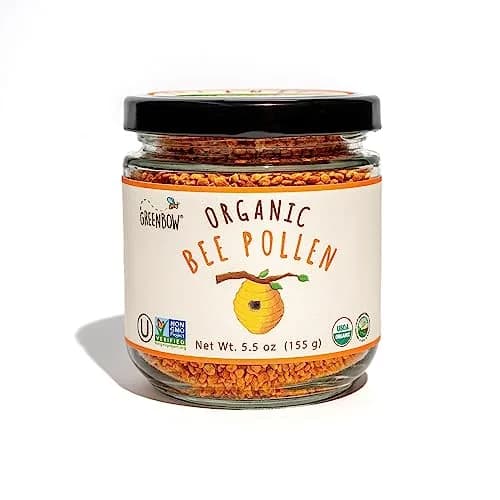
Greenbow Organic Bee Pollen
Greenbow
OverallForm: GranulesPrice: $1.05/serving
Buy Now on Amazon
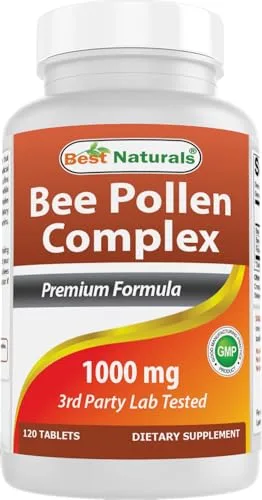
Best Naturals Bee Pollen Complex 1000mg
Best Naturals
BudgetForm: TabletPrice: $0.08/serving
Buy Now on Amazon
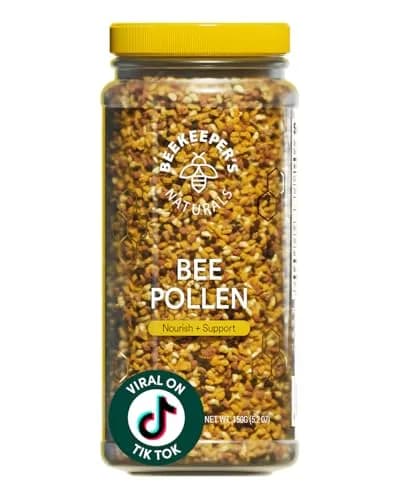
Beekeeper's Naturals Bee Pollen Granules
Beekeeper's Naturals
Best RawForm: GranulesPrice: $1.02/serving
Buy Now on Amazon
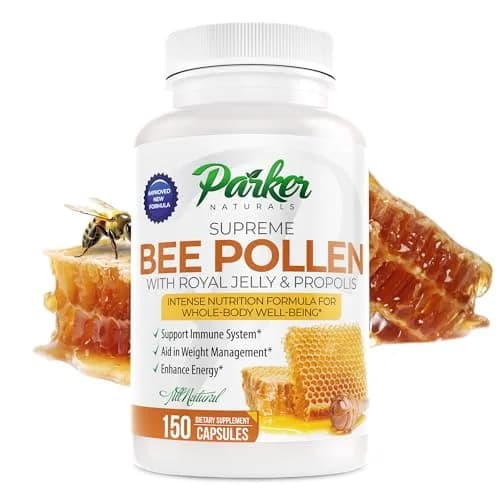
Parker Naturals Supreme Bee Pollen Capsules
Parker Naturals
Best ComplexForm: CapsulePrice: $0.73/serving
Buy Now on Amazon
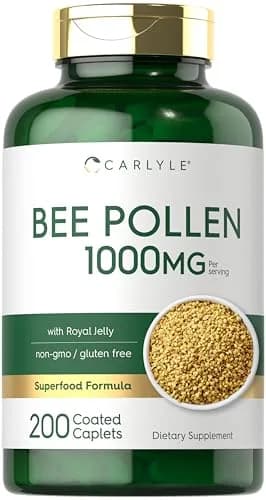
Carlyle Bee Pollen Supplement 1000mg
Carlyle
Best ValueForm: CapletPrice: $0.06/serving
Buy Now on Amazon

Medication Interactions & Contraindications

Drug Interactions

Warfarin
moderate
Anticoagulant
Monitor INR. Bee pollen contains compounds with mild antiplatelet activity that may increase bleeding risk when combined with anticoagulants.
Cyclosporine
moderate
Immunosuppressant
Use with caution. Bee pollen's immunostimulatory properties may counteract immunosuppressive therapy. Consult transplant team before use.
Metformin
minor
Antidiabetic
Monitor blood glucose. Animal studies suggest bee pollen may have mild blood sugar-lowering effects that could be additive with diabetes medications.
Epinephrine auto-injector
major
Emergency allergy treatment
Always have epinephrine available when starting bee pollen if you have any history of bee allergies, pollen allergies, or atopic conditions. Anaphylactic reactions have been reported.

Who Should NOT Take This

Bee venom or bee product allergy(absolute)
Individuals with known allergies to bee stings, honey, propolis, or royal jelly are at high risk of severe allergic reaction including anaphylaxis from bee pollen. Must be strictly avoided.
Severe pollen allergies (anaphylaxis history)(absolute)
Bee pollen contains the same allergenic proteins found in airborne pollens. Individuals with a history of anaphylactic reactions to pollen should not consume bee pollen.
Pregnancy and breastfeeding(relative)
Insufficient safety data exists for bee pollen use during pregnancy or lactation. The risk of allergic sensitization in the infant and lack of standardization make it advisable to avoid during these periods.

This information is for educational purposes only. Always consult your healthcare provider before starting or stopping any supplement, especially if you take prescription medications.

Side Effects and Safety

Safety profile: Safe with Caution

Potential Side Effects

  • Allergic reactions — the most serious concern; ranges from mild itching and hives to severe anaphylaxis in individuals allergic to bee products or specific pollens
  • GI discomfort — bloating, nausea, or stomach upset, especially at higher doses or initial use
  • Oral tingling or itching — may indicate mild allergic sensitivity; discontinue and seek medical attention
  • Headache reported occasionally, usually mild and transient
  • Contamination risk — bee pollen may contain pesticide residues, heavy metals, or mycotoxins depending on source environment

Drug & Supplement Interactions

  • Anticoagulants (warfarin) — bee pollen may have mild antiplatelet effects; theoretical additive bleeding risk
  • Immunosuppressants — bee pollen stimulates immune function and may counteract immunosuppressive therapy
  • Diabetes medications — some animal studies suggest blood sugar lowering effects; monitor glucose
  • Allergy medications (antihistamines) — may interact unpredictably with allergy desensitization protocols
Check Bee Pollen interactions with other supplements →
BenefitsDosage GuideSide EffectsTypes & FormsResearchFAQ

Related Conditions

Related Supplements

Frequently Asked Questions

Can bee pollen cure seasonal allergies?

The popular claim that eating local bee pollen can desensitize you to local allergens has weak scientific support. A controlled trial by Rajan et al. (1986) found no significant benefit of bee pollen over placebo for hay fever symptoms. While bee pollen does contain some of the same allergenic proteins found in airborne pollens, the dose and route of exposure differ greatly from clinical allergen immunotherapy. Some people report subjective improvement, but this has not been confirmed in well-designed clinical trials.

Is bee pollen safe if I have a bee sting allergy?

No. If you are allergic to bee stings, honey, propolis, or royal jelly, you should not consume bee pollen. Severe allergic reactions including anaphylaxis have been reported. Bee pollen contains proteins from both the flowers and the bees' own secretions, and cross-reactivity with bee venom allergens is possible. Even without a known bee allergy, always start with just a few granules to test for a reaction.

What makes bee pollen a 'complete food'?

Bee pollen contains all essential amino acids, making it a complete protein source (22-40% protein by dry weight). It also provides B-vitamins, vitamin C, minerals (iron, zinc, selenium, potassium), essential fatty acids, enzymes, and over 200 bioactive compounds. However, the 'perfect food' label is somewhat misleading — it lacks adequate vitamin D, vitamin B12, and some nutrients in sufficient quantities. It is best viewed as a nutrient-dense supplement rather than a sole food source.

How should I start taking bee pollen?

Always start with a very small amount — just 2-3 granules on the first day — and wait 24 hours to check for any allergic reaction (itching, swelling, breathing difficulty). If tolerated, gradually increase over 1-2 weeks to the target dose of 1-3 teaspoons daily. This cautious approach is essential because allergic reactions to bee pollen can be severe and unpredictable, even in people without known bee allergies.

Does the botanical source of bee pollen matter?

Yes, significantly. The bioactive compound profile — flavonoids, phenolic acids, vitamins, and proteins — varies dramatically based on which flowers the bees foraged. For example, buckwheat pollen tends to be higher in antioxidants, while clover pollen has a different amino acid profile. This variability is the biggest challenge in bee pollen research, as results from one botanical source may not apply to another. Choose bee pollen from reputable sources that identify the primary botanical origin.

Can children take bee pollen?

Bee pollen is generally not recommended for children under 1 year due to the risk of botulism spores (similar to honey). For older children, the primary concern is allergic reactions. If considering bee pollen for a child, consult their pediatrician first, start with an even smaller test dose than for adults, and ensure the child has no history of atopic conditions (eczema, asthma, food allergies) that increase allergy risk.

How should bee pollen be stored?

Bee pollen should be stored in an airtight container in the refrigerator or freezer to preserve its bioactive compounds. Fresh bee pollen has a shelf life of approximately 1-2 years when frozen and several months when refrigerated. At room temperature, the flavonoid and vitamin content degrades more rapidly. Avoid direct sunlight and moisture, which promote mold growth and nutrient degradation.

Continue Reading

References

  1. Komosinska-Vassev K, Olczyk P, Kazmierczak J, Mencner L, Olczyk K (2015). Bee pollen: chemical composition and therapeutic application. Evidence-Based Complementary and Alternative Medicine. DOI PubMed
  2. Maruyama H, Sakamoto T, Araki Y, Hara H (2010). Anti-inflammatory effect of bee pollen ethanol extract from Cistus sp. of Spanish on carrageenan-induced rat hind paw edema. BMC Complementary and Alternative Medicine. DOI PubMed
  3. Pascoal A, Rodrigues S, Teixeira A, Feás X, Estevinho LM (2014). Biological activities of commercial bee pollens: antimicrobial, antimutagenic, antioxidant and anti-inflammatory. Food and Chemical Toxicology. DOI PubMed
  4. Rajan TV, Tennen H, Lindquist RL, Cohen L, Clive J (2002). Effect of ingestion of honey on symptoms of rhinoconjunctivitis. Annals of Allergy, Asthma & Immunology. DOI PubMed
  5. Feás X, Vázquez-Tato MP, Estevinho L, Seijas JA, Iglesias A (2012). Organic bee pollen: botanical origin, nutritional value, bioactive compounds, antioxidant activity and microbiological quality. Molecules. DOI PubMed
  6. Denisow B, Denisow-Pietrzyk M (2016). Biological and therapeutic properties of bee pollen: a review. Journal of the Science of Food and Agriculture. DOI PubMed