
We evaluated bee pollen supplements across source transparency, form (granules vs capsules), organic certification, purity testing, and value per serving. Bee pollen contains over 200 bioactive substances including flavonoids, 22-40% protein, and essential amino acids — but form and processing matter enormously for nutrient preservation.
Best Bee Pollen Supplements (2026)
Product pricing and availability checked
Methodology: Evidence-ranked evaluation
·
2,600+Clinical Studies Cited
·5Bee Pollen products evaluated
This content is for informational purposes only and does not constitute medical advice. Statements about dietary supplements have not been evaluated by the FDA and are not intended to diagnose, treat, cure, or prevent any disease. Individual results may vary — consult your healthcare provider before starting any supplement. Full disclaimer
As an Amazon Associate, we earn from qualifying purchases. Some links below are affiliate links — this doesn't affect our editorial independence or product ratings. How we evaluate products
Our Verdict
The best bee pollen supplement is certified organic, low-temperature dried to preserve enzymes and flavonoids, and delivered as fresh granules or capsules from a transparent single-source apiary.
Best By Category
The best bee pollen supplement is USDA Organic, freeze-dried or low-heat dried (below 115°F) to preserve enzymes and...
The best bee pollen supplement is USDA Organic, freeze-dried or low-heat dried (below 115°F) to preserve enzymes and flavonoids, and clearly labels its floral source. Start with a quarter-teaspoon daily to rule out allergy before scaling to the typical 1-2 teaspoon serving.
How We Chose These Products
Products are ranked using our published scoring methodology — evidence strength, dose adequacy, ingredient form, third-party testing signals, value, and clean-label factors are weighted across the 5 criteria below. Commercial relationships do not determine our editorial rankings.
Source Transparency
25%Bee pollen composition varies dramatically by region and season. Products that disclose geographic origin and beekeeping practices score higher.
Form & Processing
25%Raw granules preserve heat-sensitive enzymes, vitamins, and flavonoids better than processed capsules/tablets. Low-temperature or no-heat drying methods are preferred.
Organic Certification
20%USDA Organic certification ensures bees foraged in pesticide-free environments, which is critical since bee pollen can concentrate environmental contaminants.
Purity Testing
15%Third-party testing for pesticide residues, heavy metals, and microbial contamination is especially important for a product harvested directly from the environment.
Value per Serving
15%Cost per serving adjusted for form, dose, and additional ingredients like royal jelly or propolis.
#1 Top Pick
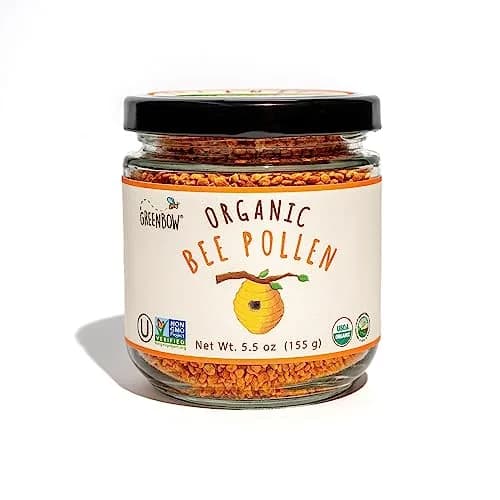
Greenbow uses low-temperature drying to preserve the heat-sensitive enzymes and flavonoids (quercetin, kaempferol) that make bee pollen valuable. USDA Organic certification ensures the bees foraged in pesticide-free areas — critical since pollen concentrates environmental contaminants. Triple-certified (Organic/Kosher/Halal) with 1% of proceeds donated to the Planet Bee Foundation.
Ingredient100% USDA Organic Bee Pollen Granules
Dose~15g per tablespoon
FormGranules
TestingUSDA Organic / Kosher / Halal
~15g per tablespoonClinical range: 5-15g granules or 500-1500mg extract daily
Therapeutic dose
$3.36 / ounce
Pros
- USDA Organic — pesticide-free foraging guarantee
- Low-temperature dried to preserve enzymes and flavonoids
- Triple-certified: Organic, Kosher, Halal
Cons
- Granule form may not appeal to everyone's taste
- No royal jelly or propolis included
Contains bee products — NOT safe for bee sting allergy sufferersGluten-freeNon-GMO
Quick Comparison
#1Greenbow Organic Bee Pollen
9.2/10
Greenbow
#1 Top Pick
5,530 Amazon reviews
Best for: Overall best bee pollen with organic certification and enzyme preservation
100% USDA Organic Bee Pollen Granules · ~15g per tablespoon
Granules · USDA Organic / Kosher / Halal
$18.49
$3.36 / ounce
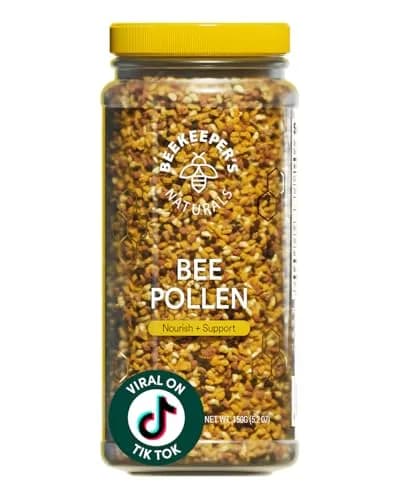
#2Beekeeper's Naturals Bee Pollen Granules
9/10
Beekeeper's Naturals
4,095 Amazon reviews
Best for: raw bee pollen with rigorous pesticide-free testing and enzyme preservation
100% Raw Bee Pollen Granules · ~1 tablespoon per serving
Granules · Third-Party Lab Tested (pesticide-free)
$28.38
$5.46 / ounce
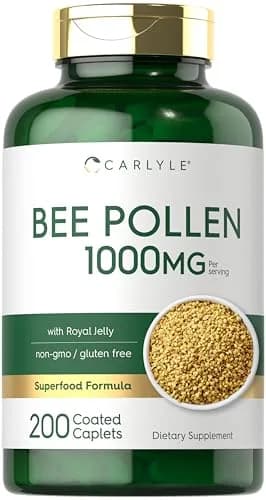
#3Carlyle Bee Pollen Supplement 1000mg
7.8/10
Carlyle
542 Amazon reviews
Best for: value — 200 caplets with bee pollen, royal jelly, and propolis at an unbeatable price
Bee Pollen 1000mg with Royal Jelly & Propolis · 1000mg (1 caplet)
Caplet · Lab Tested
$9.99
$0.05 / count
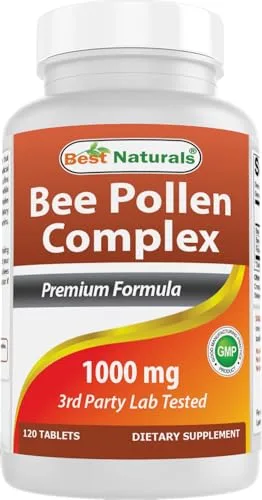
#4Best Naturals Bee Pollen Complex 1000mg
7.6/10
Best Naturals
711 Amazon reviews
Best for: Budget pick with third-party testing and FDA-registered facility manufacturing
Bee Pollen Complex 1000mg with Royal Jelly & Propolis · 1000mg (1 tablet)
Tablet · Third-Party Tested / GMP Certified
$14.99
$0.12 / count
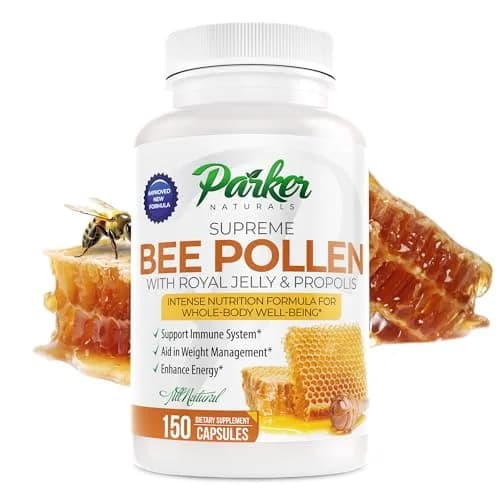
#5Parker Naturals Supreme Bee Pollen Capsules
7.4/10
Parker Naturals
296 Amazon reviews
Best for: complex formula — highest dose capsule with bee pollen, royal jelly, propolis, and black pepper for absorption
Bee Pollen 3520mg (5 capsules) with Royal Jelly, Propolis & Black Pepper · 3520mg (5 capsules per serving)
Capsule · None listed
$22.97
$0.15 / count
| # | Product | Best For | Ingredient & Dose | Form & Testing | Price | Rating | |
|---|---|---|---|---|---|---|---|
| 1 | Greenbow Organic Bee Pollen #1 Top Pick 5,530 Amazon reviews | Overall best bee pollen with organic certification and enzyme preservation | 100% USDA Organic Bee Pollen Granules ~15g per tablespoon | Granules USDA Organic / Kosher / Halal | $18.49 $3.36 / ounce | 9.2/10 | |
| 2 | Beekeeper's Naturals Bee Pollen Granules 4,095 Amazon reviews | raw bee pollen with rigorous pesticide-free testing and enzyme preservation | 100% Raw Bee Pollen Granules ~1 tablespoon per serving | Granules Third-Party Lab Tested (pesticide-free) | $28.38 $5.46 / ounce | 9/10 | |
| 3 | Carlyle Bee Pollen Supplement 1000mg 542 Amazon reviews | value — 200 caplets with bee pollen, royal jelly, and propolis at an unbeatable price | Bee Pollen 1000mg with Royal Jelly & Propolis 1000mg (1 caplet) | Caplet Lab Tested | $9.99 $0.05 / count | 7.8/10 | |
| 4 | Best Naturals Bee Pollen Complex 1000mg 711 Amazon reviews | Budget pick with third-party testing and FDA-registered facility manufacturing | Bee Pollen Complex 1000mg with Royal Jelly & Propolis 1000mg (1 tablet) | Tablet 120 Tablets Third-Party Tested / GMP Certified | $14.99 $0.12 / count | 7.6/10 | |
| 5 | Parker Naturals Supreme Bee Pollen Capsules 296 Amazon reviews | complex formula — highest dose capsule with bee pollen, royal jelly, propolis, and black pepper for absorption | Bee Pollen 3520mg (5 capsules) with Royal Jelly, Propolis & Black Pepper 3520mg (5 capsules per serving) | Capsule 150 Capsules None listed | $22.97 $0.15 / count | 7.4/10 |
Detailed Reviews
#1 Top Pick
Greenbow Organic Bee Pollen - 100% USDA Certified Organic, Non-GMO, Halal, Kosher Certified, Pure & Natural Bee Pollen - Superfood Packed with Proteins, Vitamins & Minerals - Gluten Free - 155g
Greenbow
5,530 Amazon reviews
9.2/10
(5,530)
Contains bee products — NOT safe for bee sting allergy sufferersGluten-freeNon-GMO
Greenbow uses low-temperature drying to preserve the heat-sensitive enzymes and flavonoids (quercetin, kaempferol) that make bee pollen valuable. USDA Organic certification ensures the bees foraged in pesticide-free areas — critical since pollen concentrates environmental contaminants. Triple-certified (Organic/Kosher/Halal) with 1% of proceeds donated to the Planet Bee Foundation.
Ingredient100% USDA Organic Bee Pollen Granules
Dose~15g per tablespoon
FormGranules
TestingUSDA Organic / Kosher / Halal
~15g per tablespoonClinical range: 5-15g granules or 500-1500mg extract daily
Therapeutic dose
$3.36 / ounce
Ideal for: Overall best bee pollen with organic certification and enzyme preservation
Not ideal for: Those who prefer capsule convenience or need a bee pollen complex with royal jelly and propolis
Pros
- USDA Organic — pesticide-free foraging guarantee
- Low-temperature dried to preserve enzymes and flavonoids
- Triple-certified: Organic, Kosher, Halal
- 1% donated to Planet Bee Foundation
- 155g container provides good supply
Cons
- Granule form may not appeal to everyone's taste
- No royal jelly or propolis included
- Origin region not specified on label
Beekeeper's Naturals - 100% Raw Bee Pollen Granules, Natural Preserved Enzymes, Source of Vitamin B, Minerals, Amino Acids & Protein - Paleo & Keto Friendly, Gluten Free (5.2 oz)
Beekeeper's Naturals
4,095 Amazon reviews
9/10
(4,095)
Contains bee products — NOT safe for bee sting allergy sufferersGluten-freeDairy-free
Beekeeper's Naturals never heats their pollen, preserving all heat-sensitive enzymes, B vitamins, and bioactive compounds. Their third-party lab testing specifically screens for pesticide residues — a critical differentiator since many bee pollen products skip this step. As a B Corp, the company meets verified standards for social and environmental performance. The raw processing method maximizes the over 200 bioactive substances naturally present in bee pollen.
Ingredient100% Raw Bee Pollen Granules
Dose~1 tablespoon per serving
FormGranules
TestingThird-Party Lab Tested (pesticide-free)
~1 tablespoon per servingClinical range: 5-15g granules or 500-1500mg extract daily
Blend formula
$5.46 / ounce
Ideal for: raw bee pollen with rigorous pesticide-free testing and enzyme preservation
Not ideal for: Those seeking organic certification or a combined bee product complex
Pros
- Never heated — maximum enzyme and nutrient preservation
- Third-party lab tested specifically for pesticide residues
- Certified B Corporation
- Clean, single-ingredient product
- Strong brand reputation in bee products
Cons
- No USDA Organic certification
- Slightly smaller container than Greenbow
- Premium price for non-organic granules
Carlyle Bee Pollen Supplement | 1000mg | 200 Caplets | with Royal Jelly and Bee Propolis | for Men and Women | Vegetarian, Non-GMO, Gluten Free
Carlyle
542 Amazon reviews
7.8/10
(542)
Contains bee products — NOT safe for bee sting allergy sufferersMay contain soy
At roughly 6 cents per serving with 200 caplets per bottle, Carlyle delivers extraordinary value. The formula combines bee pollen with royal jelly and propolis, providing a broader spectrum of bee-derived bioactives. Lab-tested for quality assurance. This is the go-to choice for anyone wanting to try bee pollen supplementation without a significant financial commitment.
IngredientBee Pollen 1000mg with Royal Jelly & Propolis
Dose1000mg (1 caplet)
FormCaplet
TestingLab Tested
1000mg (1 caplet)Clinical range: 5-15g granules or 500-1500mg extract daily
Below clinical dose
$0.05 / count
Ideal for: value — 200 caplets with bee pollen, royal jelly, and propolis at an unbeatable price
Not ideal for: Those who prioritize raw/unprocessed forms or want high-dose granule supplementation
Pros
- Outstanding value at ~$0.06 per serving
- 200 caplets per bottle — over 6 months supply
- Includes royal jelly and propolis
- Lab-tested quality assurance
- Convenient caplet form
Cons
- Heat processing during manufacturing destroys some enzymes
- 1000mg dose is well below granule equivalent (~15g)
- Source region not disclosed
- No organic certification
Best Naturals Bee Pollen Complex 1000 mg 120 Tablets
Best Naturals
711 Amazon reviews
7.6/10
(711)
Contains bee products — NOT safe for bee sting allergy sufferersMay contain traces of milk, soy, wheat, egg, peanuts, tree nuts
Best Naturals combines affordability with quality assurance — third-party tested and manufactured in a GMP-certified, FDA-registered facility. The bee pollen complex includes royal jelly and propolis for a multi-faceted bee product supplement. At ~$0.08 per serving with 120 tablets, it provides 4 months of daily supplementation at a budget-friendly price.
IngredientBee Pollen Complex 1000mg with Royal Jelly & Propolis
Dose1000mg (1 tablet)
FormTablet
TestingThird-Party Tested / GMP Certified
1000mg (1 tablet)Clinical range: 5-15g granules or 500-1500mg extract daily
Below clinical dose
$0.12 / count$14.99 · 120 Tablets
Ideal for: Budget pick with third-party testing and FDA-registered facility manufacturing
Not ideal for: Those who want raw granules, organic certification, or higher doses
Pros
- Third-party tested for quality and purity
- Manufactured in FDA-registered, GMP-certified facility
- Includes royal jelly and propolis
- Budget-friendly at ~$0.08 per serving
- 120 tablets — 4 months supply
Cons
- Tablet compression destroys heat-sensitive enzymes
- 1000mg dose below granule equivalent
- No organic certification
- Limited source transparency
Parker Naturals Supreme Bee Pollen Capsules, 3520 mg Royal Jelly, Bee Pollen, and Bee Propolis Capsules, Natural Bee Pollen Supplement for Adults, 150 Capsules
Parker Naturals
296 Amazon reviews
7.4/10
(296)
Contains bee products — NOT safe for bee sting allergy sufferers
Parker Naturals offers the most comprehensive bee product complex in capsule form, combining bee pollen, royal jelly, and propolis at a meaningful 3520mg total dose — the highest among capsule options. The addition of black pepper (piperine) enhances bioavailability. Sourced from USA beekeepers, providing better traceability than most capsule competitors.
IngredientBee Pollen 3520mg (5 capsules) with Royal Jelly, Propolis & Black Pepper
Dose3520mg (5 capsules per serving)
FormCapsule
TestingNone listed
3520mg (5 capsules per serving)Clinical range: 5-15g granules or 500-1500mg extract daily
Partial dose
$0.15 / count$22.97 · 150 Capsules
Ideal for: complex formula — highest dose capsule with bee pollen, royal jelly, propolis, and black pepper for absorption
Not ideal for: Those who want third-party testing verification or prefer fewer capsules per serving
Pros
- Highest dose capsule option at 3520mg per serving
- Comprehensive: bee pollen + royal jelly + propolis
- Black pepper (piperine) for enhanced absorption
- USA beekeeper sourced
- 150 capsules per bottle
Cons
- 5 capsules per serving is cumbersome
- No third-party testing certifications listed
- No organic certification
- Higher cost per serving than budget options
Pairs Well With
Frequently taken together based on complementary benefits
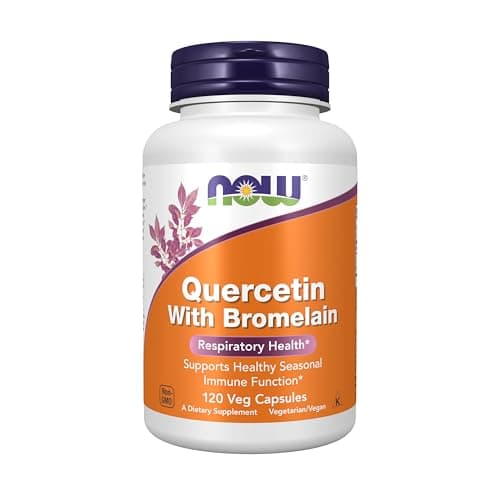
Quercetin
NOW Foods Quercetin with Bromelain
400mg quercetin + 100mg bromelain
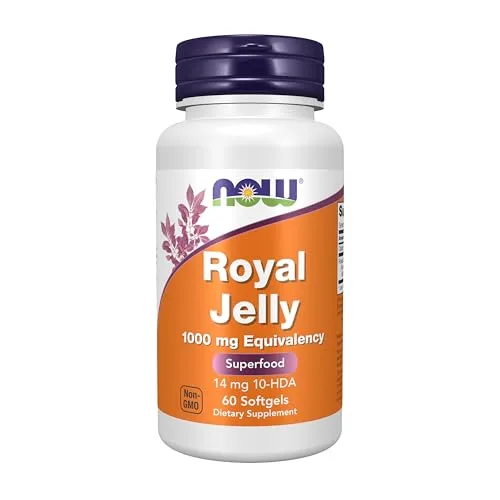
Royal Jelly
NOW Foods Royal Jelly 1000mg
1000mg equivalent (14mg 10-HDA per softgel)
How to Choose
Granules vs Capsules: Why Form Matters
Raw bee pollen granules preserve heat-sensitive enzymes, vitamins, and bioactive flavonoids that are destroyed during the tablet and capsule manufacturing process. Studies show that bee pollen's enzymatic activity — a key component of its health benefits — degrades significantly above 40°C (104°F). Granules that are low-temperature dried or never heated retain the full spectrum of nutrients. Capsules and tablets trade nutrient preservation for convenience and standardized dosing.
Allergen Warning: Bee Pollen and Allergies
Bee pollen can cause severe allergic reactions in individuals with bee sting allergies or pollen allergies. Reactions can range from mild itching and hives to life-threatening anaphylaxis. Even individuals without known allergies should start with a very small amount (1/4 teaspoon or less) and wait 24 hours before increasing their dose. Pregnant and breastfeeding women should consult their healthcare provider before use. If you carry an EpiPen for any reason, consult your allergist before trying bee pollen.
Why Organic Certification Matters for Bee Pollen
Bee pollen is harvested directly from the environment, meaning it can concentrate pesticide residues, heavy metals, and other contaminants present in the bees' foraging area. USDA Organic certification ensures the bees foraged in areas free from synthetic pesticides and herbicides. Third-party pesticide testing (like Beekeeper's Naturals offers) is a strong alternative if organic certification is not available.
Starting Slow and Building Up
Begin with 1/4 teaspoon of granules (or half a capsule's contents mixed into food) for the first few days. If no adverse reaction occurs, gradually increase to the full serving size over 1-2 weeks. Bee pollen can be mixed into smoothies, yogurt, oatmeal, or eaten straight. Avoid adding it to hot foods or drinks above 40°C (104°F), as heat destroys the enzymes.
Storage Tips
Store bee pollen granules in an airtight container in the refrigerator or freezer to preserve enzymatic activity and prevent moisture degradation. Granules can last 1-2 years frozen. Capsules and tablets are more shelf-stable and can be stored at room temperature in a cool, dry place. Always check the expiration date and discard any product that smells rancid or shows signs of moisture.
Ready to Buy?
Greenbow Organic Bee Pollen
9.2/10$3.36 / ounceBest for: Overall best bee pollen with organic certification and enzyme preservation
The best bee pollen supplement is certified organic, low-temperature dried to preserve enzymes and flavonoids, and delivered as fresh granules or capsules from a transparent single-source apiary.
Evidence:Review (2015) · moderate confidence[#1]. See full reference list below.Read Our Full Bee Pollen Research Guide
Evidence level, dosage, side effects, and more →
Already taking supplements?
Check how Bee Pollen fits with your current stack — interactions, timing, and optimization →
Related Supplements
Related Conditions
Frequently Asked Questions
Is bee pollen safe for people with bee sting allergies?
Is bee pollen safe for people with bee sting allergies?
No. Bee pollen can cause severe allergic reactions — including anaphylaxis — in individuals with bee sting allergies [1]. The proteins in bee pollen can cross-react with bee venom allergens. If you have any history of bee sting allergy, bee pollen supplements are not safe for you. Consult an allergist before considering bee pollen if you have any insect venom sensitivities.
Evidence:Review (2015) · moderate confidence[#1]. See full reference list below.What is the best form of bee pollen — granules or capsules?
What is the best form of bee pollen — granules or capsules?
Raw granules are nutritionally superior because they preserve heat-sensitive enzymes, B vitamins, and bioactive flavonoids that degrade during capsule and tablet manufacturing. However, capsules offer standardized dosing and convenience. If nutrient preservation is your priority, choose granules processed at low temperatures or never heated.
How much bee pollen should I take per day?
How much bee pollen should I take per day?
For granules, 5-15 grams daily (roughly 1-3 teaspoons to 1 tablespoon) is typical. For capsule/tablet extracts, 500-1500mg daily is the common range. Always start with a very small amount (1/4 teaspoon or one capsule) to test for allergic reaction before building up to a full dose over 1-2 weeks.
Does bee pollen really contain all essential amino acids?
Does bee pollen really contain all essential amino acids?
Yes. Bee pollen is 22-40% protein by weight and contains all essential amino acids, making it a complete protein source. It also provides over 200 bioactive substances including flavonoids (quercetin, kaempferol), vitamins (especially B vitamins), minerals, and fatty acids. The exact composition varies by plant source, region, and season.
Can I take bee pollen if I have seasonal pollen allergies?
Can I take bee pollen if I have seasonal pollen allergies?
Use extreme caution. While some anecdotal reports suggest bee pollen may help with seasonal allergies through gradual desensitization, clinical evidence for this is weak. Bee pollen can also trigger allergic reactions in people with pollen sensitivities. Start with a minuscule amount and consult your allergist before use.
What are the proven health benefits of bee pollen?
What are the proven health benefits of bee pollen?
Research shows bee pollen has antioxidant activity (Komosinska-Vassev 2015), anti-inflammatory effects via mast cell stabilization (Maruyama 2010), immune-modulating properties (Pascoal 2014), and liver-protective effects (Feás 2012). However, most evidence is emerging — primarily from cell studies and animal models — with limited large-scale human clinical trials.
Should bee pollen be refrigerated?
Should bee pollen be refrigerated?
Granules should be stored in an airtight container in the refrigerator or freezer to preserve enzymatic activity and prevent spoilage. Frozen bee pollen can last 1-2 years. Capsules and tablets are more shelf-stable and can be stored at room temperature in a cool, dry place away from direct sunlight and moisture.
Is organic bee pollen worth the extra cost?
Is organic bee pollen worth the extra cost?
Yes, especially for bee pollen. Because pollen is harvested directly from the environment, it can concentrate pesticide residues and contaminants from the bees' foraging area. USDA Organic certification guarantees pesticide-free foraging zones. If organic is not available, look for products with third-party pesticide testing to verify purity.
Continue Reading
References
- ReviewKomosinska-Vassev K, Olczyk P, Kaźmierczak J, et al. (2015). Bee pollen: chemical composition and therapeutic application. Evidence-Based Complementary and Alternative Medicine. DOI PubMed
- ObservationalPascoal A, Rodrigues S, Teixeira A, et al. (2014). Biological activities of commercial bee pollens: antimicrobial, antimutagenic, antioxidant and anti-inflammatory. Food and Chemical Toxicology. DOI PubMed
- ObservationalFeás X, Vázquez-Tato MP, Estevinho L, et al. (2012). Organic bee pollen: botanical origin, nutritional value, bioactive compounds, antioxidant activity and microbiological quality. Molecules. DOI PubMed
- ReviewDenisow B, Denisow-Pietrzyk M. (2016). Biological and therapeutic properties of bee pollen: a review. Journal of the Science of Food and Agriculture. DOI PubMed
- Kieliszek M, Piwowarek K, Kot AM, et al. (2018). Pollen and bee bread as new health-oriented products: a review. Trends in Food Science & Technology. DOI
- Mărgăoan R, Stranț M, Varadi A, et al. (2019). Bee pollen as a food and food supplement: variations in composition, extraction methods, and properties. Journal of Apicultural Research. DOI