
We analyzed 41 Vitamin D supplements across form (D3 vs D2), dose, third-party testing, added co-factors, and value. Our picks prioritize clinical evidence and transparent labeling.
Best Vitamin D Supplements (2026)
Product pricing and availability checked
Methodology: Evidence-ranked evaluation
·
2,600+Clinical Studies Cited
·7Vitamin D3 products evaluated
This content is for informational purposes only and does not constitute medical advice. Statements about dietary supplements have not been evaluated by the FDA and are not intended to diagnose, treat, cure, or prevent any disease. Individual results may vary — consult your healthcare provider before starting any supplement. Full disclaimer
As an Amazon Associate, we earn from qualifying purchases. Some links below are affiliate links — this doesn't affect our editorial independence or product ratings. How we evaluate products
Our Verdict
The best Vitamin D supplement is D3 (cholecalciferol) at 1,000-5,000 IU daily, taken with dietary fat, ideally paired with K2 (MK-7) for safe calcium metabolism.
Best By Category
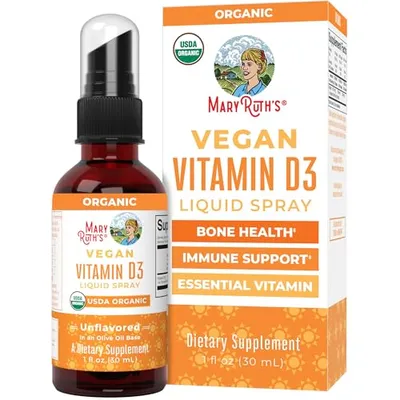
#4Not Recommended
Mary Ruth's MaryRuth Organics Vitamin D USDA Organic | VIT D3 Liquid | Sugar Free | Liquid VIT D SprThe best Vitamin D supplement for most adults is vitamin D3 (cholecalciferol) at 1,000-2,000 IU daily, ideally taken...
The best Vitamin D supplement for most adults is vitamin D3 (cholecalciferol) at 1,000-2,000 IU daily, ideally taken with a fat-containing meal for absorption. D3 is 87% more effective at raising serum 25(OH)D levels than D2.
How We Chose These Products
Products are ranked using our published scoring methodology — evidence strength, dose adequacy, ingredient form, third-party testing signals, value, and clean-label factors are weighted across the 5 criteria below. Commercial relationships do not determine our editorial rankings.
D3 Form (not D2)
25%D3 is 87% more effective than D2 at raising serum 25(OH)D levels. All our picks use D3 cholecalciferol.
Third-Party Testing
25%USP, NSF, or independent testing ensures potency accuracy. Fat-soluble vitamins are frequently over- or under-dosed.
K2 Co-factor
20%Vitamin K2 (MK-7) directs calcium to bones rather than arteries. Critical at doses above 2,000 IU.
Dose Flexibility
15%Ideal dose varies by individual — products with adjustable serving sizes (liquids, lower IU) score higher.
Value
15%Cost per serving adjusted for included co-factors. A D3+K2 at $0.13/serving is better value than separate purchases.
#1 Top Pick
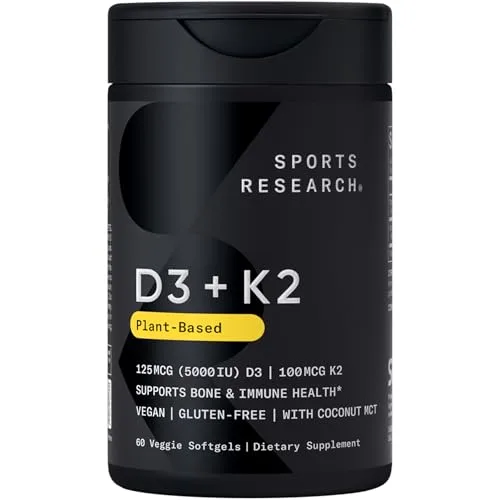
Combines D3 with K2 (MK-7) to direct calcium to bones rather than arteries. USP verified. Coconut oil carrier enhances absorption of this fat-soluble vitamin.
IngredientVitamin D3 (Cholecalciferol) + K2 (MK-7)
Dose5,000 IU D3 + 100mcg K2
FormSoftgel with coconut oil
TestingUSP Verified
5,000 IU D3 + 100mcg K2Clinical range: 1,000-4,000 IU daily (25-100 mcg)
Therapeutic dose
$0.40 / count$23.95 · 60 Softgels
Pros
- USP Verified (gold standard)
- D3 + K2 combo in one softgel
- Coconut oil carrier for absorption
Cons
- 5,000 IU may exceed needs for some
- Should test levels before starting high dose
Gluten-freeNon-GMOSoy-free
Quick Comparison
#1Sports Research Vitamin D3 + K2 (5000 IU)
9.3/10
Sports Research
#1 Top Pick
51,867 Amazon reviews
Best for: General supplementation with calcium metabolism support
Vitamin D3 (Cholecalciferol) + K2 (MK-7) · 5,000 IU D3 + 100mcg K2
Softgel with coconut oil · USPUSP Verified
$23.95
$0.40 / count
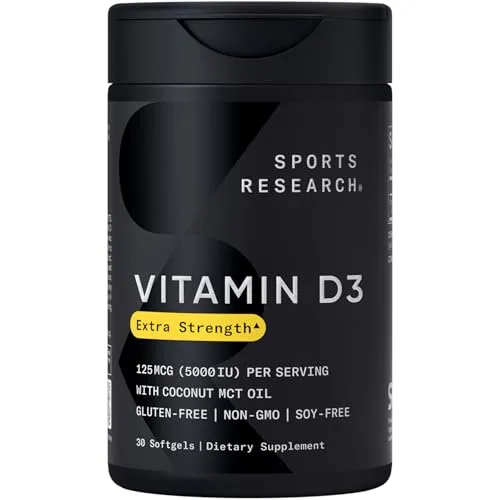
#2Sports Research Vitamin D3 5000 IU with Coconut MCT Oil
9.2/10
Sports Research
71,366 Amazon reviews
Best for: Adults seeking a highly bioavailable daily vitamin D3 supplement enhanced with coconut MCT oil for improved fat-soluble absorption
Vitamin D3 (as cholecalciferol) · 5000 IU (125 mcg) per softgel with cold-pressed virgin coconut oil
Softgel · Yes — Non-GMO Verified, cGMP-compliant, third-party tested for quality and potency
$8.95
$0.30 / count
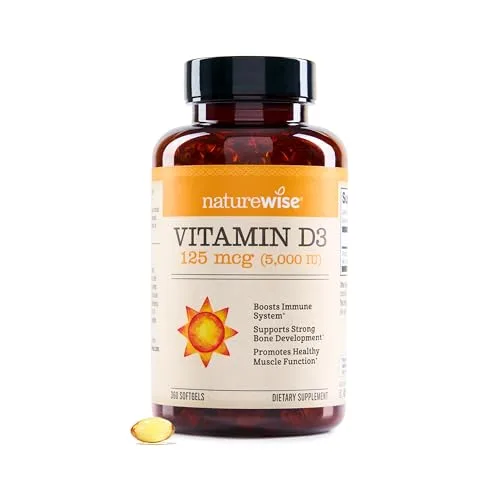
#3NatureWise Vitamin D3 5000 IU
9/10
NatureWise
191,874 Amazon reviews
Best for: value vitamin D3
Vitamin D3 (Cholecalciferol) in Organic Olive Oil · 5,000 IU (125mcg)
Softgel · Third-Party Tested, Non-GMO
$14.99
$0.04 / count
#4Mary Ruth's MaryRuth Organics Vitamin D USDA Organic | VIT D3 Liquid | Sugar Free | Liquid VIT D Spr
9/10
MARYRUTH'S
1,536 Amazon reviews
Best for: Not Recommended
Liquid · 2000 IU
Liquid · USDA Organic, Non-GMO
$18.95
$23.40 / fluid ounce
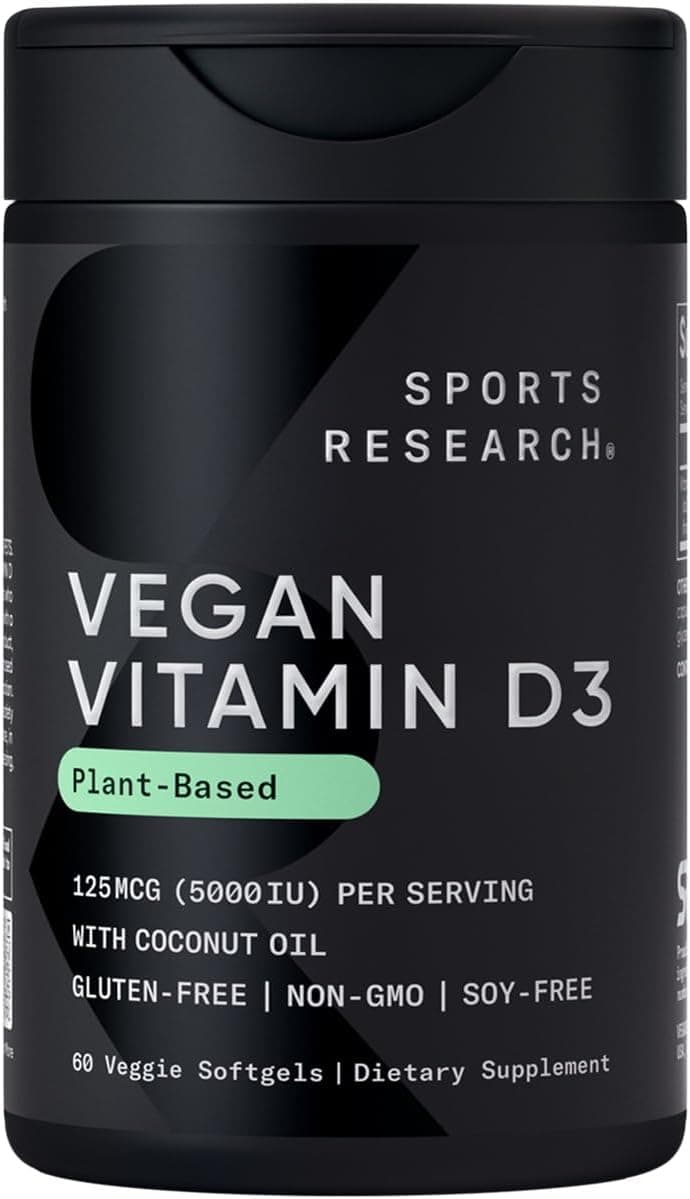
#5Sports Research Vegan Vitamin D3 5000IU with Coconut Oil
8.5/10
Sports Research
2,643 Amazon reviews
Best for: Vegans and plant-based athletes needing a clinically dosed D3 from lichen
Vitamin D3 (as Cholecalciferol from VegaDelight lichen) · 5000 IU (125 mcg) per softgel
Veggie Softgel · Yes — Non-GMO Project Verified, Vegan Certified
$15.95
$0.27 / count
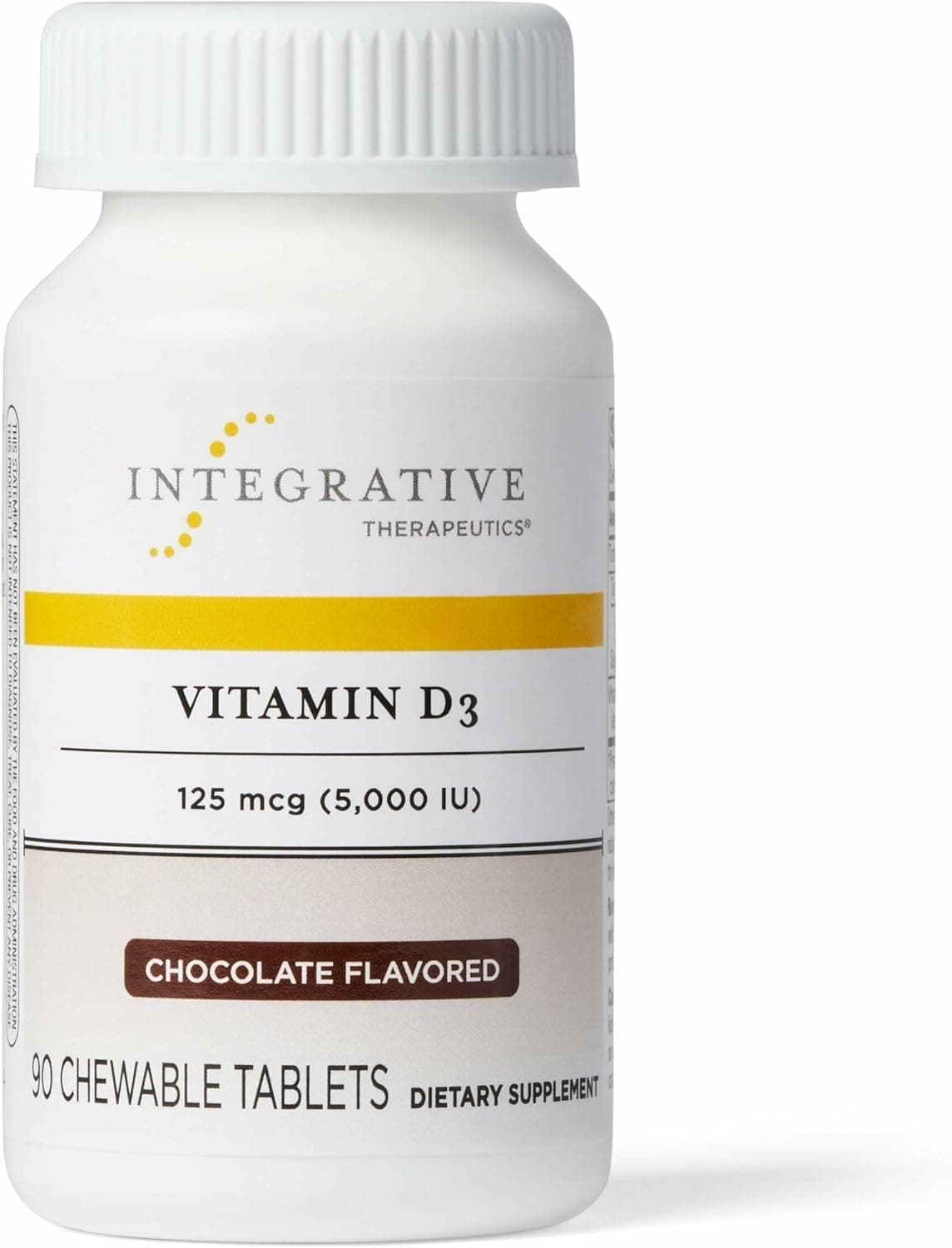
#6IT Vitamin D3 125 mcg Chewable
8/10
Integrative Therapeutics
745 Amazon reviews
Best for: Adults who prefer a chewable vitamin D3 format at a high-potency 5,000 IU dose for bone health and immune support, without swallowing capsules
Vitamin D3 (cholecalciferol) 5,000 IU · 125 mcg (5,000 IU) vitamin D3 per chewable tablet (90 tablets, 90 servings)
Chewable Tablet · GMP Certified
$23.50
$0.26 / count
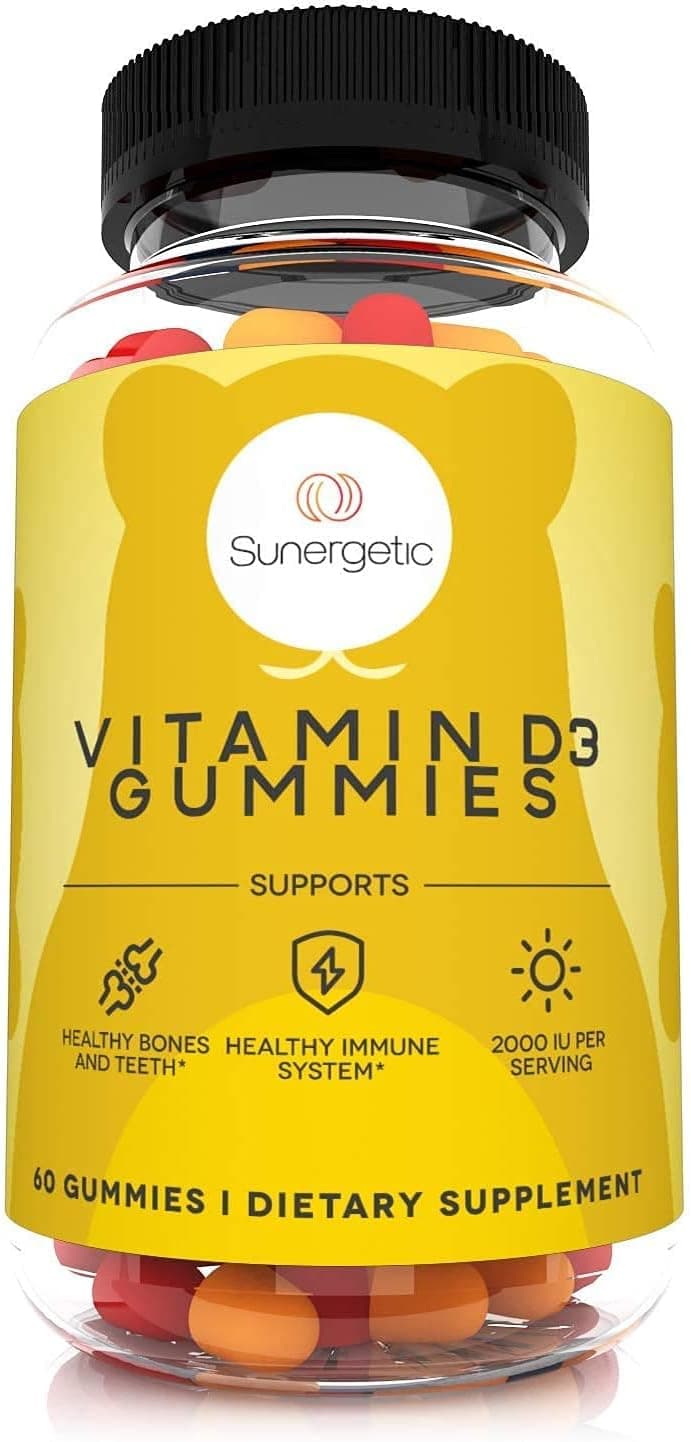
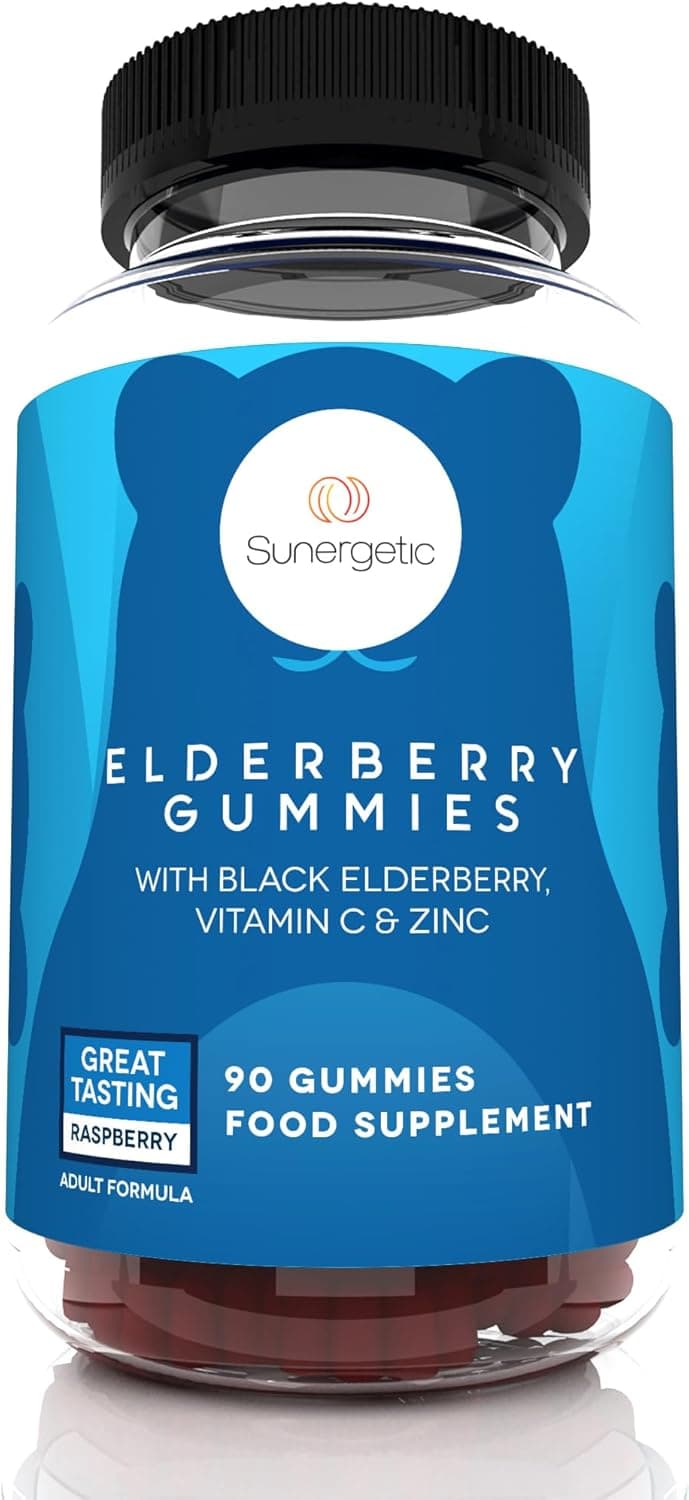
#7Sunergetic Vitamin D3 Gummies 2000 IU
7.8/10
Sunergetic
426 Amazon reviews
Best for: Users preferring gummy Vitamin D format at 1000 IU per gummy with strawberry-peach-mango flavor for daily bone, mood, and immune support
Cholecalciferol (Vitamin D3) 2000 IU per serving · 2000 IU (50 mcg) D3 per 2-gummy serving; 30 servings per bottle
Gummy · GMP manufactured; third-party testing not publicly disclosed
$22.95
| # | Product | Best For | Ingredient & Dose | Form & Testing | Price | Rating | |
|---|---|---|---|---|---|---|---|
| 1 | Sports Research Vitamin D3 + K2 (5000 IU) #1 Top Pick 51,867 Amazon reviews | General supplementation with calcium metabolism support | Vitamin D3 (Cholecalciferol) + K2 (MK-7) 5,000 IU D3 + 100mcg K2 | Softgel with coconut oil 60 Softgels USPUSP Verified | $23.95 $0.40 / count | 9.3/10 | |
| 2 | Sports Research Vitamin D3 5000 IU with Coconut MCT Oil 71,366 Amazon reviews | Adults seeking a highly bioavailable daily vitamin D3 supplement enhanced with coconut MCT oil for improved fat-soluble absorption | Vitamin D3 (as cholecalciferol) 5000 IU (125 mcg) per softgel with cold-pressed virgin coconut oil | Softgel 30.0 Count Yes — Non-GMO Verified, cGMP-compliant, third-party tested for quality and potency | $8.95 $0.30 / count | 9.2/10 | |
| 3 | NatureWise Vitamin D3 5000 IU 191,874 Amazon reviews | value vitamin D3 | Vitamin D3 (Cholecalciferol) in Organic Olive Oil 5,000 IU (125mcg) | Softgel 360 Count Third-Party Tested, Non-GMO | $14.99 $0.04 / count | 9/10 | |
| 4 | Mary Ruth's MaryRuth Organics Vitamin D USDA Organic | VIT D3 Liquid | Sugar Free | Liquid VIT D Spr 1,536 Amazon reviews | Not Recommended | Liquid 2000 IU | Liquid 30 Servings USDA Organic, Non-GMO | $18.95 $23.40 / fluid ounce | 9/10 | |
| 5 | Sports Research Vegan Vitamin D3 5000IU with Coconut Oil 2,643 Amazon reviews | Vegans and plant-based athletes needing a clinically dosed D3 from lichen | Vitamin D3 (as Cholecalciferol from VegaDelight lichen) 5000 IU (125 mcg) per softgel | Veggie Softgel 60.0 Count Yes — Non-GMO Project Verified, Vegan Certified | $15.95 $0.27 / count | 8.5/10 | |
| 6 | IT Vitamin D3 125 mcg Chewable 745 Amazon reviews | Adults who prefer a chewable vitamin D3 format at a high-potency 5,000 IU dose for bone health and immune support, without swallowing capsules | Vitamin D3 (cholecalciferol) 5,000 IU 125 mcg (5,000 IU) vitamin D3 per chewable tablet (90 tablets, 90 servings) | Chewable Tablet 90 Count GMP Certified | $23.50 $0.26 / count | 8/10 | |
| 7 | Sunergetic Vitamin D3 Gummies 2000 IU 426 Amazon reviews | Users preferring gummy Vitamin D format at 1000 IU per gummy with strawberry-peach-mango flavor for daily bone, mood, and immune support | Cholecalciferol (Vitamin D3) 2000 IU per serving 2000 IU (50 mcg) D3 per 2-gummy serving; 30 servings per bottle | Gummy 60 Count GMP manufactured; third-party testing not publicly disclosed | $22.95 | 7.8/10 |
Detailed Reviews
#1 Top Pick
Sports Research® Vitamin D3 + K2 w/ Coconut Oil - Vegan Vitamin D 5000iu & Mk7 Vitamin K 100mcg for Bone & Immune Support - Vegan Certified · Non-GMO · Soy Free - 60 Softgels
#1 Best Sellerin Vitamin D3 &Sports Research
51,867 Amazon reviews
9.3/10
(51,867)
Gluten-freeNon-GMOSoy-free
Combines D3 with K2 (MK-7) to direct calcium to bones rather than arteries. USP verified. Coconut oil carrier enhances absorption of this fat-soluble vitamin.
IngredientVitamin D3 (Cholecalciferol) + K2 (MK-7)
Dose5,000 IU D3 + 100mcg K2
FormSoftgel with coconut oil
TestingUSP Verified
5,000 IU D3 + 100mcg K2Clinical range: 1,000-4,000 IU daily (25-100 mcg)
Therapeutic dose
$0.40 / count$23.95 · 60 Softgels
Ideal for: General supplementation with calcium metabolism support
Not ideal for: Those with normal vitamin D levels who need under 2,000 IU
Pros
- USP Verified (gold standard)
- D3 + K2 combo in one softgel
- Coconut oil carrier for absorption
- Excellent value at $0.13/serving
Cons
- 5,000 IU may exceed needs for some
- Should test levels before starting high dose
Sports Research Vitamin D3 5000 IU with Coconut MCT Oil - Extra Strength Vitamin D Supplement - Non-GMO Verified, Gluten & Soy Free – 125mcg, 30 Liquid Softgels
Sports Research
71,366 Amazon reviews
9.2/10
(71,366)
Gluten-free, soy-free, non-GMOFree from soybean oil and synthetic additives
Sports Research D3 5000 IU with Coconut MCT Oil is one of the best-validated vitamin D products in its category — 71K+ reviews at 4.8 stars speaks to real-world satisfaction at scale. The coconut oil delivery system directly addresses D3's fat-soluble bioavailability limitation, making it meaningfully superior to dry-powder D3 tablets. Clean ingredient list, third-party testing, and Non-GMO Verification round out a product that earns its top ranking.
IngredientVitamin D3 (as cholecalciferol)
Dose5000 IU (125 mcg) per softgel with cold-pressed virgin coconut oil
FormSoftgel
TestingYes — Non-GMO Verified, cGMP-compliant, third-party tested for quality and potency
5000 IU (125 mcg) per softgel with cold-pressed virgin coconut oilClinical range: 1,000-4,000 IU daily (25-100 mcg)
Clinical dose
$0.30 / count$8.95 · 30.0 Count
Ideal for: Adults seeking a highly bioavailable daily vitamin D3 supplement enhanced with coconut MCT oil for improved fat-soluble absorption
Not ideal for: Those who need a D3+K2 combination formula or prefer capsules without any oil carrier
Pros
- 71,366+ reviews at 4.8 stars — among the highest-rated D3 supplements on Amazon
- Coconut MCT oil carrier significantly enhances bioavailability of this fat-soluble vitamin
- Clean formula: only D3 and coconut oil — no soybean oil, no synthetic fillers
- Non-GMO Verified, third-party tested, and manufactured in a US cGMP-compliant facility
Cons
- 30-count bottle lasts only one month at the labeled dose — frequent reorders required
- 5000 IU dose exceeds the RDA and may not be appropriate without bloodwork confirmation
- No K2 included, which some experts recommend alongside high-dose D3 for calcium metabolism
NatureWise Vitamin D3 5000iu (125 mcg) 1 Year Supply for Immune Support, Healthy Muscle Function, and Bone Health - Non-GMO, Gluten Free in Organic Extra Virgin Olive Oil, (Mini Softgel), 360 Count
#2 Best Sellerin Vitamin D SupplementsNatureWise
191,874 Amazon reviews
9/10
(191,874)
Gluten-freeNon-GMO
America's #1 best-selling vitamin D brand with 60,000+ reviews. Organic olive oil carrier for absorption. Exceptional value at about 5 cents per day.
IngredientVitamin D3 (Cholecalciferol) in Organic Olive Oil
Dose5,000 IU (125mcg)
FormSoftgel
TestingThird-Party Tested, Non-GMO
5,000 IU (125mcg)Clinical range: 1,000-4,000 IU daily (25-100 mcg)
Clinical dose
$0.04 / count$14.99 · 360 Count
Ideal for: value vitamin D3
Not ideal for: People supplementing calcium who need K2 co-factor
Pros
- #1 best-selling vitamin D brand
- Incredible value ($0.05/serving)
- Organic olive oil carrier
- 60,000+ reviews
Cons
- No K2 included
- May need separate K2 supplement
MaryRuth Organics Vitamin D USDA Organic | VIT D3 Liquid | Sugar Free | Liquid VIT D Spray Immune Support for Adults & Kids | Bone Health| Vegan | Gluten Free | Non-GMO | 30 Servings
MARYRUTH'S
1,536 Amazon reviews
9/10
(1,536)
Customer rating of 4.5★ flags quality/efficacy concerns versus higher-rated alternatives on this page.
IngredientLiquid
Dose2000 IU
FormLiquid
TestingUSDA Organic, Non-GMO
2000 IUClinical range: 1,000-4,000 IU daily (25-100 mcg)
Blend formula
$23.40 / fluid ounce$18.95 · 30 Servings
Ideal for: Not Recommended
Not ideal for: Most users — see customer reviews
Low Amazon rating (4.5★/1536 reviews).
Sports Research Vegan Vitamin D3 5000IU (125 mcg) with Coconut Oil | 100% Plant-Based Vitamin D for Bone, Joint & Immune Support | Carrageenan Free, Vegan Certified & Non-GMO Verified (60 Softgels)
Sports Research
2,643 Amazon reviews
8.5/10
(2,643)
Gluten-free, soy-free, carrageenan-free, no animal byproducts
This is the go-to vegan D3 on Amazon for plant-based athletes. The lichen-sourced VegaDelight ingredient is the real deal — cholecalciferol, not ergocalciferol — delivering the body's preferred form of D3 without any animal inputs. Coconut oil suspension addresses the classic fat-solubility absorption challenge. With 2,643 reviews at 4.8 stars, it's well-validated by real users.
IngredientVitamin D3 (as Cholecalciferol from VegaDelight lichen)
Dose5000 IU (125 mcg) per softgel
FormVeggie Softgel
TestingYes — Non-GMO Project Verified, Vegan Certified
5000 IU (125 mcg) per softgelClinical range: 1,000-4,000 IU daily (25-100 mcg)
Clinical dose
$0.27 / count$15.95 · 60.0 Count
Ideal for: Vegans and plant-based athletes needing a clinically dosed D3 from lichen
Not ideal for: Those who prefer a D3+K2 combo or need higher-volume supply beyond 60 softgels
Pros
- Plant-sourced D3 from lichen — the only vegan form of cholecalciferol
- Coconut oil carrier improves absorption of this fat-soluble vitamin
- Vegan Certified and Non-GMO Project Verified with carrageenan-free capsule
- 5000 IU dose is appropriate for deficiency correction per clinical guidance
Cons
- Only 60 softgels per bottle — roughly 2-month supply at one daily
- No K2 co-factor included, which some D3 formulas pair for calcium direction
- Slightly higher cost-per-serving than non-vegan D3 options
Integrative Therapeutics Vitamin D3 125 mcg - Vitamin D Supplement for Bone Health & Immune Support* - Gluten-Free & Dairy-Free - Chocolate Flavored, 90 Chewable Tablets (90 Servings)
Integrative Therapeutics
745 Amazon reviews
8/10
(745)
Integrative Therapeutics' clinical-grade manufacturing ensures potency accuracy in a format — chocolate chewable — that genuinely improves adherence for D3-resistant patients. The 5,000 IU dose and 4.7-star rating reflect real-world clinical utility and strong patient satisfaction in the practitioner supplement space.
IngredientVitamin D3 (cholecalciferol) 5,000 IU
Dose125 mcg (5,000 IU) vitamin D3 per chewable tablet (90 tablets, 90 servings)
FormChewable Tablet
TestingGMP Certified
125 mcg (5,000 IU) vitamin D3 per chewable tablet (90 tablets, 90 servings)Clinical range: 1,000-4,000 IU daily (25-100 mcg)
Clinical dose
$0.26 / count$23.50 · 90 Count
Ideal for: Adults who prefer a chewable vitamin D3 format at a high-potency 5,000 IU dose for bone health and immune support, without swallowing capsules
Not ideal for: Those who need vitamin D combined with K2 for optimal calcium metabolism, or anyone who prefers unflavored capsule or liquid formats
Pros
- 5,000 IU of D3 as cholecalciferol — the most bioavailable form of vitamin D
- Chocolate-flavored chewable format ideal for those who dislike swallowing capsules
- Sugar-free, gluten-free, dairy-free, soy-free — broad allergen-friendly profile
- 745 reviews at 4.7 stars — strong social proof for a clinical-brand chewable D3
Cons
- 5,000 IU is above the standard 1,000–2,000 IU dose — requires bloodwork-guided use
- Does not include vitamin K2, which many clinical practitioners co-prescribe with high-dose D3
- Chewable tablet form requires careful storage to prevent moisture-related breakdown
Sunergetic Premium Vitamin D3 Gummies - Powerful Vitamin D Gummies to Support Healthy Bones, Mood & Immune System - 2000 IU of Vitamin D3 per Serving - 60 D3 Gummies
Sunergetic
426 Amazon reviews
7.8/10
(426)
Gluten-free
Vitamin D3 (cholecalciferol) at 2000 IU is the sweet spot for daily maintenance — matching Endocrine Society recommendations without crossing into therapeutic territory. Strong 4.6-star review profile and gummy format make it a compliance-friendly option.
IngredientCholecalciferol (Vitamin D3) 2000 IU per serving
Dose2000 IU (50 mcg) D3 per 2-gummy serving; 30 servings per bottle
FormGummy
TestingGMP manufactured; third-party testing not publicly disclosed
2000 IU (50 mcg) D3 per 2-gummy serving; 30 servings per bottleClinical range: 1,000-4,000 IU daily (25-100 mcg)
Therapeutic dose
$22.95 · 60 Count
Ideal for: Users preferring gummy Vitamin D format at 1000 IU per gummy with strawberry-peach-mango flavor for daily bone, mood, and immune support
Not ideal for: Users needing higher clinical doses (5000+ IU) or sugar-free Vitamin D capsules
Pros
- 2000 IU D3 matches the Endocrine Society maintenance recommendation for most adults
- Cholecalciferol (D3) is the more bioavailable form than D2 (ergocalciferol)
- Gummy format improves compliance for people who dislike capsules
- 426 reviews at 4.6 stars signals strong consumer satisfaction
Cons
- Third-party testing not publicly disclosed — no published COAs on the brand site
- Gummies contain added sugar unlike capsule alternatives
- Below the higher doses (5000-10000 IU) sometimes used to correct deficiency
Pairs Well With
Frequently taken together based on complementary benefits
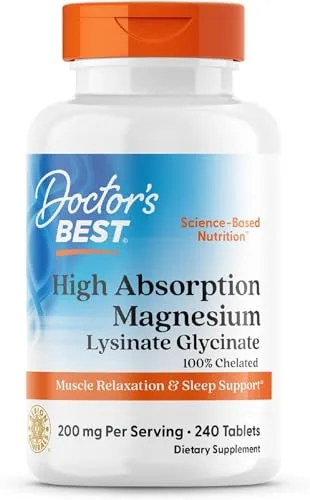
Magnesium
Doctor's Best High Absorption Magnesium Glycinate
200mg elemental Mg per serving
How to Choose
Always Choose D3, Never D2
Vitamin D3 (cholecalciferol) is 87% more effective than D2 (ergocalciferol) at raising serum 25(OH)D levels, according to a 2012 meta-analysis. D3 has a longer half-life and is the form your skin naturally produces from sunlight. D2 is plant-derived and sometimes used in vegan supplements, but D3 from lichen is now available as a vegan alternative.
Take With Fat for Absorption
Vitamin D is fat-soluble — absorption increases up to 50% when taken with dietary fat. Choose softgels with built-in oil carriers (coconut oil, MCT oil, olive oil) or take your capsule with your largest meal. Avoid taking vitamin D on an empty stomach.
Get Tested Before Choosing a Dose
The optimal serum 25(OH)D level is 40-60 ng/mL according to the Endocrine Society. About 42% of US adults are deficient (<20 ng/mL). A simple blood test determines your baseline and ideal dose: 1,000-2,000 IU for maintenance, 5,000 IU for insufficiency, and 10,000 IU for severe deficiency (under medical supervision only).
Pair With K2 at Higher Doses
At D3 doses above 2,000 IU, pair with vitamin K2 (MK-7 form) to ensure calcium goes to bones, not arteries. K2 activates osteocalcin (bone-building) and matrix GLA protein (arterial protection). Most D3+K2 combos include 100-200mcg of K2, which is sufficient for daily use.
Ready to Buy?
Sports Research Vitamin D3 + K2 (5000 IU)
9.3/10$0.40 / countBest for: General supplementation with calcium metabolism support
The best Vitamin D supplement is D3 (cholecalciferol) at 1,000-5,000 IU daily, taken with dietary fat, ideally paired with K2 (MK-7) for safe calcium metabolism.
Evidence:Meta-analysis (2012) · high confidence[#1]. See full reference list below.Related Comparisons
Read Our Full Vitamin D3 Research Guide
Evidence level, dosage, side effects, and more →
Already taking supplements?
Check how Vitamin D3 fits with your current stack — interactions, timing, and optimization →
Related Supplements
MagnesiumStrong
Bottom line: For sleep support, magnesium glycinate is usually the most practical first-choice form. Start with 100-200mg elemental magnesium in the evening, adjust only if tolerated, and stay at or below 350mg/day from supplements unless a clinician recommends otherwise.
Top picks →ZincStrong
Bottom line: Zinc is a proven cold fighter and essential immune mineral. Take 15-30mg daily for maintenance and zinc lozenges within 24 hours of cold onset for fastest recovery.
Top picks →Related Conditions
Learn More
Frequently Asked Questions
How much vitamin D should I take daily?
How much vitamin D should I take daily?
The Endocrine Society recommends 1,000-2,000 IU daily for most adults to maintain serum levels of 40-60 ng/mL. However, individual needs vary widely based on skin tone, sun exposure, latitude, and body weight. People with obesity may need 2-3x higher doses. Always test your serum 25(OH)D levels before taking doses above 2,000 IU.
What is the best time to take vitamin D?
What is the best time to take vitamin D?
Take vitamin D with your largest meal of the day, as it is fat-soluble and absorption increases up to 50% when taken with dietary fat. Morning or evening does not matter — consistency with a fat-containing meal is what counts. Avoid taking it on an empty stomach.
Can you take too much vitamin D?
Can you take too much vitamin D?
Yes. Vitamin D toxicity (hypervitaminosis D) occurs at sustained daily intakes above 10,000 IU without medical supervision. Symptoms include nausea, vomiting, weakness, and dangerously high calcium levels. The tolerable upper limit is 4,000 IU/day for adults, though many experts consider 5,000 IU safe with monitoring. Always test serum 25(OH)D levels.
Should I take vitamin D3 or D2?
Should I take vitamin D3 or D2?
Always choose D3 (cholecalciferol). A 2012 meta-analysis in the American Journal of Clinical Nutrition [1] found D3 is more effective than D2 (ergocalciferol) at raising and maintaining serum vitamin D levels. D2 has a shorter half-life and is less potent per IU. D3 is the form your skin naturally produces from sunlight.
Evidence:Meta-analysis (2012) · high confidence[#1]. See full reference list below.Do I need to take vitamin K2 with vitamin D3?
Do I need to take vitamin K2 with vitamin D3?
It is strongly recommended, especially at doses above 2,000 IU. Vitamin D increases calcium absorption, but without K2, that calcium may deposit in arteries instead of bones. K2 (specifically MK-7) activates proteins that direct calcium to bones and keep it out of soft tissues. Look for D3+K2 combination products for convenience.
How do I know if I am vitamin D deficient?
How do I know if I am vitamin D deficient?
A serum 25(OH)D blood test is the only reliable way. Levels below 20 ng/mL are deficient, 20-29 ng/mL is insufficient, 30-50 ng/mL is adequate, and 40-60 ng/mL is considered optimal by the Endocrine Society. About 42% of US adults are deficient. Risk factors include dark skin, obesity, limited sun exposure, and northern latitudes.
Is vitamin D safe during pregnancy?
Is vitamin D safe during pregnancy?
Yes, vitamin D is important during pregnancy. The American College of Obstetricians and Gynecologists recommends 600 IU daily as a minimum, though many practitioners suggest 1,000-2,000 IU. Severe deficiency during pregnancy is linked to preeclampsia, gestational diabetes, and low birth weight. Consult your OB-GYN for personalized dosing.
Continue Reading
Supplement Guide
Magnesium
Bottom line: For sleep support, magnesium glycinate is usually the most practical first-choice form. Start with 100-200mg elemental magnesium in the evening, adjust only if tolerated, and stay at or below 350mg/day from supplements unless a clinician recommends otherwise.
Condition GuideJoint Pain
ArticleThe Best Time to Take Every Supplement: A Complete Timing Guide
References
- Meta-analysisTripkovic L, Lambert H, Hart K, Smith CP, Bucca G, Penson S, et al. (2012). Comparison of vitamin D2 and vitamin D3 supplementation in raising serum 25-hydroxyvitamin D status: a systematic review and meta-analysis. American Journal of Clinical Nutrition. DOI PubMed
- RCTDawson-Hughes B, Harris SS, Lichtenstein AH, Dolnikowski G, Palber NJ, Rasmussen H (2015). Dietary fat increases vitamin D-3 absorption. Journal of the Academy of Nutrition and Dietetics. DOI PubMed
- Holick MF, Binkley NC, Bischoff-Ferrari HA, Gordon CM, Hanley DA, Heaney RP, et al. (2011). Evaluation, treatment, and prevention of vitamin D deficiency: an Endocrine Society clinical practice guideline. Journal of Clinical Endocrinology & Metabolism. DOI PubMed
- Forrest KY, Stuhldreher WL (2011). Prevalence and correlates of vitamin D deficiency in US adults. Nutrition Research. DOI PubMed
- Masterjohn C (2007). Vitamin D toxicity redefined: vitamin K and the molecular mechanism. Medical Hypotheses. DOI PubMed