
We evaluated the supplements with the strongest evidence for acne — zinc, omega-3, probiotics, Vitamin A, and DIM — across clinical trial alignment, dose adequacy, and mechanism coverage for inflammatory versus hormonal versus gut-microbiome-driven breakouts. Zinc has the strongest RCT evidence (49% reduction in inflammatory lesions per 2020 meta-analysis).
Best Supplements for Acne (2026)
Product pricing and availability checked
Methodology: Evidence-ranked evaluation
·
2,600+Clinical Studies Cited
·5Zinc products evaluated
This content is for informational purposes only and does not constitute medical advice. Statements about dietary supplements have not been evaluated by the FDA and are not intended to diagnose, treat, cure, or prevent any disease. Individual results may vary — consult your healthcare provider before starting any supplement. Full disclaimer
As an Amazon Associate, we earn from qualifying purchases. Some links below are affiliate links — this doesn't affect our editorial independence or product ratings. How we evaluate products
Our Verdict
The best acne supplement stacks the three most-studied nutrients — zinc (30-50mg), omega-3s (1-2g EPA+DHA), and vitamin D (2,000-5,000 IU) — at clinical doses from a third-party tested product.
Best By Category
The best acne supplements combine zinc (30-50mg), omega-3 fatty acids (1-2g EPA+DHA daily), and vitamin D3 (2,000-5,000...
The best acne supplements combine zinc (30-50mg), omega-3 fatty acids (1-2g EPA+DHA daily), and vitamin D3 (2,000-5,000 IU) — each independently RCT-backed for reducing inflammatory lesion counts. Zinc gluconate or picolinate is the most absorbable form; take with food to avoid GI upset.
How We Chose These Products
Products are ranked using our published scoring methodology — evidence strength, dose adequacy, ingredient form, third-party testing signals, value, and clean-label factors are weighted across the 5 criteria below. Commercial relationships do not determine our editorial rankings.
Zinc Dose Match
35%The 2020 Yee et al. meta-analysis of 10 RCTs found 30-45mg daily zinc reduced inflammatory acne lesions by 49%. Products delivering 15mg score poorly; 30-50mg scores highest. Bioavailable forms (picolinate, gluconate) outperform oxide. Doses above 50mg require copper co-supplementation to prevent copper depletion.
Mechanism Coverage
25%Acne has four drivers — sebum production, clogged pores, C. acnes overgrowth, and inflammation. Zinc addresses inflammation and has antimicrobial activity. Omega-3 reduces leukotriene B4 and prostaglandin E2 in skin tissue. Probiotics modulate the gut-skin axis. DIM targets androgen metabolism for hormonal acne. Multi-mechanism formulas score higher.
Third-Party Testing & Form
18%Zinc picolinate and zinc gluconate have the strongest absorption profiles. Zinc oxide and zinc citrate are less bioavailable and score lower. Third-party testing is particularly important for mineral products where label accuracy varies widely between brands.
Evidence Tier for Acne Specifically
14%Zinc has Strong evidence (meta-analysis of 10 RCTs). Omega-3 and probiotics have Moderate evidence from 2-5 RCTs. Vitamin A and DIM have Emerging evidence. We prioritize products with the ingredient tier that matches the user's primary acne driver.
Value per Clinical Serving
8%Cost per serving at a clinically effective dose. A $0.10 capsule of 15mg zinc is worse value than a $0.25 capsule of 50mg zinc for acne purposes, because the lower dose requires triple-dosing to reach the clinical target.
#1 Top Pick
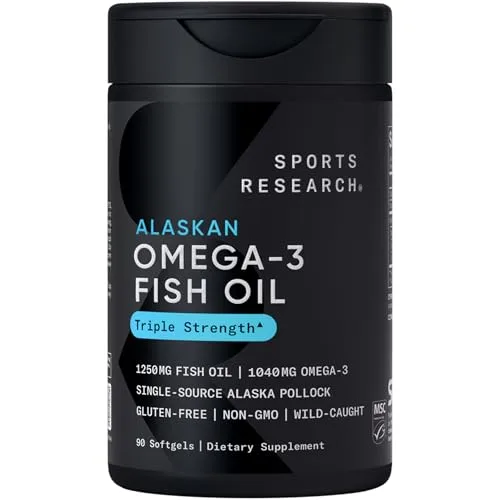
Khayef et al. 2012 (Lipids Health Dis) found 930mg EPA + 720mg DHA daily for 10 weeks reduced inflammatory acne lesion counts versus placebo. Sports Research Triple Strength delivers 1,040mg EPA+DHA in a single softgel — hitting the clinical range in one pill. IFOS 5-Star is the fish-oil-specific purity tier (tests for PCBs, mercury, oxidation).
IngredientEPA 690mg + DHA 310mg per softgel (Triple Strength fish oil)
Dose1,040mg EPA+DHA per softgel; 1 softgel daily
FormSoftgel
TestingIFOS 5-Star
1,040mg EPA+DHA per softgel; 1 softgel dailyClinical range: 15-30mg elemental zinc daily
Clinical dose
$0.35 / count$31.17 · 90.0 Count
Pros
- Hits full clinical EPA+DHA dose in one softgel (1,040mg)
- IFOS 5-Star — gold standard for fish oil purity
- Triglyceride form (higher absorption than ethyl ester)
Cons
- Fish-derived (not vegan)
- Minor fishy burps possible (no enteric coating)
Gluten-freeNon-GMOContains fish
Quick Comparison
#1Sports Research Triple Strength Omega-3
9.1/10
Sports Research
#1 Top Pick
58,683 Amazon reviews
Best for: Inflammatory acne patients whose lesions respond to anti-inflammatory modulation — omega-3 reduces PGE2 and inflammatory lesion counts in RCTs
EPA 690mg + DHA 310mg per softgel (Triple Strength fish oil) · 1,040mg EPA+DHA per softgel; 1 softgel daily
Softgel · IFOS 5-Star
$31.17
$0.35 / count
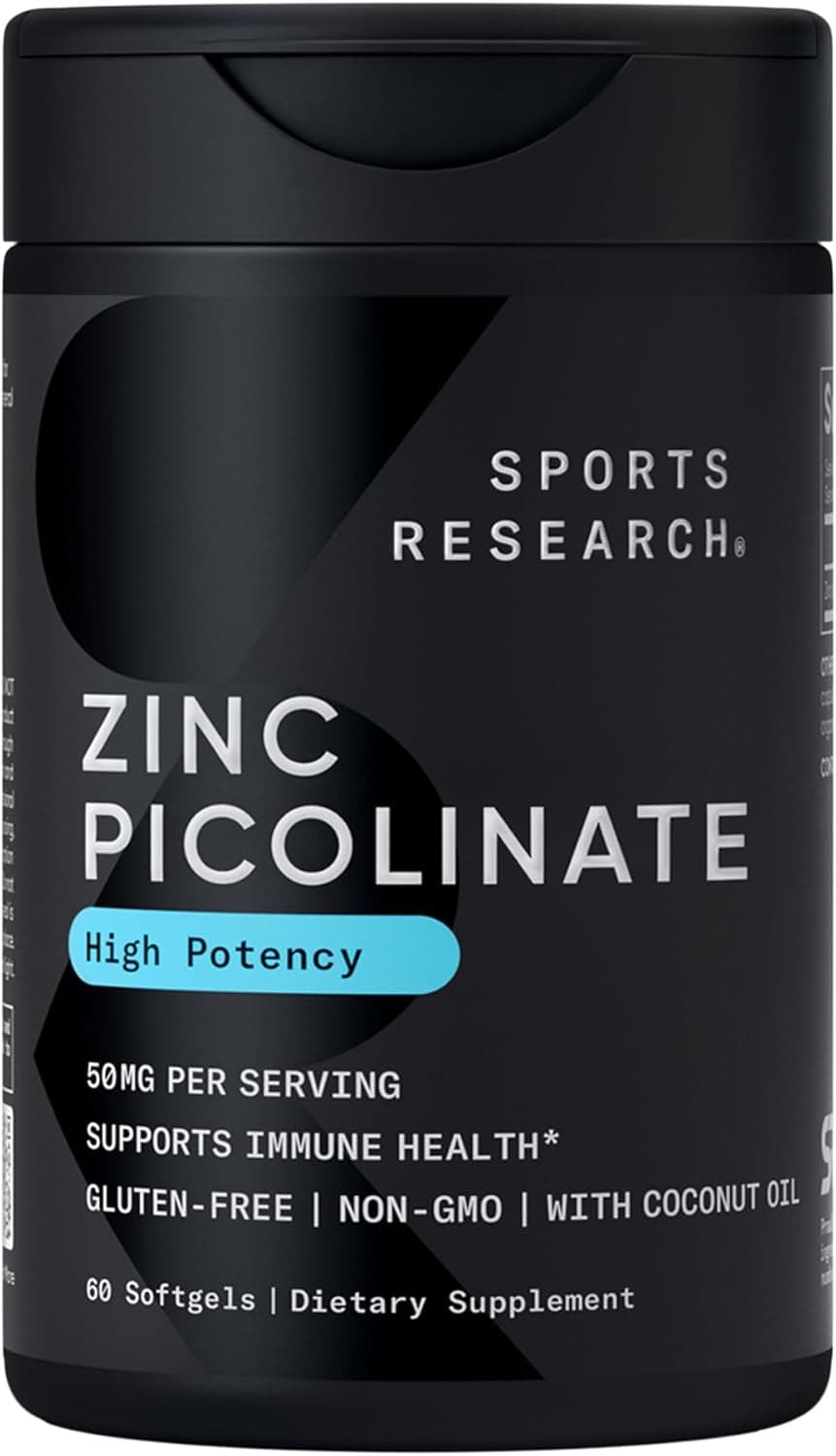
#2Sports Research Zinc Picolinate 50mg
8.8/10
Sports Research
2,903 Amazon reviews
Best for: Users who want the full clinical dose of bioavailable zinc in a single daily serving for inflammatory acne
Zinc (as Zinc Picolinate) 50mg · 1 softgel daily
Softgel · Third-Party Tested
$17.95
$0.30 / count
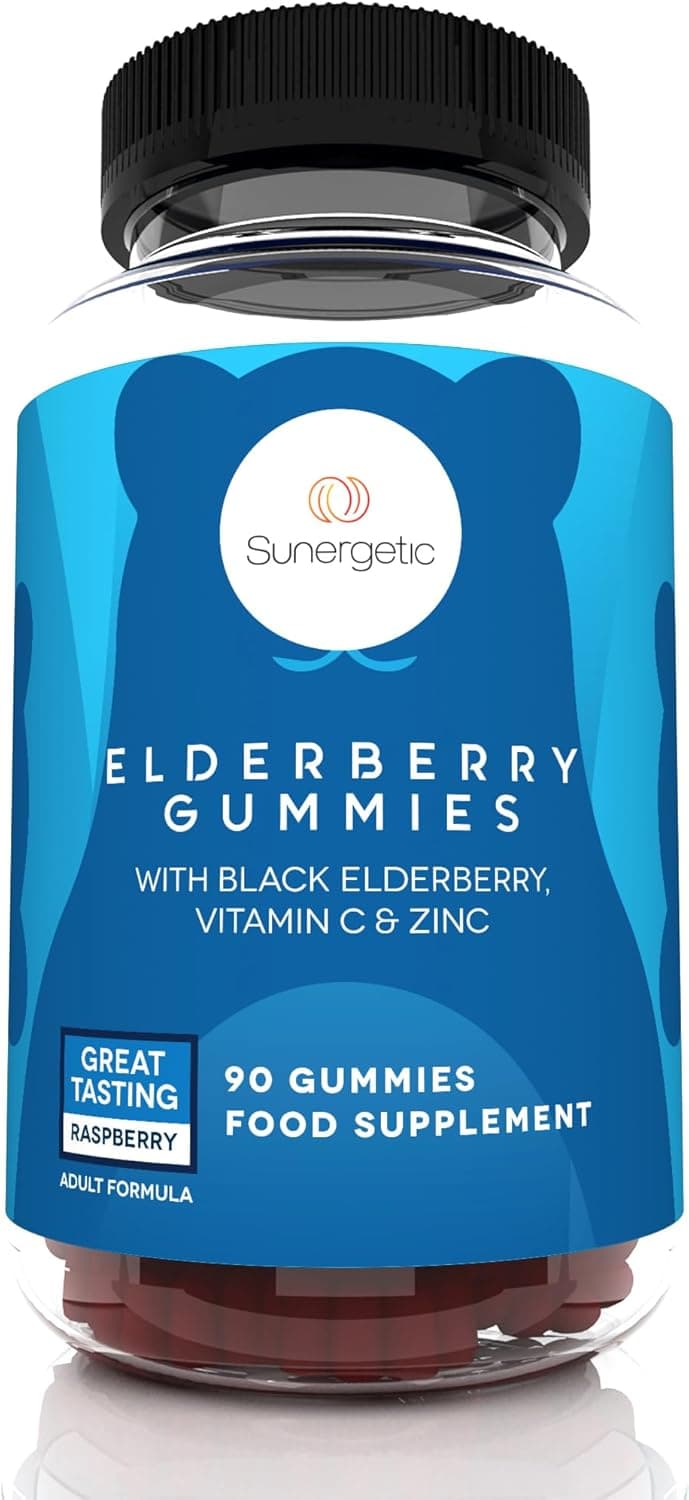
#3Sunergetic Elderberry Gummies Vitamin C Zinc
8/10
Sunergetic
637 Amazon reviews
Best for: Daily zinc + antioxidant support for inflammatory acne, particularly for users who prefer gummies to capsules
Sambucus Elderberry + Vitamin C + Zinc · 2 gummies daily
Gummy · GMP Certified
$19.95
$0.22 / count
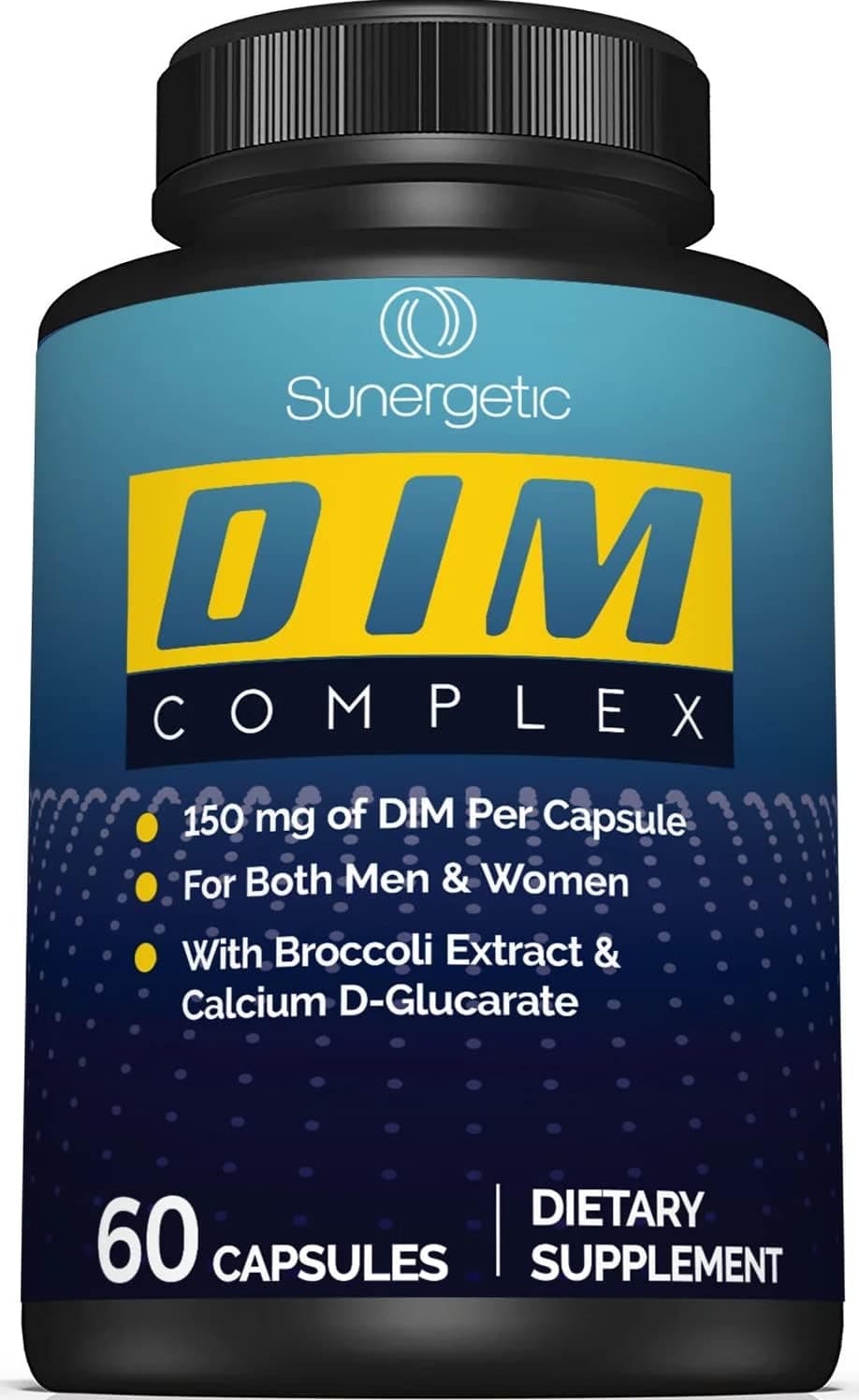
#4Sunergetic DIM 150mg
7.9/10
Sunergetic
652 Amazon reviews
Best for: Hormonal acne driven by androgen excess or estrogen-metabolism imbalance, particularly perimenstrual cystic acne
DIM 150mg + Broccoli Extract + Calcium D-Glucarate + BioPerine · 1 capsule daily
Capsule · GMP Certified
$17.95
$0.30 / count
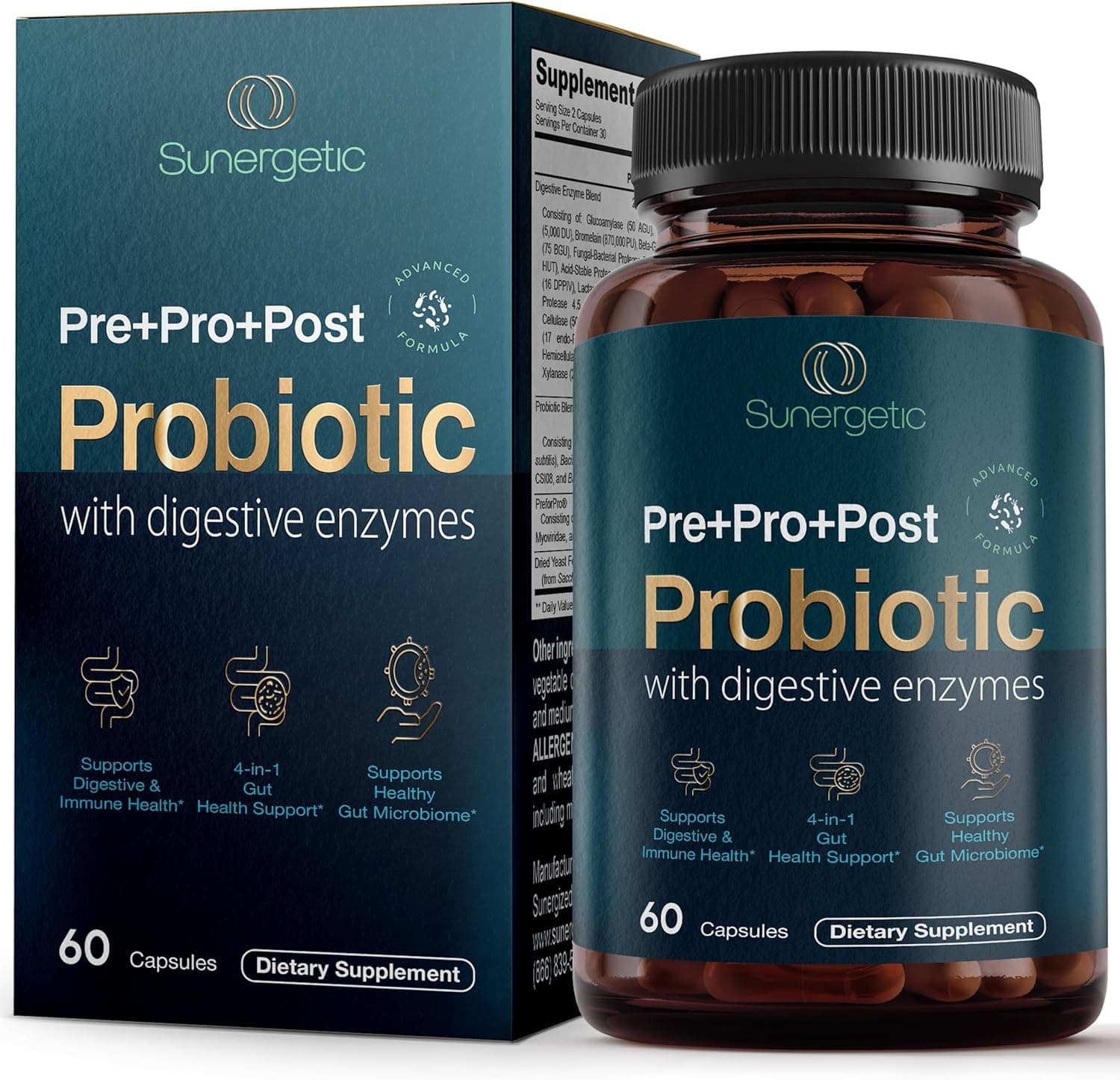
#5Sunergetic 4-in-1 Probiotic Prebiotic Postbiotic Enzyme
7.8/10
Sunergetic
1,434 Amazon reviews
Best for: Acne with gut-microbiome drivers — post-antibiotic, dietary-trigger, or adult acne with concurrent IBS/SIBO symptoms
Probiotic blend + Prebiotic + Postbiotic + Digestive Enzymes · 1 capsule daily
Capsule · GMP Certified
$22.95
$0.38 / count
| # | Product | Best For | Ingredient & Dose | Form & Testing | Price | Rating | |
|---|---|---|---|---|---|---|---|
| 1 | Sports Research Triple Strength Omega-3 #1 Top Pick 58,683 Amazon reviews | Inflammatory acne patients whose lesions respond to anti-inflammatory modulation — omega-3 reduces PGE2 and inflammatory lesion counts in RCTs | EPA 690mg + DHA 310mg per softgel (Triple Strength fish oil) 1,040mg EPA+DHA per softgel; 1 softgel daily | Softgel 90.0 Count IFOS 5-Star | $31.17 $0.35 / count | 9.1/10 | |
| 2 | Sports Research Zinc Picolinate 50mg 2,903 Amazon reviews | Users who want the full clinical dose of bioavailable zinc in a single daily serving for inflammatory acne | Zinc (as Zinc Picolinate) 50mg 1 softgel daily | Softgel 60.0 Count Third-Party Tested | $17.95 $0.30 / count | 8.8/10 | |
| 3 | Sunergetic Elderberry Gummies Vitamin C Zinc 637 Amazon reviews | Daily zinc + antioxidant support for inflammatory acne, particularly for users who prefer gummies to capsules | Sambucus Elderberry + Vitamin C + Zinc 2 gummies daily | Gummy 90 Count GMP Certified | $19.95 $0.22 / count | 8/10 | |
| 4 | Sunergetic DIM 150mg 652 Amazon reviews | Hormonal acne driven by androgen excess or estrogen-metabolism imbalance, particularly perimenstrual cystic acne | DIM 150mg + Broccoli Extract + Calcium D-Glucarate + BioPerine 1 capsule daily | Capsule 60 Count GMP Certified | $17.95 $0.30 / count | 7.9/10 | |
| 5 | Sunergetic 4-in-1 Probiotic Prebiotic Postbiotic Enzyme 1,434 Amazon reviews | Acne with gut-microbiome drivers — post-antibiotic, dietary-trigger, or adult acne with concurrent IBS/SIBO symptoms | Probiotic blend + Prebiotic + Postbiotic + Digestive Enzymes 1 capsule daily | Capsule 60 Count GMP Certified | $22.95 $0.38 / count | 7.8/10 |
Detailed Reviews
#1 Top Pick
Sports Research® Omega-3 Fish Oil 1250 - Triple Strength Fish Oil Supplement from Wild Alaska Pollock - MSC Certified Sustainable · Non-GMO · Soy Free - 90 Softgel Capsules
#1 Best Sellerin Fish Oil NutritionalSports Research
58,683 Amazon reviews
9.1/10
(58,683)
Gluten-freeNon-GMOContains fish
Khayef et al. 2012 (Lipids Health Dis) found 930mg EPA + 720mg DHA daily for 10 weeks reduced inflammatory acne lesion counts versus placebo. Sports Research Triple Strength delivers 1,040mg EPA+DHA in a single softgel — hitting the clinical range in one pill. IFOS 5-Star is the fish-oil-specific purity tier (tests for PCBs, mercury, oxidation).
IngredientEPA 690mg + DHA 310mg per softgel (Triple Strength fish oil)
Dose1,040mg EPA+DHA per softgel; 1 softgel daily
FormSoftgel
TestingIFOS 5-Star
1,040mg EPA+DHA per softgel; 1 softgel dailyClinical range: 15-30mg elemental zinc daily
Clinical dose
$0.35 / count$31.17 · 90.0 Count
Ideal for: Inflammatory acne patients whose lesions respond to anti-inflammatory modulation — omega-3 reduces PGE2 and inflammatory lesion counts in RCTs
Not ideal for: Pure comedonal acne without inflammatory component. Fish allergy. Patients on anticoagulants without clinician coordination
Pros
- Hits full clinical EPA+DHA dose in one softgel (1,040mg)
- IFOS 5-Star — gold standard for fish oil purity
- Triglyceride form (higher absorption than ethyl ester)
Cons
- Fish-derived (not vegan)
- Minor fishy burps possible (no enteric coating)
- Requires 8-12 weeks for peak anti-inflammatory effect
Sports Research Zinc Picolinate 50mg with Organic Coconut Oil | Highly Absorbable Zinc Supplement for Healthy Immune Function - Non-GMO Verified, Gluten & Soy Free (60 Liquid Softgels)
Sports Research
2,903 Amazon reviews
8.8/10
(2,903)
Gluten-freeNon-GMOSoy-free
Zinc picolinate is one of the most bioavailable zinc forms, and 50mg delivers the upper end of the 2020 Yee et al. meta-analysis dose range in a single softgel. Sports Research has 2,903 reviews averaging 4.7 stars — strong market validation. Taken with food to minimize nausea.
IngredientZinc (as Zinc Picolinate) 50mg
Dose1 softgel daily
FormSoftgel
TestingThird-Party Tested
1 softgel dailyClinical range: 15-30mg elemental zinc daily
Blend formula
$0.30 / count$17.95 · 60.0 Count
Ideal for: Users who want the full clinical dose of bioavailable zinc in a single daily serving for inflammatory acne
Not ideal for: Those sensitive to high-dose zinc (may cause GI upset on empty stomach) or who aren't co-supplementing copper
Pros
- Full 50mg clinical dose in a single softgel
- Highly bioavailable picolinate form
- 2,903 reviews averaging 4.7 stars
- Third-party tested for purity
Cons
- Requires copper co-supplementation for chronic use
- GI upset possible on empty stomach
Sunergetic Premium Black Elderberry Gummies – Black Elderberry with Vitamin C & Zinc – Helps Support Immune System – Great Tasting Sambucus Elderberry Gummies – Raspberry Flavored – 90 Gummies
Sunergetic
637 Amazon reviews
8/10
(637)
Gluten-freeNon-GMO
Zinc has the strongest clinical evidence of any supplement for acne — the 2020 Yee et al. meta-analysis of 10 RCTs found 30-45mg daily reduced inflammatory lesions by 49%. This gummy pairs zinc with vitamin C (supports collagen synthesis and wound healing) and elderberry (antioxidant support). Gummy format improves compliance for users who skip capsules. 637 reviews averaging 4.4 stars.
IngredientSambucus Elderberry + Vitamin C + Zinc
Dose2 gummies daily
FormGummy
TestingGMP Certified
2 gummies dailyClinical range: 15-30mg elemental zinc daily
Blend formula
$0.22 / count$19.95 · 90 Count
Ideal for: Daily zinc + antioxidant support for inflammatory acne, particularly for users who prefer gummies to capsules
Not ideal for: Users needing the full 30-45mg zinc dose in a single product (gummies typically deliver lower elemental zinc per serving)
Pros
- Zinc + vitamin C + elderberry — complementary mechanisms
- Gummy format improves daily compliance
- 637 reviews averaging 4.4 stars
Cons
- Elemental zinc per gummy is lower than capsule competitors
- Contains small amount of sugar
- May need multiple gummies to reach clinical zinc dose
Sunergetic Premium DIM Supplement – 150mg diindolylmethane, Broccoli, Calcium D-Glucarate & Bioperine for Men & Women – DIM Complex for Menopause Support & Balance - 60 Capsules
Sunergetic
652 Amazon reviews
7.9/10
(652)
Gluten-freeNon-GMO
DIM (diindolylmethane) is a metabolite of indole-3-carbinol from cruciferous vegetables. It modulates estrogen metabolism toward less androgenic pathways, which has preliminary evidence for hormonal acne — particularly perimenstrual cystic breakouts, adult female acne, and post-OCP-discontinuation acne. Paired with calcium D-glucarate (supports phase-2 detox) and BioPerine (enhances absorption). 652 reviews averaging 4.3 stars.
IngredientDIM 150mg + Broccoli Extract + Calcium D-Glucarate + BioPerine
Dose1 capsule daily
FormCapsule
TestingGMP Certified
1 capsule dailyClinical range: 15-30mg elemental zinc daily
Blend formula
$0.30 / count$17.95 · 60 Count
Ideal for: Hormonal acne driven by androgen excess or estrogen-metabolism imbalance, particularly perimenstrual cystic acne
Not ideal for: Inflammatory acne without hormonal component — zinc is more direct
Pros
- Targets hormonal acne via estrogen-metabolism pathway
- Multi-nutrient formula with calcium D-glucarate and BioPerine
Cons
- Acne evidence for DIM is Emerging, not established
- May interact with hormonal contraceptives
- Not for pregnancy or breastfeeding
Premium 4-in-1 Probiotic Prebiotic, Postbiotic & Digestive Enzymes for Men & Women – Supports Gut, Digestion & Immunity –Complete Gut Health with Pre, Post, Probiotics & Digestive Enzymes–60 Capsules
Sunergetic
1,434 Amazon reviews
7.8/10
(1,434)
Gluten-freeNon-GMO
The gut-skin axis is well-established. The 2018 systematic review by Bowe and Logan found oral probiotics reduced acne lesion counts across 5 controlled trials, likely by reducing systemic inflammation and improving gut barrier function. Fabbrocini et al. (2016) showed L. rhamnosus SP1 normalized skin expression of insulin-signaling genes in adult acne patients. The 4-in-1 formula pairs probiotics with prebiotic fiber, postbiotic metabolites, and digestive enzymes for broader gut support. 1,434 reviews at 4.4 stars.
IngredientProbiotic blend + Prebiotic + Postbiotic + Digestive Enzymes
Dose1 capsule daily
FormCapsule
TestingGMP Certified
1 capsule dailyClinical range: 15-30mg elemental zinc daily
Blend formula
$0.38 / count$22.95 · 60 Count
Ideal for: Acne with gut-microbiome drivers — post-antibiotic, dietary-trigger, or adult acne with concurrent IBS/SIBO symptoms
Not ideal for: Primary hormonal or androgen-driven acne (zinc or DIM are more direct)
Pros
- Multi-component gut-axis formula
- 1,434 reviews averaging 4.4 stars
- Targets the gut-skin axis backed by 2018 systematic review
Cons
- Not enteric-coated
- Individual strain CFUs not fully disclosed
- Evidence tier is Moderate (not Strong)
Pairs Well With
Frequently taken together based on complementary benefits
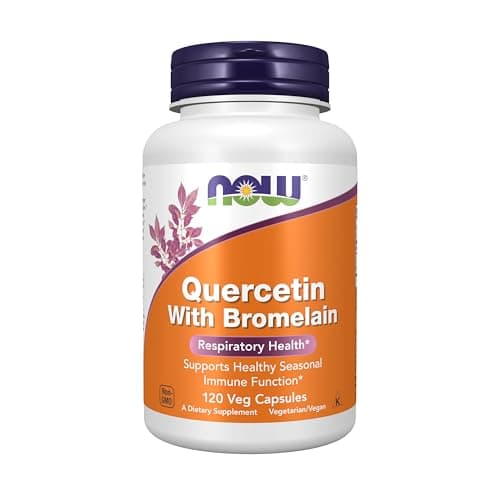
Quercetin
NOW Foods Quercetin with Bromelain
400mg quercetin + 100mg bromelain
How to Choose
Identify Your Acne Driver First
Inflammatory acne (red, tender papules and pustules) responds best to zinc and omega-3. Hormonal acne (perimenstrual cystic breakouts along the jawline, adult female pattern) responds to DIM or spironolactone-class medications. Gut-driven acne (worsens with antibiotics, dietary triggers, or concurrent bloating/IBS) responds to probiotics. Comedonal acne (whiteheads and blackheads from clogged pores) responds better to topical retinoids than oral supplementation.
Zinc Is the First Move for Most People
The 2020 Yee et al. meta-analysis established 30-45mg daily zinc as the most evidence-backed supplement for acne across subtypes. Zinc picolinate and gluconate are the most bioavailable forms; zinc oxide and citrate are less absorbed. Take zinc with food to prevent nausea. Doses above 30mg daily for prolonged periods require 1-2mg copper co-supplementation to prevent copper depletion. Expect 8-12 weeks to see measurable improvement.
What the Evidence Doesn't Support
Biotin for acne is commonly recommended but has no trial evidence for acne benefit — and high-dose biotin can actually trigger breakouts in some users. Collagen supplements have no direct acne evidence (despite skin marketing). MSM, silica, and hyaluronic acid are not acne-specific. Tea tree oil has topical evidence but no oral evidence. CBD has no controlled acne trials at supplement-tier doses.
When to See a Dermatologist
Persistent moderate-to-severe acne, cystic or nodular acne, scarring, or acne unresponsive to 12 weeks of supplement + topical OTC care warrants a dermatology referral. Prescription options — topical retinoids (tretinoin, adapalene), antibiotics (doxycycline), hormonal therapy (spironolactone, combined oral contraceptives), or isotretinoin — have substantially better evidence than any supplement for moderate-to-severe disease. Supplements work best as adjuncts to, not replacements for, dermatology-directed therapy.
Ready to Buy?
Sports Research Triple Strength Omega-3
9.1/10$0.35 / countBest for: Inflammatory acne patients whose lesions respond to anti-inflammatory modulation — omega-3 reduces PGE2 and inflammatory lesion counts in RCTs
The best acne supplement stacks the three most-studied nutrients — zinc (30-50mg), omega-3s (1-2g EPA+DHA), and vitamin D (2,000-5,000 IU) — at clinical doses from a third-party tested product.
Evidence:Meta-analysis (2020) · high confidence[#1]. See full reference list below.Read Our Full Zinc Research Guide
Evidence level, dosage, side effects, and more →
Already taking supplements?
Check how Zinc fits with your current stack — interactions, timing, and optimization →
Related Supplements
Vitamin CStrong
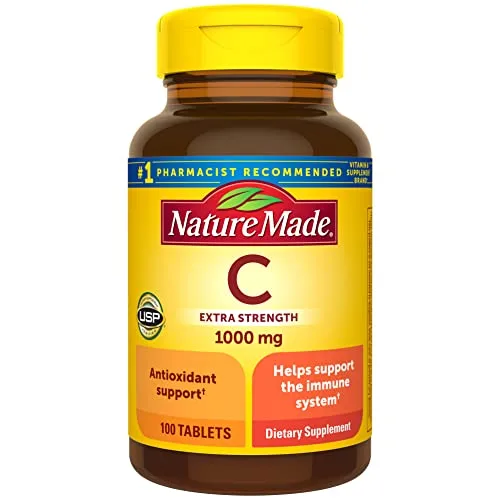
Bottom line: Vitamin C reliably shortens colds and supports daily immune function. Take 500-1000mg daily for prevention; up to 2g during acute illness.
Top picks →Related Conditions
Learn More
Frequently Asked Questions
What is the best supplement for acne?
What is the best supplement for acne?
Zinc has the strongest clinical evidence for acne across subtypes [1]. A 2020 meta-analysis of 10 RCTs by Yee et al. found zinc supplementation at 30-45mg daily (as gluconate or picolinate) reduced inflammatory acne lesions by approximately 49% [1]. Zinc works through anti-inflammatory and antimicrobial mechanisms. Omega-3 fatty acids and probiotics are well-supported second-line options depending on the acne driver.
Evidence:Meta-analysis (2020) · high confidence[#1]. See full reference list below.How long does it take for zinc to help acne?
How long does it take for zinc to help acne?
Most clinical trials show measurable improvement within 8-12 weeks of consistent zinc supplementation at 30-45mg daily. Some patients notice reduced inflammation within 4-6 weeks. Take zinc with food to avoid nausea, and co-supplement with 1-2mg copper for daily doses above 30mg to prevent copper depletion with prolonged use.
Can probiotics help with acne?
Can probiotics help with acne?
Yes, particularly for gut-driven acne. The gut-skin axis is well-established. Oral probiotics — especially Lactobacillus and Bifidobacterium strains at 10-20 billion CFU — have shown acne-reducing effects in multiple controlled trials. The 2018 systematic review by Bowe and Logan found probiotics reduced both inflammatory and total lesion counts, likely by reducing systemic inflammation and improving gut barrier function.
Does omega-3 reduce acne?
Does omega-3 reduce acne?
Yes. Omega-3 fatty acids, particularly EPA, have demonstrated anti-inflammatory effects relevant to acne. A 2014 RCT by Jung et al. showed that 2g of EPA+DHA daily for 10 weeks significantly reduced both inflammatory and non-inflammatory acne lesions. Omega-3s work by reducing pro-inflammatory leukotriene B4 and prostaglandin E2 levels in skin tissue.
Is DIM effective for hormonal acne?
Is DIM effective for hormonal acne?
DIM (diindolylmethane) modulates estrogen metabolism toward less androgenic pathways, with preliminary evidence for hormonal acne patterns — perimenstrual cystic breakouts, adult female acne, and post-oral-contraceptive-discontinuation acne. Evidence is Emerging tier, not established. DIM may interact with hormonal contraceptives and is not appropriate for pregnancy or breastfeeding. Discuss with a healthcare provider before use.
Continue Reading
References
- Meta-analysisYee BE, Richards P, Sui JY, Marsch AF (2020). Serum zinc levels and efficacy of zinc treatment in acne vulgaris: a systematic review and meta-analysis. Dermatologic Therapy. DOI PubMed
- RCTJung JY, Kwon HH, Hong JS, et al. (2014). Effect of dietary supplementation with omega-3 fatty acid and gamma-linolenic acid on acne vulgaris: a randomised, double-blind, controlled trial. Acta Dermato-Venereologica. DOI PubMed
- RCTFabbrocini G, Bertona M, Picazo O, et al. (2016). Supplementation with Lactobacillus rhamnosus SP1 normalises skin expression of genes implicated in insulin signalling and improves adult acne. Beneficial Microbes. DOI PubMed
- RCTKhayef G, Young J, Burns-Whitmore B, Spalding T (2012). Effects of fish oil supplementation on inflammatory acne. Lipids in Health and Disease. DOI PubMed