SupplementScience
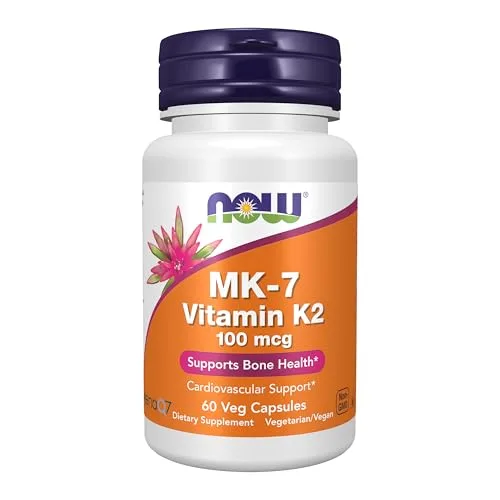
Vitamin K2 (MK-7) supplement
Fat-Soluble Vitamin

Vitamin K2 (MK-7): Benefits, Dosage, Forms & Research

Fat-Soluble Vitamin

This content is for informational purposes only and does not constitute medical advice. Consult your healthcare provider before starting any supplement. Full disclaimer

TL;DR — Quick Answer

Vitamin K2 (especially MK-7) directs calcium to bones and away from arteries by activating osteocalcin and matrix Gla protein. MK-7 has a longer half-life than MK-4 and only needs once-daily dosing. Most adults benefit from 100-200 mcg MK-7 daily, especially when supplementing vitamin D and calcium.

Key Facts

What it is
A fat-soluble vitamin that activates calcium-regulating proteins for bone and cardiovascular health
Primary benefits
  • Activates osteocalcin to deposit calcium in bones
  • Activates matrix Gla protein to prevent arterial calcification
  • Synergizes with vitamin D3 for bone health
  • Supports dental health and proper calcium metabolism
Typical dosage
100-200 mcg MK-7 daily
Evidence level
Moderate
Safety profile
Generally Safe

What the Research Says

Vitamin K2 has a growing evidence base particularly for bone and cardiovascular health. The 3-year RCT by Knapen et al. (2013, n=244) demonstrated that MK-7 at 180 mcg/day prevented age-related bone mineral density loss and improved bone strength in postmenopausal women. The landmark Rotterdam Study (Geleijnse et al., 2004, n=4,807) found that high dietary K2 (but not K1) intake was associated with significantly lower aortic calcification and cardiovascular mortality. Mechanistically, K2 activates both osteocalcin (bone formation) and MGP (calcification inhibition), providing a biological rationale for its dual bone and cardiovascular benefits. However, more large-scale RCTs are needed to confirm cardiovascular endpoint reduction.

Benefits of Vitamin K2 (MK-7)

  • Bone health — a 2013 RCT by Knapen et al. (n=244 postmenopausal women) found MK-7 at 180 mcg/day for 3 years significantly reduced age-related bone loss at the lumbar spine and femoral neck, and improved bone strength indices
  • Cardiovascular protection — K2 activates matrix Gla protein (MGP), the most potent known inhibitor of vascular calcification; the Rotterdam Study (2004, n=4,807) found high dietary K2 intake was associated with 52% lower risk of severe aortic calcification and 57% lower cardiovascular mortality over 10 years
  • Synergy with vitamin D3 — vitamin D increases calcium absorption, while K2 ensures that calcium is deposited in bones rather than accumulating in arteries; this combination may reduce the cardiovascular risk sometimes associated with calcium supplementation
  • Dental health — osteocalcin activation by K2 supports dentin mineralization and may reduce cavity formation; K2-dependent proteins are expressed in dental tissues
Did you know?

Vitamin K2 has a growing evidence base particularly for bone and cardiovascular health.

Forms of Vitamin K2 (MK-7)

FormBioavailabilityBest For
MK-7 (Menaquinone-7)HighDaily supplementation — long half-life (72 hours), consistent blood levels with once-daily dosing; derived from natto fermentation
MK-4 (Menatetrenone)ModerateHigh-dose therapeutic use — short half-life (1-2 hours), requires multiple daily doses; used at 45 mg/day in Japanese osteoporosis treatment
Full-Spectrum K2 (MK-4 + MK-7)HighComprehensive approach — combines short-acting tissue distribution (MK-4) with long-acting systemic effects (MK-7)

Dosage Recommendations

General recommendation: 100-200 mcg MK-7 daily with a fat-containing meal

Timing: With a fat-containing meal for optimal absorption; once daily for MK-7 • Take with food for best absorption.

Dosage by Condition

ConditionRecommended DoseEvidence
General bone health100-200 mcg MK-7 dailyModerate
Osteoporosis prevention180 mcg MK-7 daily (based on Knapen RCT)Moderate
Cardiovascular protection100-200 mcg MK-7 dailyModerate
Vitamin D3 companion100 mcg MK-7 per 1,000-2,000 IU D3Moderate

Upper limit: No established upper limit for K2; doses up to 360 mcg MK-7 daily used safely in trials; MK-4 used at 45 mg/day therapeutically in Japan

Our Top Vitamin K2 (MK-7) Pick

Our recommendations are based on published research, not commission rates. Some links below are affiliate links — we may earn a commission at no extra cost to you. How we evaluate products

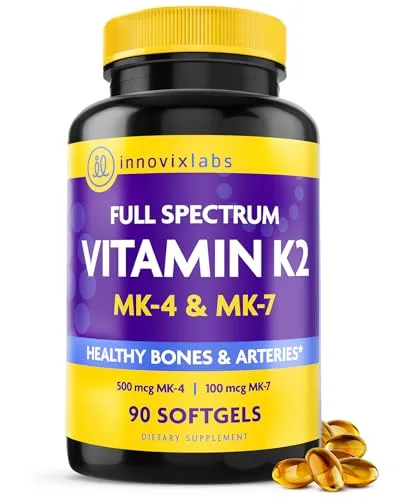
Innovix Labs Full Spectrum Vitamin K2

Innovix Labs Full Spectrum Vitamin K2

Innovix Labs

9.1/10
Best full-spectrum K2 with both MK-4 and MK-7$0.30/serving

Side Effects and Safety

Safety profile: Generally Safe

Potential Side Effects

  • Very well tolerated at standard supplemental doses
  • No known toxicity even at high doses in clinical trials
  • Theoretical concern about hypercoagulability in those with clotting disorders (not documented with K2)
  • Rare: GI discomfort

Drug & Supplement Interactions

  • Warfarin and other vitamin K antagonist anticoagulants — K2 can reduce anticoagulant effectiveness; use only under medical supervision
  • Vitamin D3 — synergistic for bone health; recommended to combine
  • Calcium supplements — K2 helps ensure calcium is deposited in bones rather than arteries
  • Statins — some evidence suggests statins may inhibit K2 synthesis; supplementation may be beneficial
Check Vitamin K2 (MK-7) interactions with other supplements →
BenefitsDosage GuideSide EffectsTypes & FormsResearchFAQ

Related Conditions

Related Supplements

Frequently Asked Questions

What is the difference between vitamin K1 and K2?

Vitamin K1 (phylloquinone) is found in green leafy vegetables and primarily supports blood clotting. Vitamin K2 (menaquinone) is found in fermented foods and animal products and primarily supports calcium metabolism — directing calcium into bones and away from arteries. They activate different proteins: K1 mainly activates clotting factors in the liver, while K2 activates osteocalcin (bones) and MGP (arteries) throughout the body.

Should I take K2 with vitamin D?

Yes, combining K2 with vitamin D is recommended, especially at higher D3 doses. Vitamin D increases calcium absorption from the gut, and K2 ensures that calcium goes to your bones rather than accumulating in arteries. Without adequate K2, increased calcium absorption from vitamin D could theoretically contribute to arterial calcification. A general guideline is 100 mcg MK-7 per 1,000-2,000 IU vitamin D3.

Is MK-7 or MK-4 the better form of K2?

MK-7 is generally preferred for daily supplementation because of its long half-life (72 hours) allowing once-daily dosing and consistent blood levels. MK-4 has a very short half-life (1-2 hours) requiring multiple doses daily, but has more direct tissue-level research, particularly for bone health at pharmacological doses (45 mg/day) in Japan. For most people, MK-7 at 100-200 mcg daily is the practical choice.

References

  1. (). Three-year low-dose menaquinone-7 supplementation helps decrease bone loss in healthy postmenopausal women. Osteoporosis International. DOI
  2. (). Dietary intake of menaquinone is associated with a reduced risk of coronary heart disease: the Rotterdam Study. Journal of Nutrition. DOI
  3. (). Vitamin K-containing dietary supplements: comparison of synthetic vitamin K1 and natto-derived menaquinone-7. Blood. DOI