SupplementScience
HMB (Beta-Hydroxy Beta-Methylbutyrate) supplement
Amino Acid Metabolite / Anti-Catabolic

HMB (Beta-Hydroxy Beta-Methylbutyrate): Benefits, Dosage, Forms & Research

Amino Acid Metabolite / Anti-Catabolic

This content is for informational purposes only and does not constitute medical advice. Consult your healthcare provider before starting any supplement. Full disclaimer

TL;DR — Quick Answer

HMB at 3 g/day reduces muscle protein breakdown and enhances lean mass gains, particularly in untrained individuals (+0.5-1 kg over 3-6 weeks) and older adults. A meta-analysis (Nissen & Sharp, 2003) of 9 studies confirmed HMB increases lean mass and strength during resistance training. Benefits are less pronounced in trained athletes.

Key Facts

What it is
A metabolite of leucine that inhibits muscle protein breakdown via the ubiquitin-proteasome pathway
Primary benefits
  • Reduces muscle protein breakdown (anti-catabolic)
  • Enhances lean mass in untrained individuals
  • Preserves muscle during caloric restriction
  • Supports muscle maintenance in older adults
Typical dosage
3 g daily in divided doses
Evidence level
Moderate
Safety profile
Generally Safe

What the Research Says

HMB is best understood as an anti-catabolic supplement rather than an anabolic one. It works primarily by reducing muscle protein breakdown, which makes it most valuable in situations of high catabolic stress: untrained individuals experiencing novel training stimulus, caloric restriction, aging, and prolonged bed rest. The Nissen & Sharp (2003) meta-analysis established its efficacy, though subsequent studies in trained athletes have shown more modest benefits. A controversial 2014 study (Wilson et al.) showed dramatic results that have not been replicated and are widely questioned. For trained athletes already consuming adequate protein, the incremental benefit of HMB is small.

Benefits of HMB (Beta-Hydroxy Beta-Methylbutyrate)

  • Lean mass — Nissen & Sharp (2003) meta-analysis of 9 studies found 3 g/day HMB increased lean mass by 0.28% per week and strength by 1.40% per week vs placebo in resistance-trained subjects
  • Anti-catabolic — HMB inhibits the ubiquitin-proteasome proteolytic pathway, the primary mechanism for muscle protein degradation during stress, catabolism, and disuse
  • Muscle preservation during caloric deficit — Wilkinson et al. (2013) found HMB attenuated muscle loss during energy restriction combined with exercise, making it valuable during cutting phases
  • Sarcopenia prevention — Wu et al. (2015) meta-analysis found HMB supplementation preserved muscle mass and improved physical function in older adults
Did you know?

HMB is best understood as an anti-catabolic supplement rather than an anabolic one.

Forms of HMB (Beta-Hydroxy Beta-Methylbutyrate)

FormBioavailabilityBest For
Calcium HMB (HMB-Ca)GoodMost studied form — cost-effective; peak blood levels in 1-2 hours; take with food
HMB Free Acid (HMB-FA)High (faster absorption)Faster peak levels (~30 min) — may be superior acutely; more expensive; fewer long-term studies

Dosage Recommendations

General recommendation: 3 g daily, divided into 3 doses of 1 g each with meals

Timing: Divide into 3 equal doses with meals; for HMB-FA, take 30-60 minutes pre-workout • Take with food for best absorption.

Dosage by Condition

ConditionRecommended DoseEvidence
Resistance training (untrained)3 g/day in divided dosesModerate
Muscle preservation (caloric deficit)3 g/dayModerate
Sarcopenia (older adults)3 g/dayModerate

Upper limit: 6 g/day; doses above 3 g show diminishing returns in most studies

Our Top HMB (Beta-Hydroxy Beta-Methylbutyrate) Pick

Our recommendations are based on published research, not commission rates. Some links below are affiliate links — we may earn a commission at no extra cost to you. How we evaluate products

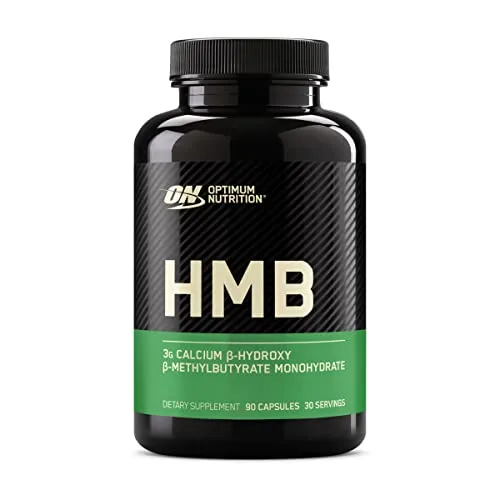
Optimum Nutrition HMB 1000mg

Optimum Nutrition HMB 1000mg

Optimum Nutrition

9/10
Overall best HMB capsule for muscle preservation$0.55/serving

Side Effects and Safety

Safety profile: Generally Safe

Potential Side Effects

  • Very few reported side effects — HMB is generally very well tolerated
  • Occasional mild GI discomfort (nausea, diarrhea) at higher doses
  • No adverse effects on liver or kidney function in clinical trials up to 6 g/day

Drug & Supplement Interactions

  • No significant drug interactions reported
  • Stacks well with creatine and protein — some evidence of additive benefits
  • May complement but not replace adequate protein/leucine intake
Check HMB (Beta-Hydroxy Beta-Methylbutyrate) interactions with other supplements →
BenefitsDosage GuideSide EffectsTypes & FormsResearchFAQ

Related Conditions

Related Supplements

Frequently Asked Questions

Is HMB worth it if I already take protein and creatine?

For trained athletes consuming adequate protein (1.6-2.2 g/kg/day) and creatine, HMB offers minimal additional benefit for muscle growth. It becomes more useful during specific situations: cutting phases (caloric deficit), returning from injury/layoff, or for older adults. Think of HMB as an anti-breakdown supplement, not a muscle-builder.

Why not just take more leucine instead of HMB?

Only about 5% of leucine is converted to HMB, so you would need ~60 g of leucine to get 3 g of HMB — an impractical and expensive amount. Direct HMB supplementation is far more efficient for achieving anti-catabolic blood levels. However, leucine has its own benefits for stimulating muscle protein synthesis via mTOR.

Is HMB free acid better than calcium HMB?

HMB free acid (HMB-FA) absorbs faster and reaches peak blood levels in ~30 minutes vs 1-2 hours for calcium HMB. Some acute studies suggest faster absorption may be beneficial around training. However, calcium HMB has more long-term data, is cheaper, and the chronic adaptation over weeks likely matters more than acute timing. Both forms are effective.

References

  1. (). Effect of dietary supplements on lean mass and strength gains with resistance exercise: a meta-analysis. Journal of Applied Physiology. DOI
  2. (). Effect of beta-hydroxy-beta-methylbutyrate supplementation on muscle loss in older adults: a systematic review and meta-analysis. Archives of Gerontology and Geriatrics. DOI
  3. (). Effects of leucine and its metabolite β-hydroxy-β-methylbutyrate on human skeletal muscle protein metabolism. Journal of Physiology. DOI