SupplementScience
Lutein supplement
Carotenoid

Lutein: Benefits, Dosage, Forms & Research

Carotenoid

This content is for informational purposes only and does not constitute medical advice. Consult your healthcare provider before starting any supplement. Full disclaimer

TL;DR — Quick Answer

Lutein is a carotenoid that accumulates in the macula and protects against blue light damage and oxidative stress. The AREDS2 trial showed 10 mg/day lutein (with 2 mg zeaxanthin) reduced the risk of advanced AMD progression. Most eye health experts recommend 10-20 mg daily.

Key Facts

What it is
A carotenoid pigment that concentrates in the macula and filters high-energy blue light
Primary benefits
  • Protects the macula from blue light and oxidative damage
  • Reduces risk of age-related macular degeneration progression
  • Improves visual contrast sensitivity
  • Supports lens health and may reduce cataract risk
  • Provides antioxidant protection to retinal cells
Typical dosage
10-20 mg daily
Evidence level
Strong
Safety profile
Generally Safe

What the Research Says

Lutein has robust clinical evidence, anchored by the AREDS2 trial (2013, JAMA, n=4,203), which established lutein 10 mg + zeaxanthin 2 mg as the preferred carotenoid combination for AMD. A 10-year follow-up confirmed lutein/zeaxanthin was superior to beta-carotene for reducing late AMD risk by approximately 20%. Epidemiological data consistently associates higher lutein intake with reduced risk of both AMD and cataracts.

Benefits of Lutein

  • Macular degeneration protection — the AREDS2 trial (n=4,203) demonstrated that lutein 10 mg + zeaxanthin 2 mg was a safe and effective replacement for beta-carotene in reducing advanced AMD risk by ~18% over 5 years
  • Blue light filtration — lutein absorbs 40-90% of incident blue light in the macula, reducing phototoxic damage to photoreceptors (Bernstein et al., 2016)
  • Contrast sensitivity — a 2017 meta-analysis of 20 RCTs found lutein supplementation significantly improved macular pigment optical density (MPOD) and visual contrast sensitivity
  • Cataract risk reduction — the Nurses Health Study and Health Professionals Follow-Up Study found those in the highest quintile of lutein/zeaxanthin intake had an 18-22% lower risk of cataracts
  • Cognitive support — higher macular pigment density is correlated with better cognitive function in older adults, suggesting neuroprotective effects
Did you know?

Lutein has robust clinical evidence, anchored by the AREDS2 trial (2013, JAMA, n=4,203), which established lutein 10 mg + zeaxanthin 2 mg as the preferred carotenoid combination for AMD.

Forms of Lutein

FormBioavailabilityBest For
Free Lutein (FloraGLO)HighGeneral supplementation — most studied form in clinical trials including AREDS2
Lutein EstersModerateBudget option — requires enzymatic conversion to free lutein in the gut
Lutein + Zeaxanthin CombinationHighComprehensive macular support — mimics natural macular pigment composition

Dosage Recommendations

General recommendation: 10-20 mg daily with a fat-containing meal

Timing: With a meal containing dietary fat for optimal absorption • Take with food for best absorption.

Dosage by Condition

ConditionRecommended DoseEvidence
AMD prevention10 mg daily with 2 mg zeaxanthinStrong
Blue light protection10-20 mg dailyModerate
Cataract risk reduction6-10 mg dailyModerate
Macular pigment density10-20 mg daily for 6+ monthsStrong

Upper limit: 40 mg/day has been used safely in studies; no formal upper limit established

Our Top Lutein Pick

Our recommendations are based on published research, not commission rates. Some links below are affiliate links — we may earn a commission at no extra cost to you. How we evaluate products

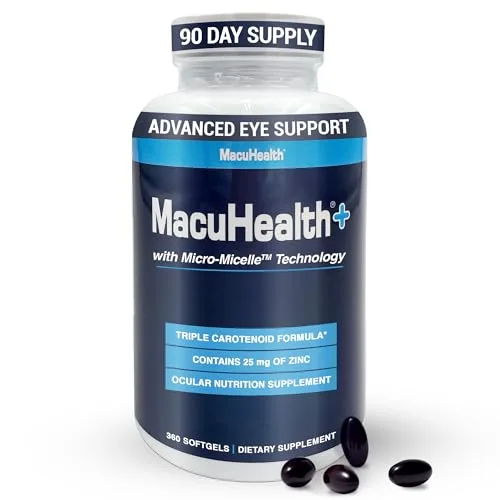
MacuHealth Plus+

MacuHealth Plus+

MacuHealth

9.4/10
Best overall triple-carotenoid macular support$0.83/serving

Side Effects and Safety

Safety profile: Generally Safe

Potential Side Effects

  • Carotenodermia (harmless yellowing of skin) at very high doses
  • Mild gastrointestinal discomfort in rare cases
  • Possible interaction with beta-carotene absorption at high doses

Drug & Supplement Interactions

  • Beta-carotene competes for absorption — avoid high-dose beta-carotene with lutein
  • Orlistat and cholestyramine reduce carotenoid absorption
  • Colestipol may decrease lutein bioavailability
Check Lutein interactions with other supplements →
BenefitsDosage GuideSide EffectsTypes & FormsResearchFAQ

Related Conditions

Related Supplements

Frequently Asked Questions

How much lutein should I take for eye health?

The most studied dose is 10 mg daily, as used in the landmark AREDS2 trial. Combined with 2 mg of zeaxanthin, this dose has been shown to reduce the risk of advanced AMD progression. Taking lutein with a fat-containing meal improves absorption by up to 3-fold.

Can I get enough lutein from food alone?

The average American diet provides only 1-2 mg of lutein per day, well below the 10 mg shown to be protective. One cup of cooked kale provides about 24 mg, and one cup of cooked spinach about 20 mg. Regular consumption of dark leafy greens can meet the target, but supplementation is a reliable alternative.

How long does it take for lutein to improve macular pigment density?

Studies show measurable increases in macular pigment optical density (MPOD) within 2-3 months of supplementation, with continued improvement over 6-12 months. The AREDS2 trial evaluated outcomes over 5 years, suggesting long-term supplementation provides cumulative protection.

References

  1. (). Lutein + zeaxanthin and omega-3 fatty acids for age-related macular degeneration: the Age-Related Eye Disease Study 2 (AREDS2) randomized clinical trial. JAMA. DOI
  2. (). Secondary Analyses of the Effects of Lutein/Zeaxanthin on Age-Related Macular Degeneration Progression: AREDS2 Report No. 3. JAMA Ophthalmology. DOI
  3. (). Lutein and zeaxanthin intake and the risk of age-related macular degeneration: a systematic review and meta-analysis. British Journal of Nutrition. DOI