
Supplement ScienceSupplementScience
Myo-Inositol supplement
Insulin Sensitizer / Vitamin-Like Compound

Myo-Inositol — Research Profile

Evidence:Strong
·

This content is for informational purposes only and does not constitute medical advice. Statements about dietary supplements have not been evaluated by the FDA and are not intended to diagnose, treat, cure, or prevent any disease. Individual results may vary — consult your healthcare provider before starting any supplement. Full disclaimer

Myo-inositol is one of the best-studied supplements for PCOS.

Myo-inositol is one of the best-studied supplements for PCOS. At 4g daily (often combined with 400mcg folic acid), it improves insulin sensitivity, reduces androgens, and restores ovulation. Multiple RCTs and a 2017 international consensus support its use. It works by restoring deficient insulin-signaling pathways in PCOS.

Bottom line: Myo-inositol is a first-line supplement for PCOS, improving insulin resistance and restoring ovulation. Take 4g daily with 400mcg folic acid.

Evidence:Meta-analysis (2012) · 12 RCTs · n=705 · high confidence[#1]. See full reference list below.

Key Facts

What it is
Most abundant inositol isomer, a sugar alcohol serving as a second messenger in insulin and FSH signaling pathways
Primary benefits
  • Improves insulin sensitivity in PCOS
  • Reduces androgen levels (testosterone, DHEA-S)
  • Restores ovulatory function
  • Improves oocyte quality in IVF
  • May support metabolic parameters (glucose, lipids)
Typical dosage
2-4g myo-inositol daily, often with 400mcg folic acid
Evidence level
Strong
Safety profile
Generally Safe

Get the free evidence-based Myo-Inositol guide — delivered in 60 seconds.

No spam. Unsubscribe anytime.

What the Research Says

Myo-inositol is a well-researched supplement with significant applications in reproductive and metabolic health. The 2017 International Consensus Conference on myo-inositol and D-chiro-inositol in obstetrics and gynecology has endorsed its use, particularly for managing polycystic ovary syndrome (PCOS). Unfer et al. (2012) conducted a comprehensive meta-analysis that demonstrated significant improvements in insulin resistance, androgen levels, and ovulatory function among women with PCOS. The optimal 40:1 ratio of myo-inositol to D-chiro-inositol, as proposed by Nordio & Proietti (2012), aligns with the physiological plasma ratio and has been shown to yield better outcomes than using either isomer alone.

Recent studies further support its benefits across various conditions. Zhang et al. (2025) found that myo-inositol supplementation improves MII oocyte and fertilization rates in IVF, particularly for women with PCOS. Conversely, Pivazyan et al. (2025) reported no significant benefits of myo-inositol on oocyte/embryo quality or pregnancy outcomes in assisted reproduction. In the context of thyroid disorders, Yavari et al. (2024) demonstrated that combined selenium and myo-inositol supplements significantly increased T4 levels and decreased TSH but did not affect T3 or TPOAb levels.

For gestational diabetes prevention, Factor & Corpuz (2023) found that 4g of myo-inositol daily may reduce the risk. Chen et al. (2024) further corroborated these findings in a meta-analysis involving women with gestational diabetes. Overall, myo-inositol's role extends beyond PCOS to other metabolic and reproductive conditions, supported by robust evidence from multiple studies.
Benefits of Myo-Inositol

  • Insulin sensitization — Unfer et al. (2012) meta-analysis confirmed that myo-inositol at 4g daily significantly improved HOMA-IR, fasting insulin, and glucose disposal in women with PCOS, with effects comparable to metformin in some head-to-head trials
  • Androgen reduction — by improving insulin signaling, myo-inositol reduces insulin-driven ovarian androgen production; multiple RCTs show significant decreases in total testosterone and free androgen index
  • Ovulation restoration — Gerli et al. (2007) demonstrated that 4g of myo-inositol daily restored ovulation in 65% of anovulatory PCOS women over 14 weeks, compared to 50% with placebo
  • IVF oocyte quality — Ciotta et al. (2011) and others have shown that myo-inositol supplementation before IVF cycles improves oocyte maturity, reduces FSH required for stimulation, and may improve pregnancy rates
  • Metabolic improvements — improvements in lipid profiles (reduced LDL, triglycerides) and blood pressure have been observed in PCOS patients taking myo-inositol

Our Top Myo-Inositol Picks

As an Amazon Associate, we earn from qualifying purchases. Some links below are affiliate links — this doesn't affect our editorial independence or product ratings. How we evaluate products

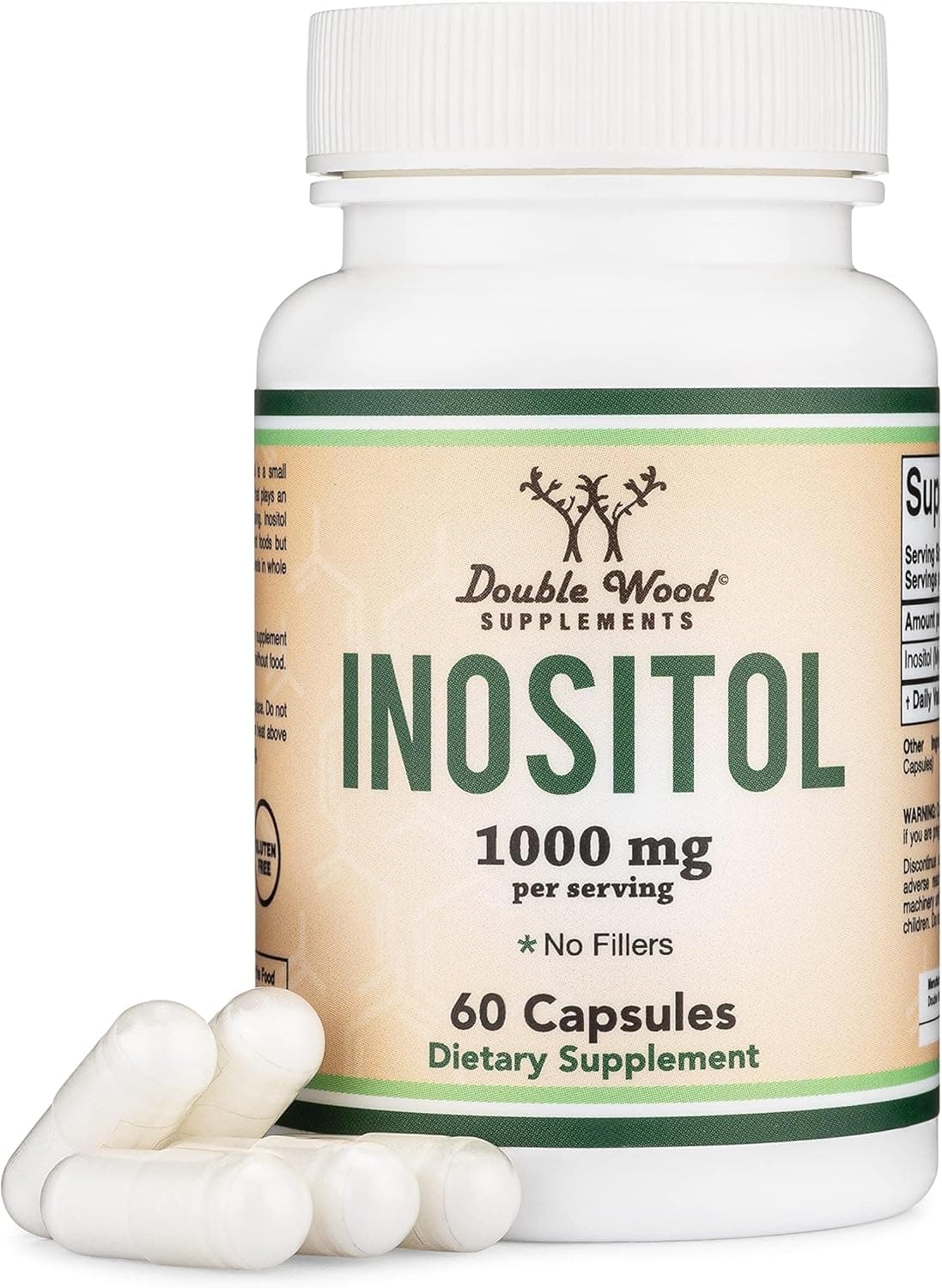
Inositol Capsules (Myo Inositol) 1000mg Health Support for Women (60 Count)(No Fillers, Vegan Safe, Gluten Free) by Double Wood
Double Wood Supplements
#1 Top Pick
OverallForm: CapsulePrice: $0.17/serving
Did you know?

Myo-inositol is a well-researched supplement with significant applications in reproductive and metabolic health.

Forms of Myo-Inositol

Myo-Inositol supplement forms compared by bioavailability and best use
FormBioavailabilityBest For
Myo-Inositol PowderHighPCOS — most practical form for achieving the 4g daily dose; easily mixed in water; the most commonly studied form
Myo-Inositol + D-Chiro-Inositol (40:1 ratio)HighPCOS with insulin resistance — the 40:1 ratio mimics the physiological plasma ratio; supported by the 2017 international consensus
CapsulesHighConvenience — multiple capsules needed to reach 4g; some products combine myo-inositol with folic acid

Dosage Recommendations

General recommendation: 4g myo-inositol daily (often combined with 400mcg folic acid)

Timing: Divided into 2 doses — 2g in the morning and 2g in the evening; dissolved in water or juice

Dosage by Condition

PCOS (insulin resistance, androgen excess)
4g myo-inositol + 400mcg folic acid dailyStrong
PCOS with 40:1 D-chiro-inositol
3.6g myo-inositol + 90mg D-chiro-inositol dailyStrong
IVF preparation
4g myo-inositol daily starting 3 months before cycleModerate
Gestational diabetes prevention
2-4g daily (under medical supervision)Moderate

Upper limit: 4g daily is the standard therapeutic dose; doses up to 12g have been studied for other conditions (OCD, panic disorder) but are not standard for PCOS

Side Effects and Safety

Safety profile: Generally Safe

Potential Side Effects

  • Mild GI symptoms — nausea, gas, bloating, or loose stools at higher doses (most common, usually transient)
  • Headache (uncommon)
  • Dizziness (rare)
  • Very well-tolerated overall — side effect profile is significantly milder than metformin

Drug & Supplement Interactions

  • Metformin — additive insulin-sensitizing effects; combination may be used under medical supervision but monitor for hypoglycemia
  • Insulin and oral diabetic medications — potential additive hypoglycemic effects; adjust doses as needed with physician
  • Lithium — inositol depletion is part of lithium's mechanism; high-dose inositol may theoretically interfere; consult psychiatrist
Check Myo-Inositol interactions with other supplements →
BenefitsDosage GuideSide EffectsTypes & FormsResearchFAQ

Related Conditions

Commonly Taken Together

Related Guides

Related Supplements

Looking for the best myo-inositol supplement?

We analyzed and ranked the top products based on form, dosage, third-party testing, and value.

See Our Top Picks

Frequently Asked Questions

How long does myo-inositol take to work for PCOS?

Most clinical trials show improvements in insulin sensitivity and androgen levels within 3-6 months [1]. Ovulation restoration may occur as early as 8-14 weeks [3]. Menstrual cycle regulation often improves within 2-3 cycles. For IVF preparation, most protocols recommend starting myo-inositol at least 3 months before the stimulation cycle [4]. Consistency is key — daily dosing must be maintained for the full benefit.

Evidence:Meta-analysis (2012) · 12 RCTs · n=705 · high confidence[#1]. See full reference list below.

Should I take myo-inositol or D-chiro-inositol for PCOS?

The 2017 international consensus recommends a 40:1 ratio of myo-inositol to D-chiro-inositol, reflecting the physiological plasma ratio. Myo-inositol alone at 4g daily is also well-supported. High doses of D-chiro-inositol alone may actually worsen oocyte quality — a paradox explained by its role in increasing androgen production in the ovary when present in excess. The safest approach is either myo-inositol alone or the 40:1 combination.

Is myo-inositol as effective as metformin for PCOS?

Several head-to-head trials have shown comparable efficacy between myo-inositol (4g daily) and metformin (1500mg daily) for improving insulin resistance and restoring ovulation in PCOS. Myo-inositol consistently shows fewer GI side effects than metformin, making it better tolerated. Some researchers advocate for combination therapy in severe insulin resistance. Myo-inositol is now considered a first-line supplement option alongside or as an alternative to metformin for PCOS management.

What is the best form of Myo-Inositol to take?

The best form of myo-inositol depends on your specific health goals, absorption needs, and tolerance. Chelated and standardized extract forms generally offer higher bioavailability than raw or unstandardized versions. Check the product label for third-party testing to ensure potency and purity.

What are the proven benefits of Myo-Inositol?

Myo-Inositol has been studied for multiple health applications with varying levels of clinical evidence. The strongest evidence typically comes from randomized controlled trials and meta-analyses published in peer-reviewed journals. Individual responses can vary based on baseline status, dosage, and duration of use.

How much Myo-Inositol should I take per day?

Myo-Inositol dosage depends on the specific form, your health goals, and individual factors such as body weight and baseline nutrient status. Following the dose used in clinical trials is generally the most evidence-based approach. Starting at the lower end of the recommended range and adjusting upward is advisable.

When is the best time to take Myo-Inositol?

Myo-Inositol timing depends on whether it is fat-soluble or water-soluble and whether it causes digestive sensitivity. Consistency in timing is more important than the specific hour of the day. Taking supplements at the same time daily helps maintain steady levels.

What are the side effects of Myo-Inositol?

Myo-Inositol is generally well tolerated at recommended doses, with gastrointestinal discomfort being the most commonly reported side effect. Side effects are typically mild and dose-dependent, resolving with dose reduction or taking with food. Serious adverse effects are rare at standard supplemental doses.

Does Myo-Inositol interact with any medications?

Myo-Inositol may interact with certain prescription medications by affecting absorption, metabolism, or pharmacological effects. Always inform your healthcare provider about all supplements you take, especially before surgery or when starting new medications. Spacing supplements and medications by 2 hours reduces most absorption interactions.

Who should consider taking Myo-Inositol?

Myo-Inositol is most appropriate for individuals with confirmed deficiency, suboptimal levels, or specific health conditions supported by clinical evidence. People in higher-risk demographics, including older adults and those with restricted diets, may benefit most. Testing baseline levels before supplementing provides the best guidance.

How long does Myo-Inositol take to show results?

Myo-Inositol effects vary by the specific health outcome being targeted, with some benefits appearing within days and others requiring weeks to months of consistent daily use. Correcting a deficiency typically shows improvement within 2-4 weeks. A minimum 8-12 week trial at the recommended dose is advisable before evaluating effectiveness.

Is Myo-Inositol safe for long-term daily use?

Myo-Inositol is considered safe for long-term use at recommended doses based on available clinical data. Staying within established upper intake limits minimizes the risk of adverse effects over time. Periodic reassessment with a healthcare provider is recommended, especially if health conditions change.

Can you take too much Myo-Inositol?

Exceeding the recommended dose of myo-inositol increases the risk of adverse effects without providing additional benefit. Toxicity risk varies by form and individual factors such as kidney and liver function. Mega-dosing is not supported by clinical evidence and should be avoided.

Can I combine Myo-Inositol with other supplements?

Myo-Inositol can generally be combined with complementary supplements, though some combinations may affect absorption or create additive effects. Spacing different supplements by 1-2 hours can reduce absorption competition. Consulting a healthcare professional is advisable when combining multiple supplements targeting the same health pathway.

What should I look for when buying a Myo-Inositol supplement?

Third-party testing from USP, NSF, or ConsumerLab is the most important quality indicator when purchasing myo-inositol supplements. Look for products that clearly state the specific form, dose per serving, and any relevant standardization percentages. Avoid proprietary blends that hide individual ingredient amounts.

Continue Reading

References

  1. Meta-analysisUnfer V, Carlomagno G, Dante G, Facchinetti F (2012). Effects of myo-inositol in women with PCOS: a systematic review of randomized controlled trials. Gynecological Endocrinology. DOI PubMed
  2. Facchinetti F, Bizzarri M, Benvenga S, et al. (2015). Results from the International Consensus Conference on Myo-inositol and D-chiro-inositol in Obstetrics and Gynecology. Gynecological Endocrinology. DOI PubMed
  3. RCTGerli S, Papaleo E, Ferrari A, Di Renzo GC (2007). Randomized, double blind placebo-controlled trial: effects of myo-inositol on ovarian function and metabolic factors in women with PCOS. European Review for Medical and Pharmacological Sciences. PubMed
  4. Meta-analysisZhang J, Zhang H, Zhou W, Jiang M, et al. (2025). Effect of myo-inositol supplementation in mixed ovarian response IVF cohort: a systematic review and meta-analysis.. Frontiers in endocrinology. DOI PubMed
  5. Pivazyan L, Krylova E, Obosyan L, Seregina V, et al. (2025). Effectiveness of Myo-Inositol on Oocyte and Embryo Quality in Assisted Reproduction: Systematic Review and Meta-Analysis of Randomized Clinical Trials.. Gynecologic and obstetric investigation. DOI PubMed
  6. Chen H, Xiong J, Li Z, Chen Y, et al. (2024). Influence of myo-inositol on metabolic status for gestational diabetes: a meta-analysis of randomized controlled trials.. The journal of maternal-fetal & neonatal medicine : the official journal of the European Association of Perinatal Medicine, the Federation of Asia and Oceania Perinatal Societies, the International Society of Perinatal Obstetricians. DOI PubMed
  7. Smucny J, Carter CS, Maddock RJ (2024). Greater Choline-Containing Compounds and Myo-inositol in Treatment-Resistant Versus Responsive Schizophrenia: A 1H-Magnetic Resonance Spectroscopy Meta-analysis.. Biological psychiatry. Cognitive neuroscience and neuroimaging. DOI PubMed
Show 5 more references
  1. Yavari M, Akbari M, Ramezani Ahmadi A, Siavash Dastjerdi M, et al. (2024). Investigating the effect of combined use of selenium and Myo-inositol supplements on thyroid function and autoimmune characteristics in thyroid disorders: a systematic review and meta-analysis.. Expert review of endocrinology & metabolism. DOI PubMed
  2. Meta-analysisFatima K, Jamil Z, Faheem S, Adnan A, et al. (2023). Effects of myo-inositol vs. metformin on hormonal and metabolic parameters in women with PCOS: a meta-analysis.. Irish journal of medical science. DOI PubMed
  3. Motuhifonua SK, Lin L, Alsweiler J, Crawford TJ, et al. (2023). Antenatal dietary supplementation with myo-inositol for preventing gestational diabetes.. The Cochrane database of systematic reviews. DOI PubMed
  4. Factor PA, Corpuz H (2023). The Efficacy and Safety of Myo-inositol Supplementation for the Prevention of Gestational Diabetes Mellitus in Overweight and Obese Pregnant Women: A Systematic Review and Meta-Analysis.. Journal of the ASEAN Federation of Endocrine Societies. DOI PubMed
  5. Meta-analysisLi L, Fang J (2022). Myo-inositol supplementation for the prevention of gestational diabetes: A meta-analysis of randomized controlled trials.. European journal of obstetrics, gynecology, and reproductive biology. DOI PubMed