
We reviewed 16 slippery elm supplements across organic certification, bark quality, dose adequacy, form, and value per serving. Our picks prioritize clean formulations with adequate doses of inner bark, the part of the tree that produces the mucilaginous demulcent compounds used for centuries in traditional GI support.
Best Slippery Elm Supplements (2026)
Product pricing and availability checked
Methodology: Evidence-ranked evaluation
·
2,600+Clinical Studies Cited
·3Slippery Elm products evaluated
This content is for informational purposes only and does not constitute medical advice. Statements about dietary supplements have not been evaluated by the FDA and are not intended to diagnose, treat, cure, or prevent any disease. Individual results may vary — consult your healthcare provider before starting any supplement. Full disclaimer
As an Amazon Associate, we earn from qualifying purchases. Some links below are affiliate links — this doesn't affect our editorial independence or product ratings. How we evaluate products
Our Verdict
Peak Performance USDA Organic Slippery Elm is our top pick: micronized organic bark, clean formulation, and adequate dosing for daily GI mucosal support.
Best By Category
The best slippery elm supplement is USDA Organic, micronized or finely powdered inner bark of Ulmus rubra, delivering...
The best slippery elm supplement is USDA Organic, micronized or finely powdered inner bark of Ulmus rubra, delivering 400-800mg per capsule taken 30 minutes before meals with a full glass of water. For GERD or IBS, 1-2g before each meal is typical; the mucilage coating requires water to activate.
How We Chose These Products
Products are ranked using our published scoring methodology — evidence strength, dose adequacy, ingredient form, third-party testing signals, value, and clean-label factors are weighted across the 5 criteria below. Commercial relationships do not determine our editorial rankings.
Organic Certification
25%USDA Organic certification ensures the slippery elm bark was sourced from trees grown without synthetic chemicals. Slippery elm (Ulmus rubra) is an at-risk species — organic and sustainably harvested sourcing is both an environmental and quality concern.
Bark Quality
25%The inner bark of slippery elm contains the mucilage that produces the demulcent (soothing) effect. Products specifying inner bark content score higher than those listing only generic bark. Micronized processing improves surface area and mucilage release.
Dose Adequacy
20%Traditional use doses range from 400-1,600mg of bark daily. While no formal clinical dose has been established in large RCTs, products providing at least 400mg per serving align with ethnobotanical dosing and the preparations studied in pilot GI research.
Form and Bioavailability
15%Capsules offer standardized dosing. Powder mixed in water creates a mucilaginous drink that coats the throat and GI tract directly — ideal for esophageal and stomach soothing. Liquid extracts preserve some mucilage but are less viscous than hydrated powder.
Value per Serving
15%Cost per serving relative to dose and quality. Slippery elm is moderately priced as an herb — organic certification and inner bark specification justify moderate premiums over generic bark powder.
#1 Top Pick
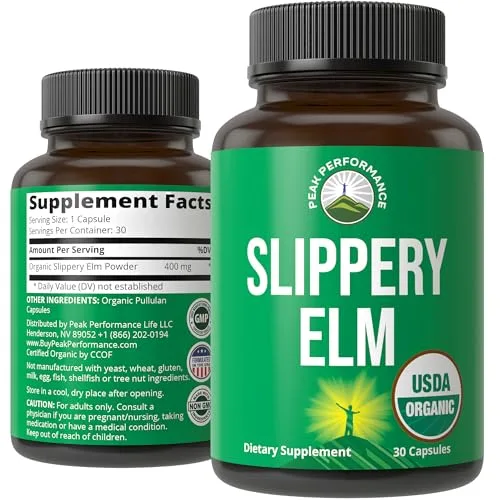
USDA Organic certified slippery elm bark that has been micronized for improved surface area and mucilage release upon contact with GI fluids. The organic certification ensures the bark was sustainably sourced without synthetic chemicals — important for an at-risk species. Peak Performance's clean formula excludes artificial fillers and additives. Third-party tested with strong early consumer ratings at 4.4 stars across 221 reviews.
IngredientUSDA Organic Micronized Slippery Elm Bark
DoseOrganic micronized slippery elm bark per serving
FormCapsule
TestingThird-Party Tested
Organic micronized slippery elm bark per servingClinical range: 400-1,000mg capsules 3x daily, or bark tea
Blend formula
$0.63 / count$18.95 · 30 Capsules
Pros
- USDA Organic certified slippery elm bark
- Micronized for improved mucilage release
- Clean formula without artificial fillers
Cons
- Newer product with limited long-term track record
- Capsule form bypasses throat-coating benefit
Quick Comparison
#1Peak Performance USDA Organic Slippery Elm Capsules
8.3/10
Peak Performance
#1 Top Pick
222 Amazon reviews
Best for: Organic daily GI mucosal support
USDA Organic Micronized Slippery Elm Bark · Organic micronized slippery elm bark per serving
Capsule · Third-Party Tested
$18.95
$0.63 / count
#2NOW Slippery Elm 400mg
8/10
NOW Foods
4,800 Amazon reviews
Best for: Budget-friendly daily slippery elm supplementation
Slippery Elm Bark Powder 400mg · 400mg slippery elm bark per capsule
Capsule · GMP Certified
$8.00
$0.08 / count
#3Nature's Way Slippery Elm Bark 400mg
8.1/10
Nature's Way
3,600 Amazon reviews
Best for: Traditional herbal brand with DNA-verified botanical identity
Slippery Elm Bark 400mg · 400mg slippery elm bark per capsule
Capsule · TRU-ID Verified
$8.50
$0.09 / count
| # | Product | Best For | Ingredient & Dose | Form & Testing | Price | Rating | |
|---|---|---|---|---|---|---|---|
| 1 | Peak Performance USDA Organic Slippery Elm Capsules #1 Top Pick 222 Amazon reviews | Organic daily GI mucosal support | USDA Organic Micronized Slippery Elm Bark Organic micronized slippery elm bark per serving | Capsule 30 Capsules Third-Party Tested | $18.95 $0.63 / count | 8.3/10 | |
| 2 | NOW Slippery Elm 400mg 4,800 Amazon reviews | Budget-friendly daily slippery elm supplementation | Slippery Elm Bark Powder 400mg 400mg slippery elm bark per capsule | Capsule 100 Capsules GMP Certified | $8.00 $0.08 / count | 8/10 | |
| 3 | Nature's Way Slippery Elm Bark 400mg 3,600 Amazon reviews | Traditional herbal brand with DNA-verified botanical identity | Slippery Elm Bark 400mg 400mg slippery elm bark per capsule | Capsule 100 Capsules TRU-ID Verified | $8.50 $0.09 / count | 8.1/10 |
Detailed Reviews
#1 Top Pick
USDA Organic Slippery Elm for Women & Men. Vegan Capsules with Micronized Slippery Elm Bark Powder for Digestion, Bloating Relief, & Gut Lining. Natural Mucilage that Soothes The Throat & Airways
Peak Performance
222 Amazon reviews
8.3/10
(222)
USDA Organic certified slippery elm bark that has been micronized for improved surface area and mucilage release upon contact with GI fluids. The organic certification ensures the bark was sustainably sourced without synthetic chemicals — important for an at-risk species. Peak Performance's clean formula excludes artificial fillers and additives. Third-party tested with strong early consumer ratings at 4.4 stars across 221 reviews.
IngredientUSDA Organic Micronized Slippery Elm Bark
DoseOrganic micronized slippery elm bark per serving
FormCapsule
TestingThird-Party Tested
Organic micronized slippery elm bark per servingClinical range: 400-1,000mg capsules 3x daily, or bark tea
Blend formula
$0.63 / count$18.95 · 30 Capsules
Ideal for: Organic daily GI mucosal support
Not ideal for: Those who prefer mixing bark powder directly in water for throat coating or need a liquid extract
Pros
- USDA Organic certified slippery elm bark
- Micronized for improved mucilage release
- Clean formula without artificial fillers
- Third-party tested for purity and potency
Cons
- Newer product with limited long-term track record
- Capsule form bypasses throat-coating benefit
- Slightly higher price than budget options
NOW Supplements, Slippery Elm (Ulmus rubra) 400 mg, Herbal Supplement, 100 Veg Capsules
NOW Foods
4,800 Amazon reviews
8/10
(4,800)
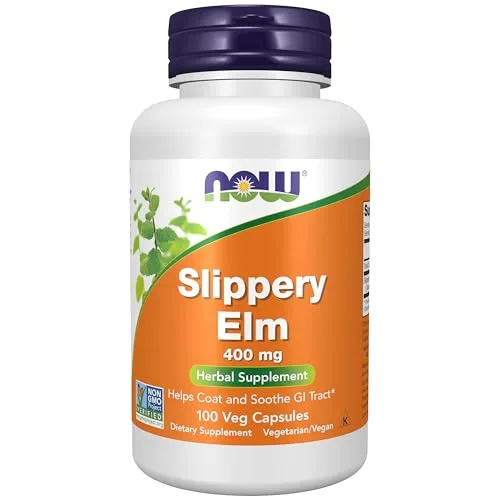
NOW Foods delivers a solid 400mg of slippery elm bark per capsule at the lowest price per serving on our list. The 400mg dose aligns with the lower end of traditional use recommendations, and taking two capsules brings you to 800mg for more robust GI support. NOW's GMP-certified manufacturing and decades of market presence make this the default budget recommendation for reliable slippery elm.
IngredientSlippery Elm Bark Powder 400mg
Dose400mg slippery elm bark per capsule
FormCapsule
TestingGMP Certified
400mg slippery elm bark per capsuleClinical range: 400-1,000mg capsules 3x daily, or bark tea
Therapeutic dose
$0.08 / count$8.00 · 100 Capsules
Ideal for: Budget-friendly daily slippery elm supplementation
Not ideal for: Those seeking organic certification or a higher dose per capsule
Pros
- Most affordable slippery elm per serving
- Single capsule convenience at 400mg
- GMP-certified with decades of brand trust
- Thousands of verified consumer reviews
Cons
- Not organic certified
- 400mg is the minimum traditional dose
- Does not specify inner bark content
Nature’s Way Slippery Elm Bark Capsules, Traditional Digestive Support to Soothe Gastrointestinal Tract*, 1,600 mg per 4-Capsule Serving for Traditional GI Support*, Vegan, 100 Capsules
Nature's Way
3,600 Amazon reviews
8.1/10
(3,600)
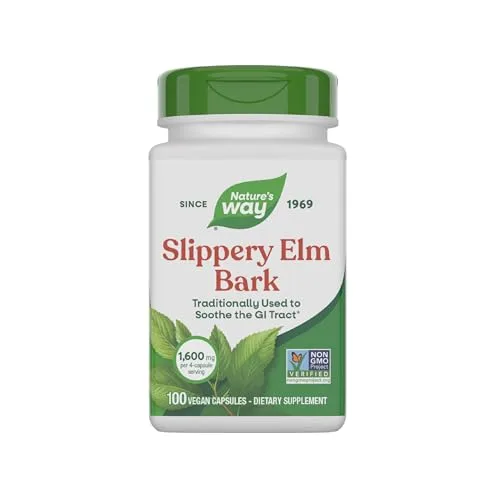
Nature's Way brings their TRU-ID DNA verification technology to slippery elm, confirming that every capsule contains genuine Ulmus rubra bark — not a cheaper substitute. This is particularly valuable for slippery elm, as supply chain integrity is a concern for this at-risk species. The 400mg dose matches the lower end of traditional use, and the brand's multi-decade reputation in herbal supplements provides an extra layer of confidence.
IngredientSlippery Elm Bark 400mg
Dose400mg slippery elm bark per capsule
FormCapsule
TestingTRU-ID Verified
400mg slippery elm bark per capsuleClinical range: 400-1,000mg capsules 3x daily, or bark tea
Therapeutic dose
$0.09 / count$8.50 · 100 Capsules
Ideal for: Traditional herbal brand with DNA-verified botanical identity
Not ideal for: Those seeking organic certification or a standardized mucilage extract
Pros
- TRU-ID DNA verified for botanical identity
- One of the most trusted herbal supplement brands
- Single capsule serving for convenience
- Widely available in stores and online
Cons
- Not organic certified
- 400mg is the lower end of traditional dosing
- TRU-ID verifies identity only, not mucilage content
How to Choose
Inner Bark vs Whole Bark
The inner bark of slippery elm is where the mucilage is concentrated. When mixed with water, this mucilage forms a viscous gel that coats and soothes irritated mucous membranes — the defining mechanism behind slippery elm's traditional use. Products that specify inner bark content are preferred over those listing generic bark, which may include outer bark with less mucilage. Micronized processing improves the surface area available for mucilage release.
Capsules vs Powder vs Liquid
Capsules offer standardized dosing and convenience but bypass the throat and esophagus without coating them. Powder mixed in warm water creates a mucilaginous drink that coats from the throat down through the GI tract — ideal for sore throats, acid reflux, and upper GI irritation. Liquid tinctures offer flexible dosing and some throat coating but contain less mucilage than hydrated powder. Choose your form based on where in the GI tract you need the most support.
Sustainability and Sourcing
Slippery elm (Ulmus rubra) is classified as potentially at-risk due to Dutch elm disease, habitat loss, and commercial harvesting pressure. Responsible brands source from sustainably managed stands and replant after harvest. Organic certification provides some assurance of responsible land management. Supporting brands that prioritize sustainability helps ensure the continued availability of this valuable medicinal tree.
Ready to Buy?
Peak Performance USDA Organic Slippery Elm Capsules
8.3/10$0.63 / countBest for: Organic daily GI mucosal support
Peak Performance USDA Organic Slippery Elm is our top pick: micronized organic bark, clean formulation, and adequate dosing for daily GI mucosal support.
Read Our Full Slippery Elm Research Guide
Evidence level, dosage, side effects, and more →
Already taking supplements?
Check how Slippery Elm fits with your current stack — interactions, timing, and optimization →
Related Supplements
Related Conditions
Frequently Asked Questions
What is the best slippery elm supplement?
What is the best slippery elm supplement?
The best slippery elm supplement for most people is an organic capsule or powder providing 400-800mg of inner bark per serving. Peak Performance USDA Organic Slippery Elm offers micronized organic bark in a clean capsule format. For budget shoppers, NOW Slippery Elm 400mg delivers reliable quality at the lowest price per serving.
What is slippery elm used for?
What is slippery elm used for?
Slippery elm bark has been used for centuries as a demulcent — a substance that forms a soothing, protective coating on mucous membranes. Traditional and modern uses include sore throat relief, acid reflux and GERD symptom management, IBS and IBD support, and general GI mucosal protection. The mucilage in the inner bark creates a gel that physically coats and soothes irritated tissues.
How much slippery elm should I take daily?
How much slippery elm should I take daily?
Traditional use doses range from 400-1,600mg of bark daily, typically in divided doses. For sore throat, 400-800mg as a powder mixed in water or as lozenges provides direct coating. For GI support, 400-800mg taken 2-3 times daily before meals is commonly recommended. There are no large clinical trials establishing a formal clinical dose.
Is slippery elm safe to take long term?
Is slippery elm safe to take long term?
Slippery elm has centuries of traditional use with an excellent safety record. The mucilage is a non-toxic polysaccharide that is not systemically absorbed. The main caution is that the mucilage coating may slow the absorption of medications taken at the same time — take medications 1-2 hours before or after slippery elm.
Can slippery elm help with acid reflux?
Can slippery elm help with acid reflux?
Slippery elm's mucilage forms a protective coating on the esophageal lining that may buffer against acid contact — a traditional, mechanistic basis for its use in reflux rather than a trial-proven effect. While not a replacement for PPIs in severe GERD, many people use slippery elm as a complementary approach for mild reflux symptoms.