SupplementScience
Pygeum supplement
Herbal Extract

Pygeum: Benefits, Dosage, Forms & Research

Herbal Extract

This content is for informational purposes only and does not constitute medical advice. Consult your healthcare provider before starting any supplement. Full disclaimer

TL;DR — Quick Answer

Pygeum bark extract at 100-200mg daily is an established European phytotherapy for BPH. A 2002 Cochrane review of 18 RCTs confirmed it significantly improves urinary symptoms, nocturia, and urine flow. Often combined with saw palmetto and nettle root for comprehensive prostate support.

Key Facts

What it is
Bark extract from Prunus africana standardized to pentacyclic triterpenes and ferulic acid esters for prostate health
Primary benefits
  • Reduces BPH urinary symptoms
  • Decreases nocturia (nighttime urination)
  • Improves urinary flow rate
  • Anti-inflammatory effects in prostate tissue
  • Inhibits prostate cell growth factors
Typical dosage
100-200mg standardized bark extract daily
Evidence level
Strong
Safety profile
Generally Safe

What the Research Says

Pygeum has one of the strongest evidence bases among prostate supplements, anchored by the 2002 Cochrane review by Wilt et al. This systematic review analyzed 18 randomized controlled trials involving 1,562 men with BPH and concluded that pygeum bark extract (typically 100mg daily standardized to Tadenan specifications) provided statistically significant improvements in overall urological symptoms (65% of pygeum users reported improvement vs. 30% for placebo), nocturia (19% reduction), residual urine volume (24% reduction), and peak urine flow (23% increase). The extract is an approved pharmaceutical product in France (Tadenan), Germany, and Italy, where it is covered by national health insurance. Edgar et al. (2007) published a detailed analysis of pygeum's mechanism, confirming anti-inflammatory effects via 5-LOX inhibition and anti-proliferative effects via growth factor inhibition. Sustainability is a concern — Prunus africana is listed under CITES Appendix II due to overharvesting, and ethical sourcing should be verified.

Benefits of Pygeum

  • BPH symptom relief — Wilt et al. (2002) Cochrane review of 18 RCTs involving 1,562 men concluded that pygeum extract provided moderate improvement in overall urological symptoms and flow measures, with men taking pygeum more than twice as likely to report symptom improvement
  • Nocturia reduction — the Cochrane review found a 19% reduction in nighttime urination frequency, which is particularly meaningful for sleep quality in men with BPH
  • Anti-inflammatory mechanism — pentacyclic triterpenes (ursolic acid, oleanolic acid) inhibit 5-lipoxygenase and cyclooxygenase in prostate tissue, reducing prostaglandin and leukotriene-driven inflammation
  • Growth factor inhibition — pygeum extract inhibits fibroblast growth factors (FGF) and epidermal growth factor (EGF) in prostate tissue, which may slow prostatic hyperplasia progression
  • Secretory function — ferulic acid esters (n-docosanol) in pygeum improve prostatic secretory function and may reduce the frequency and volume of prostatic fluid abnormalities associated with BPH
Did you know?

Pygeum has one of the strongest evidence bases among prostate supplements, anchored by the 2002 Cochrane review by Wilt et al.

Forms of Pygeum

FormBioavailabilityBest For
Standardized Bark Extract (14% triterpenes, 0.5% n-docosanol)HighClinical applications — this standardization matches the Tadenan brand used in most European clinical trials and approvals
Pygeum + Saw Palmetto CombinationHighComprehensive BPH management — the combination addresses multiple pathological mechanisms

Dosage Recommendations

General recommendation: 100-200mg standardized bark extract daily (standardized to 14% triterpenes)

Timing: Morning and evening with meals; the twice-daily regimen (50mg x 2) is used in most European clinical protocols • Take with food for best absorption.

Dosage by Condition

ConditionRecommended DoseEvidence
BPH urinary symptoms100mg daily or 50mg twice dailyStrong
Nocturia reduction100-200mg dailyStrong
Prostate health maintenance50-100mg dailyModerate

Upper limit: 200mg daily; most clinical trials use 100mg daily (50mg twice daily)

Our Top Pygeum Pick

Our recommendations are based on published research, not commission rates. Some links below are affiliate links — we may earn a commission at no extra cost to you. How we evaluate products

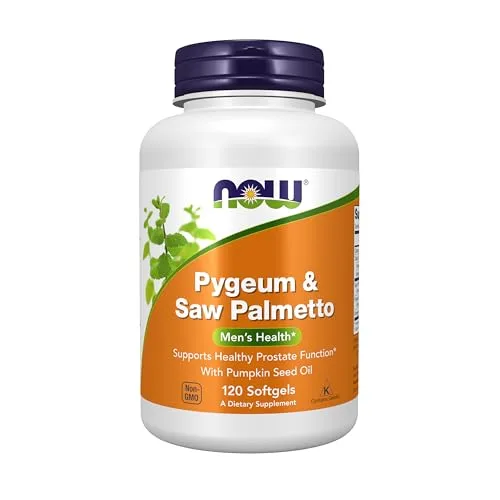
NOW Foods Pygeum & Saw Palmetto

NOW Foods Pygeum & Saw Palmetto

NOW Foods

9/10
Best pygeum + saw palmetto combination$0.22/serving

Side Effects and Safety

Safety profile: Generally Safe

Potential Side Effects

  • GI discomfort (nausea, stomach pain, diarrhea) — reported in approximately 5% of users; mild and usually transient
  • Constipation (occasional)
  • Headache (rare)
  • Excellent overall safety profile established across multiple Cochrane-reviewed RCTs

Drug & Supplement Interactions

  • Finasteride/dutasteride — potential additive effects on prostate; may be complementary but discuss with urologist
  • Alpha-blockers (tamsulosin) — may have additive effects on urinary symptoms; generally considered safe to combine
  • Blood thinners — ursolic acid may have mild antiplatelet properties; inform physician
Check Pygeum interactions with other supplements →
BenefitsDosage GuideSide EffectsTypes & FormsResearchFAQ

Related Conditions

Related Supplements

Frequently Asked Questions

How does pygeum compare to saw palmetto for prostate health?

Both have moderate-to-strong evidence for BPH symptom relief, but they work through different mechanisms. Pygeum primarily targets inflammation (via triterpenes) and growth factor inhibition, while saw palmetto primarily inhibits 5-alpha-reductase (reducing DHT). Many urologists and European phytotherapy guidelines recommend combining them for comprehensive prostate support, as they address complementary pathological pathways. Pygeum has stronger Cochrane-level evidence, while saw palmetto has more individual RCTs.

Is pygeum sustainable and ethically sourced?

This is an important concern. Prunus africana is listed under CITES Appendix II due to overharvesting of wild trees in Cameroon, Madagascar, and other African countries. When purchasing pygeum supplements, look for products that source from sustainably managed plantations or CITES-certified suppliers. Some manufacturers have established replanting programs. This is a supplement where ethical sourcing matters — overharvesting threatens both the species and the communities that depend on it.

How long does pygeum take to work for BPH symptoms?

Most clinical trials show measurable improvements in urinary symptoms within 4-8 weeks. The Cochrane-reviewed trials used treatment periods of 30-120 days, with benefits typically apparent by 6-8 weeks. Pygeum is intended for ongoing use rather than acute symptom relief — consistent daily dosing is important. Some men notice improvements in nocturia (nighttime urination) within the first 2-4 weeks.

References

  1. (). Pygeum africanum for benign prostatic hyperplasia. Cochrane Database of Systematic Reviews. DOI
  2. (). A critical review of the pharmacology of the plant extract of Pygeum africanum in the treatment of LUTS. Neurourology and Urodynamics. DOI