Supplement ScienceSupplementScience
Turkey Tail supplement
Medicinal Mushroom

Turkey Tail — Research Profile

Evidence:Strong
·

This content is for informational purposes only and does not constitute medical advice. Statements about dietary supplements have not been evaluated by the FDA and are not intended to diagnose, treat, cure, or prevent any disease. Individual results may vary — consult your healthcare provider before starting any supplement. Full disclaimer

Turkey tail (Trametes versicolor) is the most research-backed medicinal mushroom, with its polysaccharides PSK and PSP...

Turkey tail (Trametes versicolor) is the most research-backed medicinal mushroom, with its polysaccharides PSK and PSP showing strong immune-modulating effects. Approved as adjunctive cancer therapy in Japan, it activates NK cells and T-cells. Typical doses are 1-3g daily of hot water extract for immune support.

Bottom line: Turkey tail is the most clinically proven medicinal mushroom for immune support, backed by 400+ studies. Take 1-3g hot water extract daily — choose extract over whole powder.

Evidence:Meta-analysis (2007) · 13 RCTs · n=8,009 · high confidence[#1]. See full reference list below.

Key Facts

What it is
A medicinal mushroom (Trametes versicolor) rich in immune-modulating polysaccharides PSK and PSP
Primary benefits
  • Activates natural killer (NK) cells and T-cells
  • Modulates immune response (enhances without overstimulating)
  • Contains potent beta-glucan polysaccharides
  • Supports gut microbiome diversity
  • Used as adjunctive oncology support in Asia
Typical dosage
1-3g daily of hot water extract
Evidence level
Strong
Safety profile
Generally Safe

Get the free evidence-based Turkey Tail guide — delivered in 60 seconds.

No spam. Unsubscribe anytime.

What the Research Says

Turkey tail has the deepest evidence base of any medicinal mushroom. PSK (polysaccharide-K) has been approved as an adjunctive cancer therapy in Japan since 1977, and a 2012 meta-analysis by Oba et al. analyzing 8,009 patients across 13 RCTs found that PSK significantly improved overall survival in gastric and colorectal cancer patients receiving chemotherapy. In the United States, a Phase I clinical trial funded by the NIH (Torkelson et al., 2012) found that turkey tail significantly increased NK cell activity in breast cancer patients after radiation therapy, with dose-dependent immune enhancement at 3, 6, and 9g/day. For general immune support, Pallav et al. (2014) demonstrated that turkey tail supplementation modulated gut microbiome composition in healthy volunteers, increasing beneficial Bifidobacterium and Lactobacillus strains. The beta-glucan content of turkey tail activates the complement system and enhances macrophage phagocytosis through dectin-1 and CR3 receptor binding.
Benefits of Turkey Tail

  • Immune cell activation — PSK and PSP bind to Toll-like receptors (TLR-2, TLR-4) on immune cells, activating NK cells, cytotoxic T-cells, and dendritic cells. This enhances immune surveillance without the overstimulation associated with echinacea-type immunostimulants
  • Oncology support — a landmark meta-analysis of 13 RCTs (n=8,009) found that PSK as adjunctive therapy improved 5-year survival rates in gastric and colorectal cancer patients. PSK has been a prescription adjunctive therapy in Japan since 1977
  • Gut microbiome support — turkey tail polysaccharides act as prebiotics, increasing Bifidobacterium and Lactobacillus populations. A 2014 study found significant improvements in gut microbiome composition after 8 weeks of turkey tail supplementation
  • Antioxidant activity — contains phenolic compounds and flavonoids that contribute to antioxidant capacity and reduction of oxidative stress markers
  • Upper respiratory infection prevention — a small clinical study found turkey tail supplementation reduced the incidence and duration of cold and flu symptoms in healthy adults

Our Top Turkey Tail Picks

As an Amazon Associate, we earn from qualifying purchases. Some links below are affiliate links — this doesn't affect our editorial independence or product ratings. How we evaluate products

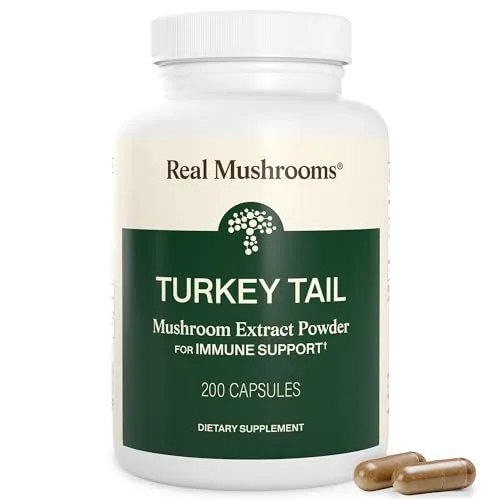
Real Mushrooms Turkey Tail Extract Capsules
Real Mushrooms
#1 Top Pick
Overall / Best Value / Highest Beta-GlucanForm: CapsulePrice: $1.78/serving
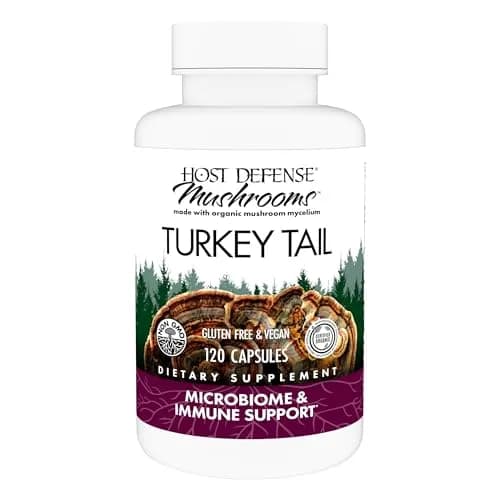
Host Defense Turkey Tail Capsules
Host Defense
Most Trusted BrandForm: CapsulePrice: $0.79/serving
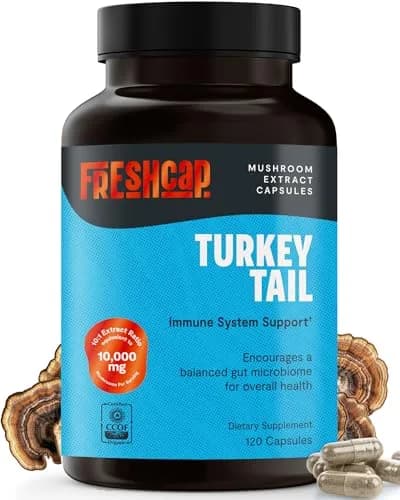
FreshCap Turkey Tail Capsules
FreshCap Mushrooms
Dual ExtractForm: CapsulePrice: $1.33/serving
Did you know?

Turkey tail has the deepest evidence base of any medicinal mushroom.

Forms of Turkey Tail

Turkey Tail supplement forms compared by bioavailability and best use
FormBioavailabilityBest For
Hot Water ExtractHigh (beta-glucans fully extracted)Maximum immune support, clinical dosing
Dual Extract (Water + Alcohol)High (extracts both water-soluble and alcohol-soluble compounds)Comprehensive compound extraction
Whole Fruiting Body PowderModerate (chitin cell walls limit absorption)Budget-friendly daily supplement, smoothie addition

Dosage Recommendations

General recommendation: 1-3g daily of hot water extract

Timing: With food for best absorption; can be taken any time of day • Take with food for best absorption.

Dosage by Condition

Daily immune support
1-2g extract dailyStrong
Intensive immune support
3g extract dailyStrong
Gut microbiome support
2-3g dailyModerate
Adjunctive oncology support
3g PSK daily (under medical supervision)Strong

Upper limit: Clinical trials have used up to 9g/day of PSK without serious adverse effects

Side Effects and Safety

Safety profile: Generally Safe

Potential Side Effects

  • Mild digestive symptoms (bloating, gas) in some users, particularly at higher doses
  • Darkening of fingernails at high doses (rare, cosmetic only, reversible)
  • Rare: mild diarrhea during the first few days of use
  • Overall extremely well-tolerated even in long-term oncology studies

Drug & Supplement Interactions

  • Immunosuppressants (cyclosporine, tacrolimus) — turkey tail may counteract immunosuppressive therapy; do not combine without physician approval
  • Chemotherapy — while PSK is used adjunctively with chemo in Japan, any use alongside cancer treatment requires oncologist supervision
  • Anticoagulants — theoretical risk of additive antiplatelet effects; consult physician if on blood thinners
Check Turkey Tail interactions with other supplements →
BenefitsDosage GuideSide EffectsTypes & FormsResearchFAQ

Related Conditions

Commonly Taken Together

Form Comparisons

Related Guides

Related Supplements

Learn More

Looking for the best turkey tail supplement?

We analyzed and ranked the top products based on form, dosage, third-party testing, and value.

See Our Top Picks

Frequently Asked Questions

What makes turkey tail different from other medicinal mushrooms?

Turkey tail has far more clinical evidence than any other medicinal mushroom. Its polysaccharide PSK is an approved pharmaceutical adjunctive therapy in Japan, backed by over 400 studies and multiple large-scale randomized controlled trials totaling thousands of patients. While other mushrooms like reishi and lion's mane have promising research, turkey tail's evidence base for immune modulation is in a different league.

Evidence:Meta-analysis (2007) · 13 RCTs · n=8,009 · high confidence[#1]. See full reference list below.

Should I choose hot water extract or whole fruiting body?

Hot water extract is strongly preferred. The key bioactive compounds in turkey tail (beta-glucans and PSK/PSP polysaccharides) are locked behind chitin cell walls that human digestion cannot break down efficiently. Hot water extraction releases these compounds, dramatically increasing bioavailability. Whole fruiting body powder provides fiber and some beta-glucans but at a much lower effective dose.

Can I take turkey tail during cancer treatment?

Turkey tail (specifically PSK) is used alongside chemotherapy in Japan with clinical evidence of improved outcomes. However, you should NEVER start any supplement during cancer treatment without explicit approval from your oncologist. Turkey tail modulates immune function, which can interact with immunotherapy, and timing relative to chemotherapy cycles matters. Discuss it with your cancer care team.

What is the best form of Turkey Tail to take?

The best form of turkey tail depends on your specific health goals, absorption needs, and tolerance. Chelated and standardized extract forms generally offer higher bioavailability than raw or unstandardized versions. Check the product label for third-party testing to ensure potency and purity.

What are the proven benefits of Turkey Tail?

Turkey Tail has been studied for multiple health applications with varying levels of clinical evidence. The strongest evidence typically comes from randomized controlled trials and meta-analyses published in peer-reviewed journals. Individual responses can vary based on baseline status, dosage, and duration of use.

How much Turkey Tail should I take per day?

Turkey Tail dosage depends on the specific form, your health goals, and individual factors such as body weight and baseline nutrient status. Following the dose used in clinical trials is generally the most evidence-based approach. Starting at the lower end of the recommended range and adjusting upward is advisable.

When is the best time to take Turkey Tail?

Turkey Tail timing depends on whether it is fat-soluble or water-soluble and whether it causes digestive sensitivity. Consistency in timing is more important than the specific hour of the day. Taking supplements at the same time daily helps maintain steady levels.

What are the side effects of Turkey Tail?

Turkey Tail is generally well tolerated at recommended doses, with gastrointestinal discomfort being the most commonly reported side effect. Side effects are typically mild and dose-dependent, resolving with dose reduction or taking with food. Serious adverse effects are rare at standard supplemental doses.

Does Turkey Tail interact with any medications?

Turkey Tail may interact with certain prescription medications by affecting absorption, metabolism, or pharmacological effects. Always inform your healthcare provider about all supplements you take, especially before surgery or when starting new medications. Spacing supplements and medications by 2 hours reduces most absorption interactions.

Who should consider taking Turkey Tail?

Turkey Tail is most appropriate for individuals with confirmed deficiency, suboptimal levels, or specific health conditions supported by clinical evidence. People in higher-risk demographics, including older adults and those with restricted diets, may benefit most. Testing baseline levels before supplementing provides the best guidance.

How long does Turkey Tail take to show results?

Turkey Tail effects vary by the specific health outcome being targeted, with some benefits appearing within days and others requiring weeks to months of consistent daily use. Correcting a deficiency typically shows improvement within 2-4 weeks. A minimum 8-12 week trial at the recommended dose is advisable before evaluating effectiveness.

Is Turkey Tail safe for long-term daily use?

Turkey Tail is considered safe for long-term use at recommended doses based on available clinical data. Staying within established upper intake limits minimizes the risk of adverse effects over time. Periodic reassessment with a healthcare provider is recommended, especially if health conditions change.

Can you take too much Turkey Tail?

Exceeding the recommended dose of turkey tail increases the risk of adverse effects without providing additional benefit. Toxicity risk varies by form and individual factors such as kidney and liver function. Mega-dosing is not supported by clinical evidence and should be avoided.

Can I combine Turkey Tail with other supplements?

Turkey Tail can generally be combined with complementary supplements, though some combinations may affect absorption or create additive effects. Spacing different supplements by 1-2 hours can reduce absorption competition. Consulting a healthcare professional is advisable when combining multiple supplements targeting the same health pathway.

What should I look for when buying a Turkey Tail supplement?

Third-party testing from USP, NSF, or ConsumerLab is the most important quality indicator when purchasing turkey tail supplements. Look for products that clearly state the specific form, dose per serving, and any relevant standardization percentages. Avoid proprietary blends that hide individual ingredient amounts.

Continue Reading

References

  1. Meta-analysisOba K, Teramukai S, Kobayashi M, et al. (2007). Efficacy of adjuvant immunochemotherapy with polysaccharide K for patients with curative resections of gastric cancer. Cancer Immunology, Immunotherapy. DOI PubMed
  2. RCTTorkelson CJ, Sweet E, Martzen MR, et al. (2012). Phase 1 Clinical Trial of Trametes versicolor in Women with Breast Cancer. ISRN Oncology. DOI PubMed
  3. RCTPallav K, Dowd SE, Villafuerte J, et al. (2014). Effects of polysaccharopeptide from Trametes versicolor and amoxicillin on the gut microbiome of healthy volunteers. Gut Microbes. DOI PubMed
  4. ReviewNarayanan S, de Mores AR, Cohen L, Anwar MM, et al. (2023). Medicinal Mushroom Supplements in Cancer: A Systematic Review of Clinical Studies.. Current oncology reports. DOI PubMed