SupplementScience
Lion's Mane supplement
Medicinal Mushroom

Lion's Mane: Benefits, Dosage, Forms & Research

Medicinal Mushroom

DJP
Reviewed by , MD, Board Certified Internal Medicine

This content is for informational purposes only and does not constitute medical advice. Consult your healthcare provider before starting any supplement. Full disclaimer

TL;DR — Quick Answer

Lion's mane (Hericium erinaceus) is a medicinal mushroom that stimulates nerve growth factor (NGF), supporting cognitive function, memory, and neuroprotection. Clinical trials show benefits for mild cognitive impairment at 500-3000mg daily of fruiting body extract, typically noticeable after 4-8 weeks of consistent use.

Key Facts

  • What it is: A medicinal mushroom (Hericium erinaceus) that stimulates nerve growth factor (NGF)
  • Primary benefits:
    • Stimulates nerve growth factor (NGF)
    • Supports cognitive function and memory
    • May protect against neurodegeneration
    • Reduces mild anxiety and depression symptoms
    • Supports gut health via prebiotic beta-glucans
  • Typical dosage: 500-3000mg fruiting body extract daily
  • Evidence level: Moderate
  • Safety: Generally Safe

What the Research Says

Lion's mane has a growing body of clinical evidence supporting its nootropic and neuroprotective properties. The landmark 2009 Mori et al. trial demonstrated statistically significant cognitive improvement in older adults with mild cognitive impairment after 16 weeks of supplementation. Lai et al. (2013) confirmed neurotrophic properties in vitro, showing lion's mane extract stimulates NGF synthesis. A 2019 study by Saitsu et al. found that oral intake of Hericium erinaceus improved cognitive function scores in healthy adults, extending the evidence beyond impaired populations.

Benefits of Lion's Mane

  • Nerve growth factor stimulation — lion's mane contains hericenones and erinacines, unique compounds that cross the blood-brain barrier and stimulate NGF synthesis, promoting neuronal growth and repair
  • Cognitive function and memory — a 2009 double-blind RCT found 3g/day of lion's mane significantly improved cognitive function in older adults with mild cognitive impairment over 16 weeks
  • Neuroprotection — preclinical studies demonstrate lion's mane extracts protect against amyloid-beta plaque formation and oxidative damage to neurons, with implications for Alzheimer's prevention
  • Anxiety and depression reduction — a 2019 clinical trial found lion's mane supplementation improved depression, anxiety, and sleep quality scores after 8 weeks of daily use
  • Gut health support — beta-glucans and other polysaccharides act as prebiotics, supporting beneficial gut bacteria and intestinal barrier integrity

Forms of Lion's Mane

FormBioavailabilityBest For
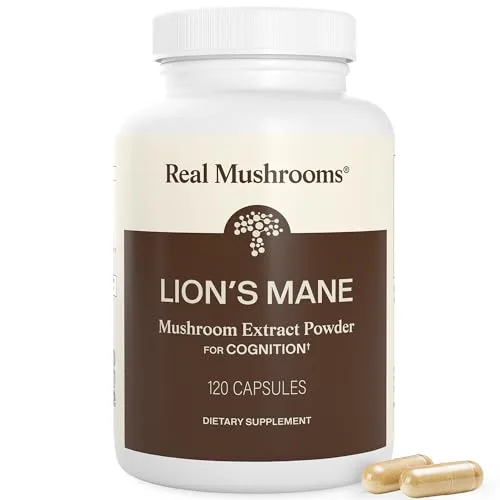
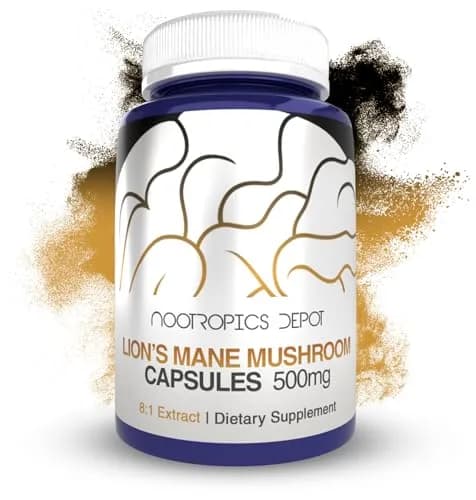
Fruiting Body Extract CapsulesHighStandardized dosing — concentrated hericenones, most clinically studied form
Dual Extract (Hot Water + Alcohol)HighMaximum spectrum — extracts both water-soluble beta-glucans and alcohol-soluble terpenes
Powder (Fruiting Body)Moderate-HighVersatility — mix into coffee, smoothies, or food
Mycelium on GrainLow-ModerateBudget option — lower concentration of active compounds, contains grain starch filler
Whole Dried MushroomModerateCulinary use — cook into soups, stir-fries, or tea for traditional preparation

Dosage Recommendations

General recommendation: 500-3000mg daily of fruiting body extract, standardized to >30% beta-glucans

Timing: Consistent daily use for 4-8+ weeks to notice benefits; can be taken any time of day • Take with food for best absorption.

Dosage by Condition

ConditionRecommended DoseEvidence
Cognitive support1000-3000mg fruiting body extract dailyModerate
Neuroprotection1000-3000mg daily, long-term useEmerging
Anxiety/depression500-1000mg daily for 8+ weeksModerate
Gut health500-1000mg dailyEmerging

Upper limit: 3000mg/day from supplements (higher doses not well-studied)

Side Effects and Safety

Safety profile: Generally Safe

Potential Side Effects

  • Rare — mild gastrointestinal discomfort during initial use
  • Skin itching in sensitive individuals (likely related to NGF stimulation)
  • Possible allergic reaction in those with mushroom sensitivities

Drug & Supplement Interactions

  • Anticoagulant medications — lion's mane may have mild antiplatelet effects
  • Antidiabetic medications — may lower blood sugar levels additively
BenefitsDosage GuideSide EffectsTypes & FormsResearchFAQ

Related Conditions

Related Research

Related Supplements

Frequently Asked Questions

How long does lion's mane take to work?

Most clinical studies show measurable cognitive benefits after 4-8 weeks of daily use. NGF stimulation is a gradual biological process — neurons need time to grow and form new connections. Some users report subjective improvements in focus within 2 weeks, but full neuroprotective benefits require consistent long-term supplementation.

Is lion's mane a psychedelic?

No. Despite being a mushroom, lion's mane is not psychoactive and does not produce any hallucinogenic effects. It does not contain psilocybin or any psychedelic compounds. Its mechanism of action involves stimulating nerve growth factor (NGF) production, which supports normal neuronal function rather than altering consciousness.

Fruiting body vs mycelium — which is better?

Fruiting body extracts contain significantly higher concentrations of hericenones and erinacines, the active compounds that stimulate NGF. Mycelium-on-grain products often contain substantial grain starch filler (up to 60-70% by weight), diluting the active compounds. All major clinical trials used fruiting body extracts. Choose products standardized to >30% beta-glucans from fruiting body.

References

  1. (). Improving effects of the mushroom Yamabushitake (Hericium erinaceus) on mild cognitive impairment: a double-blind placebo-controlled clinical trial. Phytotherapy Research. DOI
  2. (). Neurotrophic properties of the Lion's mane medicinal mushroom, Hericium erinaceus. International Journal of Medicinal Mushrooms. DOI
  3. (). Improvement of cognitive functions by oral intake of Hericium erinaceus. Biomedical Research. DOI