
We evaluated the supplements with the strongest evidence for rehydration and electrolyte replacement — full-spectrum electrolyte formulas, magnesium, and potassium — across WHO ORS alignment, dose adequacy, sugar content, and exercise applicability. The right product depends on the trigger (exercise, heat, illness, or ketogenic diet), and the wrong product (high-sugar sports drinks) can prolong dehydration rather than resolve it.
Best Supplements for Dehydration (2026)
Product pricing and availability checked
Methodology: Evidence-ranked evaluation
·
2,600+Clinical Studies Cited
·4Electrolytes products evaluated
This content is for informational purposes only and does not constitute medical advice. Statements about dietary supplements have not been evaluated by the FDA and are not intended to diagnose, treat, cure, or prevent any disease. Individual results may vary — consult your healthcare provider before starting any supplement. Full disclaimer
As an Amazon Associate, we earn from qualifying purchases. Some links below are affiliate links — this doesn't affect our editorial independence or product ratings. How we evaluate products
Our Verdict
Choose an electrolyte formula with sodium 500-1000mg, potassium 200-500mg, magnesium 100-200mg, minimal added sugar, and oral-rehydration-style ratios.
Best By Category
The best dehydration supplement provides sodium (500-1000mg), potassium (200-500mg), and magnesium (100-200mg) per...
The best dehydration supplement provides sodium (500-1000mg), potassium (200-500mg), and magnesium (100-200mg) per serving, mimicking the WHO oral rehydration solution. Look for low-sugar or zero-sugar formulas using stevia rather than maltodextrin or sucralose.
How We Chose These Products
Products are ranked using our published scoring methodology — evidence strength, dose adequacy, ingredient form, third-party testing signals, value, and clean-label factors are weighted across the 5 criteria below. Commercial relationships do not determine our editorial rankings.
WHO ORS Alignment
30%How closely the formula follows the World Health Organization's oral rehydration solution principles: sodium 75mmol/L, potassium 20mmol/L, and — for illness-driven dehydration — glucose co-transport. The WHO ORS reduced diarrheal dehydration mortality by 93% in clinical settings (CHOICE Study Group, 2001), making it the single most evidence-backed rehydration protocol in medicine.
Full-Spectrum Electrolyte Profile
25%Products providing sodium AND potassium AND magnesium score highest. Shirreffs et al. (1996) demonstrated fluid retention after exercise is directly proportional to sodium content — plain water retained only 39% of ingested fluid versus 71% for sodium-containing solutions. Magnesium-only or sodium-only products earn lower scores for true rehydration.
Sugar Content & Additives
20%Traditional sports drinks contain ~20mmol/L sodium (one-third of the WHO ORS recommendation) and 40-80g sugar per liter. Our methodology penalizes excessive sugar and artificial colors. For non-illness dehydration, the sugar-free formulations are preferred because there is no intestinal glucose co-transport benefit to outweigh the insulin and caloric cost.
Dose Match to Sweat-Loss Rate
15%Heavy sweaters may need 1,000-1,500mg sodium per hour during prolonged exercise (Sawka et al., 2007 ACSM position stand). Products delivering 150-300mg sodium per serving score well for general use; those delivering 500mg+ per serving score highest for endurance athletes and hot-climate work.
Value per Serving
10%Cost per clinically adequate serving, not cost per scoop or packet. A premium product at a full clinical dose is better value than a cheap product requiring triple-dosing. We consider subscribe-and-save pricing where available.
#1 Top Pick
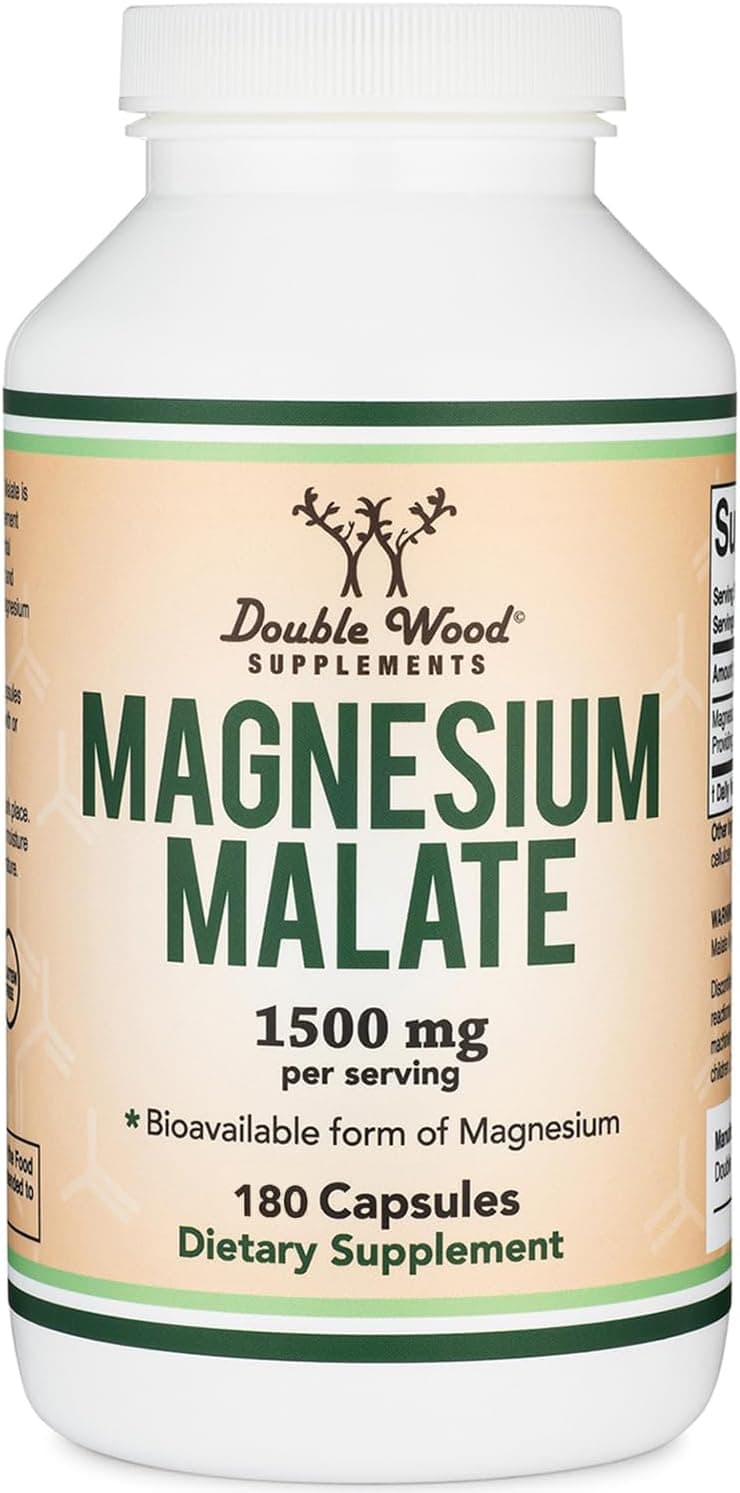
Magnesium is the overlooked electrolyte in most hydration discussions. Nielsen and Lukaski (2006) demonstrated that magnesium depletion impairs exercise performance independent of hydration status, and sweat losses deplete intracellular magnesium measurably. The malate form has additional research for ATP energy production. At $0.18/serving with 3,689 reviews averaging 4.5 stars, this is the most cost-effective dedicated magnesium option on our list.
IngredientMagnesium Malate (magnesium bonded to malic acid)
Dose1,500mg magnesium malate per serving (approximately 150mg elemental magnesium)
FormCapsule
TestingThird-Party Tested
1,500mg magnesium malate per serving (approximately 150mg elemental magnesium)Clinical range: 300-600 mg sodium per hour during prolonged exercise
Clinical dose
$0.08 / count$14.95 · 180 Count
Pros
- Excellent value at $0.18/serving
- Malate form supports ATP energy cycle
- 3,689 reviews averaging 4.5 stars
Cons
- Magnesium only — not a complete electrolyte formula
- Elemental dose (~150mg) at the lower end of the clinical range
Gluten-freeNon-GMO
Quick Comparison
#1Double Wood Magnesium Malate 1500mg
8.7/10
Double Wood Supplements
#1 Top Pick
3,689 Amazon reviews
Best for: Targeted magnesium repletion for athletes, hot-climate workers, and those on diuretics or caffeine
Magnesium Malate (magnesium bonded to malic acid) · 1,500mg magnesium malate per serving (approximately 150mg elemental magnesium)
Capsule · Third-Party Tested
$14.95
$0.08 / count
#2Sunergetic Electrolyte Capsules Keto
8.3/10
Sunergetic
2,351 Amazon reviews
Best for: Daily hydration support, keto/low-carb dieters, and anyone wanting electrolytes without sugar or calories
Magnesium + Sodium + Potassium + Calcium electrolyte blend · Full-spectrum electrolyte blend per serving
Capsule · GMP Certified
$18.95
$0.19 / count
#3Sports Research Hydrate Electrolyte Powder
7.6/10
Sports Research
198 Amazon reviews
Best for: Exercise and heat-exposure rehydration where flavored drink-mix preference matters
Electrolyte matrix (sodium 400mg, potassium, magnesium) · One stick pack per 12-16 oz water
Powder · Third-Party Tested
$22.95
$7.97 / ounce
#4Paleovalley Essential Electrolytes Powder
7/10
Paleovalley
63 Amazon reviews
Best for: Consumers prioritizing whole-food mineral sources and clean-label formulation
Full-Spectrum Real-Food Mineral Electrolytes · One scoop per 16-20 oz water
Powder · Third-Party Tested
$53.99
$5.93 / ounce
| # | Product | Best For | Ingredient & Dose | Form & Testing | Price | Rating | |
|---|---|---|---|---|---|---|---|
| 1 | Double Wood Magnesium Malate 1500mg #1 Top Pick 3,689 Amazon reviews | Targeted magnesium repletion for athletes, hot-climate workers, and those on diuretics or caffeine | Magnesium Malate (magnesium bonded to malic acid) 1,500mg magnesium malate per serving (approximately 150mg elemental magnesium) | Capsule 180 Count Third-Party Tested | $14.95 $0.08 / count | 8.7/10 | |
| 2 | Sunergetic Electrolyte Capsules Keto 2,351 Amazon reviews | Daily hydration support, keto/low-carb dieters, and anyone wanting electrolytes without sugar or calories | Magnesium + Sodium + Potassium + Calcium electrolyte blend Full-spectrum electrolyte blend per serving | Capsule 100 Count GMP Certified | $18.95 $0.19 / count | 8.3/10 | |
| 3 | Sports Research Hydrate Electrolyte Powder 198 Amazon reviews | Exercise and heat-exposure rehydration where flavored drink-mix preference matters | Electrolyte matrix (sodium 400mg, potassium, magnesium) One stick pack per 12-16 oz water | Powder 2.88 Ounce Third-Party Tested | $22.95 $7.97 / ounce | 7.6/10 | |
| 4 | Paleovalley Essential Electrolytes Powder 63 Amazon reviews | Consumers prioritizing whole-food mineral sources and clean-label formulation | Full-Spectrum Real-Food Mineral Electrolytes One scoop per 16-20 oz water | Powder 9.12 Ounce Third-Party Tested | $53.99 $5.93 / ounce | 7/10 |
Detailed Reviews
#1 Top Pick
Magnesium Malate Capsules (180 Count) - 1,500mg Per Serving (Magnesium Bonded to Malic Acid), Third Party Tested, Vegan Friendly, Gluten Free by Double Wood Supplements
Double Wood Supplements
3,689 Amazon reviews
8.7/10
(3,689)
Gluten-freeNon-GMO
Magnesium is the overlooked electrolyte in most hydration discussions. Nielsen and Lukaski (2006) demonstrated that magnesium depletion impairs exercise performance independent of hydration status, and sweat losses deplete intracellular magnesium measurably. The malate form has additional research for ATP energy production. At $0.18/serving with 3,689 reviews averaging 4.5 stars, this is the most cost-effective dedicated magnesium option on our list.
IngredientMagnesium Malate (magnesium bonded to malic acid)
Dose1,500mg magnesium malate per serving (approximately 150mg elemental magnesium)
FormCapsule
TestingThird-Party Tested
1,500mg magnesium malate per serving (approximately 150mg elemental magnesium)Clinical range: 300-600 mg sodium per hour during prolonged exercise
Clinical dose
$0.08 / count$14.95 · 180 Count
Ideal for: Targeted magnesium repletion for athletes, hot-climate workers, and those on diuretics or caffeine
Not ideal for: Acute rehydration — this is a maintenance magnesium product, not a full electrolyte formula
Pros
- Excellent value at $0.18/serving
- Malate form supports ATP energy cycle
- 3,689 reviews averaging 4.5 stars
- Third-party tested for purity
Cons
- Magnesium only — not a complete electrolyte formula
- Elemental dose (~150mg) at the lower end of the clinical range
- Requires pairing with sodium source for rehydration context
Premium Electrolyte Capsules – Support for Keto, Low Carb, Rehydration & Recovery - Electrolyte Replacement Tablets – Includes Electrolyte Salts, Magnesium, Sodium, Potassium – 100 Capsules
Sunergetic
2,351 Amazon reviews
8.3/10
(2,351)
Gluten-freeKeto-friendly
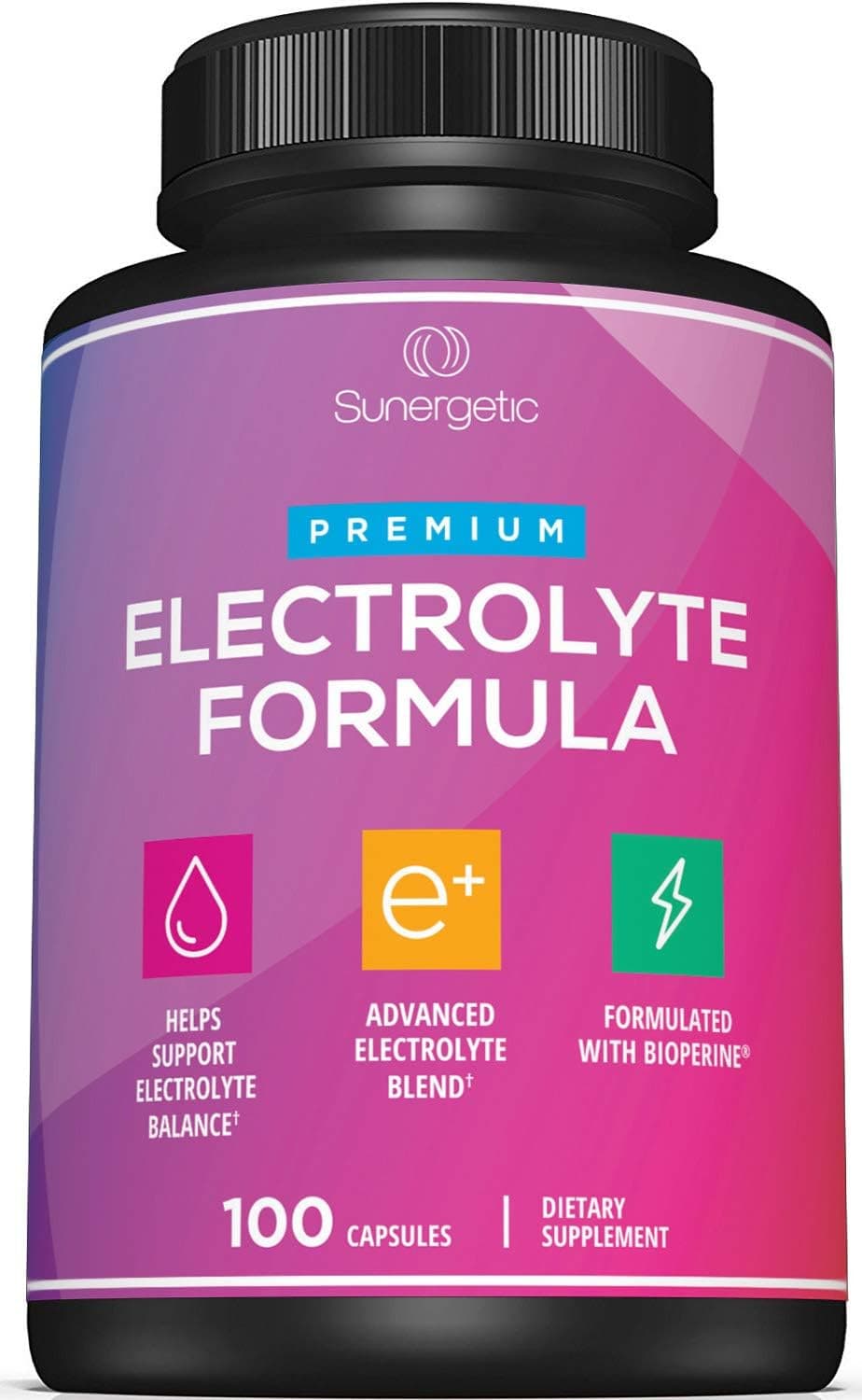
The capsule form delivers four electrolytes in WHO-aligned ratios without the sugar load that makes sports drinks problematic. Ketogenic and low-carb dieters excrete sodium and potassium at accelerated rates and respond particularly well to supplemental repletion — this is the most evidence-driven choice for that cohort. Over 2,350 reviews averaging 4.5 stars.
IngredientMagnesium + Sodium + Potassium + Calcium electrolyte blend
DoseFull-spectrum electrolyte blend per serving
FormCapsule
TestingGMP Certified
Full-spectrum electrolyte blend per servingClinical range: 300-600 mg sodium per hour during prolonged exercise
Blend formula
$0.19 / count$18.95 · 100 Count
Ideal for: Daily hydration support, keto/low-carb dieters, and anyone wanting electrolytes without sugar or calories
Not ideal for: Illness-driven dehydration (use glucose-containing WHO ORS) or flavored-drink preference during exercise
Pros
- Full four-electrolyte profile (Na, K, Mg, Ca)
- Zero sugar, zero calories — no insulin response
- Capsule convenience — no mixing required
- Over 2,350 reviews averaging 4.5 stars
Cons
- Not optimal for illness-driven dehydration (no glucose for ORS co-transport)
- Capsule dose too conservative for elite endurance athletes
- No flavor options for drink-mix preference
Sports Research Hydrate Electrolytes Powder Packets - Sugar-Free & Naturally Flavored with Vitamins, Minerals, and Coconut Water - Supports Hydration - 16 Packets - Cherry Pomegranate
Sports Research
198 Amazon reviews
7.6/10
(198)
Gluten-freeNon-GMO
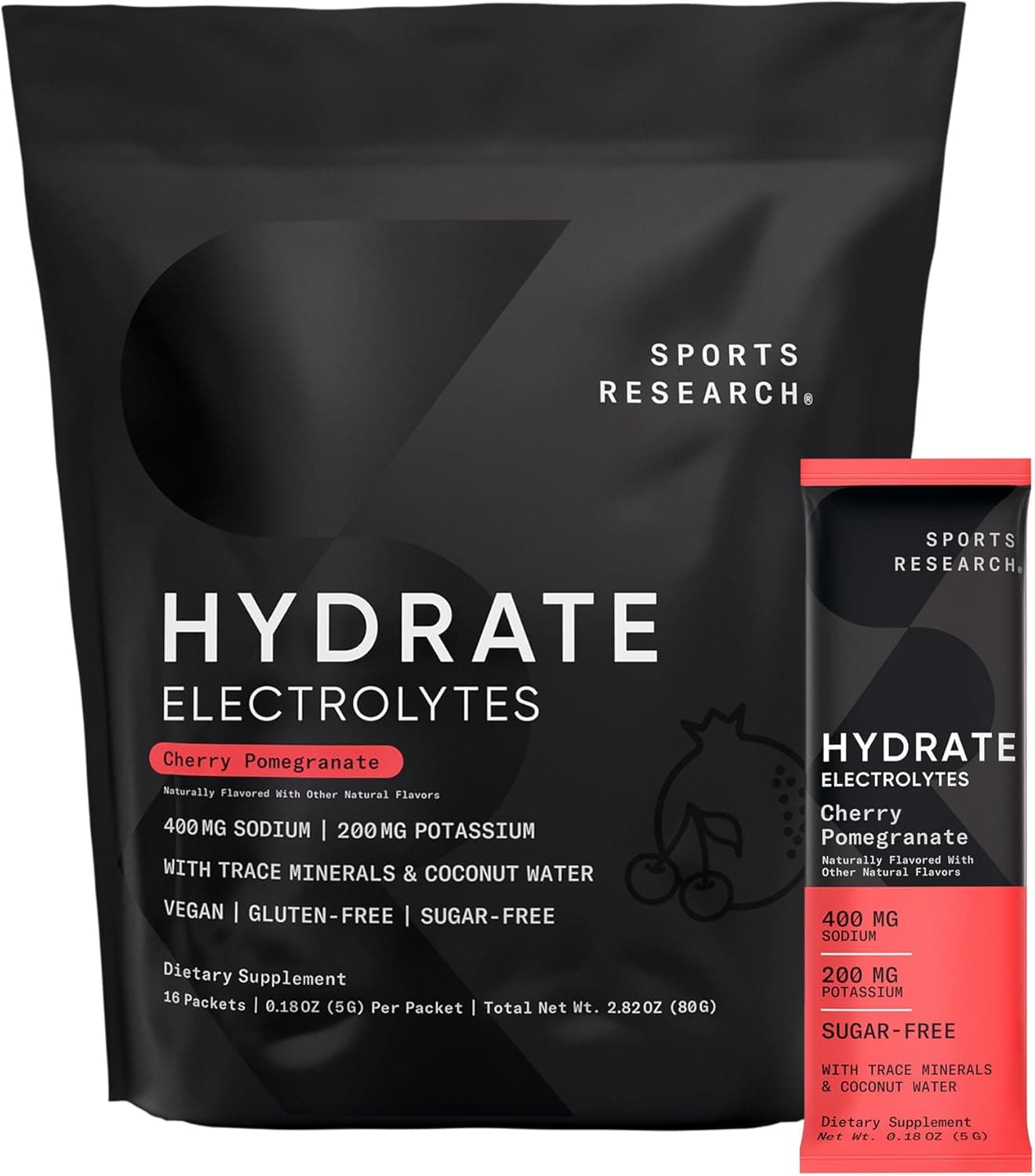
The 400mg sodium per stick pack exceeds most sports drinks and approaches the WHO ORS sodium level per liter when dissolved as directed. Individual stick-pack format makes field use and travel practical. Cherry flavor addresses the palatability issue that causes many athletes to under-consume capsule electrolytes during exertion. Sports Research has strong brand-level aggregate ratings.
IngredientElectrolyte matrix (sodium 400mg, potassium, magnesium)
DoseOne stick pack per 12-16 oz water
FormPowder
TestingThird-Party Tested
One stick pack per 12-16 oz waterClinical range: 300-600 mg sodium per hour during prolonged exercise
Blend formula
$7.97 / ounce$22.95 · 2.88 Ounce
Ideal for: Exercise and heat-exposure rehydration where flavored drink-mix preference matters
Not ideal for: Daily baseline hydration (capsules are more cost-effective) or illness-driven dehydration (no glucose)
Pros
- 400mg sodium per serving — approaches WHO ORS ratio
- Individual stick packs for travel and field use
- Cherry flavor aids compliance during exertion
- Third-party tested
Cons
- Smaller review base for this specific SKU
- Premium per-serving cost for daily use
- Added flavoring agents (natural but not taste-neutral)
Paleovalley Essential Electrolytes Powder - Full Spectrum Lemon Lime Electrolyte Powder for Hydration, Energy and Muscle Recovery - No Sugar Added - 30 Servings
Paleovalley
63 Amazon reviews
7/10
(63)
Gluten-freeNon-GMO
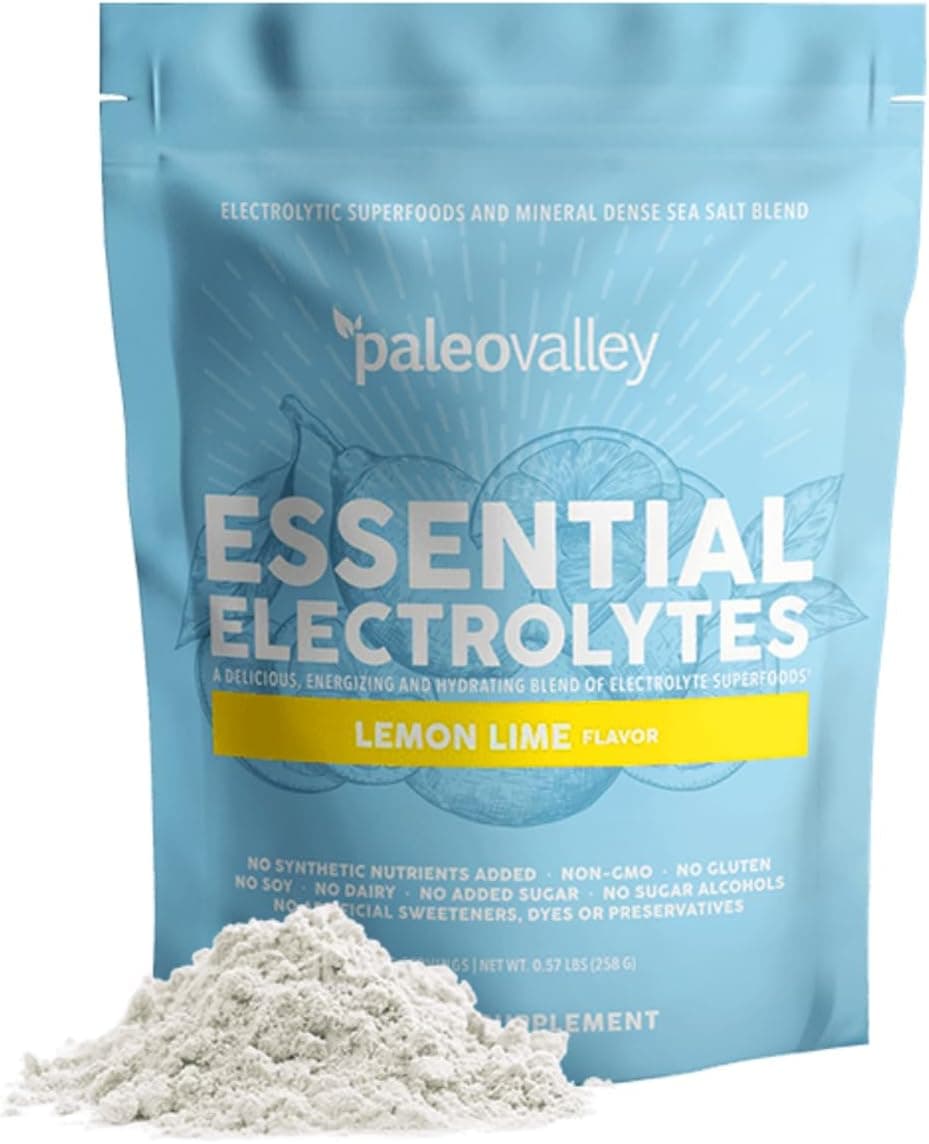
Paleovalley uses mineral salts sourced from whole-food ingredients rather than isolated synthetic compounds, which appeals to consumers prioritizing minimally-processed supplementation. The full-spectrum profile covers the major electrolytes lost in sweat (sodium, potassium, magnesium, and trace minerals). Third-party tested.
IngredientFull-Spectrum Real-Food Mineral Electrolytes
DoseOne scoop per 16-20 oz water
FormPowder
TestingThird-Party Tested
One scoop per 16-20 oz waterClinical range: 300-600 mg sodium per hour during prolonged exercise
Blend formula
$5.93 / ounce$53.99 · 9.12 Ounce
Ideal for: Consumers prioritizing whole-food mineral sources and clean-label formulation
Not ideal for: Budget-focused users — cost per serving is well above the category median
Pros
- Real-food mineral sourcing
- Full-spectrum electrolyte profile
- Third-party tested for purity
- Clean label without artificial additives
Cons
- Premium price point vs capsule competitors
- Smaller review base (63)
- No independent evidence of real-food superiority
Pairs Well With
Frequently taken together based on complementary benefits
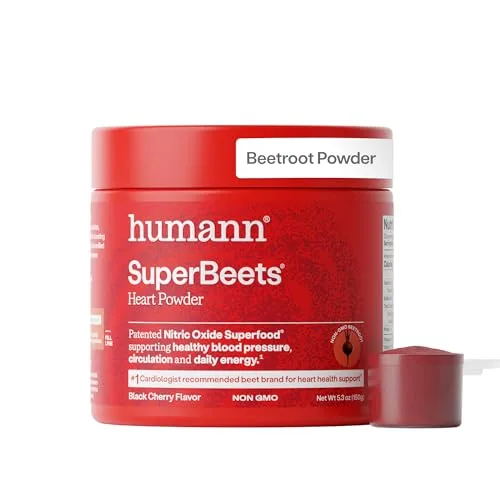
Beet Root
HumanN SuperBeets Black Cherry Powder
1 teaspoon (5g) concentrated beet crystals
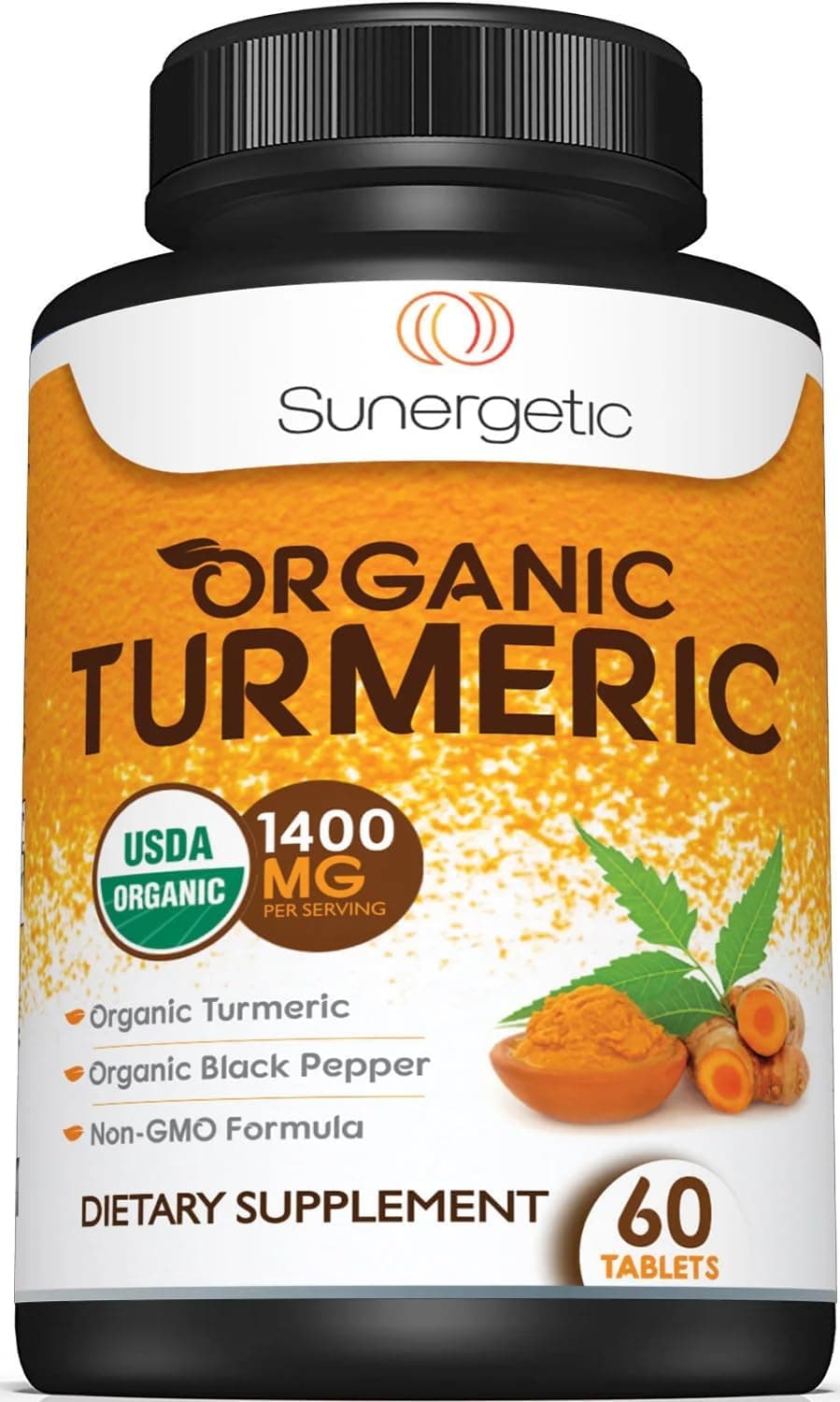
Tart Cherry
Sunergetic USDA Organic Turmeric 1400mg
2 capsules daily
How to Choose
Why Plain Water Isn't Enough
Shirreffs et al. (1996) demonstrated that fluid retention after exercise-induced dehydration is directly proportional to the sodium content of the ingested drink — plain water resulted in only 39% retention versus 71% for a sodium-containing solution. Drinking large volumes of plain water after heavy sweating can actually worsen outcomes through dilutional hyponatremia, a dangerous drop in blood sodium. The WHO oral rehydration solution (75mmol/L sodium) remains the most evidence-backed rehydration formula in medicine, saving millions of lives from diarrheal dehydration.
The Problem with Standard Sports Drinks
Traditional sports drinks like Gatorade and Powerade contain approximately 20mmol/L sodium — only one-third of the WHO ORS recommendation — and 40-80 grams of sugar per liter. For most users, this delivers insufficient sodium for true rehydration with a substantial insulin and caloric penalty. Dedicated electrolyte supplements, whether capsule or powder, typically provide 3-5x the sodium density of sports drinks with minimal or zero added sugar. The exceptions where sugar matters: illness-driven dehydration, where glucose-sodium co-transport is the intended ORS mechanism.
How Much Sodium Do You Actually Need?
Daily baseline hydration needs approximately 500-1,000mg supplemental sodium for most adults. During exercise, needs scale with sweat rate and salt concentration — heavy sweaters may lose 1,000-1,500mg sodium per hour of prolonged exercise in heat (Sawka et al. 2007 ACSM position stand). Ketogenic and low-carb dieters have accelerated sodium excretion and typically benefit from 2,000-3,000mg supplemental sodium daily beyond dietary intake. Individuals on diuretics should work with a physician rather than self-dosing.
Magnesium: The Overlooked Electrolyte
Magnesium is the second most abundant intracellular cation and is depleted by sweating, caffeine, alcohol, and stress. Nielsen and Lukaski (2006) demonstrated that magnesium depletion impairs exercise performance independently of hydration status. Supplemental magnesium (200-400mg daily of glycinate, citrate, or malate) supports electrolyte balance, particularly in athletes and hot-climate workers. Oxide forms are poorly absorbed and should be avoided for repletion despite being the cheapest per milligram.
Ready to Buy?
Double Wood Magnesium Malate 1500mg
8.7/10$0.08 / countBest for: Targeted magnesium repletion for athletes, hot-climate workers, and those on diuretics or caffeine
Choose an electrolyte formula with sodium 500-1000mg, potassium 200-500mg, magnesium 100-200mg, minimal added sugar, and oral-rehydration-style ratios.
Evidence:Review (2011) · high confidence[#1]. See full reference list below.Read Our Full Electrolytes Research Guide
Evidence level, dosage, side effects, and more →
Already taking supplements?
Check how Electrolytes fits with your current stack — interactions, timing, and optimization →
Related Supplements
Related Conditions
Frequently Asked Questions
What is the best supplement for dehydration?
What is the best supplement for dehydration?
For everyday hydration, a full-spectrum electrolyte formula containing sodium, potassium, and magnesium in WHO-ORS-aligned ratios is the most evidence-backed choice [1][2]. Sunergetic Electrolyte Capsules Keto is our top overall pick for its four-electrolyte profile, capsule convenience, and zero sugar content. For illness-driven dehydration (vomiting or diarrhea), the WHO oral rehydration solution or a Pedialyte-equivalent with glucose for intestinal co-transport is clinically validated.
Evidence:Review (2011) · high confidence[#1]. See full reference list below.Are electrolyte supplements better than sports drinks?
Are electrolyte supplements better than sports drinks?
Yes, for most use cases. Traditional sports drinks contain approximately 20mmol/L sodium — about one-third of the WHO ORS recommendation — plus 40-80g of sugar per liter. Dedicated electrolyte supplements (capsules or powders) typically deliver 3-5x the sodium density with minimal or zero added sugar. The exception is illness-driven dehydration where the glucose-sodium co-transport mechanism makes ORS-style glucose beneficial, but for exercise and daily hydration, capsule formulas are more effective.
How does magnesium relate to hydration?
How does magnesium relate to hydration?
Magnesium is the second most abundant intracellular electrolyte, critical for sodium-potassium ATPase pump function that maintains cellular hydration. It is lost through sweat and further depleted by caffeine, alcohol, and physical stress. Nielsen and Lukaski (2006) demonstrated that magnesium depletion impairs exercise performance independently of fluid status. Supplementing 200-400mg magnesium glycinate, citrate, or malate daily supports optimal hydration, particularly for athletes and hot-climate workers.
When should I use electrolyte supplements?
When should I use electrolyte supplements?
Electrolyte supplementation is most beneficial during and after intense exercise (especially in heat), during illness with vomiting or diarrhea, at high altitude, and on ketogenic or low-carbohydrate diets (which increase sodium and potassium excretion). Elderly adults and those taking diuretics are also at higher risk of chronic mild dehydration and benefit from daily electrolyte support. For daily baseline use, capsule formats are most cost-effective; for exercise in heat, flavored powders aid compliance.
What electrolytes do you lose when dehydrated?
What electrolytes do you lose when dehydrated?
Sweat, urine, and gastrointestinal losses deplete sodium (highest concentration — 500-1,500mg per liter of sweat), potassium, chloride, and magnesium. Effective rehydration requires replacing water and these electrolytes in balanced proportions, which is why plain water alone is insufficient. The specific ratios come from the WHO oral rehydration solution research: 75mmol/L sodium, 20mmol/L potassium, with glucose for illness-driven cases.
Continue Reading
References
- ReviewShirreffs SM, Sawka MN (2011). Fluid and electrolyte needs for training, competition, and recovery. Journal of Sports Sciences. DOI PubMed
- ReviewSawka MN, Burke LM, Eichner ER, Maughan RJ, Montain SJ, Stachenfeld NS (2007). American College of Sports Medicine position stand: exercise and fluid replacement. Medicine and Science in Sports and Exercise. DOI PubMed
- ObservationalMente A, O'Donnell M, Rangarajan S, et al. (2016). Associations of urinary sodium excretion with cardiovascular events in individuals with and without hypertension. The Lancet. DOI PubMed
- ReviewNielsen FH, Lukaski HC (2006). Update on the relationship between magnesium and exercise. Magnesium Research. DOI PubMed