
We reviewed 20 ginger supplements across organic certification, extract standardization, dose adequacy, form, and value per serving. Our picks prioritize products that deliver the 250-1,000mg extract dose studied in clinical trials for nausea relief and anti-inflammatory support.
Best Ginger Supplements (2026)
Product pricing and availability checked
Methodology: Evidence-ranked evaluation
·
2,600+Clinical Studies Cited
·3Ginger products evaluated
This content is for informational purposes only and does not constitute medical advice. Statements about dietary supplements have not been evaluated by the FDA and are not intended to diagnose, treat, cure, or prevent any disease. Individual results may vary — consult your healthcare provider before starting any supplement. Full disclaimer
As an Amazon Associate, we earn from qualifying purchases. Some links below are affiliate links — this doesn't affect our editorial independence or product ratings. How we evaluate products
Our Verdict
Peak Performance USDA Organic Ginger Root is our top pick: certified organic, clean formulation, and adequate dosing for daily digestive and anti-inflammatory support.
Best By Category
The best ginger supplement is USDA Organic whole-root Zingiber officinale at 500-1000mg per serving (2-4g daily total),...
The best ginger supplement is USDA Organic whole-root Zingiber officinale at 500-1000mg per serving (2-4g daily total), standardized to gingerols or provided as freshly dried whole root. For nausea, gingerols are the active fraction; for inflammation, shogaols (from slightly aged ginger) are more potent.
How We Chose These Products
Products are ranked using our published scoring methodology — evidence strength, dose adequacy, ingredient form, third-party testing signals, value, and clean-label factors are weighted across the 5 criteria below. Commercial relationships do not determine our editorial rankings.
Organic Certification
25%USDA Organic certification ensures no synthetic pesticides, herbicides, or fertilizers were used during cultivation. Ginger root absorbs compounds from soil, making organic sourcing important for a supplement taken daily for digestive health.
Extract Standardization
25%Standardized ginger extracts guarantee a minimum concentration of gingerols and shogaols — the bioactive compounds responsible for anti-nausea and anti-inflammatory effects. Products standardized to 5% gingerols deliver more consistent results than raw root powder.
Dose Adequacy
20%Clinical trials on ginger for nausea use 250-1,000mg of ginger extract daily. The Ernst & Pittler meta-analysis found 1g of ginger effective for nausea. Products providing at least 250mg extract or 500mg root powder per serving meet the therapeutic threshold.
Form and Bioavailability
15%Capsules offer standardized dosing, while liquid extracts provide faster absorption. Ginger root powder retains the full spectrum of compounds, while concentrated extracts deliver higher gingerol content per milligram.
Value per Serving
15%Cost per serving adjusted for dose, organic status, and standardization. Ginger is an affordable herb — organic certification and extract standardization justify moderate premiums.
#1 Top Pick
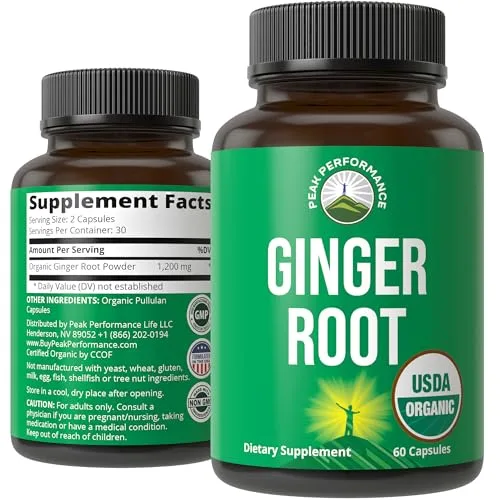
USDA Organic certified ginger root in a clean capsule format with no artificial fillers or additives. Peak Performance's commitment to organic sourcing ensures the ginger root was cultivated without synthetic chemicals, which is especially important for a root crop that absorbs heavily from soil. Third-party tested for purity and potency with strong early consumer ratings.
IngredientUSDA Organic Ginger Root
DoseOrganic ginger root per serving
FormCapsule
TestingThird-Party Tested
Organic ginger root per servingClinical range: 250-1,000mg standardized extract daily
Blend formula
$0.33 / count$19.95 · 60 Capsules
Pros
- USDA Organic certified ginger root
- Clean formula without artificial fillers
- Third-party tested for purity
Cons
- Newer product with limited review history
- Not standardized to gingerol content
Quick Comparison
#1Peak Performance USDA Organic Ginger Root Capsules
8.3/10
Peak Performance
#1 Top Pick
25 Amazon reviews
Best for: Organic daily ginger supplementation
USDA Organic Ginger Root · Organic ginger root per serving
Capsule · Third-Party Tested
$19.95
$0.33 / count
#2Nature's Way Ginger Root 550mg
8/10
Nature's Way
5,200 Amazon reviews
Best for: Traditional herbal brand with DNA-verified identity
Ginger Root 550mg · 550mg ginger root per capsule
Capsule · TRU-ID Verified
$16.65
$0.07 / count
#3NOW Foods Ginger Root 550mg
8.1/10
NOW
1,933 Amazon reviews
Best for: Budget-friendly daily ginger supplementation
Ginger Root 550mg · 550mg ginger root per capsule
Capsule · GMP Certified
$7.33
$0.07 / count
| # | Product | Best For | Ingredient & Dose | Form & Testing | Price | Rating | |
|---|---|---|---|---|---|---|---|
| 1 | Peak Performance USDA Organic Ginger Root Capsules #1 Top Pick 25 Amazon reviews | Organic daily ginger supplementation | USDA Organic Ginger Root Organic ginger root per serving | Capsule 60 Capsules Third-Party Tested | $19.95 $0.33 / count | 8.3/10 | |
| 2 | Nature's Way Ginger Root 550mg 5,200 Amazon reviews | Traditional herbal brand with DNA-verified identity | Ginger Root 550mg 550mg ginger root per capsule | Capsule 240 Count TRU-ID Verified | $16.65 $0.07 / count | 8/10 | |
| 3 | NOW Foods Ginger Root 550mg 1,933 Amazon reviews | Budget-friendly daily ginger supplementation | Ginger Root 550mg 550mg ginger root per capsule | Capsule GMP Certified | $7.33 $0.07 / count | 8.1/10 |
Detailed Reviews
#1 Top Pick
Peak Performance USDA Organic Ginger Root Capsules. Vegan Ginger Pills Supplement for Women & Men to Support Digestion, Occasional Nausea Relief, Gas & Bloat Support, and Gentle Stomach Comfort
Peak Performance
25 Amazon reviews
8.3/10
(25)
USDA Organic certified ginger root in a clean capsule format with no artificial fillers or additives. Peak Performance's commitment to organic sourcing ensures the ginger root was cultivated without synthetic chemicals, which is especially important for a root crop that absorbs heavily from soil. Third-party tested for purity and potency with strong early consumer ratings.
IngredientUSDA Organic Ginger Root
DoseOrganic ginger root per serving
FormCapsule
TestingThird-Party Tested
Organic ginger root per servingClinical range: 250-1,000mg standardized extract daily
Blend formula
$0.33 / count$19.95 · 60 Capsules
Ideal for: Organic daily ginger supplementation
Not ideal for: Those needing a standardized gingerol extract or maximum potency concentrate
Pros
- USDA Organic certified ginger root
- Clean formula without artificial fillers
- Third-party tested for purity
- Strong 4.7-star early reviews
Cons
- Newer product with limited review history
- Not standardized to gingerol content
- Slightly higher price than budget options
Nature’s Way Ginger Root Capsules, 1100 mg per 2-Capsule Serving Ginger Supplement for Digestive Comfort and Motion-Related Nausea Support*, Vegan, Non-GMO Project Verified, 240 Count
#3 Best Sellerin Ginger Herbal SupplementsNature's Way
5,200 Amazon reviews
8/10
(5,200)
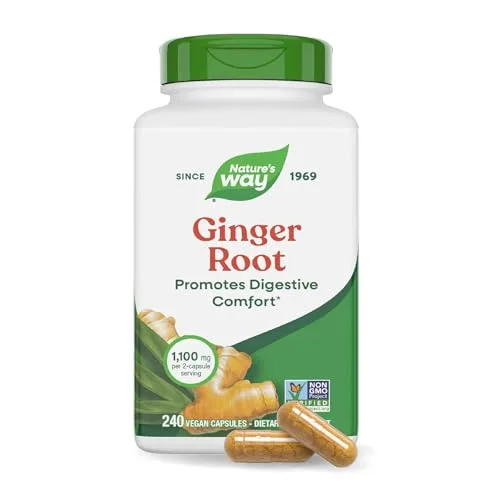
Nature's Way is one of the oldest and most respected herbal supplement brands in the US, with a commitment to botanical identity verification through their TRU-ID DNA testing program. This ensures the ginger root in every capsule is genuine Zingiber officinale, not a cheaper substitute. The 550mg dose provides a practical daily amount for digestive comfort and anti-nausea support.
IngredientGinger Root 550mg
Dose550mg ginger root per capsule
FormCapsule
TestingTRU-ID Verified
550mg ginger root per capsuleClinical range: 250-1,000mg standardized extract daily
Therapeutic dose
$0.07 / count$16.65 · 240 Count
Ideal for: Traditional herbal brand with DNA-verified identity
Not ideal for: Those seeking organic certification or a standardized gingerol extract
Pros
- TRU-ID DNA verified for botanical identity
- One of the most trusted herbal brands
- Single capsule serving for convenience
- Widely available in stores and online
Cons
- Not organic or standardized to gingerols
- Moderate 550mg dose per capsule
- TRU-ID verifies identity only, not potency
Jarrow Formulas Ashwagandha Capsules, 300 mg Supplement Supports Normalized Resistance to Mental and Physical Stress, 120 Veggie Capsules, 60 Day Supply
NOW
1,933 Amazon reviews
8.1/10
(1,933)
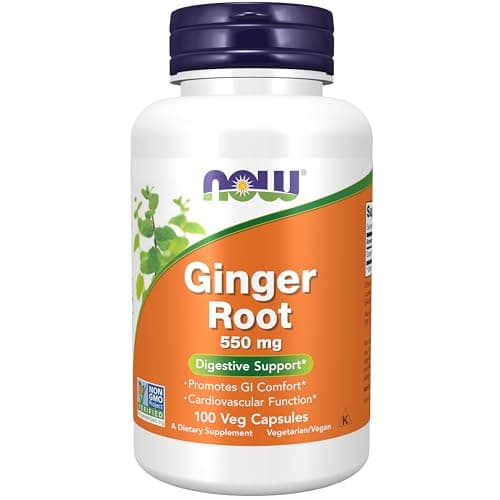
NOW Foods delivers a solid 550mg of ginger root per capsule at the lowest price per serving on our list. As one of the most trusted affordable supplement brands, NOW's GMP-certified manufacturing provides confidence in quality without the premium price. The single-capsule serving makes daily compliance easy, and the product has thousands of verified reviews confirming consistent quality.
IngredientGinger Root 550mg
Dose550mg ginger root per capsule
FormCapsule
TestingGMP Certified
550mg ginger root per capsuleClinical range: 250-1,000mg standardized extract daily
Therapeutic dose
$0.07 / count
Ideal for: Budget-friendly daily ginger supplementation
Not ideal for: Those seeking organic certification or standardized extract
Pros
- Most affordable ginger supplement per serving
- Single capsule convenience
- GMP-certified with decades of brand trust
- Thousands of verified consumer reviews
Cons
- Not organic or standardized
- No independent third-party testing published
- Moderate 550mg dose per capsule
Pairs Well With
Frequently taken together based on complementary benefits
Turmeric / Curcumin
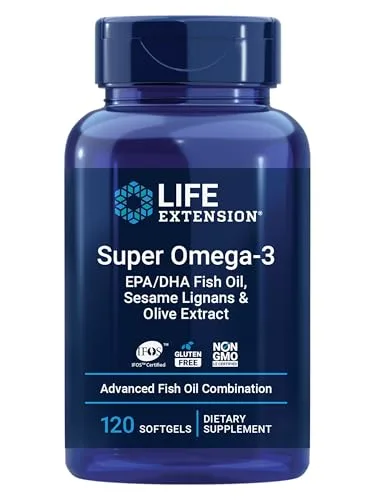
Life Extension Super Omega-3 EPA/DHA
2 softgels twice daily
How to Choose
Root Powder vs Standardized Extract
Whole ginger root powder contains hundreds of bioactive compounds including gingerols, shogaols, paradols, and zingerone. Standardized extracts concentrate the gingerols to a guaranteed percentage (typically 5%), delivering more consistent potency per capsule. For nausea relief and anti-inflammatory use, standardized extracts align more closely with clinical trial protocols. For general digestive support and wellness, whole root powder provides broader phytochemical coverage.
Clinical Doses for Specific Uses
The Ernst & Pittler meta-analysis confirmed 1g of ginger effective for nausea. For pregnancy-related nausea, 250mg four times daily (1g total) is the most studied protocol. For osteoarthritis pain, studies use 250mg standardized extract daily. For general digestive support, 500-1,000mg of whole root powder daily is commonly recommended. Match your dose to your specific use case.
Organic Certification and Root Quality
Ginger is a rhizome that grows underground and absorbs heavily from surrounding soil. Non-organic ginger may contain pesticide residues and heavy metals from contaminated soil. USDA Organic certification ensures the ginger was cultivated without synthetic chemicals. Look for products that specify the ginger species (Zingiber officinale) and country of origin for full transparency.
Ready to Buy?
Peak Performance USDA Organic Ginger Root Capsules
8.3/10$0.33 / countBest for: Organic daily ginger supplementation
Peak Performance USDA Organic Ginger Root is our top pick: certified organic, clean formulation, and adequate dosing for daily digestive and anti-inflammatory support.
Evidence:Meta-analysis (2000) · 6 RCTs · moderate confidence[#1]. See full reference list below.Read Our Full Ginger Research Guide
Evidence level, dosage, side effects, and more →
Already taking supplements?
Check how Ginger fits with your current stack — interactions, timing, and optimization →
Related Supplements
Related Conditions
Frequently Asked Questions
What is the best ginger supplement for nausea?
What is the best ginger supplement for nausea?
For nausea, choose a ginger supplement providing at least 250mg of standardized extract or 500mg of whole root powder per serving. Solgar Ginger Root Extract offers a standardized extract for consistent potency. Peak Performance USDA Organic Ginger Root provides clean organic root powder. The Ernst & Pittler meta-analysis confirmed ginger effective for nausea at 1g daily.
Evidence:Meta-analysis (2000) · 6 RCTs · moderate confidence[#1]. See full reference list below.How much ginger should I take daily?
How much ginger should I take daily?
Clinical studies use 250-1,000mg of ginger extract daily depending on the condition. For nausea, 1g daily (often split into 250mg four times) is the most-studied dose. For anti-inflammatory and pain relief, 250mg of standardized extract daily has shown benefit in osteoarthritis trials. General digestive support typically uses 500-1,000mg of root powder daily.
Is ginger safe during pregnancy?
Is ginger safe during pregnancy?
Multiple clinical trials have studied ginger at doses of 1g daily for pregnancy-related nausea, and it is generally considered safe at this dose. The American College of Obstetricians and Gynecologists lists ginger as a first-line non-pharmacological option for morning sickness. However, always consult your OB/GYN before starting any supplement during pregnancy.
Can ginger supplements help with joint pain?
Can ginger supplements help with joint pain?
A 2015 meta-analysis (PMID: 25230520) found that ginger supplementation significantly reduced pain in osteoarthritis patients compared to placebo. The anti-inflammatory mechanism involves inhibition of COX-2 and 5-lipoxygenase pathways. Most pain studies use standardized ginger extract at 250mg daily for at least 3-12 weeks.
Are there side effects from ginger supplements?
Are there side effects from ginger supplements?
Ginger is well-tolerated at typical supplement doses. Rare side effects include mild heartburn, gas, or mouth irritation. High doses (over 5g daily) may cause GI distress. Ginger has mild blood-thinning properties, so consult your doctor before surgery or if you take anticoagulant medications.