
We evaluated moringa supplements on organic certification, sourcing transparency, leaf quality, third-party testing, dose per serving, and value. Our recommendations span capsules and powder, with non-affiliate options included.
Best Moringa Supplements (2026)
Product pricing and availability checked
Methodology: Evidence-ranked evaluation
·
2,600+Clinical Studies Cited
·5Moringa products evaluated
This content is for informational purposes only and does not constitute medical advice. Statements about dietary supplements have not been evaluated by the FDA and are not intended to diagnose, treat, cure, or prevent any disease. Individual results may vary — consult your healthcare provider before starting any supplement. Full disclaimer
As an Amazon Associate, we earn from qualifying purchases. Some links below are affiliate links — this doesn't affect our editorial independence or product ratings. How we evaluate products
Our Verdict
Organic India Moringa is the best overall moringa supplement, combining USDA Organic certification, B-Corp ethics, and fair-trade Indian sourcing at a reasonable price.
Best By Category
The best moringa supplement is USDA Organic, whole-leaf Moringa oleifera from a traceable source (India, Philippines,...
The best moringa supplement is USDA Organic, whole-leaf Moringa oleifera from a traceable source (India, Philippines, or Africa), minimally processed (low-temperature dried) to preserve vitamin C and quercetin. Typical daily dose is 1500-2000mg in capsules or 1 teaspoon of powder.
How We Chose These Products
Products are ranked using our published scoring methodology — evidence strength, dose adequacy, ingredient form, third-party testing signals, value, and clean-label factors are weighted across the 5 criteria below. Commercial relationships do not determine our editorial rankings.
Organic Certification & Sourcing
30%USDA Organic certification ensures no synthetic pesticides or heavy metal-laden fertilizers. Transparent sourcing from established moringa-growing regions (India, East Africa) indicates better leaf quality.
Leaf Quality
25%Whole-leaf moringa powder preserves the full nutrient and phytochemical profile, including isothiocyanates and quercetin. Extracts can concentrate certain compounds but may lose heat-sensitive nutrients.
Third-Party Testing
20%Independent lab testing verifies heavy metal levels, microbial contamination, and label accuracy. Moringa is often imported from developing regions where soil contamination is a concern.
Dose per Serving
15%Clinical studies use 3-5g of leaf powder. Capsule products typically deliver 500-1,000mg per serving, meaning multiple servings may be needed for full therapeutic effect.
Value per Serving
10%Cost per serving adjusted for quality. An organic product at $0.44/serving can deliver more value than a non-organic product at $0.15/serving if sourcing and testing are superior.
#1 Top Pick
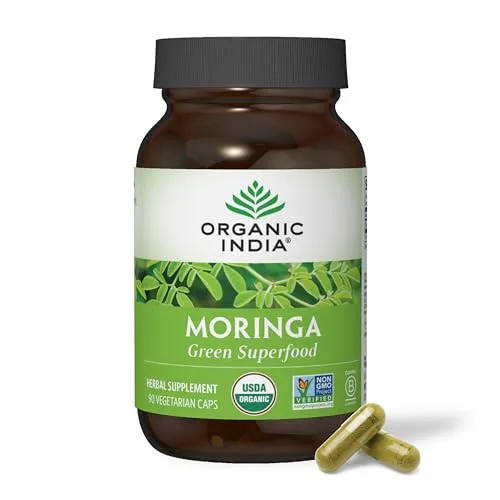
B-Corp certified with fair-trade sourcing from small Indian farms. USDA Organic, widely available at Whole Foods, and backed by one of the most transparent herbal supplement brands in the US.
IngredientOrganic Moringa Leaf Powder (Moringa oleifera)
Dose700mg per serving (2 capsules)
FormCapsule
TestingUSDA Organic
700mg per serving (2 capsules)Clinical range: 3-5g leaf powder or 150-500mg extract daily
Below clinical dose
$0.24 / count$21.95 · 90 Capsules
Pros
- USDA Organic certified
- B-Corp with fair-trade Indian sourcing
- Widely available at Whole Foods
Cons
- Lower dose at 700mg/serving
- Higher per-serving cost
USDA OrganicVeganGluten-free
Quick Comparison
#1Organic India Moringa (90 Caps)
9/10
ORGANIC INDIA
#1 Top Pick
2,606 Amazon reviews
Best for: Quality-conscious buyers who want ethical sourcing and organic certification
Organic Moringa Leaf Powder (Moringa oleifera) · 700mg per serving (2 capsules)
Capsule · USDA Organic
$21.95
$0.24 / count
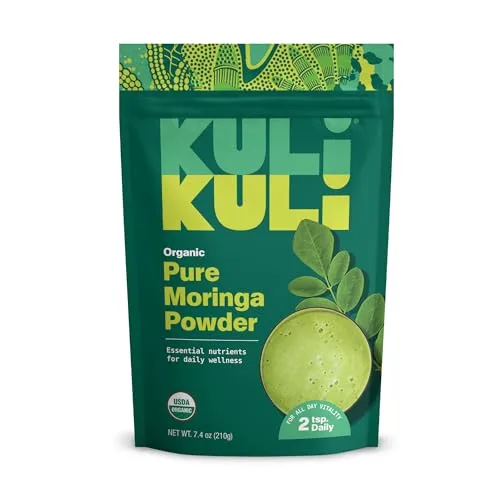
#2Kuli Kuli Moringa Powder (7.4 oz)
8.8/10
Kuli Kuli
4,274 Amazon reviews
Best for: Smoothie and food users who want full clinical doses in powder form
Organic Moringa Leaf Powder (Moringa oleifera) · 5g per serving (1 tablespoon)
Powder · USDA Organic
$15.43
$2.09 / ounce
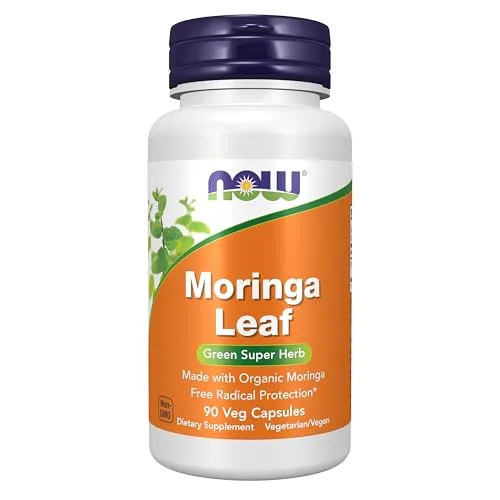
#3NOW Foods Moringa Leaf (90 Veg Caps)
8.2/10
NOW
103 Amazon reviews
Best for: Budget buyers who want a trusted, GMP-certified brand
Moringa Leaf Powder (Moringa oleifera) · 800mg per serving (2 capsules)
Veg Capsule · GMP Certified
$12.23
$0.14 / count
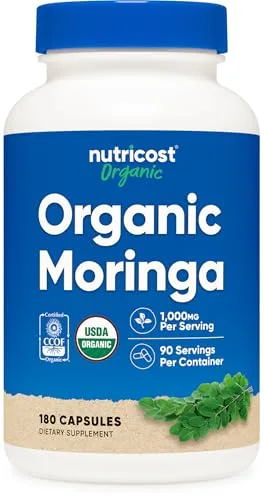
#4Nutricost Moringa 500mg (180 Caps)
8/10
Nutricost
484 Amazon reviews
Best for: Value seekers who want the highest capsule dose at the lowest cost
Moringa Leaf Powder (Moringa oleifera) · 1,000mg per serving (2 capsules)
Capsule · ISO-Accredited Lab / GMP
$14.95
$0.08 / count
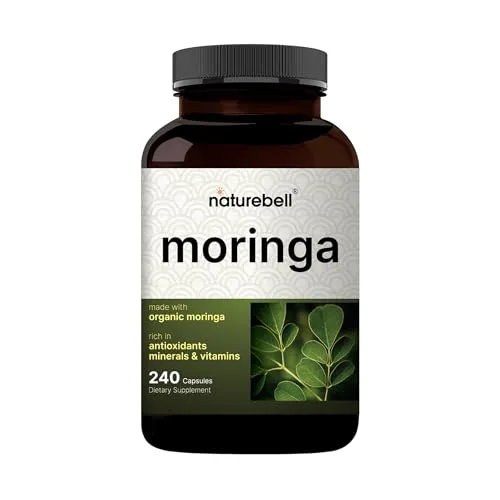
#5NatureBell Moringa (240 Caps)
7.8/10
NatureBell
3,168 Amazon reviews
Best for: Long-term users who want the most capsules per bottle at a low price
Moringa Leaf Powder (Moringa oleifera) · 800mg per serving (2 capsules)
Capsule · Third-Party Tested
$23.99
$0.10 / count
| # | Product | Best For | Ingredient & Dose | Form & Testing | Price | Rating | |
|---|---|---|---|---|---|---|---|
| 1 | Organic India Moringa (90 Caps) #1 Top Pick 2,606 Amazon reviews | Quality-conscious buyers who want ethical sourcing and organic certification | Organic Moringa Leaf Powder (Moringa oleifera) 700mg per serving (2 capsules) | Capsule 90 Capsules USDA Organic | $21.95 $0.24 / count | 9/10 | |
| 2 | Kuli Kuli Moringa Powder (7.4 oz) 4,274 Amazon reviews | Smoothie and food users who want full clinical doses in powder form | Organic Moringa Leaf Powder (Moringa oleifera) 5g per serving (1 tablespoon) | Powder USDA Organic | $15.43 $2.09 / ounce | 8.8/10 | |
| 3 | NOW Foods Moringa Leaf (90 Veg Caps) 103 Amazon reviews | Budget buyers who want a trusted, GMP-certified brand | Moringa Leaf Powder (Moringa oleifera) 800mg per serving (2 capsules) | Veg Capsule GMP Certified | $12.23 $0.14 / count | 8.2/10 | |
| 4 | Nutricost Moringa 500mg (180 Caps) 484 Amazon reviews | Value seekers who want the highest capsule dose at the lowest cost | Moringa Leaf Powder (Moringa oleifera) 1,000mg per serving (2 capsules) | Capsule 180 Capsules ISO-Accredited Lab / GMP | $14.95 $0.08 / count | 8/10 | |
| 5 | NatureBell Moringa (240 Caps) 3,168 Amazon reviews | Long-term users who want the most capsules per bottle at a low price | Moringa Leaf Powder (Moringa oleifera) 800mg per serving (2 capsules) | Capsule 240 Capsules Third-Party Tested | $23.99 $0.10 / count | 7.8/10 |
Detailed Reviews
#1 Top Pick
ORGANIC INDIA Moringa Herbal Supplement - Green Superfood, Nutrient Dense, Pure Plant Protein, Vitamin A, E, K, Iron, Calcium, Fiber, Vegan, Gluten-Free, USDA Certified Organic - 90 Capsules
ORGANIC INDIA
2,606 Amazon reviews
9/10
(2,606)
USDA OrganicVeganGluten-free
B-Corp certified with fair-trade sourcing from small Indian farms. USDA Organic, widely available at Whole Foods, and backed by one of the most transparent herbal supplement brands in the US.
IngredientOrganic Moringa Leaf Powder (Moringa oleifera)
Dose700mg per serving (2 capsules)
FormCapsule
TestingUSDA Organic
700mg per serving (2 capsules)Clinical range: 3-5g leaf powder or 150-500mg extract daily
Below clinical dose
$0.24 / count$21.95 · 90 Capsules
Ideal for: Quality-conscious buyers who want ethical sourcing and organic certification
Not ideal for: Those seeking the highest dose per capsule or the lowest price.
Pros
- USDA Organic certified
- B-Corp with fair-trade Indian sourcing
- Widely available at Whole Foods
- Transparent supply chain
Cons
- Lower dose at 700mg/serving
- Higher per-serving cost
- Need 4+ caps to reach study-level doses
Kuli Kuli Moringa Oleifera Organic Leaf Powder & Green Smoothie, 100% Pure USDA Certified & Non-GMO Moringa Powder, Great with Smoothies, Tea, and Food, 1 Pack
Kuli Kuli
4,274 Amazon reviews
8.8/10
(4,274)
USDA OrganicNon-GMO VerifiedVeganGluten-free
The only major US brand focused exclusively on moringa. Sources from women-led farming cooperatives in West Africa and Haiti. 5g per serving meets the clinical study range, and USDA Organic plus Non-GMO verified.
IngredientOrganic Moringa Leaf Powder (Moringa oleifera)
Dose5g per serving (1 tablespoon)
FormPowder
TestingUSDA Organic
5g per serving (1 tablespoon)Clinical range: 3-5g leaf powder or 150-500mg extract daily
Therapeutic dose
$2.09 / ounce
Ideal for: Smoothie and food users who want full clinical doses in powder form
Not ideal for: People who dislike the earthy/green taste or prefer capsule convenience.
Pros
- Full clinical dose (5g/serving)
- USDA Organic & Non-GMO Verified
- Supports women-led farming cooperatives
- Versatile — smoothies, cooking, teas
Cons
- Strong earthy/green taste
- Less convenient than capsules
- Powder can clump without proper mixing
NOW Supplements, Moringa Leaf, Green Super Herb, Made with Organic Moringa, Free Radical Protection*, 90 Veg Capsules
NOW
103 Amazon reviews
8.2/10
(103)
VeganGMP CertifiedNon-GMO
NOW Foods is one of the most established supplement brands with over 50 years of GMP-certified manufacturing. Reliable quality at a budget price. 800mg per serving in vegetarian capsules.
IngredientMoringa Leaf Powder (Moringa oleifera)
Dose800mg per serving (2 capsules)
FormVeg Capsule
TestingGMP Certified
800mg per serving (2 capsules)Clinical range: 3-5g leaf powder or 150-500mg extract daily
Below clinical dose
$0.14 / count
Ideal for: Budget buyers who want a trusted, GMP-certified brand
Not ideal for: Those seeking organic certification or the lowest per-serving cost.
Pros
- Trusted brand with 50+ year track record
- GMP-certified facility
- Vegetarian capsules
- Widely available
Cons
- Not organic certified
- Only 45 servings per bottle
- No sourcing transparency details
Nutricost Moringa Capsules 500mg, 180 Capsules (90 Servings) - Vegetarian Capsules, Non-GMO, Gluten Free
Nutricost
484 Amazon reviews
8/10
(484)
Non-GMOGluten-freeVegan
Highest dose per serving (1,000mg) among the capsule options at just $0.16/serving. Tested by an ISO-accredited lab and manufactured in a GMP facility. 90 servings per bottle.
IngredientMoringa Leaf Powder (Moringa oleifera)
Dose1,000mg per serving (2 capsules)
FormCapsule
TestingISO-Accredited Lab / GMP
1,000mg per serving (2 capsules)Clinical range: 3-5g leaf powder or 150-500mg extract daily
Below clinical dose
$0.08 / count$14.95 · 180 Capsules
Ideal for: Value seekers who want the highest capsule dose at the lowest cost
Not ideal for: Those who want organic or ethically sourced moringa.
Pros
- Highest capsule dose (1,000mg/serving)
- ISO-accredited lab tested
- GMP-certified manufacturing
- 90 servings per bottle at $0.16 each
Cons
- Not organic certified
- No sourcing transparency
- 500mg per capsule requires 2 for full serving
NatureBell Moringa - 240 Capsules - Organic Moringa for Immune, Energy & Skin Health Support* - Green Superfood Properties
NatureBell
3,168 Amazon reviews
7.8/10
(3,168)
Non-GMOGluten-freeSoy-free
240 capsules per bottle (120 servings) at just $0.15/serving makes this the best supply option. Third-party tested for purity. Good dose at 800mg per serving.
IngredientMoringa Leaf Powder (Moringa oleifera)
Dose800mg per serving (2 capsules)
FormCapsule
TestingThird-Party Tested
800mg per serving (2 capsules)Clinical range: 3-5g leaf powder or 150-500mg extract daily
Below clinical dose
$0.10 / count$23.99 · 240 Capsules
Ideal for: Long-term users who want the most capsules per bottle at a low price
Not ideal for: Those who prioritize organic certification or sourcing transparency.
Pros
- 240 capsules — longest supply
- Third-party tested
- Very low cost per serving
- 800mg dose per serving
Cons
- Not organic certified
- Limited sourcing transparency
- No branded or standardized extract
Pairs Well With
Frequently taken together based on complementary benefits
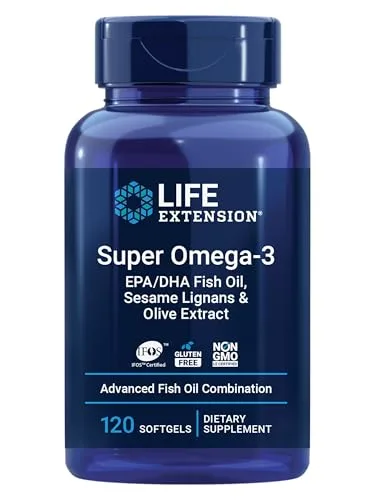
Turmeric / Curcumin
Life Extension Super Omega-3 EPA/DHA
2 softgels twice daily
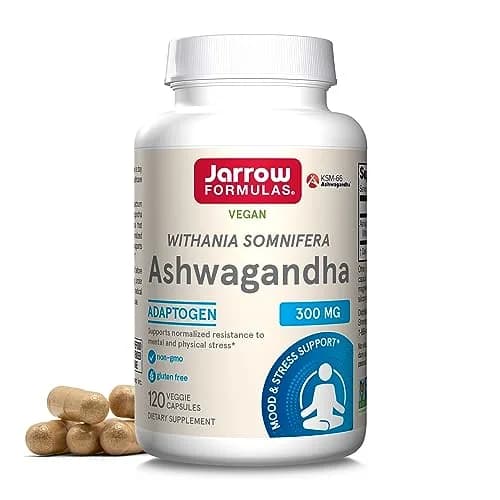
Ashwagandha
Jarrow Formulas Ashwagandha 300mg
Staff Pick
300mg (5% withanolides), 2 caps = 600mgHow to Choose
Organic Certification and Sourcing Matter
Moringa is predominantly grown in tropical developing regions where pesticide regulations vary. USDA Organic certification ensures the leaves were grown without synthetic pesticides and verifies the supply chain. Look for brands that name their sourcing country and farming practices — India and East Africa have the longest moringa cultivation history and generally produce higher-quality leaf powder.
Powder vs. Capsules: Dose Is the Key Difference
Clinical studies on moringa use 3-5g of leaf powder daily. One tablespoon of powder delivers approximately 5g — a full clinical dose in a single serving. Capsules typically provide 500-1,000mg per serving, meaning you need 4-6 capsules daily to approach study doses. Choose powder if you want therapeutic doses and don't mind the earthy flavor. Choose capsules for convenience if you're supplementing for general nutrition rather than targeting a specific health outcome.
Third-Party Testing for Heavy Metals
Moringa leaves can accumulate heavy metals from contaminated soil, particularly lead and cadmium. Third-party testing by an independent lab is essential, especially for non-organic products where growing conditions are less regulated. GMP certification covers manufacturing practices but does not guarantee heavy metal screening of raw materials. Look for products that specifically mention heavy metal testing or hold ISO-accredited lab verification.
Who Should Be Cautious with Moringa
Moringa may lower blood sugar and blood pressure, so anyone on diabetes or hypertension medication should consult their doctor before starting. Pregnant women should avoid moringa root and bark extracts, which have shown uterine-stimulating effects in animal studies. Moringa leaf powder is generally considered safe, but high doses (above 10g/day) can cause digestive discomfort. Start with a lower dose and increase gradually.
Ready to Buy?
Organic India Moringa (90 Caps)
9/10$0.24 / countBest for: Quality-conscious buyers who want ethical sourcing and organic certification
Organic India Moringa is the best overall moringa supplement, combining USDA Organic certification, B-Corp ethics, and fair-trade Indian sourcing at a reasonable price.
Evidence:Review (2015) · moderate confidence[#1]. See full reference list below.Read Our Full Moringa Research Guide
Evidence level, dosage, side effects, and more →
Already taking supplements?
Check how Moringa fits with your current stack — interactions, timing, and optimization →
Related Supplements
Turmeric / CurcuminStrong
Bottom line: Curcumin works as well as ibuprofen for joint pain, but you must use an enhanced-absorption form (Meriva, Longvida, or with piperine). Standard turmeric barely absorbs.
Top picks →Related Conditions
Frequently Asked Questions
What is the right dose of moringa per day?
What is the right dose of moringa per day?
Clinical studies typically use 3-5g of moringa leaf powder daily. For capsules, this translates to 4-6 capsules at standard 800-1,000mg servings. Some studies on blood sugar used lower extract doses of 150-500mg. Start with 1-2g and increase over one to two weeks to assess tolerance.
Is moringa safe for daily long-term use?
Is moringa safe for daily long-term use?
Moringa leaf powder has a long history of traditional dietary use and is generally considered safe at doses up to 5g daily. Human studies up to 90 days show good tolerability. However, very high doses (above 10g/day) may cause GI discomfort. Avoid moringa root and bark extracts, which contain potentially toxic alkaloids not found in leaf preparations.
Can moringa lower blood sugar?
Can moringa lower blood sugar?
Yes. Multiple human studies show moringa leaf powder can reduce fasting blood glucose by up to 28% over 8-12 weeks [1]. The mechanism involves isothiocyanates and chlorogenic acid that improve insulin sensitivity [6]. People on diabetes medication should monitor blood sugar carefully and consult their doctor, as combined effects could cause hypoglycemia [2].
Evidence:Review (2015) · moderate confidence[#1]. See full reference list below.Is moringa powder or capsule form better?
Is moringa powder or capsule form better?
Powder delivers higher doses more easily — one tablespoon provides about 5g, matching clinical study doses. Capsules are more convenient but require 4-6 per day to reach the same dose. Powder is better for smoothies and cooking. Capsules are better for people who dislike the taste or want portability.
Does moringa interact with medications?
Does moringa interact with medications?
Moringa may interact with blood sugar-lowering medications (risk of hypoglycemia), blood pressure drugs (additive lowering effect), thyroid medications (moringa contains goitrogens), and drugs metabolized by cytochrome P450 enzymes. Consult your healthcare provider if you take prescription medications.
What nutrients does moringa contain?
What nutrients does moringa contain?
Moringa leaf is exceptionally nutrient-dense: gram for gram, it contains roughly 7 times the vitamin C of oranges, 4 times the calcium of milk, 3 times the potassium of bananas, and 2 times the protein of yogurt. It also provides iron, B vitamins, and the bioactive compounds isothiocyanates (moringin), quercetin, and chlorogenic acid.
Can pregnant women take moringa?
Can pregnant women take moringa?
Moringa leaf powder is used as a nutritional supplement during pregnancy in some traditional cultures, but moringa root and bark extracts should be avoided due to potential uterine-stimulating effects shown in animal studies. There are insufficient human safety studies during pregnancy. Consult your OB-GYN before taking any moringa supplement while pregnant or breastfeeding.
How does moringa reduce inflammation?
How does moringa reduce inflammation?
Moringa's anti-inflammatory effects are primarily driven by isothiocyanates (particularly moringin), which suppress the NF-kB inflammatory signaling pathway. Quercetin and chlorogenic acid provide additional antioxidant and anti-inflammatory activity. Human studies show reductions in inflammatory markers like CRP after 8-12 weeks of supplementation at 3-5g daily.
Continue Reading
References
- ReviewStohs SJ, Hartman MJ (2015). Review of the Safety and Efficacy of Moringa oleifera. Phytotherapy Research. DOI PubMed
- ReviewMbikay M (2012). Therapeutic Potential of Moringa oleifera Leaves in Chronic Hyperglycemia and Dyslipidemia: A Review. Frontiers in Pharmacology. DOI PubMed
- Leone A, Spada A, Battezzati A, et al. (2016). Moringa oleifera Seeds and Oil: Characteristics and Uses for Human Health. International Journal of Molecular Sciences. DOI PubMed
- AnimalWaterman C, Cheng DM, Rojas-Silva P, et al. (2015). Isothiocyanate-rich Moringa oleifera extract reduces weight gain, insulin resistance, and hepatic gluconeogenesis in mice. Molecular Nutrition & Food Research. DOI PubMed
- ReviewAnwar F, Latif S, Ashraf M, Gilani AH (2007). Moringa oleifera: a food plant with multiple medicinal uses. Phytotherapy Research. DOI PubMed
- ReviewVergara-Jimenez M, Almatrafi MM, Fernandez ML (2017). Bioactive Components in Moringa Oleifera Leaves Protect against Chronic Disease. Antioxidants. DOI PubMed
- Giridhari VVA, Malathi D, Geetha K (2011). Anti diabetic property of drumstick (Moringa oleifera) leaf tablets. International Journal of Health and Nutrition.