SupplementScience
Akkermansia supplement
Next-Generation Probiotic

Akkermansia: Benefits, Dosage, Forms & Research

Next-Generation Probiotic

This content is for informational purposes only and does not constitute medical advice. Consult your healthcare provider before starting any supplement. Full disclaimer

TL;DR — Quick Answer

Akkermansia muciniphila is a next-generation probiotic that strengthens the gut barrier. A 2019 RCT found pasteurized Akkermansia (10 billion cells/day) reduced insulinemia by 28% and improved metabolic markers in overweight adults over 3 months. Dose: 100 million to 10 billion cells daily.

Key Facts

What it is
A mucin-degrading gut bacterium (Akkermansia muciniphila) that maintains the intestinal barrier
Primary benefits
  • Strengthens the gut mucin layer
  • Supports GLP-1 signaling and metabolic health
  • Improves insulin sensitivity markers
  • May aid body weight management
  • Reduces gut permeability (leaky gut)
Typical dosage
100 million to 10 billion cells daily
Evidence level
Emerging
Safety profile
Generally Safe

What the Research Says

Research on Akkermansia muciniphila is still early but compelling. The landmark 2019 proof-of-concept RCT by Depommier et al. in Nature Medicine (n=32) found that pasteurized Akkermansia improved insulin sensitivity, reduced insulinemia by 28%, and decreased total cholesterol and relevant blood markers in overweight/obese volunteers over 3 months. Notably, pasteurized bacteria outperformed live bacteria, likely because the outer membrane protein Amuc_1100 — responsible for many of the metabolic benefits — is heat-stable and more bioavailable after pasteurization. Preclinical work in mice has consistently shown that Akkermansia supplementation prevents diet-induced obesity and improves gut barrier function. As of 2025, Akkermansia has received Novel Food approval from the European Food Safety Authority (EFSA), validating its safety profile for human consumption.

Benefits of Akkermansia

  • Gut barrier integrity — Akkermansia feeds on and stimulates production of mucin, the protective gel layer lining the intestinal wall, strengthening the gut barrier against endotoxins
  • Metabolic health — a landmark 2019 RCT by Depommier et al. found pasteurized Akkermansia improved insulin sensitivity, reduced insulinemia, and decreased total plasma cholesterol in overweight/obese subjects
  • GLP-1 pathway support — Akkermansia produces short-chain fatty acids and interacts with Toll-like receptor 2 (TLR2), which may indirectly support GLP-1 secretion from intestinal L-cells
  • Body composition — preclinical and early clinical data suggest Akkermansia supplementation reduces fat mass gain and improves markers of metabolic syndrome
  • Reduced systemic inflammation — by improving gut barrier function, Akkermansia reduces the translocation of lipopolysaccharide (LPS) into the bloodstream, lowering chronic low-grade inflammation
Did you know?

Research on Akkermansia muciniphila is still early but compelling.

Forms of Akkermansia

FormBioavailabilityBest For
Pasteurized AkkermansiaHigh (membrane protein Amuc_1100 is heat-stable)Metabolic health, gut barrier support
Live AkkermansiaVariable (strict anaerobe, survival through GI tract uncertain)General gut microbiome support
Synbiotic BlendsVariable (depends on formulation)Comprehensive gut health with prebiotic support

Dosage Recommendations

General recommendation: 100 million to 10 billion cells daily

Timing: With or without food; morning dosing most common in clinical trials

Dosage by Condition

ConditionRecommended DoseEvidence
Metabolic health10 billion cells daily (pasteurized)Emerging
Gut barrier support100 million to 1 billion cells dailyEmerging
General gut health100 million cells dailyPreliminary

Upper limit: No established upper limit; clinical trials have used up to 10 billion cells/day safely

Our Top Akkermansia Pick

Our recommendations are based on published research, not commission rates. Some links below are affiliate links — we may earn a commission at no extra cost to you. How we evaluate products

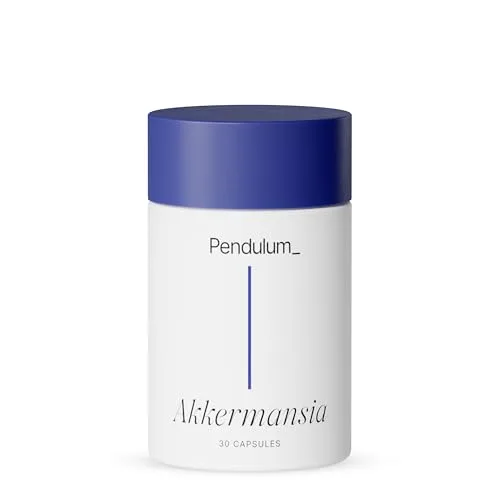
Pendulum Akkermansia

Pendulum Akkermansia

Pendulum

8.8/10
Clinical-grade pasteurized Akkermansia$2.30/serving

Side Effects and Safety

Safety profile: Generally Safe

Potential Side Effects

  • Mild bloating or gas during the first week of supplementation (common with any probiotic)
  • Rare: changes in stool consistency as microbiome adapts
  • No serious adverse events reported in clinical trials to date

Drug & Supplement Interactions

  • Metformin — Akkermansia levels naturally increase with metformin use; combined supplementation may have additive metabolic effects (consult physician)
  • Immunosuppressants — as with all probiotics, those on immunosuppressive therapy should consult a doctor before use
  • Antibiotics — broad-spectrum antibiotics will reduce or eliminate supplemented Akkermansia colonies
Check Akkermansia interactions with other supplements →
BenefitsDosage GuideSide EffectsTypes & FormsResearchFAQ

Related Conditions

Related Supplements

Looking for the best akkermansia supplement?

We analyzed and ranked the top products based on form, dosage, third-party testing, and value.

See Our Top Picks

Frequently Asked Questions

What is Akkermansia and why is it called a next-generation probiotic?

Akkermansia muciniphila is a gut bacterium that lives in the mucin layer of the intestinal wall, where it plays a critical role in maintaining barrier integrity. It is called "next-generation" because it was identified through modern metagenomic sequencing rather than traditional culturing methods. Unlike conventional probiotics like Lactobacillus, Akkermansia directly strengthens the physical gut barrier and has metabolic signaling functions tied to GLP-1 and insulin sensitivity.

Is pasteurized or live Akkermansia better?

Current evidence favors pasteurized Akkermansia. The 2019 Depommier et al. trial in Nature Medicine found that pasteurized bacteria produced better metabolic outcomes than live bacteria. This is because a key membrane protein (Amuc_1100) responsible for metabolic signaling is heat-stable and may be more accessible after pasteurization.

How long does Akkermansia take to work?

In the primary clinical trial, metabolic improvements were measured after 3 months of daily supplementation. Some users report subjective digestive improvements within 2-4 weeks, but metabolic markers like insulin sensitivity and cholesterol require longer consistent use.

References

  1. (). Supplementation with Akkermansia muciniphila in overweight and obese human volunteers: a proof-of-concept exploratory study. Nature Medicine. DOI
  2. (). A purified membrane protein from Akkermansia muciniphila or the pasteurised bacterium improves metabolism in obese and diabetic mice. Nature Medicine. DOI
  3. (). Next-Generation Beneficial Microbes: The Case of Akkermansia muciniphila. Frontiers in Microbiology. DOI