SupplementScience
Psyllium Husk supplement
Soluble Fiber

Psyllium Husk: Benefits, Dosage, Forms & Research

Soluble Fiber

This content is for informational purposes only and does not constitute medical advice. Consult your healthcare provider before starting any supplement. Full disclaimer

TL;DR — Quick Answer

Psyllium husk is an FDA-recognized soluble fiber that lowers LDL cholesterol by 5-10%, improves bowel regularity, and helps manage blood sugar. Take 5-10g daily with plenty of water. It is one of the few supplements with an FDA-approved health claim for heart disease risk reduction.

Key Facts

What it is
A soluble fiber from Plantago ovata seed husks that forms a viscous gel in the digestive tract
Primary benefits
  • FDA-approved cholesterol reduction (5-10% LDL decrease)
  • Improves bowel regularity for both constipation and diarrhea
  • Supports blood sugar management
  • May stimulate GLP-1 secretion
  • Prebiotic effects supporting gut microbiome
Typical dosage
5-10g daily in divided doses with water
Evidence level
Strong
Safety profile
Generally Safe

What the Research Says

Psyllium husk has one of the strongest evidence bases of any fiber supplement. Wei et al. (2009) conducted a meta-analysis of 21 studies confirming significant LDL cholesterol reduction, which forms the basis of the FDA's approved health claim. Gibb et al. (2015) reviewed 35 RCTs and found consistent improvements in glycemic control in type 2 diabetes patients. The American College of Gastroenterology recommends psyllium as a first-line supplement for chronic constipation (grade A recommendation). More recently, the connection between soluble fiber fermentation and GLP-1 secretion has generated significant research interest, with Chambers et al. (2015) demonstrating that short-chain fatty acids from fiber fermentation directly stimulate GLP-1 release from colonic L-cells.

Benefits of Psyllium Husk

  • Cholesterol reduction — a 2018 meta-analysis of 28 RCTs found psyllium supplementation reduced LDL cholesterol by 6-24 mg/dL (5-10%), earning an FDA-approved health claim for coronary heart disease risk reduction
  • Bowel regularity — psyllium is unique among fibers in that it normalizes stool form in both directions: it softens hard stools in constipation and firms loose stools in diarrhea by absorbing excess water
  • Blood sugar management — the viscous gel formed by psyllium slows carbohydrate absorption, reducing postprandial glucose spikes by 12-20% in studies of type 2 diabetics (Gibb et al., 2015)
  • GLP-1 stimulation — emerging research suggests soluble fiber fermentation produces short-chain fatty acids that stimulate L-cells in the colon to secrete GLP-1, the same incretin hormone targeted by semaglutide and other GLP-1 receptor agonists
  • Prebiotic effects — while psyllium is primarily a gel-forming fiber, partial fermentation in the colon supports Bifidobacterium growth and short-chain fatty acid production
Did you know?

Psyllium husk has one of the strongest evidence bases of any fiber supplement.

Forms of Psyllium Husk

FormBioavailabilityBest For
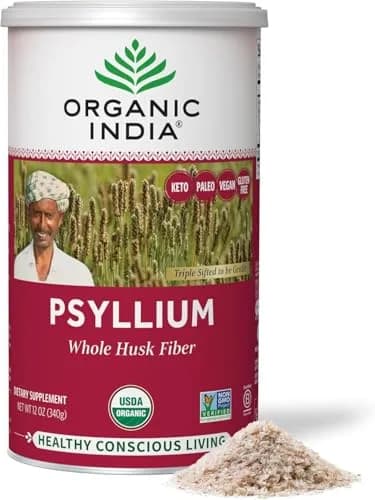
Whole Psyllium HuskHighMaximum fiber content and gel formation — the gold standard form used in most clinical studies
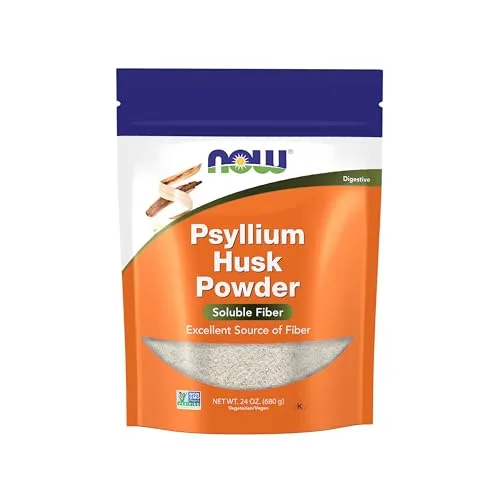
Psyllium Husk PowderHighEasier mixing — finely ground for smoother texture in water or smoothies; same efficacy as whole husk
Psyllium CapsulesHighConvenience and taste avoidance — no gritty texture, but requires more capsules to reach clinical doses
Psyllium in Fiber BlendsModerate-HighBroader fiber spectrum — combined with inulin, flaxseed, or other fibers for diverse prebiotic benefits

Dosage Recommendations

General recommendation: 5-10g daily in divided doses (2-3 servings), always with at least 8oz water per serving

Timing: Before meals for blood sugar benefits; any time for regularity; with at least 8oz water per dose

Dosage by Condition

ConditionRecommended DoseEvidence
Cholesterol reduction7-10g daily in divided doses (FDA health claim range)Strong
Constipation relief5-10g daily with adequate waterStrong
Blood sugar management5g before meals, up to 15g dailyStrong
General digestive health5g daily, gradually increasingStrong
IBS symptom management3-6g daily, starting lowModerate

Upper limit: Up to 30g daily has been studied safely, but 5-15g is sufficient for most benefits; always increase gradually

Our Top Psyllium Husk Pick

Our recommendations are based on published research, not commission rates. Some links below are affiliate links — we may earn a commission at no extra cost to you. How we evaluate products

Peak Performance Organic Psyllium Husk Capsules

Peak Performance Organic Psyllium Husk Capsules

Peak Performance

8.8/10
Overall best psyllium capsule for daily convenience$0.25/serving

Side Effects and Safety

Safety profile: Generally Safe

Potential Side Effects

  • Bloating and gas — common when starting; minimize by increasing dose gradually over 1-2 weeks
  • Choking risk if taken without adequate water — always mix with at least 8oz fluid
  • Potential esophageal or bowel obstruction in rare cases of pre-existing narrowing
  • Allergic reactions (rare) — occupational exposure to psyllium powder can cause sensitization

Drug & Supplement Interactions

  • May reduce absorption of medications taken simultaneously — take medications 1 hour before or 2-4 hours after psyllium
  • Diabetes medications — additive blood sugar-lowering effect; monitor glucose and adjust doses as needed
  • Lithium — may reduce absorption; monitor levels
  • Carbamazepine — may reduce absorption; separate dosing
Check Psyllium Husk interactions with other supplements →
BenefitsDosage GuideSide EffectsTypes & FormsResearchFAQ

Related Conditions

Related Supplements

Looking for the best psyllium husk supplement?

We analyzed and ranked the top products based on form, dosage, third-party testing, and value.

See Our Top Picks

Frequently Asked Questions

How much psyllium husk should I take daily?

For general health, 5-10g daily in divided doses is the clinical range supported by research. For cholesterol reduction specifically, the FDA health claim is based on 7g of soluble fiber from psyllium daily. Start with 3-5g and increase gradually over 1-2 weeks to minimize bloating. Always take with at least 8oz of water per serving.

Is psyllium husk better than Metamucil?

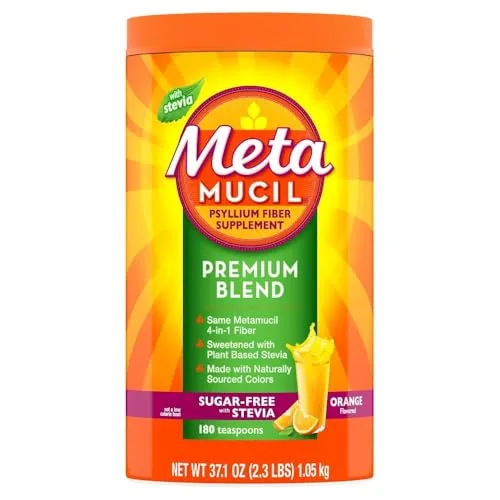
Metamucil's active ingredient is psyllium husk, so they are the same fiber. The difference is that Metamucil contains added sugar, artificial sweeteners (aspartame or stevia), citric acid, and orange flavoring. Pure psyllium husk supplements provide the same fiber without additives. If you prefer unflavored and additive-free, choose a pure psyllium product. If taste is a barrier, Metamucil may improve compliance.

Should I take psyllium husk powder or capsules?

Powder delivers the clinical dose more efficiently — one tablespoon provides about 5g of fiber, while capsules typically require 5-6 capsules for the same amount. Powder is also more cost-effective. However, capsules avoid the gritty texture that some people find unpleasant. If you choose capsules, be aware you may need 10-12 per day to reach the full clinical dose.

Does psyllium husk help with weight loss?

Psyllium husk may support weight management through increased satiety (the gel expands in the stomach), reduced calorie absorption, and potential GLP-1 stimulation. A 2020 systematic review found fiber supplementation was associated with modest weight loss (average 1.3kg over 12 weeks). However, psyllium is not a weight-loss supplement per se — its primary benefits are for cholesterol, blood sugar, and digestive regularity.

References

  1. (). Time- and dose-dependent impact of psyllium on serum lipids: a meta-analysis of 21 randomized placebo-controlled trials. European Journal of Clinical Nutrition. DOI
  2. (). Psyllium fiber improves glycemic control proportional to loss of glycemic control: a meta-analysis of data in euglycemic subjects, patients at risk of type 2 diabetes mellitus, and patients being treated for type 2 diabetes mellitus. American Journal of Clinical Nutrition. DOI
  3. (). Effects of targeted delivery of propionate to the human colon on appetite regulation, body weight maintenance and adiposity in overweight adults. Gut. DOI