
Supplement ScienceSupplementScience
B-Complex supplement
Water-Soluble Vitamin Complex

B-Complex — Research Profile

Evidence:Strong
·

This content is for informational purposes only and does not constitute medical advice. Statements about dietary supplements have not been evaluated by the FDA and are not intended to diagnose, treat, cure, or prevent any disease. Individual results may vary — consult your healthcare provider before starting any supplement. Full disclaimer

B-Complex provides all 8 essential B vitamins for energy, nervous system, and methylation support.

B-Complex provides all 8 essential B vitamins for energy, nervous system, and methylation support. Particularly beneficial for vegans, older adults, pregnant women, and people on B-depleting medications. Choose active/coenzymated forms (methylfolate, methylcobalamin, P-5-P) for optimal utilization.

Bottom line: B-Complex is ideal if you are vegan, elderly, pregnant, stressed, or on medications that deplete B vitamins. Choose active forms (methylfolate, methylcobalamin, P-5-P).

Evidence:Meta-analysis (2013) · high confidence[#1]. See full reference list below.

Key Facts

What it is
A supplement combining all 8 essential B vitamins for synergistic metabolic support
Primary benefits
  • Supports cellular energy production across multiple pathways
  • Maintains nervous system function and neurotransmitter balance
  • Reduces homocysteine levels via methylation support
  • May reduce stress perception and improve mood
  • Ensures comprehensive B-vitamin adequacy
Typical dosage
Varies by formula; active B-complex with coenzyme forms recommended
Evidence level
Strong
Safety profile
Generally Safe

Get the free evidence-based B-Complex guide — delivered in 60 seconds.

No spam. Unsubscribe anytime.

What the Research Says

B-Complex supplementation has been extensively studied for its benefits in stress reduction, mood improvement, and cognitive function. A systematic review and meta-analysis by Long and Benton (2013) of eight randomized controlled trials (RCTs) demonstrated significant improvements in perceived stress and mood outcomes, particularly among individuals experiencing occupational stress. The VITACOG trial conducted by Smith et al. (2010) highlighted that high-dose B6/B12/folate supplementation slowed brain atrophy by 30% in elderly subjects with mild cognitive impairment and elevated homocysteine levels. Additionally, Kennedy et al. (2010) found that 90 days of high-dose B-complex supplementation improved cognitive performance and reduced mental fatigue in healthy adults.

Recent studies further support the efficacy of B-Complex. Sarris et al. (2021) reviewed seven RCTs and concluded that high-dose B-complex supplements enhance mental health, stamina, and cognitive function across both healthy and at-risk populations. Furthermore, Nunes et al. (2022) noted that Roux-en-Y gastric bypass surgery leads to higher rates of vitamin B12 deficiency compared to sleeve gastrectomy, underscoring the importance of supplementation in surgical patients. The synergistic interaction among B vitamins suggests that supplementation as a complex is more effective than individual vitamins for most applications.
Benefits of B-Complex

  • Stress and mood — a 2011 meta-analysis by Long and Benton of 8 RCTs (n=1,292) found B-complex supplementation significantly reduced perceived stress, mild psychiatric symptoms, and improved mood in healthy and at-risk populations
  • Energy metabolism — B vitamins collectively participate in the citric acid cycle (B1, B2, B3, B5), fatty acid oxidation (B2, B3, B5), and amino acid metabolism (B6, B9, B12); deficiency in any single B vitamin can impair energy production
  • Homocysteine reduction — the synergy of B6, B9, and B12 is required for complete homocysteine metabolism; a 2018 Cochrane review confirmed that B-vitamin supplementation significantly lowers homocysteine levels
  • Cognitive support — the VITACOG trial (Smith et al., 2010) found that B-vitamin supplementation (B6, B12, folate) slowed brain atrophy by 30% in elderly subjects with elevated homocysteine and mild cognitive impairment

Our Top B-Complex Picks

As an Amazon Associate, we earn from qualifying purchases. Some links below are affiliate links — this doesn't affect our editorial independence or product ratings. How we evaluate products

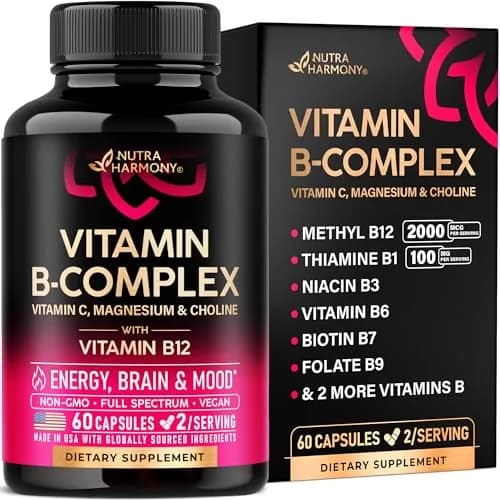
NUTRAHARMONY B Complex
NUTRAHARMONY
#1 Top Pick
Best Overall / Best Comprehensive FormulaForm: CapsulePrice: $0.36/serving
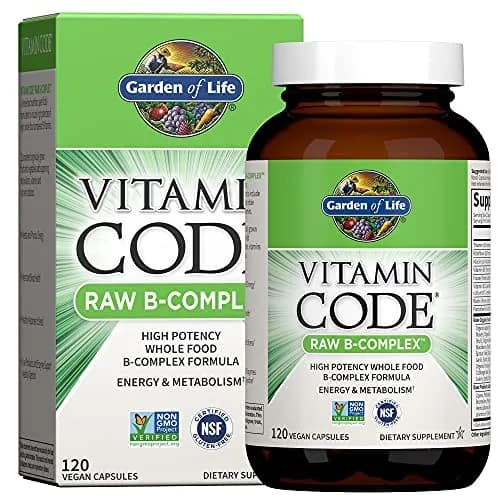
Garden of Life Vitamin Code Raw B-Complex
Garden of Life
Best Whole Food / Best ValueForm: CapsulePrice: $0.24/serving
Did you know?

B-Complex supplementation has been extensively studied for its benefits in stress reduction, mood improvement, and cognitive function.

Forms of B-Complex

B-Complex supplement forms compared by bioavailability and best use
FormBioavailabilityBest For
Standard B-ComplexModerateBudget-friendly general use — uses standard forms like folic acid and cyanocobalamin
Active/Coenzymated B-ComplexHighOptimal utilization — uses methylfolate, methylcobalamin, P-5-P, riboflavin-5-phosphate, and benfotiamine
B-50 or B-100 ComplexModerateHigher-dose therapeutic use — 50 or 100 mg of each B vitamin (where applicable)

Dosage Recommendations

General recommendation: One capsule/tablet daily of a formula providing at least 100% DV of all 8 B vitamins; active forms preferred

Timing: Morning with breakfast for energy support; avoid late evening due to potential stimulating effects • Take with food for best absorption.

Dosage by Condition

General health
1 B-complex daily at 100% DV levelsStrong
Stress support
1 high-potency B-complex daily (B-50 or B-100)Moderate
Homocysteine reduction
B-complex with adequate B6, B9, B12 dailyStrong
Vegan/vegetarian nutrition
1 active B-complex daily (especially for B12)Strong

Upper limit: Follow individual B-vitamin upper limits: B6 ≤100 mg, folic acid ≤1,000 mcg from supplements; other B vitamins have no established UL

Side Effects and Safety

Safety profile: Generally Safe

Potential Side Effects

  • Bright yellow urine (harmless — from riboflavin/B2 excretion)
  • Mild nausea if taken on an empty stomach
  • Possible jitteriness or sleep disturbance if taken too late in the day
  • B6 neuropathy risk at doses >100 mg/day chronically (check formula)
  • Niacin flush if formula contains nicotinic acid (most use niacinamide)

Drug & Supplement Interactions

  • Levodopa (without carbidopa) — B6 in complex may reduce effectiveness
  • Methotrexate — folate in complex may interact; consult oncologist for cancer treatment
  • Anticonvulsants (phenytoin, carbamazepine) — B vitamins may affect drug metabolism
  • Antibiotics — may reduce gut bacterial B-vitamin synthesis
Check B-Complex interactions with other supplements →
BenefitsDosage GuideSide EffectsTypes & FormsResearchFAQ

Related Conditions

Commonly Taken Together

Related Guides

Related Research

Related Supplements

Learn More

Looking for the best b-complex supplement?

We analyzed and ranked the top products based on form, dosage, third-party testing, and value.

See Our Top Picks

Frequently Asked Questions

What is the difference between a standard and active B-complex?

Standard B-complexes use conventional forms like folic acid, cyanocobalamin, and pyridoxine HCl. Active (coenzymated) B-complexes use the directly bioactive forms: methylfolate (5-MTHF), methylcobalamin, P-5-P, riboflavin-5-phosphate, and sometimes benfotiamine. Active forms skip conversion steps in the body, which is particularly important for the 5-15% of people with MTHFR polymorphisms. [1]

Evidence:Meta-analysis (2013) · high confidence[#1]. See full reference list below.

Who should take a B-complex supplement?

B-Complex is especially beneficial for vegans/vegetarians (B12 is only in animal foods), adults over 50 (reduced B12 absorption), pregnant women (increased B-vitamin needs), people under chronic stress, those taking medications that deplete B vitamins (metformin, PPIs, oral contraceptives, diuretics), and people with malabsorption conditions.

Should I take individual B vitamins or a B-complex?

For general health and prevention, a B-complex is preferred because the B vitamins work synergistically — for example, B2 is needed to activate B6, and B6/B9/B12 work together in homocysteine metabolism. Individual B vitamins are appropriate when targeting specific conditions at therapeutic doses (e.g., B2 at 400 mg for migraines or B12 at 2,000 mcg for deficiency correction). In such cases, take the individual vitamin alongside a B-complex for foundational support.

What is the best form of B-Complex to take?

The best form of b-complex depends on your specific health goals, absorption needs, and tolerance. Chelated and standardized extract forms generally offer higher bioavailability than raw or unstandardized versions. Check the product label for third-party testing to ensure potency and purity.

What are the proven benefits of B-Complex?

B-Complex has been studied for multiple health applications with varying levels of clinical evidence. The strongest evidence typically comes from randomized controlled trials and meta-analyses published in peer-reviewed journals. Individual responses can vary based on baseline status, dosage, and duration of use.

How much B-Complex should I take per day?

B-Complex dosage depends on the specific form, your health goals, and individual factors such as body weight and baseline nutrient status. Following the dose used in clinical trials is generally the most evidence-based approach. Starting at the lower end of the recommended range and adjusting upward is advisable.

When is the best time to take B-Complex?

B-Complex timing depends on whether it is fat-soluble or water-soluble and whether it causes digestive sensitivity. Consistency in timing is more important than the specific hour of the day. Taking supplements at the same time daily helps maintain steady levels.

What are the side effects of B-Complex?

B-Complex is generally well tolerated at recommended doses, with gastrointestinal discomfort being the most commonly reported side effect. Side effects are typically mild and dose-dependent, resolving with dose reduction or taking with food. Serious adverse effects are rare at standard supplemental doses.

Does B-Complex interact with any medications?

B-Complex may interact with certain prescription medications by affecting absorption, metabolism, or pharmacological effects. Always inform your healthcare provider about all supplements you take, especially before surgery or when starting new medications. Spacing supplements and medications by 2 hours reduces most absorption interactions.

Who should consider taking B-Complex?

B-Complex is most appropriate for individuals with confirmed deficiency, suboptimal levels, or specific health conditions supported by clinical evidence. People in higher-risk demographics, including older adults and those with restricted diets, may benefit most. Testing baseline levels before supplementing provides the best guidance.

How long does B-Complex take to show results?

B-Complex effects vary by the specific health outcome being targeted, with some benefits appearing within days and others requiring weeks to months of consistent daily use. Correcting a deficiency typically shows improvement within 2-4 weeks. A minimum 8-12 week trial at the recommended dose is advisable before evaluating effectiveness.

Is B-Complex safe for long-term daily use?

B-Complex is considered safe for long-term use at recommended doses based on available clinical data. Staying within established upper intake limits minimizes the risk of adverse effects over time. Periodic reassessment with a healthcare provider is recommended, especially if health conditions change.

Can you take too much B-Complex?

Exceeding the recommended dose of b-complex increases the risk of adverse effects without providing additional benefit. Toxicity risk varies by form and individual factors such as kidney and liver function. Mega-dosing is not supported by clinical evidence and should be avoided.

Can I combine B-Complex with other supplements?

B-Complex can generally be combined with complementary supplements, though some combinations may affect absorption or create additive effects. Spacing different supplements by 1-2 hours can reduce absorption competition. Consulting a healthcare professional is advisable when combining multiple supplements targeting the same health pathway.

What should I look for when buying a B-Complex supplement?

Third-party testing from USP, NSF, or ConsumerLab is the most important quality indicator when purchasing b-complex supplements. Look for products that clearly state the specific form, dose per serving, and any relevant standardization percentages. Avoid proprietary blends that hide individual ingredient amounts.

Continue Reading

References

  1. Meta-analysisLong SJ, Benton D (2013). Effects of vitamin and mineral supplementation on stress, mild psychiatric symptoms, and mood in nonclinical samples: a meta-analysis. Psychosomatic Medicine. DOI PubMed
  2. RCTSmith AD, Smith SM, de Jager CA, et al. (2010). Homocysteine-lowering by B vitamins slows the rate of accelerated brain atrophy in mild cognitive impairment. PLoS ONE. DOI PubMed
  3. RCTKennedy DO, Veasey R, Watson A, et al. (2010). Effects of high-dose B vitamin complex with vitamin C and minerals on subjective mood and performance in healthy males. Psychopharmacology. DOI PubMed
  4. Meta-analysisNunes R, Santos-Sousa H, Vieira S, Nogueiro J, et al. (2022). Vitamin B Complex Deficiency After Roux-en-Y Gastric Bypass and Sleeve Gastrectomy-a Systematic Review and Meta-Analysis.. Obesity surgery. DOI PubMed
  5. Buzatu R, Luca MM, Bumbu BA (2025). The Role of Vitamin B Complex in Periodontal Disease: A Systematic Review Examining Supplementation Outcomes, Age Differences in Children and Adults, and Aesthetic Changes.. Nutrients. DOI PubMed
  6. ReviewSarris J, Mehta B, Óvári V, Ferreres Giménez I (2021). Potential mental and physical benefits of supplementation with a high-dose, B-complex multivitamin/mineral supplement: What is the evidence?. Nutricion hospitalaria. DOI PubMed
  7. Lipman ET, Frishman WH (2026). Vitamin Supplementation and Cardiovascular Disease.. Cardiology in review. DOI PubMed
Show 5 more references
  1. Ahn HY, Lee MJ, Jung KY, Kim HJ, et al. (2025). Selenium vs Control for Graves Ophthalmopathy in a Selenium-Sufficient Area: A Randomized Clinical Trial.. JAMA ophthalmology. DOI PubMed
  2. Song MG, Park CH, Choi YR, Choi GW, et al. (2025). Vitamin B supplementation enhances the efficacy of non-steroidal anti-inflammatory drugs in patients with painful foot and ankle conditions: A multicenter, prospective, randomized controlled trial.. PloS one. DOI PubMed
  3. Kachko VA, Shulman LP, Kuznetsova IV, Uspenskaya YB, et al. (2024). Clinical Evaluation of Effectiveness and Safety of Combined Use of Dietary Supplements Amberen® and Smart B® in Women with Climacteric Syndrome in Perimenopause.. Advances in therapy. DOI PubMed
  4. Majidi N, Bahadori E, Shekari S, Gholamalizadeh M, et al. (2024). Effects of supplementation with low-dose group B vitamins on clinical and biochemical parameters in critically ill patients with COVID-19: a randomized clinical trial.. Expert review of anti-infective therapy. DOI PubMed
  5. Lee MC, Hsu YJ, Shen SY, Ho CS, et al. (2023). A functional evaluation of anti-fatigue and exercise performance improvement following vitamin B complex supplementation in healthy humans, a randomized double-blind trial.. International journal of medical sciences. DOI PubMed