SupplementScience

Wheatgrass — Research Profile

Superfood Grass

Reviewed by·PharmD, BCPS

This content is for informational purposes only and does not constitute medical advice. Consult your healthcare provider before starting any supplement. Full disclaimer

Wheatgrass is a chlorophyll-rich young grass with antioxidant and anti-inflammatory properties.

Wheatgrass is a chlorophyll-rich young grass with antioxidant and anti-inflammatory properties. Preliminary clinical evidence shows potential benefits for anemia, ulcerative colitis, and blood sugar regulation, though large-scale trials are lacking.

Key Facts

What it is
Young grass of common wheat (Triticum aestivum) harvested before jointing, consumed as juice or dried powder
Primary benefits
  • Rich in chlorophyll with antioxidant and potential blood-building properties
  • May reduce transfusion requirements in thalassemia patients
  • Preliminary evidence for anti-inflammatory activity in ulcerative colitis
  • Contains vitamins A, C, E, iron, and magnesium in concentrated form
  • Emerging data on blood sugar modulation
Typical dosage
3-6g powder or 30-60ml juice daily
Evidence level
Emerging
Safety profile
Generally Safe

Time to Effect

Hours
Days
Weeks
Months
2-8 weekstypical onset

Antioxidant and energy benefits may be noticed within 1-2 weeks. Blood-building effects in anemia studies were measured over 6-12 months. Gut inflammation improvements seen within 4 weeks in the ulcerative colitis trial.

What the Research Says

Wheatgrass research is at an emerging stage, with a handful of small but intriguing clinical trials. Ben-Arye et al. (2002) published the most cited trial — a randomized double-blind placebo-controlled study of 23 patients with active distal ulcerative colitis, demonstrating significant reduction in rectal bleeding and disease activity with 100ml daily wheatgrass juice over one month. In hematology, Marwaha et al. (2004) conducted a pilot study in beta-thalassemia patients showing wheatgrass juice extended the interval between blood transfusions, though the sample was small and the mechanism (possibly chlorophyll-mediated hemoglobin support) remains speculative. Bar-Sela et al. (2007) reported that wheatgrass juice reduced chemotherapy-related myelotoxicity in breast cancer patients, though this was an observational study. Shakya et al. (2016) found improvements in fasting glucose and lipid parameters in type 2 diabetes patients. The major limitation across all studies is small sample sizes (typically under 50 participants) and heterogeneity in preparations (fresh juice vs. powder). Larger, well-designed RCTs are needed to confirm these promising preliminary findings.

Benefits of Wheatgrass

  • Antioxidant activity — wheatgrass contains high concentrations of chlorophyll, flavonoids, and phenolic compounds that scavenge free radicals and reduce oxidative stress markers in vitro and in small human trials (Bar-Sela et al., 2007)
  • Anemia and thalassemia support — a pilot study by Marwaha et al. (2004) in transfusion-dependent beta-thalassemia patients found wheatgrass juice reduced the mean interval between transfusions, suggesting hemoglobin-supporting properties potentially linked to its chlorophyll content
  • Ulcerative colitis — Ben-Arye et al. (2002) conducted a randomized double-blind trial showing wheatgrass juice significantly reduced rectal bleeding severity and disease activity index in patients with active distal ulcerative colitis
  • Blood sugar regulation — Shakya et al. (2016) found wheatgrass supplementation improved fasting glucose and lipid profiles in type 2 diabetic subjects in a small controlled trial
  • Nutrient density — per gram, wheatgrass provides concentrated amounts of iron, magnesium, calcium, vitamins A, C, and E, and all essential amino acids, making it a micronutrient-dense green supplement
Did you know?

Wheatgrass research is at an emerging stage, with a handful of small but intriguing clinical trials.

Forms of Wheatgrass

Wheatgrass supplement forms compared by bioavailability and best use
FormBioavailabilityBest For
Fresh JuiceHighMaximum nutrient potency — freshly juiced wheatgrass preserves enzymes and chlorophyll; strong taste requires blending with other juices
PowderModerateConvenience and shelf stability — easily added to smoothies or water; most common supplemental form with standardized dosing
CapsulesModerateTaste avoidance — encapsulated powder bypasses the strong grassy flavor; may require multiple capsules for clinical doses
Tablets (Compressed)ModeratePortability and precise dosing — compressed powder form convenient for travel; slower dissolution than powder

Dosage Recommendations

General recommendation: 3-6g powder or 30-60ml fresh juice daily

Timing: Best taken on an empty stomach in the morning for optimal absorption; can be split into two doses

Dosage by Condition

General health / antioxidant support
3-5g powder or 30ml juice dailyEmerging
Ulcerative colitis support
100ml fresh juice dailyEmerging
Blood sugar management
3-6g powder dailyPreliminary
Energy and nutrient supplementation
3-6g powder or 30-60ml juice dailyEmerging

Upper limit: 10g powder or 120ml juice daily (higher doses may cause nausea)

Our Top Wheatgrass Picks

As an Amazon Associate, we earn from qualifying purchases. Some links below are affiliate links — this doesn't affect our editorial independence or product ratings. How we evaluate products

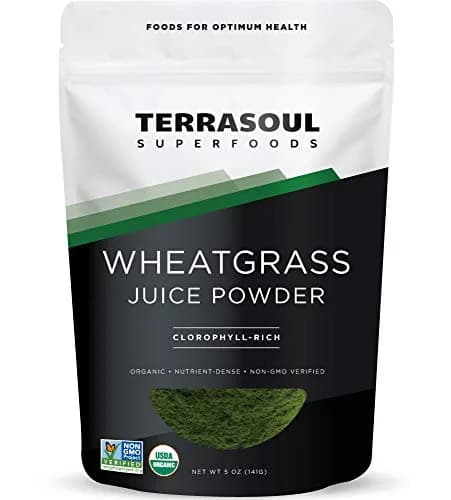
Terrasoul Wheat Grass Juice Powder (5 oz)
Terrasoul Superfoods
OverallForm: Juice PowderPrice: $0.42/serving
Buy Now on Amazon
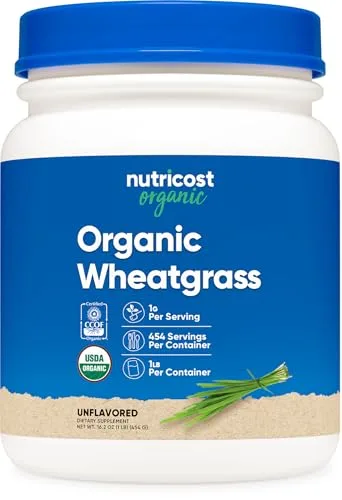
Nutricost Wheatgrass Powder (1 lb)
Nutricost
BudgetForm: PowderPrice: $0.16/serving
Buy Now on Amazon
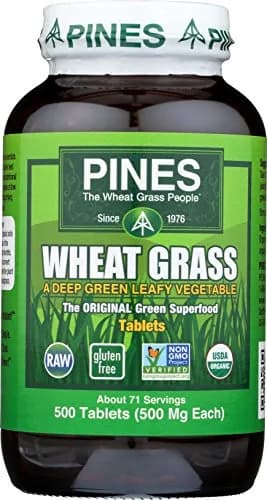
Pines International Organic Wheat Grass (500ct)
Pines International
Best TabletsForm: TabletPrice: $0.35/serving
Buy Now on Amazon
Amazing Grass Wheat Grass Powder (60 servings)
Amazing Grass
Best PowderForm: PowderPrice: $0.42/serving
Buy Now on Amazon
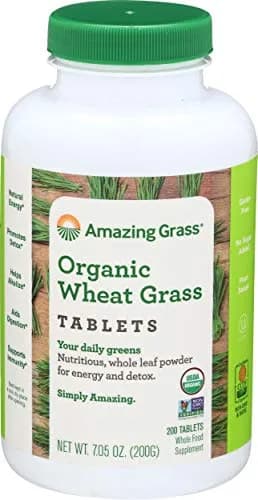
Amazing Grass Wheat Grass Tablets (200ct)
Amazing Grass
Best for BeginnersForm: TabletPrice: $0.63/serving
Buy Now on Amazon

Medication Interactions & Contraindications

Drug Interactions

Warfarin
moderate
Anticoagulant
Monitor INR closely. Wheatgrass contains significant vitamin K which may reduce warfarin efficacy. Maintain consistent daily intake if using both.
Metformin
minor
Antidiabetic
Monitor blood glucose. Wheatgrass may have additive blood sugar-lowering effects. Dose adjustment of diabetes medication may be needed.
Cyclosporine
moderate
Immunosuppressant
Use with caution. Wheatgrass may stimulate immune function and could theoretically counteract immunosuppressive therapy.
Iron supplements
minor
Mineral supplement
Monitor iron levels. Wheatgrass is naturally high in iron; concurrent supplementation may increase risk of iron overload in susceptible individuals.

Who Should NOT Take This

Wheat or grass allergy(relative)
While wheatgrass harvested before jointing is typically gluten-free, individuals with wheat allergies or celiac disease should exercise caution due to potential cross-contamination during processing.
Celiac disease(relative)
Pure wheatgrass should not contain gluten proteins (which develop later in seed maturation), but commercial products may have cross-contamination. Only use certified gluten-free wheatgrass products.
Hemochromatosis or iron overload disorders(relative)
Wheatgrass is naturally high in iron. Individuals with iron storage disorders should monitor iron levels and consult their physician before regular use.

This information is for educational purposes only. Always consult your healthcare provider before starting or stopping any supplement, especially if you take prescription medications.

Side Effects and Safety

Safety profile: Generally Safe

Potential Side Effects

  • Nausea — the most common side effect, especially when taken on an empty stomach or at higher doses
  • Headache — reported in some users, possibly related to detoxification or chlorophyll sensitivity
  • Mild diarrhea or loose stools, particularly during initial use
  • Allergic reactions possible in individuals with wheat or grass allergies (note: wheatgrass harvested before jointing is typically gluten-free, but cross-contamination risk exists)
  • Mold contamination risk — home-grown wheatgrass trays can harbor mold if improperly maintained

Drug & Supplement Interactions

  • Anticoagulants (warfarin) — wheatgrass contains vitamin K which may reduce anticoagulant efficacy
  • Diabetes medications — may have additive blood sugar lowering effects; monitor glucose closely
  • Immunosuppressants — wheatgrass may stimulate immune function; theoretical concern for transplant patients
  • Iron supplements — high iron content may contribute to excess iron intake in non-deficient individuals
Check Wheatgrass interactions with other supplements →
BenefitsDosage GuideSide EffectsTypes & FormsResearchFAQ

Related Conditions

Related Supplements

Frequently Asked Questions

Is wheatgrass gluten-free?

Wheatgrass harvested before the jointing stage (when the grass is young and has not produced seeds) should not contain gluten proteins, which are found in the wheat kernel. However, commercial wheatgrass products may be cross-contaminated during harvesting or processing. If you have celiac disease or severe gluten sensitivity, only use products that are certified gluten-free and tested for gluten content.

Can wheatgrass help with anemia?

Preliminary evidence is promising but limited. A pilot study by Marwaha et al. (2004) in beta-thalassemia patients found wheatgrass juice reduced transfusion frequency. The proposed mechanism involves chlorophyll's structural similarity to hemoglobin, though this link is speculative. Wheatgrass is naturally rich in iron and folate, which support red blood cell production. It should not replace standard anemia treatment but may be used as a complementary approach under medical supervision.

What does the science say about wheatgrass detox claims?

Most detox claims for wheatgrass are not supported by rigorous clinical evidence. While wheatgrass contains chlorophyll and antioxidants that support the body's natural detoxification pathways (particularly liver phase II enzymes), there are no well-designed human trials demonstrating that wheatgrass 'detoxifies' the body in any meaningful clinical sense. The antioxidant benefits are real, but the detox marketing overstates the evidence.

How does wheatgrass compare to spirulina?

Both are nutrient-dense green superfoods, but they differ in composition. Spirulina is a blue-green algae with higher protein content (60-70% vs. ~25% for wheatgrass) and the unique antioxidant phycocyanin, with stronger evidence for cholesterol reduction. Wheatgrass is higher in chlorophyll and has emerging evidence for ulcerative colitis and anemia support. They can be combined, as their nutrient profiles are complementary.

Is wheatgrass safe during pregnancy?

There is insufficient clinical data on wheatgrass safety during pregnancy. While it is a nutrient-rich whole food, concerns include potential mold contamination in fresh preparations and lack of standardization in commercial products. Pregnant women should consult their healthcare provider before using wheatgrass and, if approved, use only reputable, third-party tested products.

Fresh wheatgrass juice or powder — which is better?

Fresh juice preserves heat-sensitive enzymes and has higher chlorophyll bioavailability, but it requires a juicer and must be consumed immediately. Powder is far more convenient, shelf-stable, and allows precise dosing. Clinical trials have used both forms. For most people, a high-quality organic powder is the most practical choice. Look for cold-processed or freeze-dried powders to maximize nutrient retention.

Can wheatgrass help with ulcerative colitis?

One well-designed double-blind RCT by Ben-Arye et al. (2002) found that 100ml daily wheatgrass juice significantly reduced rectal bleeding severity and overall disease activity in patients with active distal ulcerative colitis over one month. While promising, this is a single small study (23 patients) and should not replace standard IBD treatment. It may be considered as a complementary approach with your gastroenterologist's approval.

Continue Reading

References

  1. Ben-Arye E, Goldin E, Wengrower D, Stamper A, Kohn R, Berry E (2002). Wheat grass juice in the treatment of active distal ulcerative colitis: a randomized double-blind placebo-controlled trial. Scandinavian Journal of Gastroenterology. DOI PubMed
  2. Marwaha RK, Bansal D, Kaur S, Trehan A (2004). Wheat grass juice reduces transfusion requirement in patients with thalassemia intermedia: a pilot study. Indian Pediatrics. PubMed
  3. Bar-Sela G, Tsalic M, Fried G, Goldberg H (2007). Wheat grass juice may improve hematological toxicity related to chemotherapy in breast cancer patients: a pilot study. Nutrition and Cancer. DOI PubMed
  4. Shakya G, Randhi PK, Pajaniradje S, Mohankumar K, Rajagopalan R (2016). Hypoglycaemic role of wheatgrass and its effect on carbohydrate metabolic enzymes in type II diabetic rats. Toxicology and Industrial Health. DOI PubMed
  5. Parit SB, Dawkar VV, Tanpure RS, Pai SR, Ambavade SD (2018). Nutritional quality and antioxidant activity of wheatgrass (Triticum aestivum) unwrap by proteome profiling and DPPH and FRAP assays. Journal of Food Science. DOI
  6. Chauhan M (2014). A pilot study on wheat grass juice for its phytochemical, nutritional and therapeutic potential on chronic diseases. International Journal of Chemical Studies.