
We evaluated astaxanthin supplements on source quality (natural Haematococcus pluvialis vs synthetic), dose per serving, bioavailability enhancement, third-party testing, and value. Here are the best options.
Best Astaxanthin Supplements (2026)
Product pricing and availability checked
Methodology: Evidence-ranked evaluation
·
2,600+Clinical Studies Cited
·6Astaxanthin products evaluated
This content is for informational purposes only and does not constitute medical advice. Statements about dietary supplements have not been evaluated by the FDA and are not intended to diagnose, treat, cure, or prevent any disease. Individual results may vary — consult your healthcare provider before starting any supplement. Full disclaimer
As an Amazon Associate, we earn from qualifying purchases. Some links below are affiliate links — this doesn't affect our editorial independence or product ratings. How we evaluate products
Our Verdict
The best astaxanthin supplement provides 12mg of natural, algae-sourced astaxanthin per serving with a fat-based carrier for absorption and third-party or branded-ingredient verification.
Best By Category
The best astaxanthin supplement provides 12mg daily of natural astaxanthin sourced from Haematococcus pluvialis...
The best astaxanthin supplement provides 12mg daily of natural astaxanthin sourced from Haematococcus pluvialis microalgae, paired with a fat source (coconut or olive oil softgel) to improve absorption. Clinical trials show 8-12mg/day for 8-12 weeks supports skin elasticity, eye health, and post-exercise recovery.
How We Chose These Products
Products are ranked using our published scoring methodology — evidence strength, dose adequacy, ingredient form, third-party testing signals, value, and clean-label factors are weighted across the 5 criteria below. Commercial relationships do not determine our editorial rankings.
Source Quality
30%Natural astaxanthin from Haematococcus pluvialis microalgae is the only form with clinical evidence. Synthetic astaxanthin (from petrochemicals) has a different stereoisomer profile and no human study support. Hawaiian-grown algae is considered the premium source.
Dose per Serving
25%Clinical studies use 4-12mg daily. Most benefit data comes from studies at 6-12mg. Products at 12mg deliver the full research dose in a single serving.
Bioavailability Enhancement
20%Astaxanthin is fat-soluble and absorbs poorly without dietary fat. Products formulated with coconut oil, olive oil, or other lipids significantly improve absorption. Taking astaxanthin with a fat-containing meal also helps.
Third-Party Testing
15%Independent testing for purity, heavy metals, and potency. Natural astaxanthin from algae should be verified for actual astaxanthin content rather than total carotenoids.
Value
10%Cost per 12mg serving. All natural astaxanthin delivers the same compound — paying more only buys better sourcing, testing, and formulation.
#1 Top Pick
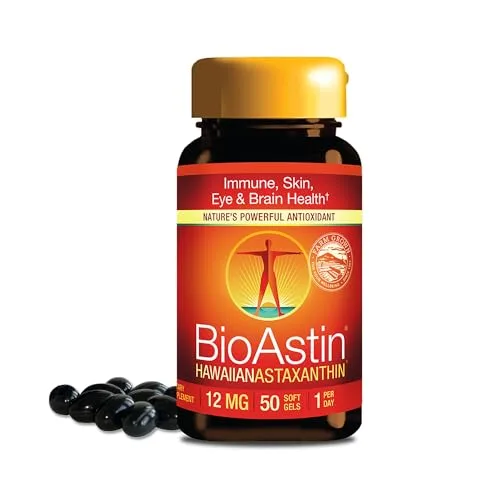
BioAstin Hawaiian Astaxanthin 12mg
Nutrex Hawaii
12,735 Amazon reviews
9.2/10
4.5
The gold standard in astaxanthin supplements. BioAstin is grown on the Kona coast of Hawaii in controlled open-pond photobioreactors, producing pharmaceutical-grade Haematococcus pluvialis. With 16,700+ reviews and decades of market presence, this is the most trusted and validated astaxanthin supplement available. Farm-direct sourcing eliminates supply chain contamination risk.
IngredientNatural Astaxanthin from Hawaiian Haematococcus pluvialis
Dose12mg astaxanthin per softgel
FormSoftgels
TestingNon-GMO, Grown in Hawaii (Kona)
12mg astaxanthin per softgelClinical range: 4-12mg daily
Therapeutic dose
$0.69 / count$34.49 · 50 Softgels
Pros
- Hawaiian-grown — premium Haematococcus pluvialis source
- 16,700+ reviews — most validated astaxanthin on market
- Farm-direct from Nutrex Hawaii (Kona coast)
Cons
- No added fat carrier for absorption enhancement
- Premium price vs competitors
Quick Comparison
#1BioAstin Hawaiian Astaxanthin 12mg
9.2/10
Nutrex Hawaii
#1 Top Pick
12,735 Amazon reviews
Best for: Most validated natural astaxanthin — farm-direct from Hawaii
Natural Astaxanthin from Hawaiian Haematococcus pluvialis · 12mg astaxanthin per softgel
Softgels · Non-GMO, Grown in Hawaii (Kona)
$34.49
$0.69 / count
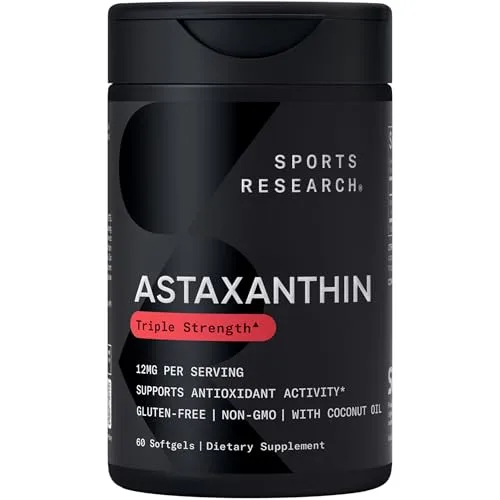
#2Sports Research Astaxanthin 12mg with Coconut Oil
8.8/10
Sports Research
3,324 Amazon reviews
Best for: Enhanced absorption with coconut oil carrier — no need to take with meals
Natural Astaxanthin with Organic Coconut Oil · 12mg astaxanthin per softgel
Softgels with coconut oil · Non-GMO Verified, Third-Party Tested
$26.95
$0.45 / count
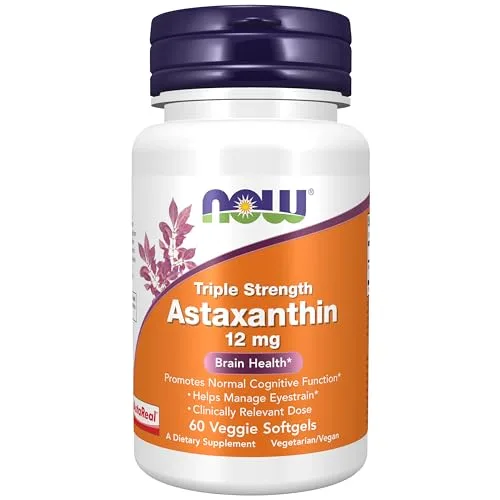
#3NOW Foods Triple Strength Astaxanthin 12mg
8.5/10
NOW
1,923 Amazon reviews
Best for: Budget-friendly 12mg astaxanthin from a trusted legacy brand
Natural Astaxanthin from Haematococcus pluvialis · 12mg astaxanthin per veggie softgel
Veggie softgels · GMP Quality Assured, NPA A-rated
$30.99
$0.52 / count
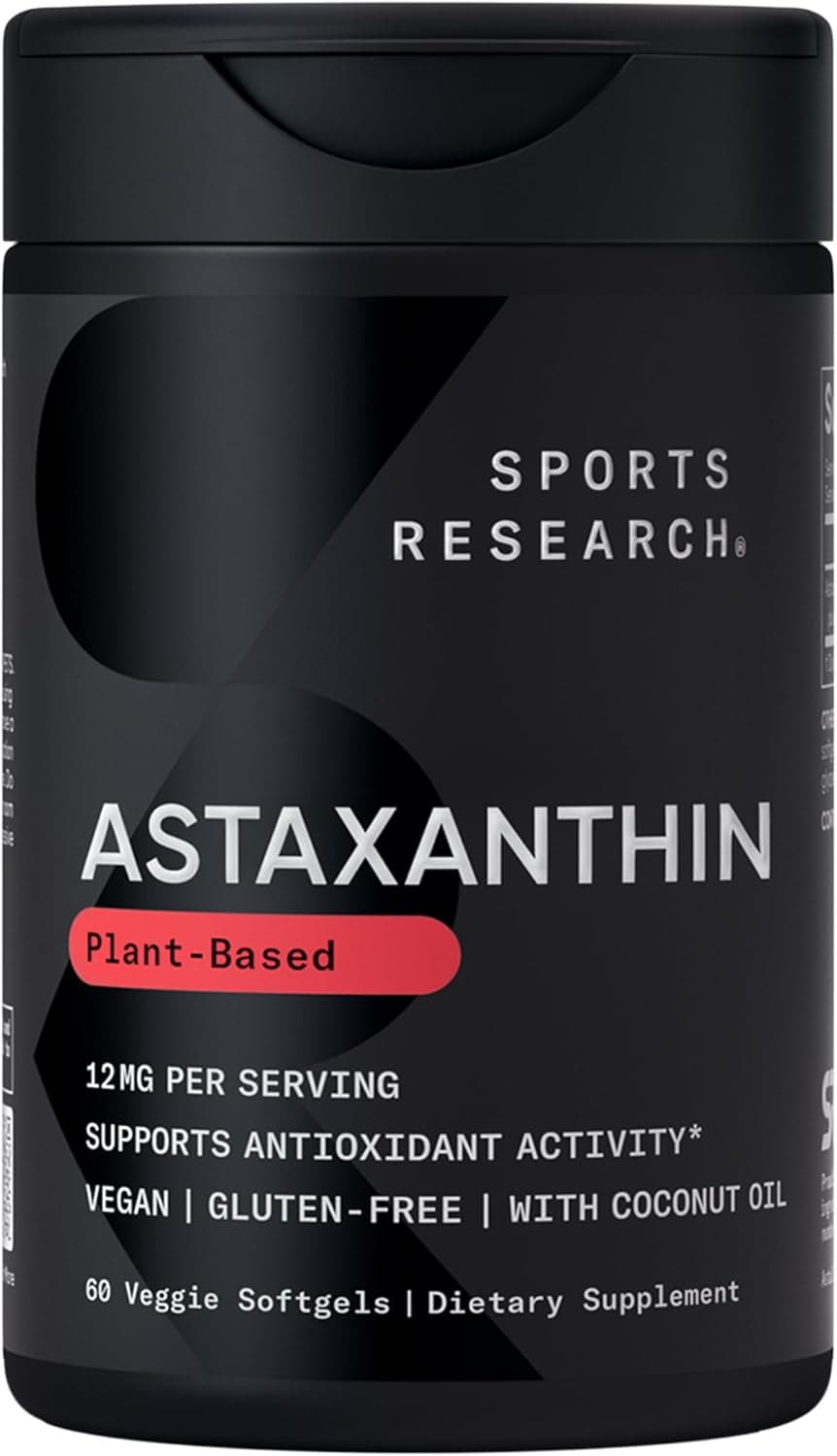
#4Sports Research Triple Strength Astaxanthin
8.5/10
Sports Research
5,775 Amazon reviews
Best for: Adults seeking a high-potency vegan astaxanthin for antioxidant, skin, and eye health support from sustainably sourced Icelandic algae
Astaxanthin (Icelandic Astalif) · 12mg astaxanthin per softgel
Softgel · IGEN Non-GMO Verified, Vegan Certified, third-party tested
$26.95
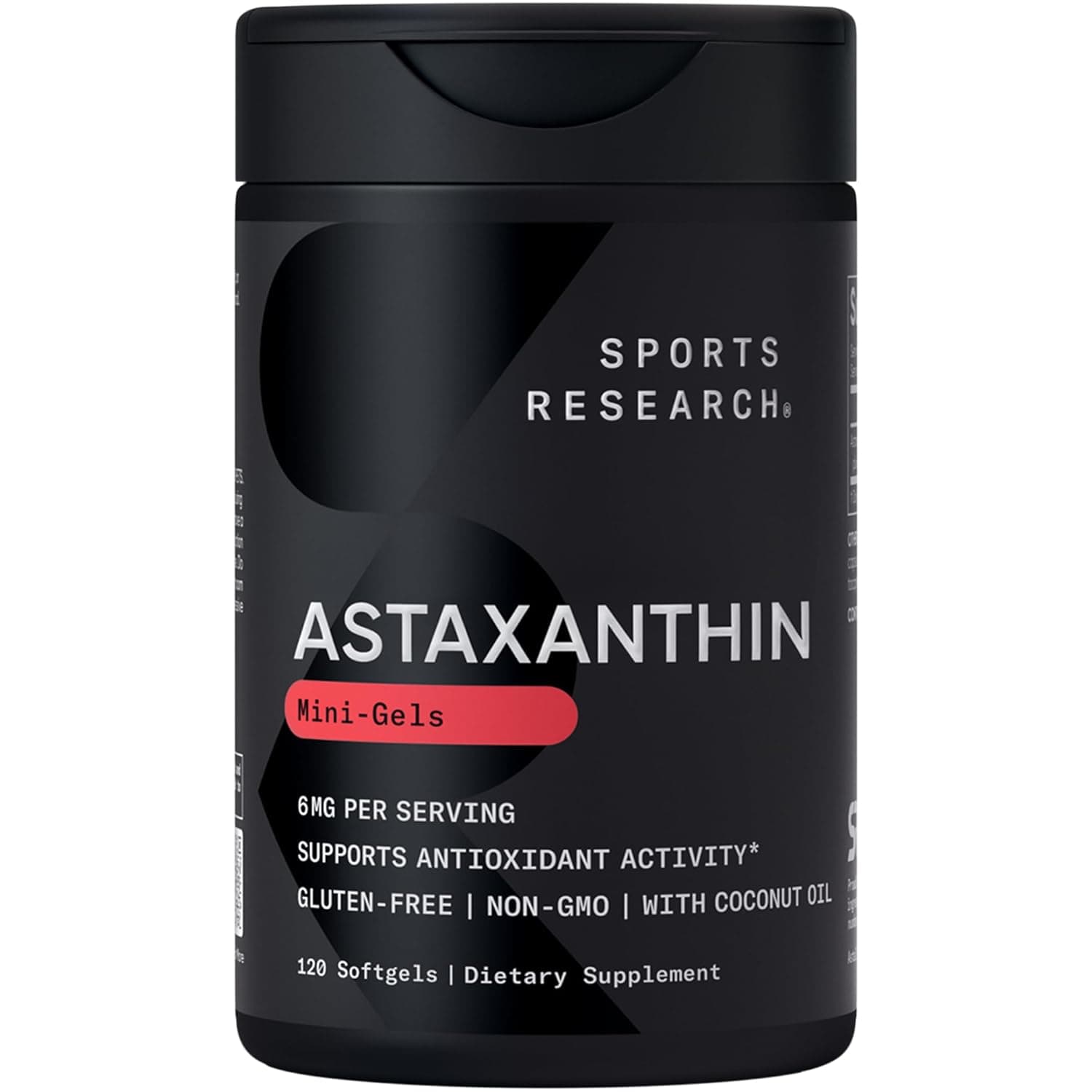
#5Sports Research Astaxanthin 6mg with Coconut Oil
8.4/10
Sports Research
3,081 Amazon reviews
Best for: Those seeking sustainably sourced Icelandic astaxanthin with coconut oil delivery for antioxidant, skin, and eye health
Astaxanthin (Icelandic Algalif) 6mg · 6mg astaxanthin per softgel
Softgel · Yes — Non-GMO tested, third-party purity and potency tested
$26.95
$0.22 / count
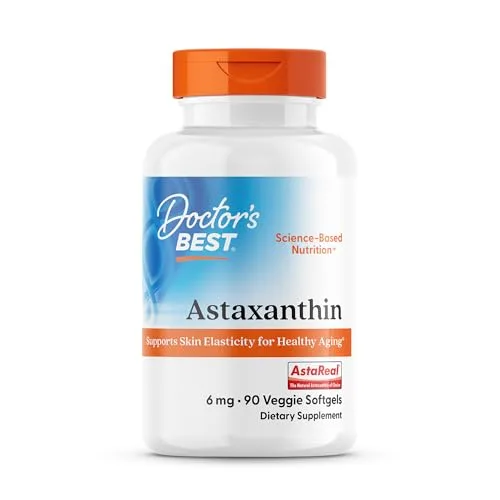
#6Doctor's Best Astaxanthin 6mg (AstaReal)
7.8/10
Doctor's BEST
58 Amazon reviews
Best for: Lower-dose astaxanthin with a branded, clinically studied ingredient (AstaReal)
AstaReal Astaxanthin (Haematococcus pluvialis) · 6mg astaxanthin per softgel
Vegan softgels · AstaReal branded ingredient
$25.99
$0.29 / count
| # | Product | Best For | Ingredient & Dose | Form & Testing | Price | Rating | |
|---|---|---|---|---|---|---|---|
| 1 | BioAstin Hawaiian Astaxanthin 12mg #1 Top Pick 12,735 Amazon reviews | Most validated natural astaxanthin — farm-direct from Hawaii | Natural Astaxanthin from Hawaiian Haematococcus pluvialis 12mg astaxanthin per softgel | Softgels 50 Softgels Non-GMO, Grown in Hawaii (Kona) | $34.49 $0.69 / count | 9.2/10 | |
| 2 | Sports Research Astaxanthin 12mg with Coconut Oil 3,324 Amazon reviews | Enhanced absorption with coconut oil carrier — no need to take with meals | Natural Astaxanthin with Organic Coconut Oil 12mg astaxanthin per softgel | Softgels with coconut oil 60 Softgels Non-GMO Verified, Third-Party Tested | $26.95 $0.45 / count | 8.8/10 | |
| 3 | NOW Foods Triple Strength Astaxanthin 12mg 1,923 Amazon reviews | Budget-friendly 12mg astaxanthin from a trusted legacy brand | Natural Astaxanthin from Haematococcus pluvialis 12mg astaxanthin per veggie softgel | Veggie softgels 60 Softgels GMP Quality Assured, NPA A-rated | $30.99 $0.52 / count | 8.5/10 | |
| 4 | Sports Research Triple Strength Astaxanthin 5,775 Amazon reviews | Adults seeking a high-potency vegan astaxanthin for antioxidant, skin, and eye health support from sustainably sourced Icelandic algae | Astaxanthin (Icelandic Astalif) 12mg astaxanthin per softgel | Softgel 60.0 Count IGEN Non-GMO Verified, Vegan Certified, third-party tested | $26.95 | 8.5/10 | |
| 5 | Sports Research Astaxanthin 6mg with Coconut Oil 3,081 Amazon reviews | Those seeking sustainably sourced Icelandic astaxanthin with coconut oil delivery for antioxidant, skin, and eye health | Astaxanthin (Icelandic Algalif) 6mg 6mg astaxanthin per softgel | Softgel 120.0 Count Yes — Non-GMO tested, third-party purity and potency tested | $26.95 $0.22 / count | 8.4/10 | |
| 6 | Doctor's Best Astaxanthin 6mg (AstaReal) 58 Amazon reviews | Lower-dose astaxanthin with a branded, clinically studied ingredient (AstaReal) | AstaReal Astaxanthin (Haematococcus pluvialis) 6mg astaxanthin per softgel | Vegan softgels 90 Softgels AstaReal branded ingredient | $25.99 $0.29 / count | 7.8/10 |
Detailed Reviews
#1 Top Pick
Nutrex Hawaii BioAstin Hawaiian Astaxanthin - 12mg, 50 Softgels - Farm-Direct Premium Antioxidant Supplement to Support Eye, Skin, Joint & Immune System Health - Non-GMO & Gluten-Free
Nutrex Hawaii
12,735 Amazon reviews
9.2/10
(12,735)
The gold standard in astaxanthin supplements. BioAstin is grown on the Kona coast of Hawaii in controlled open-pond photobioreactors, producing pharmaceutical-grade Haematococcus pluvialis. With 16,700+ reviews and decades of market presence, this is the most trusted and validated astaxanthin supplement available. Farm-direct sourcing eliminates supply chain contamination risk.
IngredientNatural Astaxanthin from Hawaiian Haematococcus pluvialis
Dose12mg astaxanthin per softgel
FormSoftgels
TestingNon-GMO, Grown in Hawaii (Kona)
12mg astaxanthin per softgelClinical range: 4-12mg daily
Therapeutic dose
$0.69 / count$34.49 · 50 Softgels
Ideal for: Most validated natural astaxanthin — farm-direct from Hawaii
Not ideal for: Budget shoppers seeking the lowest price per serving
Pros
- Hawaiian-grown — premium Haematococcus pluvialis source
- 16,700+ reviews — most validated astaxanthin on market
- Farm-direct from Nutrex Hawaii (Kona coast)
- Decades of market presence and research support
Cons
- No added fat carrier for absorption enhancement
- Premium price vs competitors
- Should be taken with a fat-containing meal for best absorption
Sports Research® Triple Strength Astaxanthin 12mg w/Organic Coconut Oil - Antioxidant Supplement for Skin & Eye Health Support* - Soy Free · Non-GMO · Gluten Free - 60 Softgels
#1 Best Sellerin Astaxanthin Nutritional SupplementsSports Research
3,324 Amazon reviews
8.8/10
(3,324)
The coconut oil carrier makes this stand out — astaxanthin is fat-soluble and absorbs significantly better with dietary fat. By embedding it in organic coconut oil, Sports Research eliminates the need to take it with a meal. Full 12mg clinical dose, Non-GMO Verified, and 3,300+ reviews at a lower price point than BioAstin.
IngredientNatural Astaxanthin with Organic Coconut Oil
Dose12mg astaxanthin per softgel
FormSoftgels with coconut oil
TestingNon-GMO Verified, Third-Party Tested
12mg astaxanthin per softgelClinical range: 4-12mg daily
Therapeutic dose
$0.45 / count$26.95 · 60 Softgels
Ideal for: Enhanced absorption with coconut oil carrier — no need to take with meals
Not ideal for: Those who prefer Hawaiian-sourced astaxanthin from Nutrex
Pros
- Coconut oil carrier enhances fat-soluble absorption
- Full 12mg clinical dose
- Lower price than BioAstin
- 3,300+ reviews at 4.6 stars
Cons
- Algae source not specified as Hawaiian
- Not USDA Organic for the astaxanthin component
- Newer to market than BioAstin
Now Supplements, Triple Strength Astaxanthin 12 mg, Triple Strength, Brain Health*, Helps Manage Eye Strain*, 60 Veggie Softgels
NOW
1,923 Amazon reviews
8.5/10
(1,923)
NOW Foods delivers the full 12mg triple-strength dose in vegetarian softgels from a brand with 50+ years of supplement manufacturing. GMP Quality Assured and NPA A-rated. Strong Amazon reviews (4.7 stars, 1,900+) suggest consistent quality. NOW is a staple brand known for value-priced, no-frills formulations.
IngredientNatural Astaxanthin from Haematococcus pluvialis
Dose12mg astaxanthin per veggie softgel
FormVeggie softgels
TestingGMP Quality Assured, NPA A-rated
12mg astaxanthin per veggie softgelClinical range: 4-12mg daily
Therapeutic dose
$0.52 / count$30.99 · 60 Softgels
Ideal for: Budget-friendly 12mg astaxanthin from a trusted legacy brand
Not ideal for: Those seeking coconut oil-enhanced absorption or Hawaiian sourcing
Pros
- Full 12mg triple-strength dose
- NOW Foods — 50+ years of trusted manufacturing
- GMP Quality Assured, NPA A-rated
- 4.7 stars — highest in this comparison
Cons
- No fat carrier for absorption
- Algae source not specified
- Veggie softgels may absorb slightly less than oil-based
Sports Research Triple Strength Vegan Astaxanthin Supplement from Algae - Plant Based Softgels for Antioxidant Activity, Skin & Eye Health - Non-GMO Verified, Made with Coconut Oil - 12mg, 60 Count
Sports Research
5,775 Amazon reviews
8.5/10
(5,775)
Coconut (tree nut)
Triple-strength 12mg from Astalif is the most clinically relevant dose of astaxanthin for antioxidant, skin photoprotection, and eye health support. Vegan certification and verifiable Icelandic sourcing distinguish this from commodity astaxanthin products.
IngredientAstaxanthin (Icelandic Astalif)
Dose12mg astaxanthin per softgel
FormSoftgel
TestingIGEN Non-GMO Verified, Vegan Certified, third-party tested
12mg astaxanthin per softgelClinical range: 4-12mg daily
Therapeutic dose
$26.95 · 60.0 Count
Ideal for: Adults seeking a high-potency vegan astaxanthin for antioxidant, skin, and eye health support from sustainably sourced Icelandic algae
Not ideal for: Budget shoppers — 12mg from Astalif costs more per mg than lower-potency algae-based alternatives
Pros
- 12mg dose matches or exceeds clinical study dosing for antioxidant and skin benefits
- Astalif is a traceable, sustainably sourced Icelandic algae produced with geothermal energy
- Vegan-certified PlantGel softgel — no animal gelatin, cold-pressed with coconut MCT for bioavailability
- 5,775+ reviews at 4.6 stars — strong social proof at this potency tier
Cons
- Higher price per serving than 4mg or 6mg astaxanthin alternatives
- Coconut oil ingredient excludes those with tree-nut allergies
- 60-count supply lasts only 2 months — no larger economy size
Sports Research Astaxanthin Supplement from Algae - Softgels for Antioxidant Activity, Skin & Eye Health Support - Made with Coconut Oil, Non-GMO Verified & Gluten Free - 6mg, 120 Count
#1 Best Sellerin Astaxanthin Nutritional SupplementsSports Research
3,081 Amazon reviews
8.4/10
(3,081)
Gluten-free, soy-freeContains coconut oilGelatin softgel (not vegan)
Algalif is among the most traceable and sustainably produced astaxanthin sources in the world — the geothermal and clean water cultivation system eliminates contamination risks common in less-controlled algae farming. The coconut oil delivery solves astaxanthin's fundamental absorption limitation. 3,081 reviews at 4.6 stars confirms a well-validated product in a category where sourcing integrity matters most.
IngredientAstaxanthin (Icelandic Algalif) 6mg
Dose6mg astaxanthin per softgel
FormSoftgel
TestingYes — Non-GMO tested, third-party purity and potency tested
6mg astaxanthin per softgelClinical range: 4-12mg daily
Therapeutic dose
$0.22 / count$26.95 · 120.0 Count
Ideal for: Those seeking sustainably sourced Icelandic astaxanthin with coconut oil delivery for antioxidant, skin, and eye health
Not ideal for: Those seeking the 12mg higher-potency dose — this is the standard 6mg maintenance formula
Pros
- Icelandic Algalif astaxanthin — geothermal-energy-cultivated with environmental traceability
- Coconut oil carrier addresses the critical fat-solubility absorption requirement for astaxanthin
- 120-count bottle provides a 4-month supply at one daily
- Non-GMO tested and third-party tested for purity and potency
Cons
- 6mg dose is the standard entry level — sports recovery applications sometimes use 12mg
- Gelatin softgel shell — not vegan despite algae-sourced active ingredient
- Premium Icelandic sourcing is reflected in the price versus commodity astaxanthin
Doctor's Best Astaxanthin Vegan Supplement 6 mg - Skin Elasticity & Antioxidant Support for Men & Women, Extract from Haematococcus Pluvialis Microalgae, Non GMO, Gluten Free - 90 Veggie Softgels
Doctor's BEST
58 Amazon reviews
7.8/10
(58)
Uses AstaReal — a premium branded astaxanthin ingredient from Sweden with its own clinical research program. The 6mg dose is within the clinical range (4-12mg) but at the lower end. Doctor's Best is a physician-founded brand known for science-backed formulations with branded ingredients.
IngredientAstaReal Astaxanthin (Haematococcus pluvialis)
Dose6mg astaxanthin per softgel
FormVegan softgels
TestingAstaReal branded ingredient
6mg astaxanthin per softgelClinical range: 4-12mg daily
Therapeutic dose
$0.29 / count$25.99 · 90 Softgels
Ideal for: Lower-dose astaxanthin with a branded, clinically studied ingredient (AstaReal)
Not ideal for: Those seeking the full 12mg dose used in most clinical studies
Pros
- AstaReal branded ingredient from Sweden
- Physician-founded brand (Doctor's Best)
- Vegan softgels
- Good starting dose for new users
Cons
- 6mg — half the dose of other products here
- Very limited reviews (58)
- Need 2 capsules for the 12mg standard dose
Pairs Well With
Frequently taken together based on complementary benefits
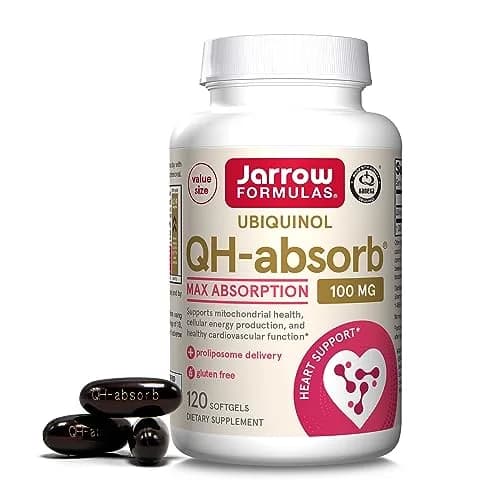
Coenzyme Q10 (CoQ10)
Jarrow Formulas QH-Absorb Ubiquinol 100mg
Staff Pick
100mg ubiquinol per softgel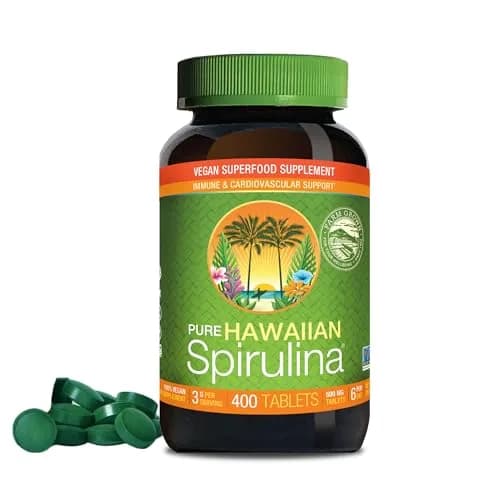
Spirulina
Nutrex Hawaii Pure Hawaiian Spirulina 500mg
3g per serving (6 tablets)
How to Choose
Natural vs Synthetic: Always Choose Natural
Natural astaxanthin from Haematococcus pluvialis microalgae has a different stereoisomer profile than synthetic astaxanthin made from petrochemicals. All clinical studies showing health benefits used the natural form. Synthetic astaxanthin is primarily used in aquaculture feed. Every product in this comparison uses natural algae-sourced astaxanthin.
Dose: 12mg Is the Sweet Spot
Clinical studies use 4-12mg daily, with most benefit data coming from the 6-12mg range. A 12mg daily dose covers skin health, exercise recovery, eye protection, and antioxidant benefits. Lower doses (4-6mg) may still provide benefits but with slower onset and potentially smaller effect sizes.
Fat-Soluble: Take with Fat or Choose an Oil-Based Formula
Astaxanthin is highly fat-soluble — absorption increases dramatically when taken with dietary fat. Products formulated in coconut oil or olive oil eliminate the need to time your dose with meals. If your product is not oil-based, take it with your fattiest meal of the day.
Ready to Buy?
BioAstin Hawaiian Astaxanthin 12mg
9.2/10$0.69 / countBest for: Most validated natural astaxanthin — farm-direct from Hawaii
The best astaxanthin supplement provides 12mg of natural, algae-sourced astaxanthin per serving with a fat-based carrier for absorption and third-party or branded-ingredient verification.
Evidence:Meta-analysis (2022) · high confidence[#1]. See full reference list below.Read Our Full Astaxanthin Research Guide
Evidence level, dosage, side effects, and more →
Already taking supplements?
Check how Astaxanthin fits with your current stack — interactions, timing, and optimization →
Related Supplements
Coenzyme Q10 (CoQ10)Moderate
Bottom line: CoQ10 is essential for anyone on statins and has strong evidence for heart health. Take 100-300mg ubiquinol daily — especially important for adults over 40.
Top picks →Related Conditions
Learn More
Frequently Asked Questions
Is astaxanthin safe for daily use?
Is astaxanthin safe for daily use?
Yes. Astaxanthin has an excellent safety profile in clinical trials at doses up to 40mg daily for extended periods. The most common dose in long-term studies is 4-12mg daily with no significant adverse effects. It has no known drug interactions at standard supplement doses, though anyone on blood thinners should consult their doctor as astaxanthin has mild antiplatelet effects.
How long does astaxanthin take to work?
How long does astaxanthin take to work?
Astaxanthin accumulates in tissues over time. Skin benefits (UV protection, elasticity) typically require 4-12 weeks of daily supplementation. Exercise recovery benefits may be noticeable within 2-4 weeks, supported by meta-analysis evidence [3] on fatigue and motor function improvements. Antioxidant blood markers improve within the first 2 weeks in most studies.
Evidence:Meta-analysis (2024) · high confidence[#3]. See full reference list below.Should I take astaxanthin with food?
Should I take astaxanthin with food?
Yes, ideally with a fat-containing meal. Astaxanthin is fat-soluble and absorbs 2-3x better with dietary fat. Products formulated in coconut oil (like Sports Research) partially address this, but taking any astaxanthin supplement with food further improves absorption.
Is natural astaxanthin better than synthetic?
Is natural astaxanthin better than synthetic?
Yes. Natural astaxanthin from Haematococcus pluvialis algae is predominantly the 3S,3'S stereoisomer and includes supporting carotenoids. Synthetic astaxanthin is a different mix of stereoisomers with no clinical study support in humans. Every clinical trial showing health benefits used the natural form. All products in this comparison use natural astaxanthin.
Can astaxanthin replace sunscreen?
Can astaxanthin replace sunscreen?
No. Astaxanthin provides internal UV protection by quenching singlet oxygen generated by UV exposure, but it does not block UV rays like sunscreen. Studies show astaxanthin at 4-6mg daily can reduce UV-induced skin damage and improve resilience, but it should be used alongside sunscreen, not as a replacement.
Continue Reading
References
- Meta-analysisMa B, Lu J, Kang T, Zhu M, et al. (2022). Astaxanthin supplementation mildly reduced oxidative stress and inflammation biomarkers: a systematic review and meta-analysis of randomized controlled trials.. Nutrition Research. DOI PubMed
- Meta-analysisZhou X, Cao Q, Orfila C, Zhao J, et al. (2021). Systematic Review and Meta-Analysis on the Effects of Astaxanthin on Human Skin Ageing.. Nutrients. DOI PubMed
- Meta-analysisLiu C, Dong X, Jia J, Ha M (2024). Effects of Astaxanthin Supplementation on Fatigue, Motor Function and Cognition: A Meta-Analysis of Randomized Controlled Trials.. Biological Research for Nursing. DOI PubMed