
We evaluated fish oil supplements on EPA+DHA content per serving, molecular form (rTG vs ethyl ester), purity testing (IFOS certification), oxidation freshness markers, and value per milligram of omega-3s. Our recommendations are evidence-based and include non-affiliate options.
Best Fish Oil Supplements (2026)
Product pricing and availability checked
Methodology: Evidence-ranked evaluation
·
2,600+Clinical Studies Cited
·6Fish Oil products evaluated
This content is for informational purposes only and does not constitute medical advice. Statements about dietary supplements have not been evaluated by the FDA and are not intended to diagnose, treat, cure, or prevent any disease. Individual results may vary — consult your healthcare provider before starting any supplement. Full disclaimer
As an Amazon Associate, we earn from qualifying purchases. Some links below are affiliate links — this doesn't affect our editorial independence or product ratings. How we evaluate products
Our Verdict
The best fish oil supplement provides at least 1000mg combined EPA+DHA per serving in triglyceride or re-esterified triglyceride form, from MSC-certified sustainable fisheries with IFOS 5-star purity testing.
Best By Category
The best fish oil supplement delivers 1000-2000mg combined EPA+DHA per daily dose in natural triglyceride (TG) or...
The best fish oil supplement delivers 1000-2000mg combined EPA+DHA per daily dose in natural triglyceride (TG) or re-esterified triglyceride (rTG) form — both absorb up to 70% better than ethyl ester (EE) concentrates. IFOS 5-star certification verifies oxidation, PCBs, and heavy metals.
How We Chose These Products
Products are ranked using our published scoring methodology — evidence strength, dose adequacy, ingredient form, third-party testing signals, value, and clean-label factors are weighted across the 5 criteria below. Commercial relationships do not determine our editorial rankings.
EPA+DHA Content per Serving
30%Total combined EPA and DHA milligrams per serving. Higher concentrations mean fewer pills or smaller volumes to reach therapeutic doses of 1-3g daily.
Molecular Form (rTG vs EE)
25%Re-esterified triglyceride (rTG) form has 70% better absorption than ethyl ester (EE) in clinical trials. Natural triglyceride form from whole fish is also well absorbed. EE is cheaper but requires higher doses.
Purity Testing (IFOS)
20%International Fish Oil Standards (IFOS) 5-Star certification tests for oxidation, heavy metals, PCBs, and dioxins. NSF Certified for Sport adds banned substance screening for athletes.
Oxidation & Freshness
15%TOTOX (total oxidation) values below 26 indicate fresh oil. Rancid fish oil may be pro-inflammatory rather than anti-inflammatory. Look for nitrogen-flushed packaging and short supply chains.
Value per mg EPA+DHA
10%Cost-effectiveness measured as price per 1,000mg of combined EPA+DHA. A cheap product with low concentration can cost more per active milligram than a premium concentrate.
#1 Top Pick
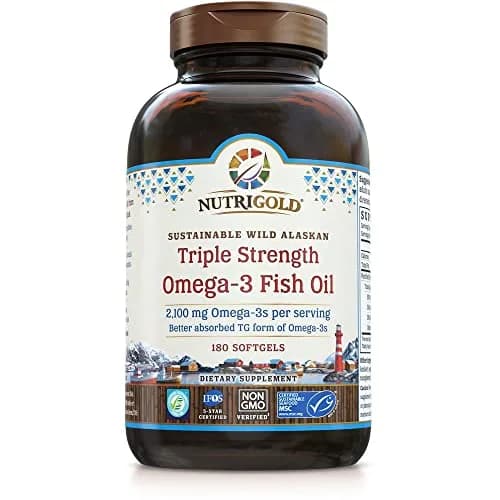
Highest EPA+DHA concentration available at 2,100mg per 2-softgel serving. Triple-certified by IFOS 5-Star, ConsumerLab, and MSC (sustainable fishing). Re-esterified triglyceride form for 70% better absorption than ethyl ester. EPA-dominant (2.6:1) ratio aligns with REDUCE-IT cardiovascular evidence.
IngredientUltra-Concentrated rTG Fish Oil
Dose2,100mg omega-3s per 2 softgels (EPA 1,450mg + DHA 550mg)
FormSoftgel (Burpless)
TestingIFOS 5-Star, ConsumerLab Approved, MSC Certified
2,100mg omega-3s per 2 softgels (EPA 1,450mg + DHA 550mg)Clinical range: 1-3g combined EPA+DHA daily
Therapeutic dose
Pros
- Highest EPA+DHA per serving (2,100mg)
- Triple certified (IFOS, ConsumerLab, MSC)
- rTG form for superior absorption
Cons
- Most expensive option ($1.00/serving)
- Only 30-day supply per bottle
Fish (anchovy, sardine, mackerel)Gluten-freeNon-GMO
Quick Comparison
#1NutriGold Triple Strength Omega-3 Gold
9.4/10
Nutrigold
#1 Top Pick
2,206 Amazon reviews
Best for: Anyone wanting maximum EPA+DHA in the fewest capsules
Ultra-Concentrated rTG Fish Oil · 2,100mg omega-3s per 2 softgels (EPA 1,450mg + DHA 550mg)
Softgel (Burpless) · CLIFOS 5-Star, ConsumerLab Approved, MSC Certified
$53.95
#2Carlson The Very Finest Fish Oil Liquid
9.2/10
Carlson
7,359 Amazon reviews
Best for: People who dislike swallowing pills or need flexible dosing
Norwegian Wild-Caught Fish Oil (TG Form) · 1,600mg omega-3s per tsp (EPA 800mg + DHA 600mg + DPA 70mg)
Liquid (Lemon Flavor) · IFOS Certified, IGEN Non-GMO
$59.42
$3.52 / fluid ounce
#3Thorne Super EPA
9/10
THORNE
2,903 Amazon reviews
Best for: Athletes, military, and anyone subject to drug testing
Pharmaceutical-Grade Fish Oil Concentrate · 695mg omega-3s per gelcap (EPA 425mg + DHA 270mg)
Gelcap · NSFNSF Certified for Sport
$41.00
$0.46 / count
#4Life Extension Super Omega-3 EPA/DHA
8.8/10
Life Extension
1,669 Amazon reviews
Best for: Those wanting omega-3s plus additional antioxidant support
Fish Oil Concentrate + Olive Polyphenols + Sesame Lignans · 1,200mg omega-3s per 2 softgels (EPA 700mg + DHA 500mg)
Softgel · IFOS 5-Star
$29.25
$0.24 / count
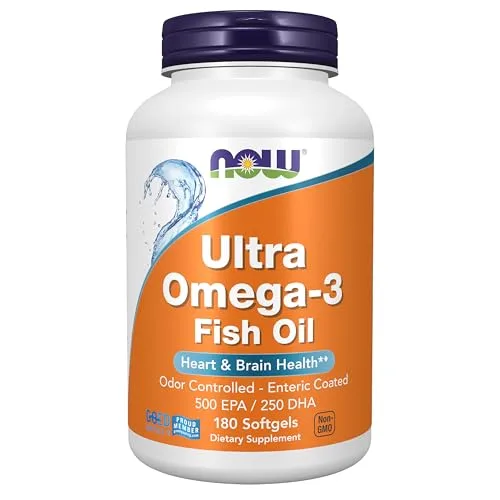
#5NOW Foods Ultra Omega-3
8.6/10
NOW
4,058 Amazon reviews
Best for: Budget-conscious buyers who want solid dosing with zero fish burps
Molecularly Distilled Concentrated Fish Oil · 750mg omega-3s per softgel (EPA 500mg + DHA 250mg)
Softgel (Enteric Coated) · GMP Certified, Molecularly Distilled
$28.94
$0.16 / count
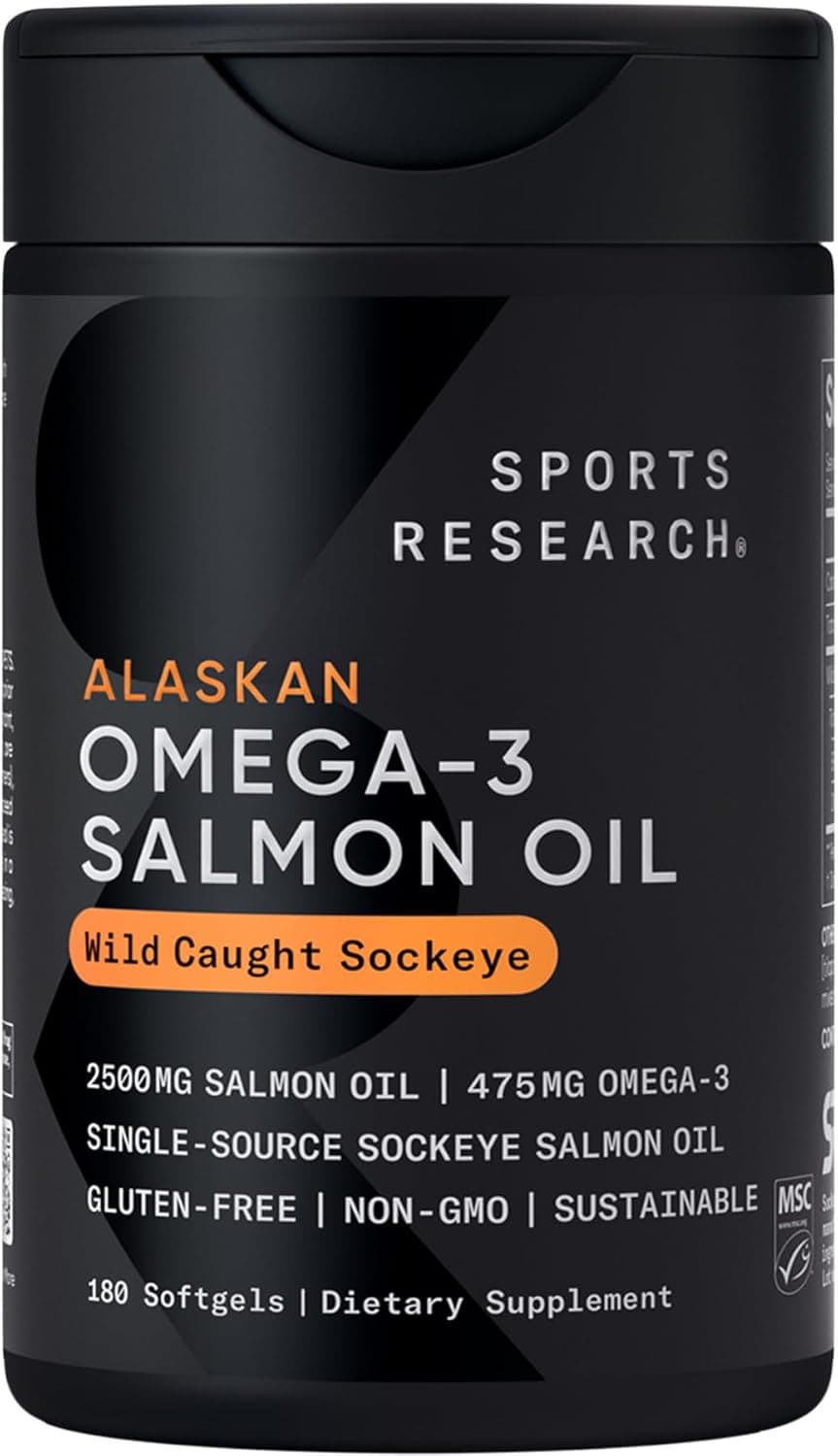
#6Sports Research Salmon Oil 2500mg Wild Alaskan Sockeye
7.9/10
Sports Research
494 Amazon reviews
Best for: Single-source fish oil seekers who want MSC-certified, wild Alaskan Sockeye Salmon oil in natural triglyceride form at a high 2500mg-per-serving dose
Wild Alaskan Sockeye Salmon Oil (Natural Triglyceride Form) · 2500mg salmon oil per 2-softgel serving delivering EPA & DHA; exact EPA/DHA mg not disclosed on Amazon listing
Softgel · MSC Certified Sustainable, IGEN Non-GMO Tested, cGMP USA
$29.95
$0.17 / count
| # | Product | Best For | Ingredient & Dose | Form & Testing | Price | Rating | |
|---|---|---|---|---|---|---|---|
| 1 | NutriGold Triple Strength Omega-3 Gold #1 Top Pick 2,206 Amazon reviews | Anyone wanting maximum EPA+DHA in the fewest capsules | Ultra-Concentrated rTG Fish Oil 2,100mg omega-3s per 2 softgels (EPA 1,450mg + DHA 550mg) | Softgel (Burpless) CLIFOS 5-Star, ConsumerLab Approved, MSC Certified | $53.95 | 9.4/10 | |
| 2 | Carlson The Very Finest Fish Oil Liquid 7,359 Amazon reviews | People who dislike swallowing pills or need flexible dosing | Norwegian Wild-Caught Fish Oil (TG Form) 1,600mg omega-3s per tsp (EPA 800mg + DHA 600mg + DPA 70mg) | Liquid (Lemon Flavor) IFOS Certified, IGEN Non-GMO | $59.42 $3.52 / fluid ounce | 9.2/10 | |
| 3 | Thorne Super EPA 2,903 Amazon reviews | Athletes, military, and anyone subject to drug testing | Pharmaceutical-Grade Fish Oil Concentrate 695mg omega-3s per gelcap (EPA 425mg + DHA 270mg) | Gelcap 90 Softgels NSFNSF Certified for Sport | $41.00 $0.46 / count | 9/10 | |
| 4 | Life Extension Super Omega-3 EPA/DHA 1,669 Amazon reviews | Those wanting omega-3s plus additional antioxidant support | Fish Oil Concentrate + Olive Polyphenols + Sesame Lignans 1,200mg omega-3s per 2 softgels (EPA 700mg + DHA 500mg) | Softgel 120 Softgels IFOS 5-Star | $29.25 $0.24 / count | 8.8/10 | |
| 5 | NOW Foods Ultra Omega-3 4,058 Amazon reviews | Budget-conscious buyers who want solid dosing with zero fish burps | Molecularly Distilled Concentrated Fish Oil 750mg omega-3s per softgel (EPA 500mg + DHA 250mg) | Softgel (Enteric Coated) 180 Softgels GMP Certified, Molecularly Distilled | $28.94 $0.16 / count | 8.6/10 | |
| 6 | Sports Research Salmon Oil 2500mg Wild Alaskan Sockeye 494 Amazon reviews | Single-source fish oil seekers who want MSC-certified, wild Alaskan Sockeye Salmon oil in natural triglyceride form at a high 2500mg-per-serving dose | Wild Alaskan Sockeye Salmon Oil (Natural Triglyceride Form) 2500mg salmon oil per 2-softgel serving delivering EPA & DHA; exact EPA/DHA mg not disclosed on Amazon listing | Softgel 180.0 Count MSC Certified Sustainable, IGEN Non-GMO Tested, cGMP USA | $29.95 $0.17 / count | 7.9/10 |
Detailed Reviews
#1 Top Pick
Nutrigold Triple Strength Omega-3 Fish Oil Supplement, Better Absorbed TG Form, Made in USA, 5-Star Certified, ConsumerLab Approved, Certified Sustainable
Nutrigold
2,206 Amazon reviews
9.4/10
(2,206)
Fish (anchovy, sardine, mackerel)Gluten-freeNon-GMO
Highest EPA+DHA concentration available at 2,100mg per 2-softgel serving. Triple-certified by IFOS 5-Star, ConsumerLab, and MSC (sustainable fishing). Re-esterified triglyceride form for 70% better absorption than ethyl ester. EPA-dominant (2.6:1) ratio aligns with REDUCE-IT cardiovascular evidence.
IngredientUltra-Concentrated rTG Fish Oil
Dose2,100mg omega-3s per 2 softgels (EPA 1,450mg + DHA 550mg)
FormSoftgel (Burpless)
TestingIFOS 5-Star, ConsumerLab Approved, MSC Certified
2,100mg omega-3s per 2 softgels (EPA 1,450mg + DHA 550mg)Clinical range: 1-3g combined EPA+DHA daily
Therapeutic dose
Ideal for: Anyone wanting maximum EPA+DHA in the fewest capsules
Not ideal for: Budget buyers — premium concentration comes at a premium price.
Pros
- Highest EPA+DHA per serving (2,100mg)
- Triple certified (IFOS, ConsumerLab, MSC)
- rTG form for superior absorption
- Heavily EPA-dominant (2.6:1 ratio)
- Burpless enteric technology
Cons
- Most expensive option ($1.00/serving)
- Only 30-day supply per bottle
- Large softgel size
Carlson - The Very Finest Fish Oil, 1600 mg Omega-3s, Liquid Supplement, Norwegian, Wild-Caught, Sustainably Sourced , Lemon, 16.9 Fl Oz
Carlson
7,359 Amazon reviews
9.2/10
(7,359)
Fish (anchovy, sardine, mackerel)Gluten-freeNon-GMO
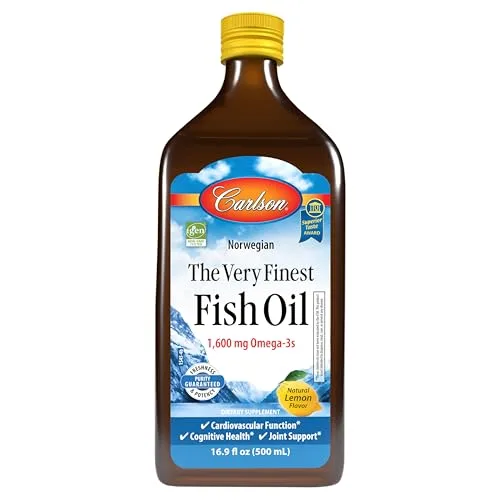
Award-winning lemon taste from Norwegian wild-caught fish in natural triglyceride form. Liquid format allows precise dose adjustment from 800mg to 3,200mg+ omega-3s. IFOS certified for purity with consistently low TOTOX scores.
IngredientNorwegian Wild-Caught Fish Oil (TG Form)
Dose1,600mg omega-3s per tsp (EPA 800mg + DHA 600mg + DPA 70mg)
FormLiquid (Lemon Flavor)
TestingIFOS Certified, IGEN Non-GMO
1,600mg omega-3s per tsp (EPA 800mg + DHA 600mg + DPA 70mg)Clinical range: 1-3g combined EPA+DHA daily
Therapeutic dose
$3.52 / fluid ounce
Ideal for: People who dislike swallowing pills or need flexible dosing
Not ideal for: Travelers or those needing maximum portability.
Pros
- Award-winning natural lemon taste
- Natural TG form for superior absorption
- Flexible dosing (1/2 tsp to 2+ tsp)
- IFOS certified purity
- Norwegian wild-caught sourcing
Cons
- Requires refrigeration after opening
- Not portable for travel
- Higher cost per serving than softgels
THORNE - Super EPA - Omega-3 Fish Oil Supplement with EPA & DHA from Sustainably Sourced Fish - Supports Brain, Skin, Joint & Heart Health* - Third-Party Certified - Gluten & Dairy-Free - 90 Softgels
#1 Best Sellerin EPA Nutritional SupplementsTHORNE
2,903 Amazon reviews
9/10
(2,903)
FishGluten-freeSoy-free
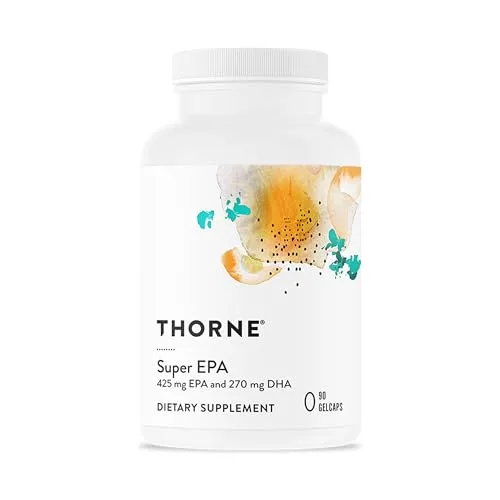
NSF Certified for Sport means every batch is tested for 200+ banned substances — the gold standard for competitive athletes. Thorne is one of only two supplement brands carried by Mayo Clinic. EPA-dominant ratio (425:270) supports anti-inflammatory pathways.
IngredientPharmaceutical-Grade Fish Oil Concentrate
Dose695mg omega-3s per gelcap (EPA 425mg + DHA 270mg)
FormGelcap
TestingNSF Certified for Sport
695mg omega-3s per gelcap (EPA 425mg + DHA 270mg)Clinical range: 1-3g combined EPA+DHA daily
Partial dose
$0.46 / count$41.00 · 90 Softgels
Ideal for: Athletes, military, and anyone subject to drug testing
Not ideal for: Budget-conscious buyers seeking the lowest cost per mg.
Pros
- NSF Certified for Sport (200+ banned substance testing)
- Carried by Mayo Clinic
- EPA-dominant formula (1.6:1 EPA:DHA)
- Pharmaceutical-grade purity
- No fishy taste or burps
Cons
- Premium price ($0.42/gelcap)
- 90ct lasts only 45 days at 2/day
- Lower concentration than ultra-concentrates
Life Extension Super Omega-3 EPA/DHA Fish Oil, Sesame Lignans & Olive Extract – Cognitive Health, Cholesterol Health Support, Gluten-Free, Non-GMO, 120 Softgels
Life Extension
1,669 Amazon reviews
8.8/10
(1,669)
Fish (anchovy, sardine)SoySesame
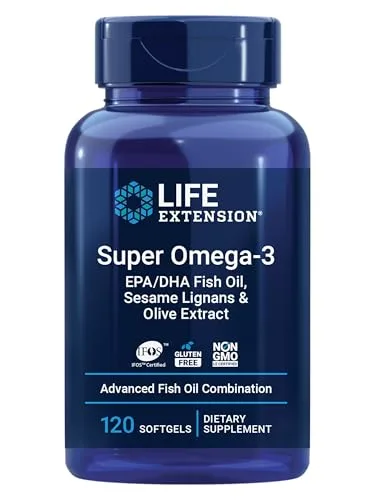
Unique formula combines IFOS 5-Star fish oil with olive fruit polyphenols (equivalent to 4-6 tablespoons of extra virgin olive oil) and sesame lignans that protect DHA from oxidation. This Mediterranean-diet-in-a-capsule approach targets multiple inflammatory pathways simultaneously.
IngredientFish Oil Concentrate + Olive Polyphenols + Sesame Lignans
Dose1,200mg omega-3s per 2 softgels (EPA 700mg + DHA 500mg)
FormSoftgel
TestingIFOS 5-Star
1,200mg omega-3s per 2 softgels (EPA 700mg + DHA 500mg)Clinical range: 1-3g combined EPA+DHA daily
Therapeutic dose
$0.24 / count$29.25 · 120 Softgels
Ideal for: Those wanting omega-3s plus additional antioxidant support
Not ideal for: Minimalists who prefer single-ingredient supplements.
Pros
- IFOS 5-Star certified purity
- Added olive polyphenols (hydroxytyrosol)
- Sesame lignans protect DHA from oxidation
- Mediterranean-diet synergy approach
- Affordable at $0.37/serving
Cons
- Requires 2 softgels per serving
- Contains soy-derived ingredients
- Lower concentration than ultra-concentrates
NOW Foods Supplements, Ultra Omega-3 Molecularly Distilled and Enteric Coated, 180 Softgels
NOW
4,058 Amazon reviews
8.6/10
(4,058)
Fish (anchovy, sardine, mackerel)Soy-freeGluten-free
Best value fish oil at $0.16/softgel delivering 750mg omega-3s. Enteric coating ensures the softgel dissolves in the intestine rather than the stomach, virtually eliminating fishy aftertaste and burps. 180-count bottle provides a 6-month supply at 1/day. NOW Foods is a family-owned GMP-certified manufacturer since 1968.
IngredientMolecularly Distilled Concentrated Fish Oil
Dose750mg omega-3s per softgel (EPA 500mg + DHA 250mg)
FormSoftgel (Enteric Coated)
TestingGMP Certified, Molecularly Distilled
750mg omega-3s per softgel (EPA 500mg + DHA 250mg)Clinical range: 1-3g combined EPA+DHA daily
Partial dose
$0.16 / count$28.94 · 180 Softgels
Ideal for: Budget-conscious buyers who want solid dosing with zero fish burps
Not ideal for: Those requiring ultra-high doses (would need 3-4 softgels/day for 2g+).
Pros
- Lowest cost ($0.16/softgel)
- Enteric coated — zero fish burps
- 180ct = 6 months at 1/day
- 750mg omega-3s per single softgel
- GMP certified since 1968
Cons
- Ethyl ester form (lower absorption than rTG)
- No IFOS third-party certification
- Would need 3+ softgels for high-dose protocols
Sports Research® Salmon Oil - Single-Source Wild Alaskan Sockeye | 2500 mg per Serving w/EPA & DHA Fatty Acids | MSC Certified - 180 Count Softgels
Sports Research
494 Amazon reviews
7.9/10
(494)
Fish (Salmon)
Natural triglyceride form salmon oil offers a genuine bioavailability advantage over the ethyl ester concentrates dominating this category, and single-source Sockeye provenance from MSC-certified Alaskan waters is both traceable and sustainable. The 2500mg total oil dose delivers a meaningful omega-3 payload in each serving.
IngredientWild Alaskan Sockeye Salmon Oil (Natural Triglyceride Form)
Dose2500mg salmon oil per 2-softgel serving delivering EPA & DHA; exact EPA/DHA mg not disclosed on Amazon listing
FormSoftgel
TestingMSC Certified Sustainable, IGEN Non-GMO Tested, cGMP USA
2500mg salmon oil per 2-softgel serving delivering EPA & DHA; exact EPA/DHA mg not disclosed on Amazon listingClinical range: 1-3g combined EPA+DHA daily
Therapeutic dose
$0.17 / count$29.95 · 180.0 Count
Ideal for: Single-source fish oil seekers who want MSC-certified, wild Alaskan Sockeye Salmon oil in natural triglyceride form at a high 2500mg-per-serving dose
Not ideal for: Users seeking IFOS-certified ultra-purified fish oil concentrates — this product does not carry IFOS certification
Pros
- Natural triglyceride form — 70% higher absorption than ethyl ester fish oils (the industry-standard form in most fish oil concentrates)
- Single-source Sockeye Salmon with MSC chain-of-custody certification — fully traceable from Alaskan fishery to softgel
- Cold-pressed processing preserves fatty acid integrity without excessive heat or solvents
- 180-count bottle provides approximately 90 days at 2 softgels/day
Cons
- EPA/DHA milligrams per serving not prominently disclosed on Amazon listing — makes comparison to clinical dosing targets difficult
- No IFOS certification — the most rigorous fish oil purity standard — unlike Sports Research's Triple Strength or Cod Liver Oil products
- Fish gelatin softgel not suitable for those requiring bovine-free or plant-based capsules
Pairs Well With
Frequently taken together based on complementary benefits
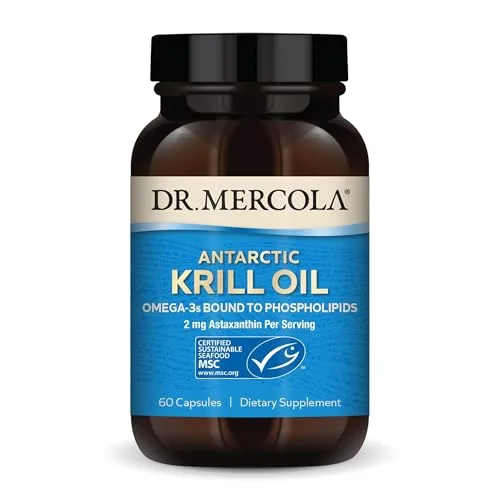
Krill Oil
Dr. Mercola Antarctic Krill Oil 1000mg
1000mg krill oil per 2 capsules
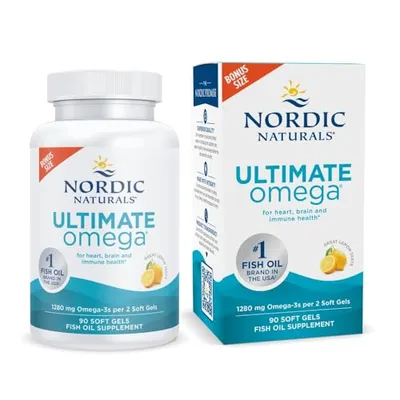
How to Choose
rTG vs Ethyl Ester: Why Molecular Form Matters
Fish oil comes in two main forms. Re-esterified triglycerides (rTG) mirror the natural form found in fish and absorb 70% better than ethyl esters (EE) in head-to-head trials (Dyerberg 2010). Ethyl esters are cheaper to produce and dominate budget products. If you choose EE, take it with a fat-containing meal to partially offset the absorption gap. Premium products like NutriGold and Carlson use TG/rTG forms.
IFOS Certification: The Purity Gold Standard
The International Fish Oil Standards (IFOS) program independently tests every batch for 200+ contaminants including mercury, PCBs, dioxins, and oxidation markers. A 5-Star rating means the oil passes the strictest thresholds. NSF Certified for Sport adds banned-substance testing for athletes. Products without third-party testing may contain oxidized oil or contaminants above safe levels.
EPA vs DHA: Match the Ratio to Your Goal
EPA and DHA serve different biological roles. EPA is the primary anti-inflammatory omega-3, driving production of resolvins and protectins — the REDUCE-IT trial used pure EPA (icosapent ethyl). DHA concentrates in brain and retinal tissue. For cardiovascular and anti-inflammatory goals, choose EPA-dominant products. For brain health and pregnancy, prioritize DHA. Most general-purpose fish oils provide a 2:1 or 3:2 EPA:DHA ratio.
Oxidation Markers: Is Your Fish Oil Rancid?
The TOTOX value (total oxidation) should be below 26 meq/kg. Rancid fish oil contains lipid peroxides that may be pro-inflammatory — the opposite of what you want. Look for brands that publish TOTOX values, use nitrogen-flushed bottles, and have short supply chains. Liquid fish oils are easiest to assess: if it smells strongly fishy or bitter, it is likely oxidized. Discard any oil past its expiration date.
Ready to Buy?
NutriGold Triple Strength Omega-3 Gold
9.4/10Best for: Anyone wanting maximum EPA+DHA in the fewest capsules
The best fish oil supplement provides at least 1000mg combined EPA+DHA per serving in triglyceride or re-esterified triglyceride form, from MSC-certified sustainable fisheries with IFOS 5-star purity testing.
Evidence:Study (2019)[#1]. See full reference list below.Read Our Full Fish Oil Research Guide
Evidence level, dosage, side effects, and more →
Already taking supplements?
Check how Fish Oil fits with your current stack — interactions, timing, and optimization →
Related Supplements
Krill OilModerate
Bottom line: Krill oil delivers omega-3s in phospholipid form for superior absorption — supporting heart health, inflammation, and PMS at 1-3g daily.
Top picks →Omega-3Strong
Bottom line: Omega-3s have strong evidence for heart, brain, and joint health. Take 1,000-2,000mg EPA+DHA daily — choose triglyceride form fish oil or algal oil for vegans.
Top picks →MCT OilModerate
Bottom line: MCT oil (especially C8) provides rapid ketone fuel for brain and body. Start slow — 1 tsp daily, building to 1-2 tbsp.
Top picks →Related Conditions
Learn More
Frequently Asked Questions
How much fish oil should I take per day?
How much fish oil should I take per day?
Most clinical guidelines recommend 1-3g of combined EPA+DHA daily for general health. The American Heart Association recommends 1g/day for cardiovascular protection and up to 4g/day (under medical supervision) for lowering triglycerides. Note: total fish oil milligrams and EPA+DHA milligrams are different — a 1,000mg fish oil capsule may contain only 300mg of EPA+DHA.
Evidence:Study (2019)[#1]. See full reference list below.What is the difference between fish oil and omega-3?
What is the difference between fish oil and omega-3?
Fish oil is the source; omega-3s are the active compounds within it. Fish oil contains two key omega-3 fatty acids: EPA (eicosapentaenoic acid) and DHA (docosahexaenoic acid). It also contains other fats that are not omega-3s. When comparing products, always look at EPA+DHA content, not total fish oil weight.
Why do some fish oil supplements cause fishy burps?
Why do some fish oil supplements cause fishy burps?
Fishy burps occur when the softgel dissolves in the stomach, releasing oil that refluxes upward. Enteric-coated softgels (like NOW Ultra Omega-3) bypass the stomach entirely and dissolve in the small intestine, eliminating this issue. Taking fish oil with food, choosing liquid forms, or selecting burpless formulations also helps.
Is rTG fish oil really better than ethyl ester?
Is rTG fish oil really better than ethyl ester?
Yes, re-esterified triglyceride (rTG) fish oil has approximately 70% higher bioavailability than ethyl ester (EE) form in clinical studies (Dyerberg 2010). rTG also has better oxidative stability. However, EE products taken with a fat-containing meal narrow the absorption gap significantly. If budget is your primary concern, EE fish oil is still beneficial.
Can fish oil lower triglycerides?
Can fish oil lower triglycerides?
Yes. A 2020 Cochrane review (Abdelhamid et al.) of 86 trials confirmed omega-3 supplementation reduces triglycerides by 15-30%. The prescription-strength REDUCE-IT trial (Bhatt 2019) demonstrated that high-dose EPA (4g/day icosapent ethyl) reduced cardiovascular events by 25% in patients with elevated triglycerides.
Does fish oil help with depression?
Does fish oil help with depression?
EPA-dominant fish oil formulations show the strongest evidence for depression. A 2019 meta-analysis by Liao et al. found that supplements with EPA >= 60% of total omega-3s significantly improved depressive symptoms compared to placebo. DHA-dominant formulas did not show the same effect. The effective dose in most studies was 1-2g EPA daily.
How do I know if my fish oil is rancid?
How do I know if my fish oil is rancid?
Check the TOTOX (total oxidation) value — it should be below 26 meq/kg. For liquid oils, smell and taste are reliable indicators: fresh fish oil should have a mild, clean ocean scent, not a strong fishy or paint-like odor. For capsules, bite one open and taste it. Always check expiration dates and store fish oil away from heat and light.
Is fish oil safe to take with blood thinners?
Is fish oil safe to take with blood thinners?
Fish oil has mild blood-thinning effects at high doses (above 3g EPA+DHA/day). If you take anticoagulants like warfarin or antiplatelet drugs like aspirin, consult your doctor before starting fish oil. At standard doses (1-2g/day), clinical trials have not shown significant bleeding risk, but monitoring is still recommended for those on blood-thinning medications.
Continue Reading
References
- Bhatt DL, Steg PG, Miller M, et al. (2019). Cardiovascular Risk Reduction with Icosapent Ethyl for Hypertriglyceridemia (REDUCE-IT). New England Journal of Medicine. DOI PubMed
- Abdelhamid AS, Brown TJ, Brainard JS, et al. (2020). Omega-3 fatty acids for the primary and secondary prevention of cardiovascular disease. Cochrane Database of Systematic Reviews. DOI PubMed
- Liao Y, Xie B, Zhang H, et al. (2019). Efficacy of omega-3 PUFAs in depression: a meta-analysis. Translational Psychiatry. DOI PubMed
- Calder PC (2017). Omega-3 fatty acids and inflammatory processes: from molecules to man. Biochemical Society Transactions. DOI PubMed
- Goldberg RJ, Katz J (2007). A meta-analysis of the analgesic effects of omega-3 polyunsaturated fatty acid supplementation for inflammatory joint pain. Pain. DOI PubMed
- Serhan CN, Levy BD (2018). Resolvins in inflammation: emergence of the pro-resolving superfamily of mediators. Journal of Clinical Investigation. DOI PubMed
- Hu Y, Hu FB, Manson JE (2019). Marine Omega-3 Supplementation and Cardiovascular Disease: An Updated Meta-Analysis of 13 Randomized Controlled Trials Involving 127,477 Participants. Journal of the American Heart Association. DOI PubMed