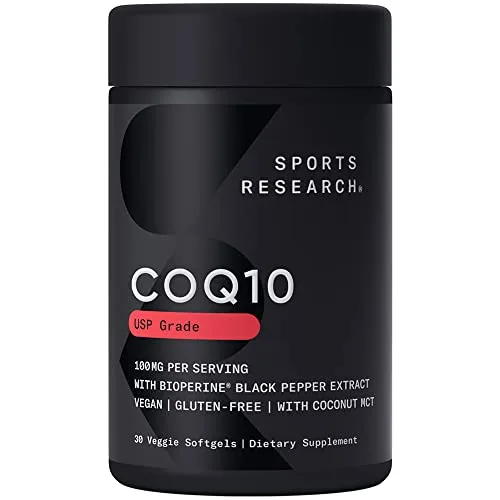
SupplementScience
Coenzyme Q10 (CoQ10) supplement
Coenzyme / Antioxidant

Coenzyme Q10 (CoQ10): Benefits, Dosage, Forms & Research

Coenzyme / Antioxidant

This content is for informational purposes only and does not constitute medical advice. Consult your healthcare provider before starting any supplement. Full disclaimer

TL;DR — Quick Answer

CoQ10 is a mitochondrial coenzyme essential for cellular energy production and a powerful antioxidant. The landmark Q-SYMBIO trial (2014) showed CoQ10 reduced major cardiovascular events by 43% in heart failure patients. Standard dose is 100-300mg daily, with ubiquinol being approximately 2x more bioavailable than ubiquinone.

Key Facts

What it is
A fat-soluble coenzyme essential for mitochondrial ATP production and a potent antioxidant
Primary benefits
  • Supports mitochondrial energy production
  • Improves heart failure outcomes (Q-SYMBIO trial)
  • Reduces blood pressure (~11/7 mmHg)
  • Relieves statin-induced muscle pain
  • Potent lipid-soluble antioxidant
  • May support fertility
Typical dosage
100-300mg daily (ubiquinol preferred for absorption)
Evidence level
Moderate
Safety profile
Generally Safe

What the Research Says

CoQ10 has a robust evidence base, particularly for cardiovascular applications. The Q-SYMBIO trial (Mortensen et al., 2014) is the landmark study — a multicenter, randomized, double-blind trial of 420 heart failure patients that demonstrated 300mg CoQ10 daily for 2 years significantly reduced major cardiovascular events and mortality. Rosenfeldt et al. (2007) published a comprehensive meta-analysis confirming blood pressure-lowering effects. Littarru and Tiano (2007) provided a thorough review of CoQ10's bioenergetic and antioxidant roles. The ubiquinol vs ubiquinone debate centers on bioavailability — ubiquinol is the reduced, active form and is approximately 2x more bioavailable, making it the preferred form for older adults whose conversion capacity may be diminished.

Benefits of Coenzyme Q10 (CoQ10)

  • Mitochondrial energy production — CoQ10 is an essential electron carrier in the mitochondrial electron transport chain, directly facilitating ATP synthesis in every cell; supplementation restores age-related declines in cellular energy capacity
  • Heart failure improvement — the landmark Q-SYMBIO trial (Mortensen et al., 2014), a multicenter RCT of 420 patients, found that 300mg CoQ10 daily for 2 years reduced major adverse cardiovascular events by 43% and halved cardiovascular mortality in chronic heart failure patients
  • Blood pressure reduction — a meta-analysis by Rosenfeldt et al. (2007) of 12 clinical trials found CoQ10 supplementation reduced systolic blood pressure by up to 11 mmHg and diastolic by up to 7 mmHg, without significant side effects
  • Statin-induced myopathy relief — CoQ10 supplementation at 100-200mg daily has been shown to reduce muscle pain and weakness caused by statin medications, which deplete CoQ10 by inhibiting the shared mevalonate synthesis pathway
  • Antioxidant protection — as one of the few lipid-soluble antioxidants synthesized endogenously, CoQ10 protects cell membranes and LDL particles from oxidative damage, reducing lipid peroxidation
  • Fertility support — emerging evidence suggests CoQ10 supplementation may improve egg quality in women and sperm motility in men by enhancing mitochondrial function in reproductive cells
Did you know?

CoQ10 has a robust evidence base, particularly for cardiovascular applications.

Forms of Coenzyme Q10 (CoQ10)

FormBioavailabilityBest For
Ubiquinol (reduced form)High (2x ubiquinone)Adults over 40 and those with absorption concerns — the active, reduced form that does not require conversion
Ubiquinone (oxidized form)ModerateGeneral supplementation — the standard form used in most early clinical trials; effective but requires conversion to ubiquinol
Softgel with LipidsHighEnhanced absorption — CoQ10 is fat-soluble and absorbs best when formulated with oils or taken with a fatty meal
Water-Soluble CoQ10HighConvenience — nano-emulsified or solubilized forms that do not require fat for absorption

Dosage Recommendations

General recommendation: 100-300mg daily with a meal containing fat

Timing: With the largest meal of the day for best absorption; can split into 2 doses • Take with food for best absorption.

Dosage by Condition

ConditionRecommended DoseEvidence
General antioxidant/energy support100-200mg dailyModerate
Heart failure (adjunct)300mg daily (as in Q-SYMBIO)Moderate
Blood pressure support100-200mg dailyModerate
Statin-induced myopathy100-200mg dailyModerate

Upper limit: 600mg/day (doses up to 1200mg have been used in Parkinson's trials without major safety concerns)

Our Top Coenzyme Q10 (CoQ10) Pick

Our recommendations are based on published research, not commission rates. Some links below are affiliate links — we may earn a commission at no extra cost to you. How we evaluate products

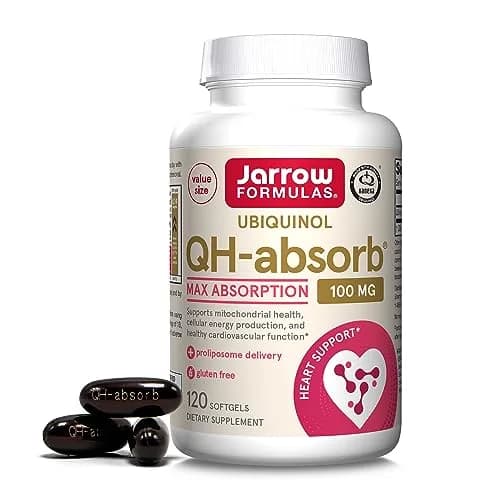
Jarrow Formulas QH-Absorb Ubiquinol 100mg

Jarrow Formulas QH-Absorb Ubiquinol 100mg

Jarrow Formulas

9.3/10
Overall best ubiquinol CoQ10$0.45/serving

Side Effects and Safety

Safety profile: Generally Safe

Potential Side Effects

  • Generally well-tolerated with an excellent safety profile across clinical trials
  • Mild GI symptoms (nausea, diarrhea, appetite loss) in a small percentage of users
  • Insomnia if taken late in the day (due to energy-enhancing effects)
  • Rare: rash or headache

Drug & Supplement Interactions

  • Warfarin / blood thinners — CoQ10 has a similar structure to vitamin K and may reduce warfarin efficacy; monitor INR closely
  • Blood pressure medications — additive hypotensive effects; monitor blood pressure
  • Insulin and diabetes medications — CoQ10 may modestly lower blood sugar; monitor glucose
  • Statins — statins deplete CoQ10; supplementation is complementary, not contraindicated
Check Coenzyme Q10 (CoQ10) interactions with other supplements →
BenefitsDosage GuideSide EffectsTypes & FormsResearchFAQ

Related Conditions

Related Supplements

Frequently Asked Questions

What is the difference between ubiquinol and ubiquinone?

Ubiquinone is the oxidized form of CoQ10 and was the original supplemental form. Ubiquinol is the reduced (active) form that your body actually uses. Young, healthy individuals convert ubiquinone to ubiquinol efficiently, but this conversion declines with age. Ubiquinol is approximately 2x more bioavailable than ubiquinone in pharmacokinetic studies. For adults over 40 or those with absorption concerns, ubiquinol is the preferred form.

Should I take CoQ10 if I am on a statin?

Statin medications inhibit HMG-CoA reductase, which is needed to produce both cholesterol and CoQ10. This is why statins can deplete CoQ10 levels and cause muscle pain (myopathy) in 10-15% of users. Supplementing with 100-200mg CoQ10 daily may help relieve statin-induced muscle symptoms. While not all studies agree, many clinicians recommend CoQ10 as a routine adjunct to statin therapy.

How long does CoQ10 take to work?

CoQ10 levels in the blood rise within the first week of supplementation, but clinical benefits typically require 4-12 weeks of consistent use. Blood pressure effects are usually seen within 4-8 weeks. In the Q-SYMBIO heart failure trial, significant differences emerged after several months. For statin-induced muscle pain, improvement may be noticed within 2-4 weeks.

Can CoQ10 help with energy and fatigue?

CoQ10 supports energy at the cellular level by facilitating ATP production in mitochondria. People with low CoQ10 levels — particularly older adults and statin users — may notice improved energy and reduced fatigue with supplementation. However, CoQ10 is not a stimulant like caffeine. Its energy benefits come from restoring optimal mitochondrial function rather than artificially boosting alertness.

References

  1. (). The effect of coenzyme Q10 on morbidity and mortality in chronic heart failure: results from Q-SYMBIO: a randomized double-blind trial. JACC: Heart Failure. DOI
  2. (). Coenzyme Q10 in the treatment of hypertension: a meta-analysis of the clinical trials. Journal of Human Hypertension. DOI
  3. (). Bioenergetic and antioxidant properties of coenzyme Q10: recent developments. Molecular Biotechnology. DOI
  4. (). Coenzyme Q10 supplementation decreases statin-related mild-to-moderate muscle symptoms: a randomized clinical study. Medical Science Monitor. DOI