SupplementScience
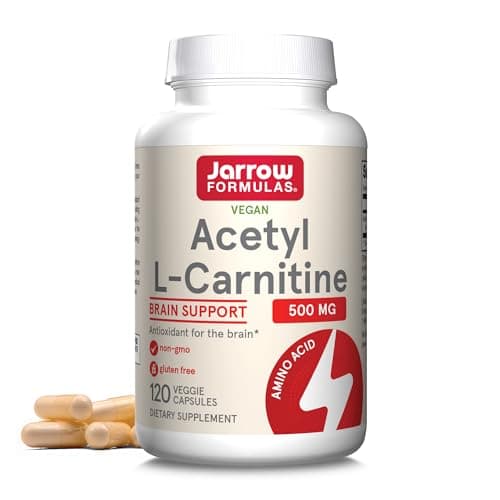
Acetyl-L-Carnitine supplement
Amino Acid Derivative / Nootropic

Acetyl-L-Carnitine: Benefits, Dosage, Forms & Research

Amino Acid Derivative / Nootropic

This content is for informational purposes only and does not constitute medical advice. Consult your healthcare provider before starting any supplement. Full disclaimer

TL;DR — Quick Answer

Acetyl-L-Carnitine (ALCAR) crosses the blood-brain barrier to support both mitochondrial energy production and acetylcholine synthesis. At 500-2000mg daily it enhances cognitive function, protects neurons, and may improve mood. Particularly beneficial for age-related cognitive decline.

Key Facts

What it is
The acetylated form of L-carnitine that crosses the blood-brain barrier for dual energy and neurotransmitter support
Primary benefits
  • Supports brain mitochondrial energy production
  • Donates acetyl groups for acetylcholine synthesis
  • Neuroprotective and neurotrophic
  • May improve age-related cognitive decline
  • Supports mood and reduces mental fatigue
Typical dosage
500-2000mg daily
Evidence level
Moderate
Safety profile
Generally Safe

What the Research Says

ALCAR has a substantial clinical evidence base, particularly for age-related cognitive decline. Montgomery et al. (2003) meta-analyzed 21 RCTs and found significant cognitive improvements in MCI and early Alzheimer's patients. Veronese et al. (2018) conducted a landmark meta-analysis showing ALCAR is comparable to standard antidepressants for depression with fewer side effects. The Ames laboratory pioneered research showing ALCAR + alpha-lipoic acid rejuvenates mitochondrial function in aged animals, though human translation of these findings is still developing.

Benefits of Acetyl-L-Carnitine

  • Brain energy metabolism — ALCAR transports fatty acids into neuronal mitochondria for beta-oxidation, directly supporting the brain's enormous energy demands; this function declines with age, making supplementation increasingly valuable
  • Acetylcholine support — the acetyl group from ALCAR is used to synthesize acetylcholine, making it a precursor-level cholinergic that complements AChE inhibitors and direct choline sources
  • Age-related cognitive support — a 2003 meta-analysis of 21 double-blind RCTs (Montgomery et al., n=1,479) found ALCAR significantly improved cognitive function in patients with mild cognitive impairment and early Alzheimer's
  • Mood and depression — Veronese et al. (2018) conducted a meta-analysis of 12 RCTs finding ALCAR was as effective as antidepressants for depression, with significantly fewer side effects
  • Neuroprotection — ALCAR stabilizes mitochondrial membranes, reduces oxidative damage, and supports nerve growth factor (NGF) activity, protecting neurons from age-related degeneration
Did you know?

ALCAR has a substantial clinical evidence base, particularly for age-related cognitive decline.

Forms of Acetyl-L-Carnitine

FormBioavailabilityBest For
ALCAR CapsulesHighConvenient — standard capsules, typically 500mg; no taste issues
ALCAR PowderHighCost-effective — dissolves in water with a mildly sour taste; flexible dosing
ALCAR + Alpha-Lipoic AcidHighAnti-aging stack — the "Ames cocktail" combination shown to rejuvenate mitochondrial function in aged animals

Dosage Recommendations

General recommendation: 500-2000mg daily, typically divided into 2 doses

Timing: Morning and early afternoon (mildly stimulating); avoid evening doses

Dosage by Condition

ConditionRecommended DoseEvidence
Cognitive enhancement500-1500mg dailyModerate
Depression (adjunct)1000-3000mg dailyModerate
Age-related cognitive decline1500-2000mg dailyModerate
Neuropathic pain1500-3000mg dailyModerate

Upper limit: 3000mg/day (used in clinical trials for depression and neuropathy)

Side Effects and Safety

Safety profile: Generally Safe

Potential Side Effects

  • Generally well-tolerated
  • Mild nausea or digestive upset
  • Restlessness or insomnia (stimulatory effect — avoid evening dosing)
  • Fishy body odor at higher doses (trimethylamine metabolite)
  • Headache (usually transient)
  • Potential concern: TMAO production — some carnitine is converted to trimethylamine N-oxide by gut bacteria, which has been linked to cardiovascular risk in observational studies

Drug & Supplement Interactions

  • Anticoagulants (warfarin) — ALCAR may enhance anticoagulant effects; monitor INR
  • Thyroid medications — ALCAR may reduce thyroid hormone activity; monitor thyroid function in hypothyroid patients
  • Chemotherapy — ALCAR may interfere with certain chemotherapy agents; consult oncologist
  • AChE inhibitors — additive cholinergic effects possible
Check Acetyl-L-Carnitine interactions with other supplements →
BenefitsDosage GuideSide EffectsTypes & FormsResearchFAQ

Related Conditions

Related Supplements

Frequently Asked Questions

ALCAR vs L-Carnitine — what is the difference?

ALCAR (acetyl-L-carnitine) has an acetyl group attached that allows it to cross the blood-brain barrier efficiently, making it effective for cognitive benefits. Regular L-carnitine does not cross the BBB well and is primarily used for fat metabolism and exercise performance. For brain health, ALCAR is the correct choice. For fitness goals, L-carnitine L-tartrate (LCLT) may be preferred.

Can ALCAR help with depression?

Yes. A 2018 meta-analysis of 12 RCTs (Veronese et al.) found ALCAR was as effective as standard antidepressants for reducing depressive symptoms, with significantly fewer side effects. Typical antidepressant doses in trials were 1000-3000mg/day. ALCAR is not a replacement for prescribed antidepressants but may be a useful adjunct or alternative under medical supervision.

Is the TMAO concern real for ALCAR?

Some L-carnitine is converted to TMAO by gut bacteria, and elevated TMAO has been associated with cardiovascular risk in observational studies. However, this concern is more relevant to high-dose, long-term L-carnitine use. ALCAR at standard nootropic doses (500-1500mg) has not been shown to significantly elevate TMAO. The cardiovascular risk from TMAO remains debated in the scientific community.

References

  1. (). Meta-analysis of double blind randomized controlled clinical trials of acetyl-L-carnitine versus placebo in the treatment of mild cognitive impairment and mild Alzheimer's disease. International Clinical Psychopharmacology. DOI
  2. (). Acetyl-L-Carnitine supplementation and the treatment of depressive symptoms: a systematic review and meta-analysis. Psychosomatic Medicine. DOI
  3. (). Delaying the mitochondrial decay of aging with acetylcarnitine. Annals of the New York Academy of Sciences. DOI