
We evaluated St. John's Wort supplements on extract standardization (hyperforin vs hypericin), clinical dose match, extract quality, drug interaction transparency, and value per serving. Our top pick uses the only patented extract proven equivalent to SSRIs in clinical trials.
Best St. John's Wort Supplements (2026)
Product pricing and availability checked
Methodology: Evidence-ranked evaluation
·
2,600+Clinical Studies Cited
·5St. John's Wort products evaluated
This content is for informational purposes only and does not constitute medical advice. Statements about dietary supplements have not been evaluated by the FDA and are not intended to diagnose, treat, cure, or prevent any disease. Individual results may vary — consult your healthcare provider before starting any supplement. Full disclaimer
As an Amazon Associate, we earn from qualifying purchases. Some links below are affiliate links — this doesn't affect our editorial independence or product ratings. How we evaluate products
Our Verdict
Choose standardized St. John's Wort only with clinician/pharmacist review because it has major drug-interaction risks; compare hypericin/hyperforin standardization and dosing.
Best By Category
The best St.
The best St. John's Wort delivers 300mg three times daily (900mg/day total) of extract standardized to 0.3% hypericin AND 3-5% hyperforin — double standardization ensures both active markers. This matches the LI 160 and WS 5570 extracts used in clinical trials. Do not combine with SSRIs, MAOIs, birth control, or anticoagulants without clinician sign-off.
How We Chose These Products
Products are ranked using our published scoring methodology — evidence strength, dose adequacy, ingredient form, third-party testing signals, value, and clean-label factors are weighted across the 5 criteria below. Commercial relationships do not determine our editorial rankings.
Extract Standardization
30%Hyperforin is the primary antidepressant compound. Perika's WS 5570 extract is standardized to 3-5% hyperforin; most competitors standardize only to 0.3% hypericin, which is a marker compound but not the main active. Hyperforin standardization is superior.
Clinical Dose Match
25%The evidence-based dose is 900mg/day in 3 divided doses (300mg × 3). Products requiring fewer capsules to reach this dose score higher for compliance.
Extract Quality
20%Patented, clinically tested extracts (WS 5570) outrank generic extracts. Third-party testing, GMP compliance, and certifications add confidence in label accuracy.
Drug Interaction Warnings
15%St. John's Wort is a potent CYP3A4 inducer with life-threatening interactions. Products that clearly warn consumers on the label score higher for responsible formulation.
Value per Serving
10%Cost per day at the clinical 900mg/day dose, adjusted for extract quality. A cheap product with unknown hyperforin content is poor value.
#1 Top Pick
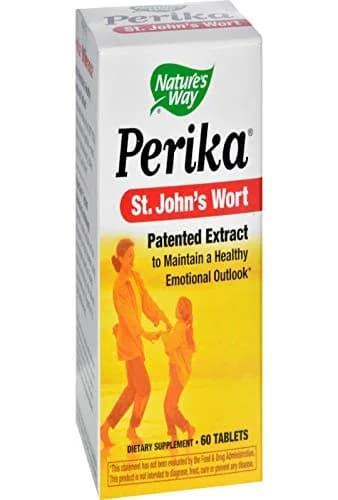
Perika St. John's Wort
Nature's Way
23 Amazon reviews
9.6/10
3.9
The only St. John's Wort standardized to hyperforin via the patented WS 5570 extract — the exact formulation used in 29+ clinical trials showing equivalence to SSRIs. Hyperforin is the multi-target reuptake inhibitor responsible for antidepressant activity, hitting serotonin, norepinephrine, dopamine, GABA, and glutamate simultaneously.
IngredientWS 5570 St. John's Wort Extract (standardized to hyperforin)
Dose300mg per tablet (WS 5570 patented extract), 3 tablets = 900mg/day
FormTablet
TestingNot verified
300mg per tablet (WS 5570 patented extract), 3 tablets = 900mg/dayClinical range: 900mg/day in 3 divided doses (standardized to 0.3% hypericin or 3-5% hyperforin)
Below clinical dose
$18.95 · 60 Tablets
Pros
- Patented WS 5570 extract — the gold standard
- Standardized to hyperforin (the primary active compound)
- Exact formulation used in major clinical trials
Cons
- Only 20-day supply at clinical dose (60 tablets ÷ 3/day)
- Premium price point (~$0.90/day)
Quick Comparison
#1Nature's Way Perika St. John's Wort
9.6/10
Nature's Way
#1 Top Pick
23 Amazon reviews
Best for: Studied in clinical trials for mood-support contexts
WS 5570 St. John's Wort Extract (standardized to hyperforin) · 300mg per tablet (WS 5570 patented extract), 3 tablets = 900mg/day
Tablet · None
$18.95
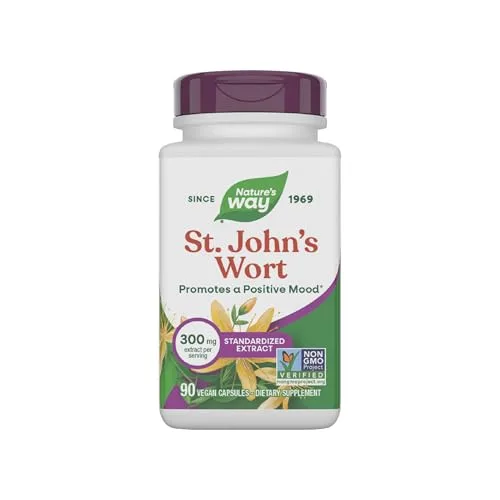
#2Nature's Way St. John's Wort Premium Extract
8.4/10
Nature's Way
221 Amazon reviews
Best for: Trusted brand at a reasonable price point
St. John's Wort Extract (0.3% hypericin) · 300mg per capsule (standardized to 0.3% hypericin), 3 caps = 900mg/day
Capsule · None
$18.99
$0.21 / count
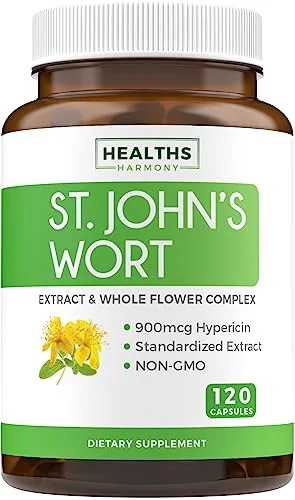
#3Healths Harmony St. John's Wort
8.2/10
Healths Harmony
4,469 Amazon reviews
Best for: Dual-action formula with extract plus whole herb synergy
St. John's Wort Extract 300mg (0.3% hypericin = 900mcg) + 200mg Whole Herb · 500mg per capsule (300mg extract + 200mg whole herb), 1-2 caps/day
Capsule · Third-Party Tested
$16.95
$0.14 / count
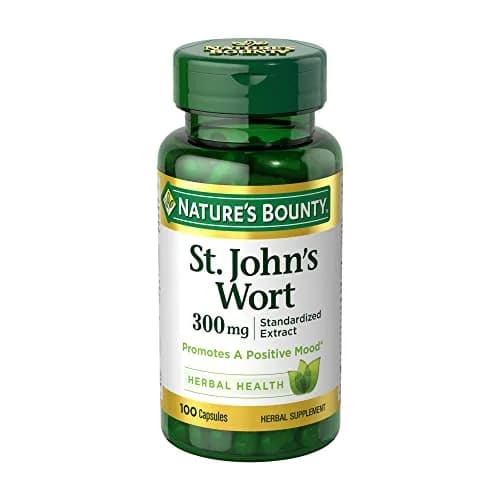
#4Nature's Bounty St. John's Wort 300mg
8/10
Nature's Bounty
9,854 Amazon reviews
Best for: Budget-conscious users wanting a pharmacy-grade brand
St. John's Wort Extract (0.3% hypericin) · 300mg per capsule (standardized to 0.3% hypericin), 3 caps = 900mg/day
Capsule · Third-Party Tested
$10.19
$0.10 / count
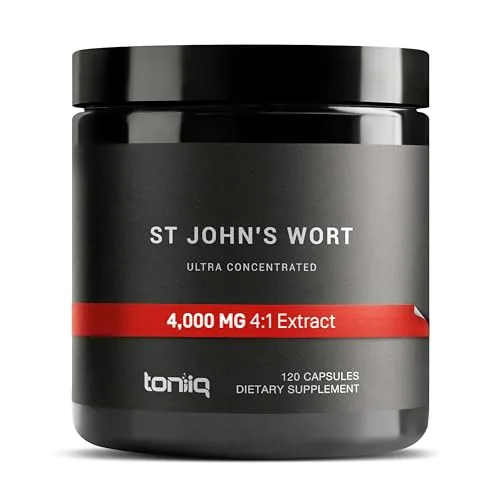
#5Toniiq 1000mg Ultra High Strength St. John's Wort
7.6/10
Toniiq
Limited time deal
3,483 Amazon reviews
Best for: Those wanting the highest potency per capsule
St. John's Wort 4:1 Concentrated Extract (0.3% hypericin) · 1000mg per capsule (4:1 concentrated extract, 0.3% hypericin)
Capsule · Third-Party Tested
-31%$15.37
Typical: $22.17
$0.13 / count
| # | Product | Best For | Ingredient & Dose | Form & Testing | Price | Rating | |
|---|---|---|---|---|---|---|---|
| 1 | Nature's Way Perika St. John's Wort #1 Top Pick 23 Amazon reviews | Studied in clinical trials for mood-support contexts | WS 5570 St. John's Wort Extract (standardized to hyperforin) 300mg per tablet (WS 5570 patented extract), 3 tablets = 900mg/day | Tablet 60 Tablets None | $18.95 | 9.6/10 | |
| 2 | Nature's Way St. John's Wort Premium Extract 221 Amazon reviews | Trusted brand at a reasonable price point | St. John's Wort Extract (0.3% hypericin) 300mg per capsule (standardized to 0.3% hypericin), 3 caps = 900mg/day | Capsule 90 Capsules None | $18.99 $0.21 / count | 8.4/10 | |
| 3 | Healths Harmony St. John's Wort 4,469 Amazon reviews | Dual-action formula with extract plus whole herb synergy | St. John's Wort Extract 300mg (0.3% hypericin = 900mcg) + 200mg Whole Herb 500mg per capsule (300mg extract + 200mg whole herb), 1-2 caps/day | Capsule Third-Party Tested | $16.95 $0.14 / count | 8.2/10 | |
| 4 | Nature's Bounty St. John's Wort 300mg 9,854 Amazon reviews | Budget-conscious users wanting a pharmacy-grade brand | St. John's Wort Extract (0.3% hypericin) 300mg per capsule (standardized to 0.3% hypericin), 3 caps = 900mg/day | Capsule 100 Capsules Third-Party Tested | $10.19 $0.10 / count | 8/10 | |
| 5 | Toniiq 1000mg Ultra High Strength St. John's Wort Limited time deal 3,483 Amazon reviews | Those wanting the highest potency per capsule | St. John's Wort 4:1 Concentrated Extract (0.3% hypericin) 1000mg per capsule (4:1 concentrated extract, 0.3% hypericin) | Capsule 120 Capsules Third-Party Tested | -31%$15.37 Typical: $22.17 $0.13 / count | 7.6/10 |
Detailed Reviews
#1 Top Pick
Nature's Way Perika St John's Wort - 60 Tablets
Nature's Way
23 Amazon reviews
9.6/10
(23)
The only St. John's Wort standardized to hyperforin via the patented WS 5570 extract — the exact formulation used in 29+ clinical trials showing equivalence to SSRIs. Hyperforin is the multi-target reuptake inhibitor responsible for antidepressant activity, hitting serotonin, norepinephrine, dopamine, GABA, and glutamate simultaneously.
IngredientWS 5570 St. John's Wort Extract (standardized to hyperforin)
Dose300mg per tablet (WS 5570 patented extract), 3 tablets = 900mg/day
FormTablet
TestingNot verified
300mg per tablet (WS 5570 patented extract), 3 tablets = 900mg/dayClinical range: 900mg/day in 3 divided doses (standardized to 0.3% hypericin or 3-5% hyperforin)
Below clinical dose
$18.95 · 60 Tablets
Ideal for: Studied in clinical trials for mood-support contexts
Not ideal for: Those on a tight budget or wanting a single daily dose.
Pros
- Patented WS 5570 extract — the gold standard
- Standardized to hyperforin (the primary active compound)
- Exact formulation used in major clinical trials
- Multi-target reuptake inhibition (5 neurotransmitters)
Cons
- Only 20-day supply at clinical dose (60 tablets ÷ 3/day)
- Premium price point (~$0.90/day)
- No listed third-party testing certification
Nature's Way St. John’s Wort Premium Extract Promotes Positive Outlook* Non-GMO 90 Capsules
Nature's Way
221 Amazon reviews
8.4/10
(221)
Non-GMO
From the same trusted brand as Perika but at a lower price point. Non-GMO Project Verified with 90 capsules providing a 30-day supply at clinical dose. Nature's Way has been in herbal supplements since 1969.
IngredientSt. John's Wort Extract (0.3% hypericin)
Dose300mg per capsule (standardized to 0.3% hypericin), 3 caps = 900mg/day
FormCapsule
TestingNot verified
300mg per capsule (standardized to 0.3% hypericin), 3 caps = 900mg/dayClinical range: 900mg/day in 3 divided doses (standardized to 0.3% hypericin or 3-5% hyperforin)
Below clinical dose
$0.21 / count$18.99 · 90 Capsules
Ideal for: Trusted brand at a reasonable price point
Not ideal for: Those wanting hyperforin standardization — this uses hypericin standardization only.
Pros
- Non-GMO Project Verified
- Trusted brand (Nature's Way, est. 1969)
- 30-day supply at clinical dose
- Affordable price per day
Cons
- Hypericin standardization only (not hyperforin)
- Requires 3 capsules daily for clinical dose
- Not the clinically studied WS 5570 extract
St John's Wort Capsules - Powerful & Potent Saint John's Wort Extract & Whole Herb Complex Standardized to 900mcg Hypericin for Balancing Daily Mood Support - Vegan Non-GMO & Lab Verified (120 Caps)
Healths Harmony
4,469 Amazon reviews
8.2/10
(4,469)
Unique dual-action formula combining 300mg standardized extract with 200mg whole herb powder per capsule. The whole herb provides the full spectrum of minor compounds that may support the extract's activity. 120 capsules provide an excellent long-term supply. Third-party tested and GMP compliant.
IngredientSt. John's Wort Extract 300mg (0.3% hypericin = 900mcg) + 200mg Whole Herb
Dose500mg per capsule (300mg extract + 200mg whole herb), 1-2 caps/day
FormCapsule
TestingThird-Party Tested
500mg per capsule (300mg extract + 200mg whole herb), 1-2 caps/dayClinical range: 900mg/day in 3 divided doses (standardized to 0.3% hypericin or 3-5% hyperforin)
Partial dose
$0.14 / count
Ideal for: Dual-action formula with extract plus whole herb synergy
Not ideal for: Those wanting a pure standardized extract without whole herb filler.
Pros
- Dual-action: standardized extract + whole herb
- 120 capsules (excellent supply)
- Third-party tested, GMP facility
- 900mcg hypericin per capsule
Cons
- Whole herb portion is unstandardized
- 3 capsules needed for full 900mg extract dose
- 500mg label can mislead (only 300mg is extract)
Nature's Bounty St. John’s Wort 300mg Capsules, Herbal Health Supplement, Promotes a Positive Mood, 100 Capsules
#1 Best Sellerin St. John's WortNature's Bounty
9,854 Amazon reviews
8/10
(9,854)
The most affordable option from a well-known pharmacy brand. Lab tested and manufactured in a GMP facility. 100 capsules gives you 33 days at clinical dose — the best value per day in this roundup.
IngredientSt. John's Wort Extract (0.3% hypericin)
Dose300mg per capsule (standardized to 0.3% hypericin), 3 caps = 900mg/day
FormCapsule
TestingThird-Party Tested
300mg per capsule (standardized to 0.3% hypericin), 3 caps = 900mg/dayClinical range: 900mg/day in 3 divided doses (standardized to 0.3% hypericin or 3-5% hyperforin)
Below clinical dose
$0.10 / count$10.19 · 100 Capsules
Ideal for: Budget-conscious users wanting a pharmacy-grade brand
Not ideal for: Those wanting premium extract quality or hyperforin standardization.
Pros
- Best price per day (~$0.27)
- Lab tested, GMP-manufactured
- Pharmacy-grade brand recognition
- 100 capsules (33-day supply at clinical dose)
Cons
- Generic extract (not patented)
- Hypericin standardization only
- No Non-GMO or organic certifications
Limited time deal
Toniiq 1,000mg Ultra High Strength St. John's Wort Capsules (Non-GMO) - 4X Concentrated Extract - 0.3% Hypericin - Highly Purified and Bioavailable - 120 Capsules
Toniiq
3,483 Amazon reviews
7.6/10
(3,483)
Highest potency per capsule in this roundup at 1000mg concentrated extract. Third-party tested. 120 capsules provide a 4-month supply at 1 capsule/day. The 4:1 concentration ratio means 1000mg is equivalent to 4000mg of raw herb.
IngredientSt. John's Wort 4:1 Concentrated Extract (0.3% hypericin)
Dose1000mg per capsule (4:1 concentrated extract, 0.3% hypericin)
FormCapsule
TestingThird-Party Tested
1000mg per capsule (4:1 concentrated extract, 0.3% hypericin)Clinical range: 900mg/day in 3 divided doses (standardized to 0.3% hypericin or 3-5% hyperforin)
Clinical dose
$0.13 / count$15.37 · 120 Capsules
Ideal for: Those wanting the highest potency per capsule
Not ideal for: Those wanting a clinically validated extract — 4:1 concentrates are not the form used in clinical trials.
Pros
- Highest potency (1000mg per capsule)
- 4:1 concentrated extract
- Third-party tested
- 120 capsules (4-month supply at 1/day)
Cons
- 4:1 concentrate not used in clinical trials
- Dosing not directly comparable to clinical evidence
- No hyperforin standardization
- Newer brand with less track record
Pairs Well With
Frequently taken together based on complementary benefits
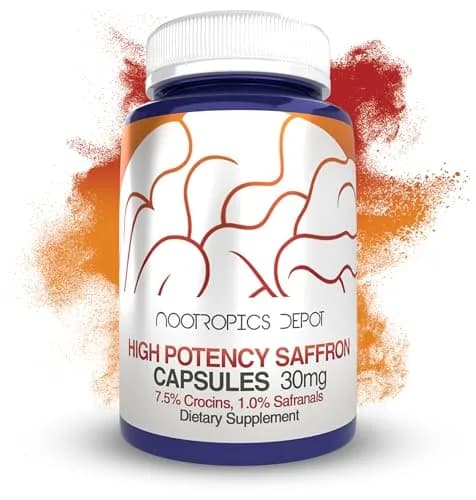
Saffron Extract
Nootropics Depot affron Saffron Extract
Staff Pick
28mg affron per capsuleHow to Choose
Hyperforin vs Hypericin Standardization
This is the single most important distinction. Hyperforin is the compound responsible for St. John's Wort's antidepressant effects — it inhibits reuptake of serotonin, norepinephrine, dopamine, GABA, and glutamate simultaneously. Only Nature's Way Perika (WS 5570 extract) is standardized to 3-5% hyperforin. All other products standardize to 0.3% hypericin, which is a useful marker compound but not the primary active ingredient. If you're taking SJW specifically for mood support, the hyperforin-standardized extract has the strongest clinical backing.
Clinical Dosing Protocol
The evidence-based dose is 900mg per day, divided into three doses of 300mg taken with meals. This is the protocol used in the Cochrane review (29 RCTs), the Gastpar 2006 trial comparing SJW to citalopram, and most major studies. Taking the full dose at once is not recommended — divided dosing maintains steady blood levels throughout the day. Do not exceed 1800mg/day.
CRITICAL: Drug Interactions
St. John's Wort is a potent inducer of CYP3A4 and P-glycoprotein enzymes, which metabolize approximately 50% of all prescription drugs. This means SJW can dramatically reduce the effectiveness of many medications. Life-threatening interactions include: SSRIs/SNRIs (risk of serotonin syndrome), oral contraceptives (reduced efficacy — risk of unintended pregnancy), warfarin (reduced anticoagulation), cyclosporine (organ transplant rejection), HIV antiretrovirals (treatment failure), chemotherapy drugs, and heart medications including digoxin. You MUST consult your doctor before taking St. John's Wort if you are on ANY medication.
Who Should NOT Take St. John's Wort
Do not take SJW if you are currently on SSRIs, SNRIs, MAOIs, or any antidepressant — the combination can cause serotonin syndrome, a potentially fatal condition. Do not take if on oral contraceptives, blood thinners, immunosuppressants, HIV medications, or if you are pregnant or breastfeeding. People with bipolar disorder should avoid SJW as it may trigger manic episodes. If you have moderate-to-severe depression, seek professional treatment — SJW evidence is for mild-to-moderate depression only.
Onset Time and Expectations
St. John's Wort is not a fast-acting supplement. Clinical trials show meaningful improvement begins at 2-4 weeks, with full effects typically seen at 4-6 weeks of consistent daily use at 900mg/day. This timeline is similar to prescription SSRIs. Do not increase your dose if you don't feel effects in the first week — give it the full 4-6 weeks before assessing efficacy. If no improvement after 8 weeks, consult a healthcare provider.
Ready to Buy?
Nature's Way Perika St. John's Wort
9.6/10Best for: Studied in clinical trials for mood-support contexts
Choose standardized St. John's Wort only with clinician/pharmacist review because it has major drug-interaction risks; compare hypericin/hyperforin standardization and dosing.
Evidence:Meta-analysis (2008) · high confidence[#1]. See full reference list below.Read Our Full St. John's Wort Research Guide
Evidence level, dosage, side effects, and more →
Already taking supplements?
Check how St. John's Wort fits with your current stack — interactions, timing, and optimization →
Related Supplements
5-HTPModerate
Bottom line: 5-HTP at 100-300 mg/day affects serotonin pathways for mood and sleep support — do not combine with SSRIs/SNRIs/MAOIs or other serotonergic drugs (serotonin syndrome risk).
Top picks →Saffron ExtractStrong
Bottom line: Saffron extract has clinical-trial evidence for mild-to-moderate depressive symptoms at 28-30mg daily. Do not combine with SSRIs/SNRIs/MAOIs (serotonin syndrome risk) without prescriber sign-off.
Top picks →Related Conditions
Learn More
Frequently Asked Questions
Can I take St. John's Wort with antidepressants?
Can I take St. John's Wort with antidepressants?
NO. Combining St. John's Wort with SSRIs (fluoxetine, sertraline, escitalopram), SNRIs (venlafaxine, duloxetine), MAOIs, or any antidepressant can cause serotonin syndrome — a potentially life-threatening condition with symptoms including agitation, confusion, rapid heart rate, high blood pressure, and seizures [1]. You must completely discontinue one before starting the other, with appropriate washout periods supervised by your doctor.
Evidence:Meta-analysis (2008) · high confidence[#1]. See full reference list below.What drugs interact with St. John's Wort?
What drugs interact with St. John's Wort?
St. John's Wort induces CYP3A4 and P-glycoprotein, affecting roughly 50% of all prescription drugs. Major interactions include: oral contraceptives (reduced efficacy), warfarin, cyclosporine, HIV antiretrovirals (indinavir, nevirapine), chemotherapy agents (irinotecan, imatinib), heart medications (digoxin, calcium channel blockers), statins, benzodiazepines, and organ transplant anti-rejection drugs. Always consult your doctor or pharmacist before combining SJW with any medication.
How does St. John's Wort compare to SSRIs for depression?
How does St. John's Wort compare to SSRIs for depression?
The 2008 Cochrane review of 29 randomized controlled trials found St. John's Wort extracts were significantly superior to placebo and similarly effective as standard antidepressants for mild-to-moderate depression. Gastpar 2006 directly compared SJW (WS 5570) to citalopram and found comparable efficacy with significantly fewer side effects. However, SJW is NOT appropriate for moderate-to-severe depression, where prescription medications remain the standard of care.
What is the difference between hyperforin and hypericin?
What is the difference between hyperforin and hypericin?
Hyperforin is the primary antidepressant compound — it inhibits reuptake of serotonin, norepinephrine, dopamine, GABA, and glutamate simultaneously, making it a broader-spectrum reuptake inhibitor than any single SSRI. Hypericin has mild MAO-inhibiting properties and is used as a standardization marker (0.3%) because it's easier to measure. The WS 5570 extract in Perika is the only product standardized to hyperforin content (3-5%).
How long does it take for St. John's Wort to work?
How long does it take for St. John's Wort to work?
Expect 2-4 weeks before noticing initial effects, with full therapeutic benefit typically reached at 4-6 weeks of consistent daily use at 900mg/day. This timeline is comparable to prescription SSRIs. Do not increase your dose prematurely. If no improvement after 8 weeks at the full clinical dose, discontinue and consult a healthcare provider for alternative treatment options.
Does St. John's Wort affect birth control pills?
Does St. John's Wort affect birth control pills?
Yes — this is one of the most clinically significant interactions. St. John's Wort induces CYP3A4, which accelerates the metabolism of ethinylestradiol and progestins in oral contraceptives, potentially reducing their efficacy. Breakthrough bleeding and unintended pregnancies have been documented. If you take oral contraceptives, do NOT use St. John's Wort. Use a non-hormonal backup method if you must take both temporarily.
Is St. John's Wort safe for anxiety?
Is St. John's Wort safe for anxiety?
Limited but promising evidence supports SJW for anxiety. Kobak 2005 found significant improvement in generalized anxiety with SJW. Kasper 1997 showed benefit for seasonal affective disorder (SAD), which involves anxiety symptoms. However, the evidence base is much stronger for depression than anxiety. The same drug interaction warnings apply regardless of the condition being treated.
Can St. John's Wort cause serotonin syndrome on its own?
Can St. John's Wort cause serotonin syndrome on its own?
Serotonin syndrome from SJW alone is extremely rare at recommended doses. The risk is almost entirely from combining SJW with other serotonergic drugs (SSRIs, SNRIs, triptans, tramadol, certain supplements like 5-HTP). Symptoms include agitation, diarrhea, rapid heartbeat, high blood pressure, muscle twitching, and in severe cases, seizures. Seek emergency care if you experience these symptoms.
Continue Reading
References
- Meta-analysisLinde K, Berner MM, Kriston L (2008). St John's wort for major depression. Cochrane Database of Systematic Reviews. DOI PubMed
- RCTKobak KA, Taylor LV, Bystritsky A, Kohlenberg CJ, Greist JH, Tucker P, Warner G, Futterer R, Vapnik T (2005). St John's wort versus placebo in obsessive-compulsive disorder: results from a double-blind study. International Clinical Psychopharmacology. DOI PubMed
- RCTSarris J, Fava M, Schweitzer I, Mischoulon D (2012). St John's wort (Hypericum perforatum) versus sertraline and placebo in major depressive disorder: continuation data from a 26-week RCT. Pharmacopsychiatry. DOI PubMed