SupplementScience
Rhodiola Rosea supplement
Adaptogenic Herb

Rhodiola Rosea: Benefits, Dosage, Forms & Research

Adaptogenic Herb

This content is for informational purposes only and does not constitute medical advice. Consult your healthcare provider before starting any supplement. Full disclaimer

TL;DR — Quick Answer

Rhodiola rosea is a stimulating adaptogen that reduces fatigue and improves mental performance under stress. A 2012 systematic review found consistent evidence for fatigue reduction across multiple RCTs. The recommended dose is 200-600mg daily of extract standardized to 3% rosavins and 1% salidroside.

Key Facts

What it is
An adaptogenic herb (Rhodiola rosea) used in Scandinavian and Russian traditional medicine
Primary benefits
  • Reduces physical and mental fatigue
  • Enhances stress resilience
  • Improves cognitive function under stress
  • Supports exercise endurance
  • Mild antidepressant effects
Typical dosage
200-600mg standardized extract daily (3% rosavins, 1% salidroside)
Evidence level
Moderate
Safety profile
Generally Safe

What the Research Says

Rhodiola rosea has a solid evidence base for fatigue reduction and stress resilience. Darbinyan et al. (2000) published one of the earliest well-designed RCTs demonstrating cognitive benefits under fatigue. Olsson et al. (2009) confirmed anti-fatigue effects in a burnout population. Hung et al. (2011) conducted a systematic review that found consistent evidence for physical and mental fatigue reduction across 11 studies, though noted that methodological quality varied. The key difference from ashwagandha is rhodiola's more stimulating, energizing profile — rhodiola upregulates catecholamine activity and modulates cortisol, while ashwagandha primarily reduces cortisol and promotes GABAergic calming effects.

Benefits of Rhodiola Rosea

  • Fatigue reduction — Darbinyan et al. (2000) demonstrated in an RCT that rhodiola extract (SHR-5) significantly reduced mental fatigue and improved cognitive function in physicians on night duty compared to placebo
  • Stress resilience — Olsson et al. (2009) found that 576mg of SHR-5 daily for 28 days significantly reduced stress-related fatigue and improved attention, cognitive function, and cortisol response in individuals with burnout syndrome
  • Cognitive function under stress — multiple trials show rhodiola improves accuracy and speed on cognitive tasks during periods of sleep deprivation, exam stress, and sustained mental work
  • Exercise endurance — rhodiola supplementation has been shown to reduce perceived exertion and improve time-to-exhaustion in moderate-intensity exercise, potentially via enhanced oxygen utilization
  • Mild antidepressant effects — a 2015 RCT (Mao et al.) comparing rhodiola to sertraline found rhodiola produced modest but clinically meaningful reductions in depression scores with significantly fewer side effects
Did you know?

Rhodiola rosea has a solid evidence base for fatigue reduction and stress resilience.

Forms of Rhodiola Rosea

FormBioavailabilityBest For
SHR-5 Standardized ExtractHighClinical use — the most studied rhodiola extract, standardized to 3% rosavins and 1% salidroside
Root PowderModerateTraditional use — less standardized but lower cost; higher doses needed
Rosavins-Standardized ExtractHighGeneral supplementation — standardized to rosavin content (the signature compound)
Salidroside-Standardized ExtractHighTargeted use — salidroside is considered the primary active compound for neuroprotective and anti-fatigue effects

Dosage Recommendations

General recommendation: 200-600mg daily of extract standardized to 3% rosavins and 1% salidroside

Timing: Morning or early afternoon; avoid evening dosing due to stimulating effects

Dosage by Condition

ConditionRecommended DoseEvidence
Fatigue reduction200-400mg SHR-5 dailyModerate
Stress resilience400-576mg SHR-5 dailyModerate
Cognitive performance200-300mg before mental tasksModerate
Mild depression340-680mg dailyEmerging

Upper limit: 680mg/day of standardized extract (higher doses not well-studied)

Our Top Rhodiola Rosea Pick

Our recommendations are based on published research, not commission rates. Some links below are affiliate links — we may earn a commission at no extra cost to you. How we evaluate products

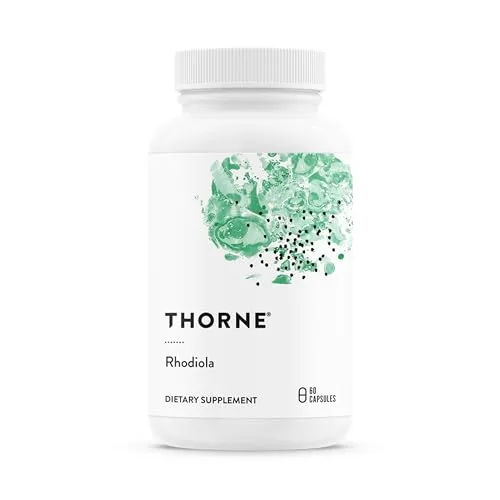
Thorne Rhodiola Rosea

Thorne Rhodiola Rosea

Thorne

9.2/10
Overall best rhodiola with NSF certification$0.23/serving

Side Effects and Safety

Safety profile: Generally Safe

Potential Side Effects

  • Generally well-tolerated with a low incidence of adverse effects
  • Mild dizziness or dry mouth (uncommon)
  • Restlessness or insomnia if taken late in the day
  • Vivid dreams reported by some users

Drug & Supplement Interactions

  • May have additive effects with stimulant medications (use caution)
  • Theoretical interaction with antidepressants (SSRIs, MAOIs) — consult provider
  • May enhance effects of anti-diabetic medications (blood sugar lowering)
  • Generally considered safe to combine with other adaptogens at moderate doses
Check Rhodiola Rosea interactions with other supplements →
BenefitsDosage GuideSide EffectsTypes & FormsResearchFAQ

Related Conditions

Related Supplements

Frequently Asked Questions

What is the difference between rhodiola and ashwagandha?

Rhodiola and ashwagandha are both adaptogens but have distinct profiles. Rhodiola is more stimulating and energizing — it is best for combating fatigue, improving focus, and enhancing mental performance under acute stress. Ashwagandha is more calming and is better suited for anxiety, sleep, and chronic stress. Some people use rhodiola in the morning for energy and ashwagandha in the evening for relaxation. They can generally be taken together safely.

When is the best time to take rhodiola?

Take rhodiola in the morning or early afternoon, ideally on an empty stomach 20-30 minutes before breakfast. Its stimulating properties can interfere with sleep if taken in the evening. For cognitive performance, taking it 30-60 minutes before a demanding task (exam, presentation) can be effective. Consistent daily use for 4-8 weeks yields the best adaptogenic benefits.

How long does rhodiola take to work?

Rhodiola has both acute and long-term effects. Some users notice improved focus and reduced fatigue within the first few days. However, full adaptogenic benefits — including improved stress resilience and sustained energy — typically develop over 2-6 weeks of consistent use. Clinical trials showing significant effects have ranged from single-dose studies to 12-week protocols.

Can I take rhodiola with caffeine?

Yes, rhodiola can be taken with caffeine, and many people find them complementary. Rhodiola may help smooth out the jittery edges of caffeine by modulating the stress response. However, if you are sensitive to stimulants, start with a lower dose of rhodiola and monitor for overstimulation. Reducing caffeine intake slightly when adding rhodiola is a reasonable approach.

References

  1. (). Rhodiola rosea in stress induced fatigue — a double blind cross-over study of a standardized extract SHR-5 with a repeated low-dose regimen on the mental performance of healthy physicians during night duty. Phytomedicine. DOI
  2. (). A randomised, double-blind, placebo-controlled, parallel-group study of the standardised extract SHR-5 of the roots of Rhodiola rosea in the treatment of subjects with stress-related fatigue. Planta Medica. DOI
  3. (). The effectiveness and efficacy of Rhodiola rosea L.: a systematic review of randomized clinical trials. Phytomedicine. DOI
  4. (). Rhodiola rosea versus sertraline for major depressive disorder: A randomized placebo-controlled trial. Phytomedicine. DOI