SupplementScience
Green Tea Extract supplement
Polyphenol

Green Tea Extract: Benefits, Dosage, Forms & Research

Polyphenol

This content is for informational purposes only and does not constitute medical advice. Consult your healthcare provider before starting any supplement. Full disclaimer

TL;DR — Quick Answer

Green tea extract (250-500mg EGCG daily) reduces CRP, IL-6, and oxidative stress markers. EGCG inhibits NF-kB and COX-2 while boosting antioxidant defenses. Also supports fat oxidation and metabolic health. Choose decaffeinated extracts if caffeine-sensitive.

Key Facts

What it is
Catechin-rich polyphenol extract from Camellia sinensis leaves, primarily EGCG
Primary benefits
  • Inhibits NF-kB and COX-2 pathways
  • Reduces CRP and IL-6 levels
  • Potent antioxidant (free radical scavenging)
  • Supports fat oxidation and metabolism
  • Neuroprotective properties
Typical dosage
250-500mg EGCG daily (from 400-800mg GTE)
Evidence level
Strong
Safety profile
Safe with Caution

What the Research Says

Green tea is among the most extensively researched botanical supplements, with thousands of studies. For inflammation, Haghighatdoost and Hariri (2020, 11 RCTs, n=763) confirmed significant CRP reductions. EGCG is a multi-target anti-inflammatory, directly inhibiting NF-kB (via IKK), suppressing COX-2 transcription, and activating Nrf2 antioxidant responses. Metabolic benefits are well-established, with Lin et al. (2018, 22 RCTs) confirming glucose/insulin improvements. However, safety concerns emerged regarding hepatotoxicity with high-dose extracts taken on an empty stomach, leading to an EFSA 2018 safety opinion recommending ≤800mg EGCG daily and always with food. Epidemiological data from Asian populations consuming 3-5 cups daily consistently shows reduced cardiovascular and cancer risk.

Benefits of Green Tea Extract

  • Inflammatory marker reduction — a 2020 meta-analysis (Haghighatdoost and Hariri, 11 RCTs, n=763) found green tea supplementation significantly reduced CRP levels, particularly in doses ≥500mg catechins for ≥8 weeks
  • NF-kB inhibition — EGCG directly inhibits IKK activation, preventing NF-kB nuclear translocation and suppressing transcription of TNF-alpha, IL-1beta, IL-6, and COX-2 genes
  • Antioxidant defense — EGCG scavenges reactive oxygen species and upregulates Nrf2-mediated antioxidant enzymes (SOD, catalase, HO-1), reducing oxidative stress that drives chronic inflammation
  • Metabolic improvement — a 2018 meta-analysis (Lin et al., 22 RCTs, n=1,584) found green tea catechins significantly reduced fasting glucose, insulin, and HbA1c in type 2 diabetes patients
  • Fat oxidation — EGCG and caffeine synergistically increase fat oxidation by 10-16%, with a 2009 meta-analysis (Hursel et al.) confirming small but significant effects on body weight and fat mass
Did you know?

Green tea is among the most extensively researched botanical supplements, with thousands of studies.

Forms of Green Tea Extract

FormBioavailabilityBest For
Standardized Extract (50-98% EGCG)ModerateTargeted anti-inflammatory — concentrated EGCG; take with food to reduce hepatotoxicity risk
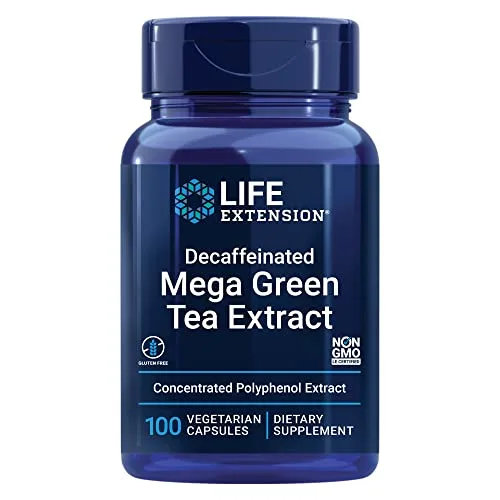
Decaffeinated ExtractModerateCaffeine-sensitive individuals — retains catechins with minimal caffeine
Matcha PowderModerate-HighWhole-leaf consumption — contains L-theanine that modulates caffeine effects; lower EGCG concentration

Dosage Recommendations

General recommendation: 250-500mg EGCG daily from standardized green tea extract, taken with food

Timing: Always take with food to reduce risk of liver injury; avoid on empty stomach; split into 2 doses • Take with food for best absorption.

Dosage by Condition

ConditionRecommended DoseEvidence
General anti-inflammatory250-500mg EGCG dailyStrong
Metabolic syndrome400-500mg EGCG dailyModerate
Fat oxidation support300-400mg EGCG daily with caffeineModerate

Upper limit: Do not exceed 800mg EGCG daily; doses above this increase hepatotoxicity risk per EFSA safety assessment

Our Top Green Tea Extract Pick

Our recommendations are based on published research, not commission rates. Some links below are affiliate links — we may earn a commission at no extra cost to you. How we evaluate products

NOW Foods EGCg Green Tea Extract 400mg

NOW Foods EGCg Green Tea Extract 400mg

NOW Foods

9/10
Best overall green tea extract$0.10/serving

Side Effects and Safety

Safety profile: Safe with Caution

Potential Side Effects

  • Hepatotoxicity risk — rare but serious liver injury reported with high-dose extracts (>800mg EGCG/day), especially on empty stomach; EFSA issued safety guidance
  • Caffeine-related effects (insomnia, anxiety, jitteriness) unless using decaffeinated extract
  • GI discomfort (nausea, stomach pain) especially on empty stomach
  • Iron absorption reduction — catechins chelate non-heme iron; separate from iron supplements by 2 hours

Drug & Supplement Interactions

  • Iron supplements — EGCG reduces non-heme iron absorption by up to 25%; take at different times
  • Stimulants and caffeine — additive stimulant effects if extract contains caffeine
  • Nadolol and other beta-blockers — green tea may reduce nadolol absorption by 85%
  • Warfarin — green tea contains vitamin K; large amounts may reduce anticoagulant effect
  • Hepatotoxic drugs — avoid combining high-dose GTE with other hepatotoxic medications
Check Green Tea Extract interactions with other supplements →
BenefitsDosage GuideSide EffectsTypes & FormsResearchFAQ

Related Conditions

Related Supplements

Frequently Asked Questions

Is green tea extract safe for the liver?

At recommended doses (250-500mg EGCG daily) taken with food, green tea extract is safe for most people. Rare hepatotoxicity cases were associated with doses >800mg EGCG/day, fasting consumption, or pre-existing liver conditions. Always take with food, stay within recommended doses, and discontinue if you experience abdominal pain, dark urine, or jaundice.

Is drinking green tea as effective as taking extract?

One cup of green tea provides 50-100mg EGCG. To reach anti-inflammatory doses (250-500mg EGCG), you would need 3-5 cups daily. This is achievable and epidemiological data supports benefits at this intake. However, standardized extracts provide precise, concentrated dosing. Tea may be safer than high-dose extracts due to slower absorption.

Does green tea extract interact with medications?

Yes, several important interactions exist. EGCG reduces non-heme iron absorption (separate by 2 hours). Green tea dramatically reduces nadolol absorption. The vitamin K content can affect warfarin therapy. Caffeine-containing extracts add stimulant load. Always disclose green tea supplement use to your healthcare provider.

References

  1. (). The effect of green tea on inflammatory mediators: a systematic review and meta-analysis of randomized clinical trials. Phytotherapy Research. DOI
  2. (). The effect of green tea supplementation on obesity: a systematic review and dose-response meta-analysis of randomized controlled trials. Phytotherapy Research. DOI
  3. (). Scientific opinion on the safety of green tea catechins. EFSA Journal. DOI