SupplementScience
Multivitamins supplement
General Nutrition

Multivitamins — Research Profile

This content is for informational purposes only and does not constitute medical advice. Consult your healthcare provider before starting any supplement. Full disclaimer

Multivitamins provide a broad spectrum of essential vitamins and minerals in a single daily serving.

Multivitamins provide a broad spectrum of essential vitamins and minerals in a single daily serving. The COSMOS-Mind trial (2022) found daily multivitamin use improved cognition in older adults, while PHS-II (2012) showed an 8% reduction in total cancer risk among male physicians over 11 years. Most adults benefit from a daily multivitamin to fill common nutrient gaps, particularly vitamin D, magnesium, and B12.

Key Facts

What it is
A supplement providing a broad spectrum of essential vitamins and minerals to fill dietary nutrient gaps
Primary benefits
  • Fills common dietary nutrient gaps (vitamin D, B12, magnesium, zinc)
  • Supports cognitive function in older adults (COSMOS-Mind trial)
  • Modest cancer risk reduction with long-term use (PHS-II)
  • Supports immune function, energy metabolism, and overall health maintenance
Typical dosage
1 serving daily (varies by product)
Evidence level
Moderate
Safety profile
Generally Safe

Time to Effect

Hours
Days
Weeks
Months
4-12 weekstypical onset

Correcting nutrient deficiencies (B12, iron, vitamin D) may produce noticeable energy and mood improvements within 2-4 weeks. Cognitive and long-term health benefits require months to years of consistent daily use, as demonstrated in the COSMOS and PHS-II trials.

What the Research Says

Multivitamins are the most studied supplement category, yet evidence for their benefits has historically been mixed. The tide shifted meaningfully with two landmark trials. The Physicians' Health Study II (Sesso et al., 2012), following 14,641 male physicians for over 11 years, found that daily multivitamin use modestly but significantly reduced total cancer incidence by 8%. The COSMOS-Mind trial (Baker et al., 2022), a well-designed ancillary study of the COcoa Supplement and Multivitamin Outcomes Study, demonstrated that daily multivitamin supplementation significantly improved global cognition in 2,262 older adults over 3 years, with benefits equivalent to approximately 2 years of reduced cognitive aging.

The nutritional insurance argument is well supported. Ward (2014) analyzed NHANES data showing that multivitamin/mineral users had substantially lower rates of nutrient inadequacy for vitamins A, C, D, E, calcium, and magnesium compared to non-users. Blumberg et al. (2017) extended this analysis and found that without multivitamin use, a significant proportion of the U.S. population would fall below the Estimated Average Requirement for multiple micronutrients.

Conversely, the U.S. Preventive Services Task Force (2022) concluded that evidence is insufficient to recommend multivitamins for cardiovascular disease or cancer mortality prevention in the general population — a nuanced position that acknowledges the COSMOS and PHS-II findings while noting limitations. For specific populations — older adults, those with malabsorption conditions, individuals on restrictive diets, and people taking medications that deplete nutrients (e.g., PPIs depleting B12 per Lam et al., 2013) — the case for multivitamin use is considerably stronger.
Benefits of Multivitamins

  • Cognitive function preservation — the COSMOS-Mind trial (Baker LD et al., 2022, PMID: 35653014), a randomized, double-blind, placebo-controlled study of 2,262 older adults, found that daily multivitamin supplementation (Centrum Silver) for 3 years significantly improved global cognition, with benefits equivalent to slowing cognitive aging by approximately 2 years compared to placebo
  • Modest cancer risk reduction — the Physicians' Health Study II (Sesso HD et al., 2012, PMID: 23117775), a large-scale RCT following 14,641 male physicians for a mean of 11.2 years, found daily multivitamin use reduced total cancer incidence by 8% (HR 0.92, 95% CI 0.86-0.998, p=0.04), though no significant reduction was found for individual cancer types
  • Nutrient gap correction — Ward (2014, PMID: 24724766) analyzed NHANES data and found that multivitamin/mineral use significantly reduced the prevalence of inadequate intakes for vitamins A, C, D, E, calcium, and magnesium, with the largest improvements seen in vitamin D and vitamin E adequacy
  • Immune support — multivitamins provide zinc, vitamin C, vitamin D, and selenium, all of which play essential roles in innate and adaptive immune responses; older adults and those with restricted diets are most likely to have suboptimal intake of these immune-critical micronutrients
  • Energy metabolism — B-vitamins (B1, B2, B3, B5, B6, B12, folate) serve as cofactors in mitochondrial energy production pathways; correcting subclinical deficiencies in these vitamins can reduce fatigue, particularly in populations at risk such as older adults and those on proton pump inhibitors (Lam JR et al., 2013, PMID: 24327038)
Did you know?

Multivitamins are the most studied supplement category, yet evidence for their benefits has historically been mixed.

Forms of Multivitamins

Multivitamins supplement forms compared by bioavailability and best use
FormBioavailabilityBest For
Standard Tablet/CapsuleModerateGeneral daily use — cost-effective, well-studied in large clinical trials, adequate for most healthy adults without genetic methylation variants
Whole Food MultivitaminHighSensitive stomachs and those prioritizing food-sourced nutrients — gentler on digestion and may include naturally occurring cofactors that enhance absorption
Active/Methylated FormsHighIndividuals with MTHFR variants, those over 50 with reduced conversion capacity, and anyone seeking the most readily usable vitamin forms
Gummy/ChewableModerateAdults who cannot swallow pills and children — convenient and palatable, but verify label for nutrient completeness as many gummies omit iron, calcium, and magnesium

Dosage Recommendations

General recommendation: 1 serving daily with food. Follow product-specific serving sizes.

Timing: Take with a meal for best absorption of fat-soluble vitamins (A, D, E, K) and to reduce nausea • Take with food for best absorption.

Dosage by Condition

General nutritional insurance
1 serving daily with a mealModerate
Cognitive support (older adults)
1 serving daily, consistent long-term use (COSMOS protocol)Moderate
Prenatal nutrition
1 serving prenatal multivitamin daily (with 400-800 mcg folate)Strong
Post-bariatric surgery
1-2 servings daily per surgical protocol (higher doses needed due to malabsorption)Moderate

Upper limit: Do not exceed the serving size on the product label. Taking multiple multivitamins risks exceeding the Tolerable Upper Intake Level for fat-soluble vitamins (A, D, E, K) and minerals (iron, zinc).

Our Top Multivitamins Picks

As an Amazon Associate, we earn from qualifying purchases. Some links below are affiliate links — this doesn't affect our editorial independence or product ratings. How we evaluate products

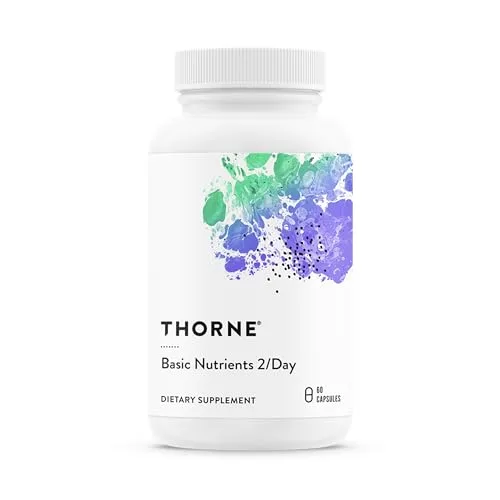
Thorne Basic Nutrients 2/Day
Thorne
Best OverallForm: CapsulePrice: $0.70/serving
Buy Now on Amazon
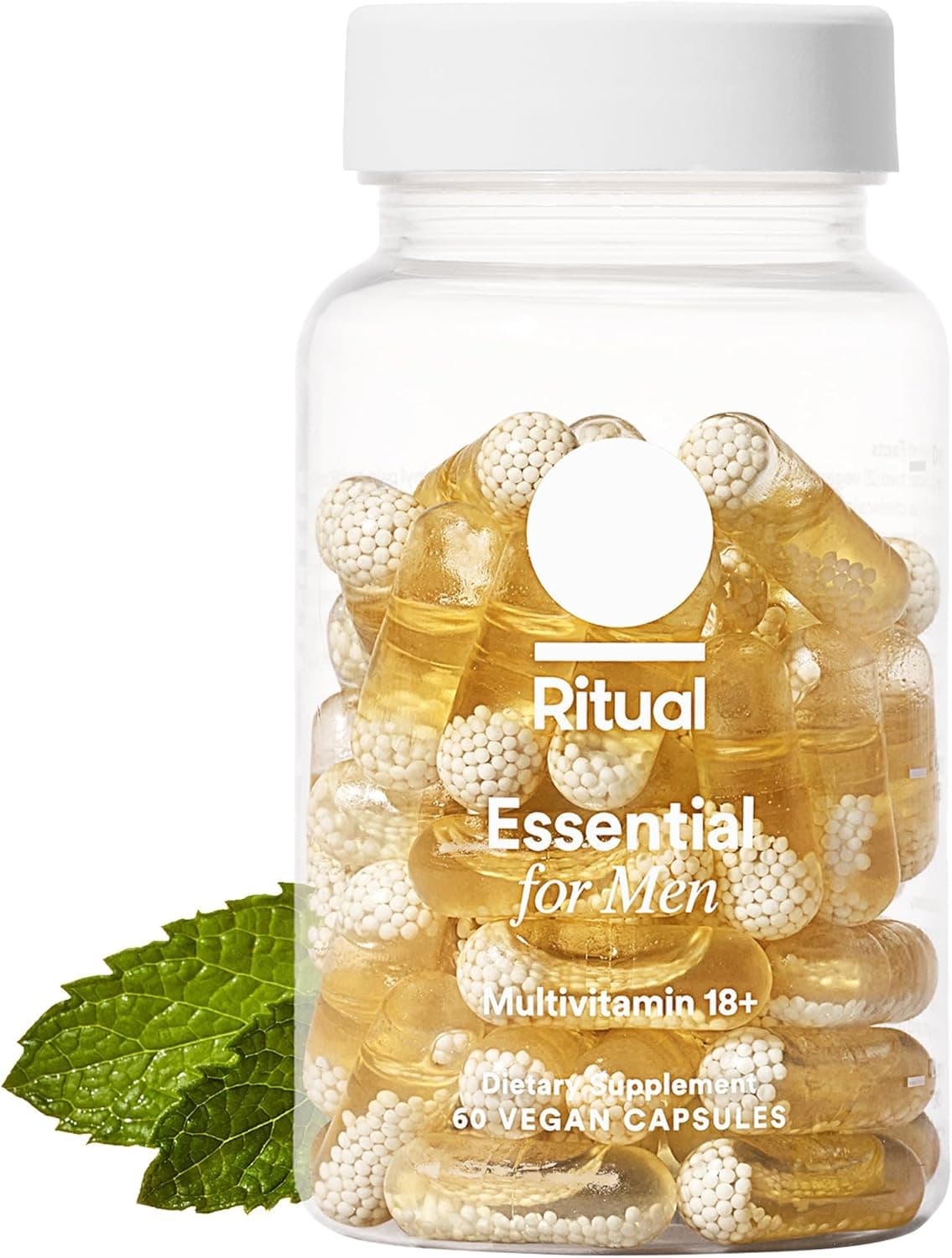
Ritual Essential Multivitamin 18+
Ritual
Best for TransparencyForm: Delayed-Release Capsule (beadlet-in-oil)Price: $1.17/serving
Buy Now on Amazon
NOW Foods ADAM Superior Men's Multi
NOW Foods
Best ValueForm: SoftgelPrice: $0.42/serving
Buy Now on Amazon
Seed DM-02 Daily Multivitamin
Seed
Staff Pick
Best for Gut HealthForm: Nested Capsule (ViaCap Technology)Price: $1.33/serving
Buy Now on Amazon

Side Effects and Safety

Safety profile: Generally Safe

Potential Side Effects

  • Nausea or stomach upset when taken on an empty stomach (the most common complaint; resolved by taking with food)
  • Iron-related constipation in formulas containing iron (particularly ferrous sulfate forms)
  • Bright yellow urine from riboflavin (B2) excretion — harmless but sometimes alarming to new users
  • Metallic taste from iron or zinc content
  • Headache or flushing at higher niacin doses (uncommon in standard multivitamin formulations)

Drug & Supplement Interactions

  • Warfarin and other vitamin K antagonists — multivitamins containing vitamin K can reduce anticoagulant effectiveness; maintain consistent intake and inform your physician
  • Levothyroxine and other thyroid medications — calcium, iron, and magnesium in multivitamins can bind thyroid hormone and reduce absorption; take thyroid medication at least 4 hours before the multivitamin
  • Tetracycline and fluoroquinolone antibiotics — calcium, iron, magnesium, and zinc in multivitamins chelate these antibiotics and reduce their absorption by up to 50%; separate by at least 2 hours
  • Levodopa (Parkinson's medication) — vitamin B6 in multivitamins can reduce levodopa effectiveness unless combined with carbidopa; consult your neurologist
  • Methotrexate — folic acid in multivitamins may interfere with methotrexate's mechanism in cancer treatment; however, it is often intentionally supplemented under oncologist supervision to reduce side effects
Check Multivitamins interactions with other supplements →
BenefitsDosage GuideSide EffectsTypes & FormsResearchFAQ

Related Conditions

Commonly Taken Together

Related Supplements

Looking for the best multivitamins supplement?

We analyzed and ranked the top products based on form, dosage, third-party testing, and value.

See Our Top Picks

Frequently Asked Questions

Do multivitamins actually work?

The evidence is mixed but increasingly favorable for specific outcomes. The COSMOS-Mind trial (2022, n=2,262) found daily multivitamin use significantly improved cognitive function in older adults over 3 years, equivalent to slowing cognitive aging by roughly 2 years. PHS-II (2012, n=14,641) found an 8% reduction in total cancer incidence over 11 years. Multivitamins are most beneficial for people with dietary gaps, restrictive diets, or nutrient-depleting medications — rather than as a universal health booster for people already eating a nutrient-dense diet.

Should I choose a multivitamin with methylated B-vitamins?

Methylated forms (methylfolate, methylcobalamin, pyridoxal-5-phosphate) are the bioactive versions your body can use directly without enzymatic conversion. Approximately 40% of the population carries MTHFR gene variants that reduce the ability to convert synthetic folic acid into its active form. If you are over 50, have known MTHFR polymorphisms, or want the most readily usable forms, a methylated multivitamin is a better choice. For most healthy young adults, standard forms used in major clinical trials are effective.

Can I take a multivitamin with my prescription medications?

Multivitamins can interact with several medication classes. Thyroid medications (levothyroxine) should be taken at least 4 hours before your multivitamin, as calcium, iron, and magnesium reduce thyroid hormone absorption. Blood thinners (warfarin) can be affected by vitamin K content — keep intake consistent and inform your doctor. Antibiotics (tetracyclines, fluoroquinolones) should be separated from multivitamins by at least 2 hours due to mineral chelation. Always tell your healthcare provider about all supplements you take.

Why do multivitamins make me nauseous?

Nausea is the most common multivitamin side effect and is almost always caused by taking the supplement on an empty stomach. Iron and zinc are the primary irritants. Solutions: always take your multivitamin with a meal containing some fat (also improves absorption of fat-soluble vitamins A, D, E, K), switch to an iron-free formula if you do not need supplemental iron, or try a whole food-based multivitamin which tends to be gentler on the stomach.

Do I need a multivitamin if I eat a healthy diet?

Even with a well-balanced diet, nutrient gaps are common. NHANES data shows that over 90% of Americans fall short on vitamin D, 45% are inadequate in magnesium, and 40% are low in vitamins A, C, and E from food alone. Soil depletion, food processing, and modern farming practices have reduced the micronutrient density of many foods compared to decades ago. A multivitamin provides insurance against these gaps, though it should complement — not replace — a nutrient-dense diet.

Continue Reading

References

  1. Baker LD, Manson JE, Rapp SR, et al. (2022). Effects of cocoa extract and multivitamin supplementation on cognitive function: a randomized clinical trial. Alzheimer's & Dementia. DOI PubMed
  2. Sesso HD, Christen WG, Bubes V, et al. (2012). Multivitamins in the prevention of cancer in men: the Physicians' Health Study II randomized controlled trial. JAMA. DOI PubMed
  3. Lam JR, Schneider JL, Zhao W, Corley DA (2013). Proton pump inhibitor and histamine 2 receptor antagonist use and vitamin B12 deficiency. JAMA. DOI PubMed
  4. Ward E (2014). Addressing nutritional gaps with multivitamin and mineral supplements. Nutrition Journal. DOI PubMed
  5. Blumberg JB, Bailey RL, Sesso HD, Ulrich CM (2018). The evolving role of multivitamin/multimineral supplement use among adults in the age of personalized nutrition. Nutrients. DOI PubMed