SupplementScience
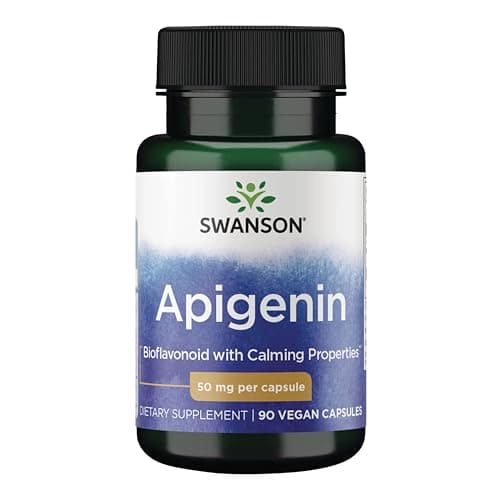
Apigenin supplement
Flavonoid

Apigenin: Benefits, Dosage, Forms & Research

Flavonoid

This content is for informational purposes only and does not constitute medical advice. Consult your healthcare provider before starting any supplement. Full disclaimer

TL;DR — Quick Answer

Apigenin is the active sleep compound in chamomile, available as a purified supplement. It binds GABA-A benzodiazepine receptors for mild sedation and anxiety relief. Doses of 50mg before bed are widely used for sleep, based on chamomile clinical trial data. Bonus: it inhibits CD38 to boost NAD+ levels.

Key Facts

What it is
A flavonoid compound from chamomile that binds GABA-A benzodiazepine receptors and inhibits the NAD+-consuming enzyme CD38
Primary benefits
  • Binds GABA-A benzodiazepine receptors for sedation (Avallone 2000)
  • Mild anxiolytic without significant cognitive impairment
  • Inhibits CD38 to increase NAD+ levels (longevity benefit)
  • Precise dosing as purified compound
  • Anti-inflammatory and neuroprotective properties
Typical dosage
50mg before bed
Evidence level
Emerging
Safety profile
Generally Safe

What the Research Says

Apigenin's mechanism is well-characterized at the molecular level. Avallone et al. (2000) demonstrated its GABA-A benzodiazepine site binding, explaining the sedative and anxiolytic effects of chamomile. Escande et al. (2013) revealed the CD38 inhibition / NAD+-boosting mechanism in cell and animal models. However, direct human RCTs with purified apigenin (rather than chamomile extract) are limited. The evidence base largely derives from chamomile trials where apigenin is the presumed primary active compound, and from mechanistic/preclinical studies. The 50mg dose recommendation comes from estimating the apigenin content in clinically effective chamomile extract doses and from Huberman's popularization of this dosage.

Benefits of Apigenin

  • GABA-A receptor binding — Avallone et al. (2000) demonstrated apigenin binds the benzodiazepine site on GABA-A receptors with moderate affinity, producing anxiolytic and mild sedative effects without the myorelaxant or amnesic effects of classical benzodiazepines
  • Sleep promotion — as the primary active compound in chamomile, apigenin accounts for much of chamomile's clinical sleep and anxiolytic effects documented in the Amsterdam et al. (2009) and Mao et al. (2016) GAD trials
  • NAD+ boosting — Escande et al. (2013) showed apigenin inhibits CD38, a major NAD+-consuming enzyme, resulting in increased intracellular NAD+ levels, which supports mitochondrial function and has longevity implications
  • Anti-inflammatory effects — apigenin inhibits NF-kB and COX-2 pathways, reducing neuroinflammation that can contribute to anxiety and sleep disturbances
  • Neuroprotection — apigenin has demonstrated protective effects against oxidative stress-induced neuronal damage in multiple preclinical models, suggesting long-term brain health benefits alongside acute calming effects
Did you know?

Apigenin's mechanism is well-characterized at the molecular level.

Forms of Apigenin

FormBioavailabilityBest For
Purified Apigenin CapsulesLow-Moderate (lipophilic, benefits from fat)Targeted sleep and GABA support — precise dosing at 50mg, the most popular supplemental form
Apigenin from Chamomile ExtractModerateBroader spectrum — includes additional chamomile flavonoids that may have synergistic effects

Dosage Recommendations

General recommendation: 50mg taken 30-60 minutes before bed

Timing: 30-60 minutes before bed for sleep. Take with a small fat-containing snack for improved absorption. • Take with food for best absorption.

Dosage by Condition

ConditionRecommended DoseEvidence
Sleep support50mg before bedEmerging
Anxiety50-100mg dailyEmerging
NAD+ support / longevity50mg dailyPreliminary

Upper limit: 100mg/day (limited human safety data at higher doses)

Side Effects and Safety

Safety profile: Generally Safe

Potential Side Effects

  • Generally well tolerated at typical doses
  • Sedation / drowsiness (intended effect for sleep use)
  • Potential concern for men: very high doses may inhibit aromatase and affect estrogen metabolism (theoretical at supplemental doses)
  • Mild GI discomfort (rare)
  • Allergic reactions in chamomile/ragweed-sensitive individuals (rare)

Drug & Supplement Interactions

  • Sedative medications — additive effects via GABA-A pathway
  • CYP1A2 and CYP2C9 substrates — apigenin may inhibit these enzymes at high concentrations
  • Hormone-sensitive conditions — theoretical aromatase inhibition at very high doses
  • Blood thinners — mild antiplatelet effects possible
Check Apigenin interactions with other supplements →
BenefitsDosage GuideSide EffectsTypes & FormsResearchFAQ

Related Conditions

Related Supplements

Frequently Asked Questions

Is apigenin the same as chamomile?

No — apigenin is a single flavonoid compound found in chamomile, but chamomile contains many other active compounds including other flavonoids, terpenoids, and coumarins. Taking purified apigenin gives you the primary sleep-promoting compound in a standardized dose, while chamomile extract provides the full spectrum of chamomile compounds. Both approaches are valid; apigenin offers precision, while chamomile extract may benefit from synergistic effects.

Does apigenin really boost NAD+ levels?

In cell and animal studies, yes — Escande et al. (2013) showed apigenin inhibits CD38, the primary NAD+-consuming enzyme in mammalian cells, resulting in increased intracellular NAD+ levels. However, this effect has not been confirmed in human clinical trials at typical supplement doses (50mg). The NAD+ benefit should be considered a promising secondary effect rather than the primary reason to take apigenin.

Is 50mg of apigenin enough for sleep?

The 50mg dose is widely used based on extrapolation from chamomile clinical trials and was popularized by neuroscientist Andrew Huberman. Many users report subjective sleep improvement at this dose. However, no direct dose-ranging study of purified apigenin for sleep has been published. Some people may benefit from higher doses (up to 100mg), but caution is warranted given limited human dosing data. Start with 50mg and assess your response before increasing.

References

  1. (). Pharmacological profile of apigenin, a flavonoid isolated from Matricaria chamomilla. Biochemical Pharmacology. DOI
  2. (). Flavonoid apigenin is an inhibitor of the NAD+ase CD38: implications for cellular NAD+ metabolism, protein acetylation, and treatment of metabolic syndrome. Diabetes. DOI
  3. (). A randomized, double-blind, placebo-controlled trial of oral Matricaria recutita (chamomile) extract therapy for generalized anxiety disorder. Journal of Clinical Psychopharmacology. DOI