
We evaluated MCT oil supplements on C8 purity, sourcing, third-party testing, GI tolerability, and value per serving. Our recommendations cover pure C8 oils for maximum ketone production through budget-friendly full-spectrum options.
Best MCT Oil Supplements (2026)
Product pricing and availability checked
Methodology: Evidence-ranked evaluation
·
2,600+Clinical Studies Cited
·7MCT Oil products evaluated
This content is for informational purposes only and does not constitute medical advice. Statements about dietary supplements have not been evaluated by the FDA and are not intended to diagnose, treat, cure, or prevent any disease. Individual results may vary — consult your healthcare provider before starting any supplement. Full disclaimer
As an Amazon Associate, we earn from qualifying purchases. Some links below are affiliate links — this doesn't affect our editorial independence or product ratings. How we evaluate products
Our Verdict
The best MCT oil supplement is C8 (caprylic acid) isolate or a C8/C10 blend from sustainable coconut or palm-free sources, delivered in opaque-bottled liquid oil or unflavored softgels.
Best By Category
The best MCT oil is pure C8 (caprylic acid) — the fastest ketone precursor — or a C8/C10 blend from sustainably sourced...
The best MCT oil is pure C8 (caprylic acid) — the fastest ketone precursor — or a C8/C10 blend from sustainably sourced coconut. Start at 1 teaspoon daily and work up to 1-2 tablespoons to avoid GI upset. Bulletproof-style blends pair MCT with whole-coffee or collagen, but plain oil is the most flexible.
How We Chose These Products
Products are ranked using our published scoring methodology — evidence strength, dose adequacy, ingredient form, third-party testing signals, value, and clean-label factors are weighted across the 5 criteria below. Commercial relationships do not determine our editorial rankings.
C8 Content
30%Caprylic acid (C8) is the MCT most efficiently converted to ketones. Pure C8 oils outperform mixed C8+C10 blends, which outperform full-spectrum oils including C12 (lauric acid).
Purity & Testing
25%Third-party testing, distillation method, and absence of contaminants or filler oils. Triple-distilled C8 ensures no residual C10 or C12 chains dilute ketone output.
Source Quality
20%100% coconut-derived MCTs are preferred over palm-derived oils for sustainability and purity. USDA Organic certification, hexane-free extraction, and non-GMO sourcing add confidence.
Value per Serving
15%Cost per tablespoon adjusted for MCT chain-length profile. A $0.50/serving pure C8 may deliver more effective ketones than a $0.25/serving full-spectrum oil.
GI Tolerability
10%MCT oils can cause GI distress (cramping, diarrhea) especially at higher doses. Pure C8 is generally better tolerated than blends containing C12. Gradual dose titration is important.
#1 Top Pick
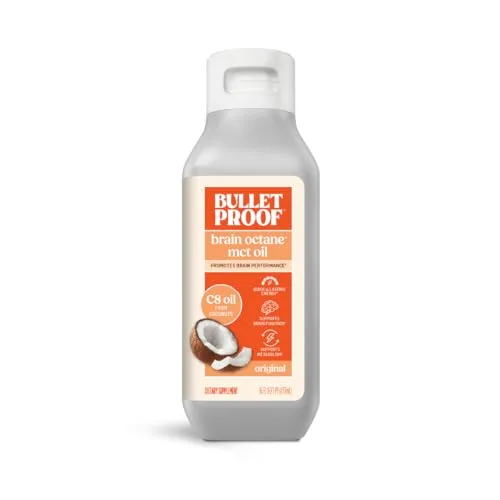
The gold standard for pure C8 MCT oil. Triple-distilled from 100% coconut oil to isolate caprylic acid, which converts to ketones 3x faster than standard coconut oil. No C10 or C12 dilution means every serving delivers peak ketone output.
Ingredient100% C8 Caprylic Acid MCT Oil
Dose14g pure C8 per tablespoon
FormLiquid
TestingThird-Party Tested (Triple-Distilled)
14g pure C8 per tablespoonClinical range: 15-30ml (1-2 tablespoons) daily
Blend formula
$1.87 / fluid ounce
Pros
- 100% pure C8 caprylic acid — fastest ketone conversion
- Triple-distilled for maximum purity
- Third-party tested for contaminants
Cons
- Premium price (~$0.52/tbsp)
- Not USDA Organic certified
VeganGluten-freeNon-GMODairy-freeSoy-free
Quick Comparison
#1Bulletproof Brain Octane C8 MCT Oil
9.4/10
Bulletproof
#1 Top Pick
30,890 Amazon reviews
Best for: Maximum ketone production and cognitive performance
100% C8 Caprylic Acid MCT Oil · 14g pure C8 per tablespoon
Liquid · Third-Party Tested (Triple-Distilled)
$29.99
$1.87 / fluid ounce
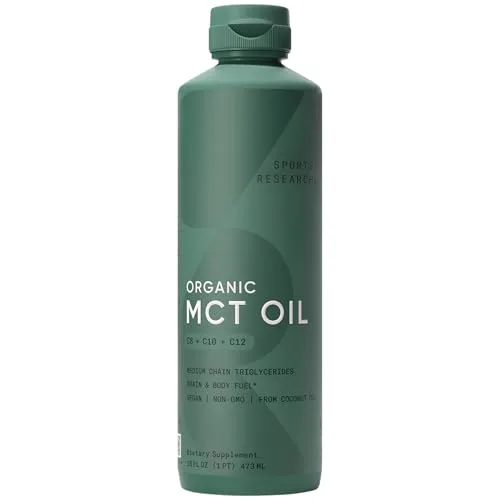
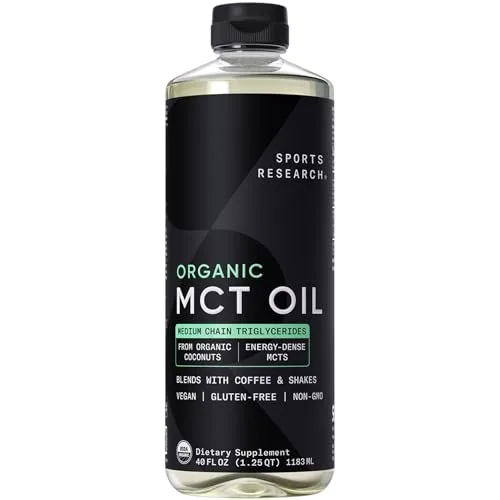
#2Sports Research Organic MCT Oil 16 oz (C8/C10/C12)
8.8/10
Sports Research
32,548 Amazon reviews
Best for: Keto dieters and intermittent fasters seeking a full-spectrum, USDA Organic, Informed Choice certified MCT oil from coconut — never palm
Full Spectrum MCT Oil (C8, C10, C12 from USDA Organic Coconut Oil) — 14g per serving · 14g MCT oil (1 tablespoon) per serving, 16 servings per 16 oz bottle
Liquid · Yes — Informed Choice certified; Non-GMO Project Verified; USDA Organic certified; manufactured in cGMP-compliant facility in the USA
$18.95
$1.18 / fluid ounce
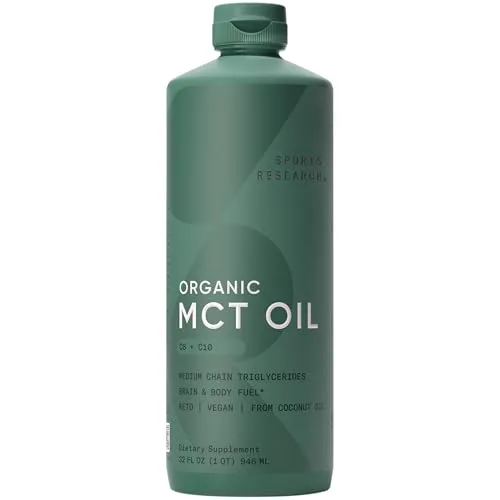
#3Sports Research Organic MCT Oil
8.8/10
Sports Research
10,519 Amazon reviews
Best for: Organic MCT oil with sport-certified purity
Organic C8 + C10 MCT Oil (Coconut-Derived) · 14g MCTs per tablespoon (C8 + C10 blend)
Liquid · USDA Organic, Informed Choice Certified
$26.95
$0.84 / fluid ounce
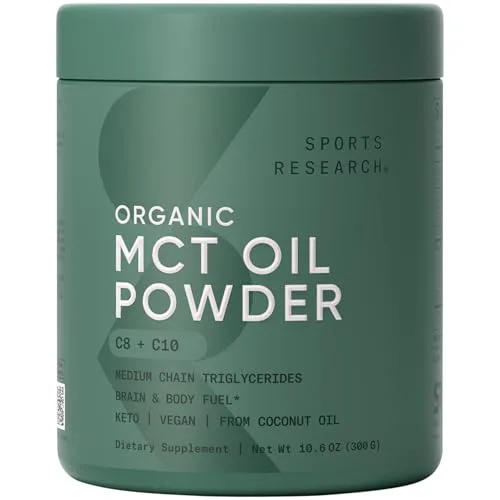
#4Sports Research Organic MCT Oil Powder
8.8/10
Sports Research
10,519 Amazon reviews
Best for: Keto and intermittent fasting adherents who want a mess-free, travel-ready C8+C10 MCT powder to blend into coffee, shakes, or recipes
MCT Oil (C8 Caprylic Acid + C10 Capric Acid) · Approximately 14g MCT powder per serving (varies by scoop)
Powder · USDA Organic, Non-GMO Project Verified, third-party tested
$24.95
$2.35 / ounce
#5Sports Research Organic MCT Oil Powder (C8+C10)
8.7/10
Sports Research
10,519 Amazon reviews
Best for: Keto dieters, intermittent fasters, and active adults who want a portable, mess-free MCT powder with only C8 and C10 chains from organic coconuts
Organic C8 (Caprylic Acid) + C10 (Capric Acid) from Coconut Oil · C8+C10 MCTs per scoop (exact grams vary by serving size)
Powder · Yes — third-party tested; manufactured in cGMP-compliant US facility; USDA Organic certified; Non-GMO Project Verified
$31.95
$0.80 / fluid ounce
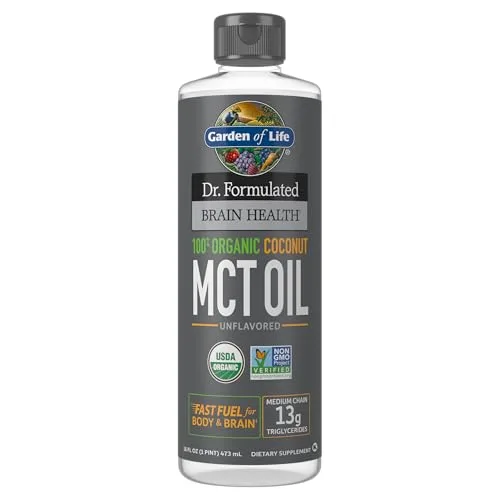
#6Garden of Life Dr. Formulated Brain Health Organic MCT Oil
8.5/10
Garden of Life
5,594 Amazon reviews
Best for: Brain health focus and clean-label shoppers
Organic C8 + C10 MCT Oil (Coconut-Derived) · 13g MCTs per tablespoon (C8 + C10)
Liquid · USDA Organic, Non-GMO Project Verified
$18.19
$1.14 / fluid ounce
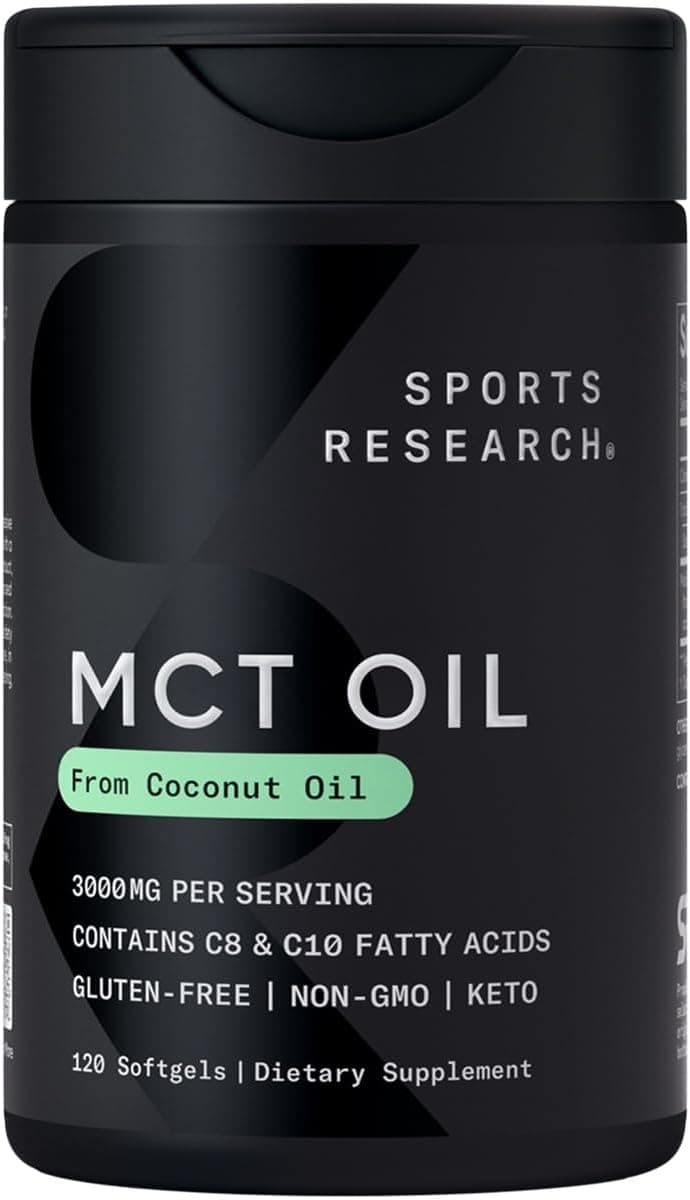
#7Sports Research MCT Oil Capsules 3000mg Coconut Softgels
7.8/10
Sports Research
1,873 Amazon reviews
Best for: Keto and intermittent fasting users who want MCT oil in a travel-ready, no-mess softgel format rather than liquid
MCT Oil (C8 ~60% Caprylic Acid + C10 ~40% Capric Acid) from Unrefined Virgin Coconut Oil · 3000mg MCT Oil (C8/C10 blend) per serving (3 softgels)
Softgel · Third-Party Tested
$16.95
$0.14 / count
| # | Product | Best For | Ingredient & Dose | Form & Testing | Price | Rating | |
|---|---|---|---|---|---|---|---|
| 1 | Bulletproof Brain Octane C8 MCT Oil #1 Top Pick 30,890 Amazon reviews | Maximum ketone production and cognitive performance | 100% C8 Caprylic Acid MCT Oil 14g pure C8 per tablespoon | Liquid Third-Party Tested (Triple-Distilled) | $29.99 $1.87 / fluid ounce | 9.4/10 | |
| 2 | Sports Research Organic MCT Oil 16 oz (C8/C10/C12) 32,548 Amazon reviews | Keto dieters and intermittent fasters seeking a full-spectrum, USDA Organic, Informed Choice certified MCT oil from coconut — never palm | Full Spectrum MCT Oil (C8, C10, C12 from USDA Organic Coconut Oil) — 14g per serving 14g MCT oil (1 tablespoon) per serving, 16 servings per 16 oz bottle | Liquid 16 Fluid Ounces Yes — Informed Choice certified; Non-GMO Project Verified; USDA Organic certified; manufactured in cGMP-compliant facility in the USA | $18.95 $1.18 / fluid ounce | 8.8/10 | |
| 3 | Sports Research Organic MCT Oil 10,519 Amazon reviews | Organic MCT oil with sport-certified purity | Organic C8 + C10 MCT Oil (Coconut-Derived) 14g MCTs per tablespoon (C8 + C10 blend) | Liquid USDA Organic, Informed Choice Certified | $26.95 $0.84 / fluid ounce | 8.8/10 | |
| 4 | Sports Research Organic MCT Oil Powder 10,519 Amazon reviews | Keto and intermittent fasting adherents who want a mess-free, travel-ready C8+C10 MCT powder to blend into coffee, shakes, or recipes | MCT Oil (C8 Caprylic Acid + C10 Capric Acid) Approximately 14g MCT powder per serving (varies by scoop) | Powder 10.6 Ounce USDA Organic, Non-GMO Project Verified, third-party tested | $24.95 $2.35 / ounce | 8.8/10 | |
| 5 | Sports Research Organic MCT Oil Powder (C8+C10) 10,519 Amazon reviews | Keto dieters, intermittent fasters, and active adults who want a portable, mess-free MCT powder with only C8 and C10 chains from organic coconuts | Organic C8 (Caprylic Acid) + C10 (Capric Acid) from Coconut Oil C8+C10 MCTs per scoop (exact grams vary by serving size) | Powder 10.6 Ounce Yes — third-party tested; manufactured in cGMP-compliant US facility; USDA Organic certified; Non-GMO Project Verified | $31.95 $0.80 / fluid ounce | 8.7/10 | |
| 6 | Garden of Life Dr. Formulated Brain Health Organic MCT Oil 5,594 Amazon reviews | Brain health focus and clean-label shoppers | Organic C8 + C10 MCT Oil (Coconut-Derived) 13g MCTs per tablespoon (C8 + C10) | Liquid USDA Organic, Non-GMO Project Verified | $18.19 $1.14 / fluid ounce | 8.5/10 | |
| 7 | Sports Research MCT Oil Capsules 3000mg Coconut Softgels 1,873 Amazon reviews | Keto and intermittent fasting users who want MCT oil in a travel-ready, no-mess softgel format rather than liquid | MCT Oil (C8 ~60% Caprylic Acid + C10 ~40% Capric Acid) from Unrefined Virgin Coconut Oil 3000mg MCT Oil (C8/C10 blend) per serving (3 softgels) | Softgel 120 Count Third-Party Tested | $16.95 $0.14 / count | 7.8/10 |
Detailed Reviews
#1 Top Pick
Bulletproof Brain Octane C8 MCT Oil, 16 oz – 100% Pure Coconut Oil, Triple-Distilled Keto Energy Supplement for Coffee & Smoothies, Unflavored, No Additives or Fillers, Non-GMO
#3 Best Sellerin MCT Oil NutritionalBulletproof
30,890 Amazon reviews
9.4/10
(30,890)
VeganGluten-freeNon-GMODairy-freeSoy-free
The gold standard for pure C8 MCT oil. Triple-distilled from 100% coconut oil to isolate caprylic acid, which converts to ketones 3x faster than standard coconut oil. No C10 or C12 dilution means every serving delivers peak ketone output.
Ingredient100% C8 Caprylic Acid MCT Oil
Dose14g pure C8 per tablespoon
FormLiquid
TestingThird-Party Tested (Triple-Distilled)
14g pure C8 per tablespoonClinical range: 15-30ml (1-2 tablespoons) daily
Blend formula
$1.87 / fluid ounce
Ideal for: Maximum ketone production and cognitive performance
Not ideal for: Budget shoppers or those who prefer organic certification
Pros
- 100% pure C8 caprylic acid — fastest ketone conversion
- Triple-distilled for maximum purity
- Third-party tested for contaminants
- Flavorless and odorless — mixes into any beverage
Cons
- Premium price (~$0.52/tbsp)
- Not USDA Organic certified
- 16oz bottle is smaller than competitors
- Plastic packaging
Sports Research® Organic MCT Oil 16oz - Full Spectrum (C8, C10, C12) Sourced from Coconut Oil - Keto Brain & Body Fuel* - Vegan Certified · Non-GMO · Informed Choice Certified - Unflavored
#2 Best Sellerin MCT Oil NutritionalSports Research
32,548 Amazon reviews
8.8/10
(32,548)
Tree nut-free (coconut is technically a tree nut — consult physician if tree nut allergic)Gluten-freeDairy-freeSoy-freeVeganNo hexane or solvents
This is one of the most rigorously certified MCT oils on the market. USDA Organic certification, Informed Choice clearance, and Non-GMO Project Verification on a single MCT oil product is exceptional — most MCT oils carry none of these. The coconut-only sourcing (no palm) addresses environmental concerns without sacrificing quality. With 32,548 reviews at 4.7 stars, this is one of the top-performing MCT oils on Amazon, with sustained customer satisfaction across a massive sample size. For buyers who want premium certification credentials behind their daily MCT, this product delivers.
IngredientFull Spectrum MCT Oil (C8, C10, C12 from USDA Organic Coconut Oil) — 14g per serving
Dose14g MCT oil (1 tablespoon) per serving, 16 servings per 16 oz bottle
FormLiquid
TestingYes — Informed Choice certified; Non-GMO Project Verified; USDA Organic certified; manufactured in cGMP-compliant facility in the USA
14g MCT oil (1 tablespoon) per serving, 16 servings per 16 oz bottleClinical range: 15-30ml (1-2 tablespoons) daily
Blend formula
$1.18 / fluid ounce$18.95 · 16 Fluid Ounces
Ideal for: Keto dieters and intermittent fasters seeking a full-spectrum, USDA Organic, Informed Choice certified MCT oil from coconut — never palm
Not ideal for: Those wanting a C8-only concentrate for maximum ketone conversion, or anyone who is sensitive to MCT-induced digestive discomfort when starting supplementation
Pros
- USDA Organic certified and Informed Choice certified — a rare dual certification in the MCT oil category
- 32,548 Amazon reviews at 4.7 stars — one of the highest-volume and highest-rated MCT oils available
- Sourced entirely from coconut oil — never palm — for environmental and ethical responsibility
- Steam-distilled without hexane or solvents, preserving oil purity and nutritional integrity
Cons
- Full-spectrum (C8/C10/C12) rather than pure C8 — those seeking maximum ketone conversion may prefer C8-only formats
- GI sensitivity (loose stools, cramping) is common when starting MCT oil — requires gradual dose escalation
- 16 oz container lasts only 16 days at one tablespoon daily — higher per-month cost than larger sizes
Sports Research Organic MCT Oil - Keto & Vegan MCTs C8, C10 from Coconuts - Fatty Acid Brain & Body Fuel, Non-GMO & Gluten Free - Flavorless Oil, Perfect in Coffee, Tea & Protein Shakes - 32 oz
#2 Best Sellerin MCT Oil NutritionalSports Research
10,519 Amazon reviews
8.8/10
(10,519)
USDA OrganicVeganGluten-freeNon-GMOKeto-friendly
The best organic MCT oil available. USDA Organic certified and Informed Choice sport-tested, making it the top pick for athletes subject to anti-doping testing. The C8+C10 blend delivers strong ketone production at a better value than pure C8 options.
IngredientOrganic C8 + C10 MCT Oil (Coconut-Derived)
Dose14g MCTs per tablespoon (C8 + C10 blend)
FormLiquid
TestingUSDA Organic, Informed Choice Certified
14g MCTs per tablespoon (C8 + C10 blend)Clinical range: 15-30ml (1-2 tablespoons) daily
Blend formula
$0.84 / fluid ounce
Ideal for: Organic MCT oil with sport-certified purity
Not ideal for: Those wanting 100% pure C8 for maximum ketone output
Pros
- USDA Organic and Non-GMO Project Verified
- Informed Choice certified for sport
- 32oz bottle — double the size at similar price
- 100% coconut-derived, no palm oil
Cons
- C8+C10 blend, not pure C8
- C10 converts to ketones more slowly
- Plastic bottle
Sports Research Organic MCT Oil Powder - Keto & Vegan MCTs C8, C10 from Coconuts - Fatty Acid Brain & Body Fuel*, Non-GMO & Gluten Free - Unflavored, Perfect in Coffee, Tea & Protein Shakes - 10.6 oz
#2 Best Sellerin MCT Oil NutritionalSports Research
10,519 Amazon reviews
8.8/10
(10,519)
Coconut (tree nut)
10K+ reviews and USDA Organic certification at a competitive price make this the benchmark MCT powder for keto and intermittent fasting users. C8+C10 exclusivity maximizes ketone conversion, and the creamy blend performance in hot coffee is consistently praised in reviews.
IngredientMCT Oil (C8 Caprylic Acid + C10 Capric Acid)
DoseApproximately 14g MCT powder per serving (varies by scoop)
FormPowder
TestingUSDA Organic, Non-GMO Project Verified, third-party tested
Approximately 14g MCT powder per serving (varies by scoop)Clinical range: 15-30ml (1-2 tablespoons) daily
Blend formula
$2.35 / ounce$24.95 · 10.6 Ounce
Ideal for: Keto and intermittent fasting adherents who want a mess-free, travel-ready C8+C10 MCT powder to blend into coffee, shakes, or recipes
Not ideal for: Users who prefer liquid MCT oil or those sensitive to acacia fiber used as a carrier agent in powdered MCT formats
Pros
- C8+C10 only — excludes C12 lauric acid for maximum ketogenic conversion efficiency
- USDA Organic certified from 100% coconut oil — no palm oil, no dairy
- 10,519+ reviews at 4.6 stars — one of the most-reviewed MCT powders on Amazon
- Blends smooth without clumping; neutral flavor in coffee, oatmeal, or baking
Cons
- Powder format requires a carrier (typically acacia fiber) which adds minor carbohydrate — not zero-carb
- 10.6oz bag may only yield roughly 15–20 full servings depending on scoop size
- More expensive per gram of actual MCT than liquid MCT oil
Sports Research Organic MCT Oil - Keto & Vegan MCTs C8, C10 from Coconuts - Fatty Acid Brain & Body Fuel, Non-GMO & Gluten Free - Flavorless Oil, Perfect in Coffee, Tea & Protein Shakes - 40 oz
#2 Best Sellerin MCT Oil NutritionalSports Research
10,519 Amazon reviews
8.7/10
(10,519)
Gluten-free, soy-free, dairy-free, palm-oil-free, veganNo major allergensContains coconut
This is one of the few MCT powders that combines C8-only purity focus with USDA Organic certification and Non-GMO Project Verified status — simultaneously hitting the performance (no C12) and clean-label criteria. The absence of maltodextrin distinguishes it from most powder MCTs, which use it as a carrier. At 10,519 reviews and 4.6 stars, real-world validation is among the strongest in the category.
IngredientOrganic C8 (Caprylic Acid) + C10 (Capric Acid) from Coconut Oil
DoseC8+C10 MCTs per scoop (exact grams vary by serving size)
FormPowder
TestingYes — third-party tested; manufactured in cGMP-compliant US facility; USDA Organic certified; Non-GMO Project Verified
C8+C10 MCTs per scoop (exact grams vary by serving size)Clinical range: 15-30ml (1-2 tablespoons) daily
Blend formula
$0.80 / fluid ounce$31.95 · 10.6 Ounce
Ideal for: Keto dieters, intermittent fasters, and active adults who want a portable, mess-free MCT powder with only C8 and C10 chains from organic coconuts
Not ideal for: Those who prefer full-spectrum MCT oil (C8+C10+C12) or liquid MCT for higher per-serving fat density without bulking agents
Pros
- C8+C10 only — no C12, maximizing ketone conversion efficiency compared to full-spectrum MCT
- USDA Organic, Non-GMO Project Verified, palm-oil-free, and dairy-free — exceptional clean-label credentials
- Blends without clumping into hot and cold beverages; no oily residue of liquid MCT
- 10,519 reviews at 4.6 stars — one of the most validated MCT powder products on Amazon
Cons
- Lower total fat per gram of powder compared to liquid MCT oil, due to the powder carrier
- Not suitable as a high-calorie fat source for those targeting very high MCT gram intake
- Organic sourcing and clean carrier commands a slight premium over non-organic MCT powders
Garden of Life Dr. Formulated Brain Health 100% Organic Coconut MCT Oil 16 fl oz Unflavored, 13g MCTs, Body & Brain Fuel, Certified Non-GMO Vegan & Gluten Free, Hexane-Free
Garden of Life
5,594 Amazon reviews
8.5/10
(5,594)
USDA OrganicVeganGluten-freeNon-GMODairy-free
Formulated by neurologist Dr. David Perlmutter, author of Grain Brain, specifically for cognitive support. Hexane-free extraction preserves MCT quality. USDA Organic and Non-GMO Verified with a clean ingredient list.
IngredientOrganic C8 + C10 MCT Oil (Coconut-Derived)
Dose13g MCTs per tablespoon (C8 + C10)
FormLiquid
TestingUSDA Organic, Non-GMO Project Verified
13g MCTs per tablespoon (C8 + C10)Clinical range: 15-30ml (1-2 tablespoons) daily
Blend formula
$1.14 / fluid ounce
Ideal for: Brain health focus and clean-label shoppers
Not ideal for: Value seekers — higher cost per gram of MCTs than competitors
Pros
- Formulated by neurologist Dr. David Perlmutter
- Hexane-free extraction process
- USDA Organic and Non-GMO Project Verified
- Clean label — 100% coconut-sourced
Cons
- Slightly lower MCT content (13g vs 14g per tbsp)
- Premium price for a C8+C10 blend
- 16oz bottle — smaller than some competitors
- No Informed Choice or NSF sport certification
Sports Research MCT Oil Capsules derived from Coconut Oil | Keto Fuel for The Brain & Body | High Potency 3000 mg | Derived from Non-GMO Coconuts (120 Softgels)
Sports Research
1,873 Amazon reviews
7.8/10
(1,873)
Sports Research's MCT capsules use unrefined virgin coconut oil (not fractionated palm) for a cleaner C8/C10 source, with Keto Certification and Non-GMO verification — a credible option for keto users who value the no-mess convenience format.
IngredientMCT Oil (C8 ~60% Caprylic Acid + C10 ~40% Capric Acid) from Unrefined Virgin Coconut Oil
Dose3000mg MCT Oil (C8/C10 blend) per serving (3 softgels)
FormSoftgel
TestingThird-Party Tested
3000mg MCT Oil (C8/C10 blend) per serving (3 softgels)Clinical range: 15-30ml (1-2 tablespoons) daily
Blend formula
$0.14 / count$16.95 · 120 Count
Ideal for: Keto and intermittent fasting users who want MCT oil in a travel-ready, no-mess softgel format rather than liquid
Not ideal for: High-volume MCT users — 3000mg per serving is only 3g MCT; liquid MCT oil delivers 14g per tablespoon more economically
Pros
- Pure C8/C10 blend (~60/40) from unrefined virgin coconut oil — no palm oil
- 120-count bottle; convenient softgel format eliminates measuring and mess
- Keto Certified and Non-GMO Verified — clean keto-friendly positioning
- Portable for travel or gym use without spill risk of liquid MCT oil
Cons
- 3g per serving is low compared to 14g per tablespoon of liquid MCT oil
- 120 softgels at 3 per serving = only 40 servings — shorter supply than expected
- Higher cost per gram of MCT than the liquid format (B071W661GD)
Pairs Well With
Frequently taken together based on complementary benefits
Fish Oil
Carlson The Very Finest Fish Oil Liquid
Staff Pick
1,600mg omega-3s per tsp (EPA 800mg + DHA 600mg + DPA 70mg)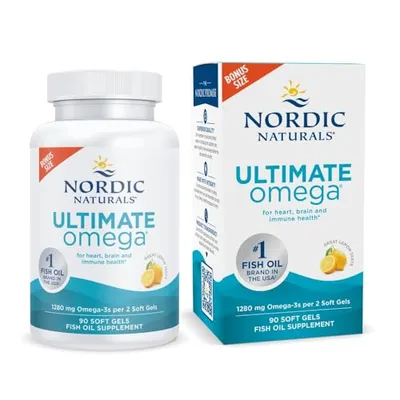
How to Choose
C8 vs C8+C10 vs Full-Spectrum: Which MCT Chain Length?
C8 (caprylic acid) is the most ketogenic MCT — it bypasses normal fat digestion and converts to ketones in the liver within 15 minutes. A 2017 study in Frontiers in Physiology showed C8 produces approximately 3x more ketones than coconut oil. C10 (capric acid) is moderately ketogenic but converts more slowly. C12 (lauric acid), despite being technically an MCT, behaves metabolically like a long-chain fatty acid and contributes minimally to rapid ketone production. If your goal is ketosis, cognitive performance, or energy, choose pure C8. If budget matters more than peak ketone levels, a C8+C10 blend is a reasonable compromise.
Coconut vs Palm Source: Why It Matters
MCT oil is derived from either coconut oil, palm kernel oil, or a blend of both. Coconut-derived MCTs are generally preferred for two reasons: sustainability (palm oil production drives deforestation) and purity (coconut oil has a naturally higher C8 content). Products labeled 'from coconuts' or '100% coconut-derived' avoid palm sourcing. USDA Organic certification provides additional assurance of sourcing quality. If environmental impact matters to you, choose a coconut-only, palm-free option.
GI Tolerance: How to Avoid Stomach Issues
MCT oil can cause GI distress — cramping, nausea, and diarrhea — especially when starting or at high doses. This happens because MCTs are rapidly absorbed and can overwhelm bile acid capacity. Start with 1 teaspoon (5ml) daily for the first week and increase by 1 teaspoon every 3-4 days until reaching your target dose of 1-2 tablespoons. Taking MCT oil with food significantly reduces GI side effects. Pure C8 is generally better tolerated than full-spectrum blends containing C12.
Who Should Use MCT Oil?
MCT oil benefits people following ketogenic or low-carb diets (accelerates ketosis), those seeking sustained mental energy without carbs, athletes wanting a fast-absorbing fuel source, and individuals exploring ketone-based support for neurodegenerative conditions. A 2021 randomized controlled trial showed MCT supplementation improved cognitive scores in mild-to-moderate Alzheimer's patients. MCT oil is not necessary for people eating a standard mixed diet — the benefits are most pronounced when carbohydrate intake is restricted.
Ready to Buy?
Bulletproof Brain Octane C8 MCT Oil
9.4/10$1.87 / fluid ounceBest for: Maximum ketone production and cognitive performance
The best MCT oil supplement is C8 (caprylic acid) isolate or a C8/C10 blend from sustainable coconut or palm-free sources, delivered in opaque-bottled liquid oil or unflavored softgels.
Evidence:Meta-analysis (2015) · high confidence[#2]. See full reference list below.Read Our Full MCT Oil Research Guide
Evidence level, dosage, side effects, and more →
Already taking supplements?
Check how MCT Oil fits with your current stack — interactions, timing, and optimization →
Related Supplements
Fish OilStrong
Bottom line: Fish oil is the omega-3 gold standard — proven to cut triglycerides, reduce inflammation, support brain health, and lower cardiovascular risk.
Top picks →Related Conditions
Frequently Asked Questions
What is MCT oil and how is it different from coconut oil?
What is MCT oil and how is it different from coconut oil?
MCT (medium-chain triglyceride) oil is a concentrated extract of the medium-chain fatty acids found in coconut and palm kernel oils. Coconut oil contains roughly 15% C8 and C10 MCTs, with the rest being C12 (lauric acid) and long-chain fats. MCT oil concentrates the C8 and C10 fractions through distillation, delivering 4-6x more ketogenic fats per tablespoon than coconut oil.
Does MCT oil help with weight loss?
Does MCT oil help with weight loss?
A 2015 meta-analysis [2] of 13 randomized controlled trials found that replacing long-chain fats with MCTs led to modest reductions in body weight, waist circumference, and total body fat. The mechanism involves increased energy expenditure — MCTs raise metabolic rate by approximately 250 kcal/day in short-term studies. However, MCT oil is still calorie-dense (115 kcal/tbsp), so it should replace other fats rather than be added on top of existing intake.
Evidence:Meta-analysis (2015) · high confidence[#2]. See full reference list below.Can MCT oil improve brain function?
Can MCT oil improve brain function?
MCT oil provides an alternative fuel source (ketones) for the brain, which may be particularly beneficial when glucose metabolism is impaired. A 2021 randomized controlled trial published in Alzheimer's Research & Therapy found that 6 months of MCT supplementation improved cognitive scores in patients with mild-to-moderate Alzheimer's disease. In healthy adults, MCT oil may support sustained mental energy during fasting or low-carb eating.
How much MCT oil should I take per day?
How much MCT oil should I take per day?
Start with 1 teaspoon (5ml) daily and gradually increase to 1-2 tablespoons (15-30ml) over 1-2 weeks. Most clinical studies use 15-30ml daily. Going too fast causes GI distress. Take with food to improve tolerance. There is no established upper limit, but most people do well at 1-2 tablespoons per day.
Is C8 MCT oil really better than C8+C10 blends?
Is C8 MCT oil really better than C8+C10 blends?
For ketone production, yes. C8 (caprylic acid) is converted to ketones approximately 3x more efficiently than C10 (capric acid) and significantly faster — within 15 minutes of ingestion. A study in the Journal of Nutritional Science showed pure C8 raised blood beta-hydroxybutyrate levels higher than equivalent doses of C8+C10 blends. The trade-off is price: pure C8 costs 30-50% more per serving.
Can MCT oil cause stomach problems?
Can MCT oil cause stomach problems?
Yes, GI distress is the most common side effect of MCT oil, particularly at high doses or when starting. Symptoms include cramping, nausea, bloating, and diarrhea. This occurs because MCTs are rapidly absorbed and can overwhelm digestive capacity. Starting with a low dose (1 tsp) and increasing gradually over 1-2 weeks eliminates this issue for most people. Taking MCT oil with meals also helps.
Can I cook with MCT oil?
Can I cook with MCT oil?
MCT oil has a smoke point of approximately 160 degrees C (320 degrees F), making it suitable for low-to-medium heat cooking, salad dressings, and blending into beverages. It is not suitable for high-heat frying or searing. Most people use MCT oil in coffee, smoothies, or drizzled over prepared foods rather than as a cooking oil.
Is MCT oil safe for people with liver conditions?
Is MCT oil safe for people with liver conditions?
MCTs are metabolized primarily in the liver, so people with liver disease or fatty liver should consult their doctor before using MCT oil. In healthy individuals, MCTs do not appear to increase liver fat. However, high doses in people with compromised liver function could theoretically overwhelm hepatic capacity. Start with small doses and monitor liver enzymes if you have a pre-existing condition.
Continue Reading
References
- Meta-analysisMumme K, Stonehouse W (2015). Effects of medium-chain triglycerides on weight loss and body composition: a meta-analysis of randomized controlled trials. Journal of the Academy of Nutrition and Dietetics. DOI PubMed
- In-vitroShilling M, Matt L, Rubin E, Visitacion MP, Haller NA, Grey SF, Woolverton CJ (2013). Antimicrobial effects of virgin coconut oil and its medium-chain fatty acids on Clostridium difficile. Journal of Medicinal Food. DOI PubMed