
We analyzed 23 spirulina supplements across source quality, heavy metal testing, phycocyanin content, third-party verification, and value per serving. Our picks prioritize purity and origin transparency over marketing claims.
Best Spirulina Supplements (2026)
Product pricing and availability checked
Methodology: Evidence-ranked evaluation
·
2,600+Clinical Studies Cited
·5Spirulina products evaluated
This content is for informational purposes only and does not constitute medical advice. Statements about dietary supplements have not been evaluated by the FDA and are not intended to diagnose, treat, cure, or prevent any disease. Individual results may vary — consult your healthcare provider before starting any supplement. Full disclaimer
As an Amazon Associate, we earn from qualifying purchases. Some links below are affiliate links — this doesn't affect our editorial independence or product ratings. How we evaluate products
Our Verdict
Nutrex Hawaii Pure Hawaiian Spirulina is the best overall pick — Kona-grown for 40+ years with high phycocyanin content and rigorous heavy metal testing.
Best By Category
The best spirulina supplement provides 3-10g daily of spirulina (Arthrospira platensis) from a transparent, traceable...
The best spirulina supplement provides 3-10g daily of spirulina (Arthrospira platensis) from a transparent, traceable source (Hawaiian Kona, Taiwan, or USDA-organic certified) with documented heavy-metal and microcystin testing. High phycocyanin content (>14%) is a key quality marker.
How We Chose These Products
Products are ranked using our published scoring methodology — evidence strength, dose adequacy, ingredient form, third-party testing signals, value, and clean-label factors are weighted across the 5 criteria below. Commercial relationships do not determine our editorial rankings.
Purity & Heavy Metal Testing
30%Spirulina bioaccumulates heavy metals from its growth environment. We prioritize products with documented heavy metal testing (arsenic, lead, mercury, cadmium) and verifiable testing protocols. Algae grown in controlled ponds score higher than open-water sources.
Source Quality
25%Growing location and conditions directly affect phycocyanin concentration, the primary bioactive compound. Hawaiian and California-grown spirulina from established producers with decades of cultivation history score highest. We penalize products with undisclosed or frequently-changed sourcing.
Nutritional Density
20%Spirulina is 55-70% protein by weight with significant phycocyanin, beta-carotene, and iron content. We verify that claimed nutrient profiles match independent testing and that per-serving doses reach the 1-3g clinical range.
Value
15%Cost per 3g serving (the standard clinical dose). A $0.48/serving premium Hawaiian product may justify the cost over a $0.08/serving generic if source quality and testing are meaningfully better.
Clean Label
10%Minimal excipients, no artificial colors or flavors, and relevant certifications (organic, non-GMO, vegan). Powder forms inherently score higher here as they require zero fillers or binders.
#1 Top Pick
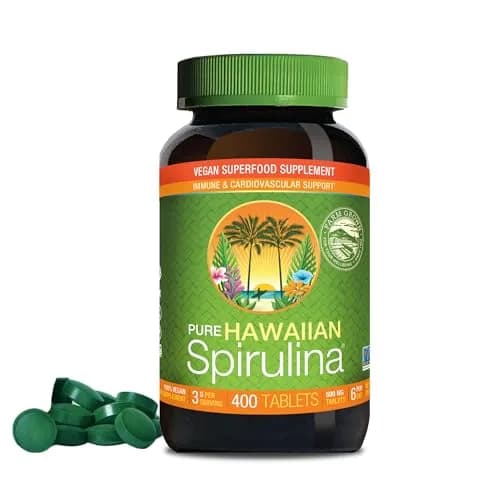
Grown on the Kona Coast of Hawaii for over 40 years in a biosecure facility using fresh Hawaiian aquifer water and year-round sunshine. Nutrex Hawaii is the gold standard for spirulina purity — their facility produces spirulina with consistently high phycocyanin content and undergoes rigorous heavy metal testing well below FDA limits.
IngredientHawaiian Spirulina (Arthrospira platensis)
Dose3g per serving (6 tablets)
FormTablet
TestingThird-Party Tested
3g per serving (6 tablets)Clinical range: 1-3g daily
Therapeutic dose
$0.08 / count$32.99 · 400 Count
Pros
- Kona-grown for 40+ years in biosecure facility
- High phycocyanin content from optimal growing conditions
- Rigorous heavy metal testing (arsenic, lead, mercury, cadmium)
Cons
- Requires 6 tablets per serving
- Premium price at $0.48/serving — 6x the cost of budget options
VeganGluten-freeNon-GMO
Quick Comparison
#1Nutrex Hawaii Pure Hawaiian Spirulina 500mg
9.2/10
Nutrex Hawaii
#1 Top Pick
10,814 Amazon reviews
Best for: Overall / Purity
Hawaiian Spirulina (Arthrospira platensis) · 3g per serving (6 tablets)
Tablet · Third-Party Tested
$32.99
$0.08 / count
#2Earthrise Spirulina Natural 500mg
8.8/10
Earthrise
71 Amazon reviews
Best for: US-Grown / Traceability
California-Grown Spirulina (Arthrospira platensis) · 3g per serving (6 tablets)
Tablet · GMP + ISO 9001:2015
$31.97
$0.09 / count
#3NOW Foods Organic Spirulina 500mg
8.6/10
NOW
4,868 Amazon reviews
Best for: Organic / Best mid-range value
Organic Spirulina (Arthrospira platensis) · 3g per serving (6 tablets)
Tablet · Non-GMO Project Verified
$21.87
$0.04 / count
#4Vimergy Spirulina Powder
8.4/10
Vimergy
2,709 Amazon reviews
Best for: Smoothies / Zero fillers
Spirulina Powder (Arthrospira platensis) · 3g per serving (1 tsp)
Powder · Third-Party Tested
$40.00
$4.57 / ounce
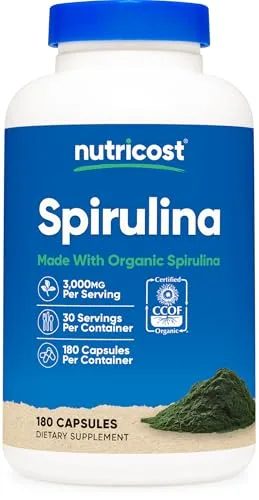
#5Nutricost Spirulina 3,000mg
7.8/10
Nutricost
320 Amazon reviews
Best for: Budget / Capsule convenience
Spirulina (Arthrospira platensis) · 3g per serving (6 capsules)
Capsule · ISO-Accredited Lab Tested
$14.95
$0.08 / count
| # | Product | Best For | Ingredient & Dose | Form & Testing | Price | Rating | |
|---|---|---|---|---|---|---|---|
| 1 | Nutrex Hawaii Pure Hawaiian Spirulina 500mg #1 Top Pick 10,814 Amazon reviews | Overall / Purity | Hawaiian Spirulina (Arthrospira platensis) 3g per serving (6 tablets) | Tablet 400 Count Third-Party Tested | $32.99 $0.08 / count | 9.2/10 | |
| 2 | Earthrise Spirulina Natural 500mg 71 Amazon reviews | US-Grown / Traceability | California-Grown Spirulina (Arthrospira platensis) 3g per serving (6 tablets) | Tablet 360 Count GMP + ISO 9001:2015 | $31.97 $0.09 / count | 8.8/10 | |
| 3 | NOW Foods Organic Spirulina 500mg 4,868 Amazon reviews | Organic / Best mid-range value | Organic Spirulina (Arthrospira platensis) 3g per serving (6 tablets) | Tablet 500 Tablets Non-GMO Project Verified | $21.87 $0.04 / count | 8.6/10 | |
| 4 | Vimergy Spirulina Powder 2,709 Amazon reviews | Smoothies / Zero fillers | Spirulina Powder (Arthrospira platensis) 3g per serving (1 tsp) | Powder 83 Servings Third-Party Tested | $40.00 $4.57 / ounce | 8.4/10 | |
| 5 | Nutricost Spirulina 3,000mg 320 Amazon reviews | Budget / Capsule convenience | Spirulina (Arthrospira platensis) 3g per serving (6 capsules) | Capsule 180 Capsules ISO-Accredited Lab Tested | $14.95 $0.08 / count | 7.8/10 |
Detailed Reviews
#1 Top Pick
Nutrex Hawaii Pure Hawaiian Spirulina – Vegan Superfood, 500 mg Tablets, Farm Grown in Kona, Non-GMO, Immune Support & Cellular Energy, 400 Count
Nutrex Hawaii
10,814 Amazon reviews
9.2/10
(10,814)
VeganGluten-freeNon-GMO
Grown on the Kona Coast of Hawaii for over 40 years in a biosecure facility using fresh Hawaiian aquifer water and year-round sunshine. Nutrex Hawaii is the gold standard for spirulina purity — their facility produces spirulina with consistently high phycocyanin content and undergoes rigorous heavy metal testing well below FDA limits.
IngredientHawaiian Spirulina (Arthrospira platensis)
Dose3g per serving (6 tablets)
FormTablet
TestingThird-Party Tested
3g per serving (6 tablets)Clinical range: 1-3g daily
Therapeutic dose
$0.08 / count$32.99 · 400 Count
Ideal for: Overall / Purity
Not ideal for: Budget-conscious buyers who want the lowest cost per serving
Pros
- Kona-grown for 40+ years in biosecure facility
- High phycocyanin content from optimal growing conditions
- Rigorous heavy metal testing (arsenic, lead, mercury, cadmium)
- 400-count bottle provides 66 servings
Cons
- Requires 6 tablets per serving
- Premium price at $0.48/serving — 6x the cost of budget options
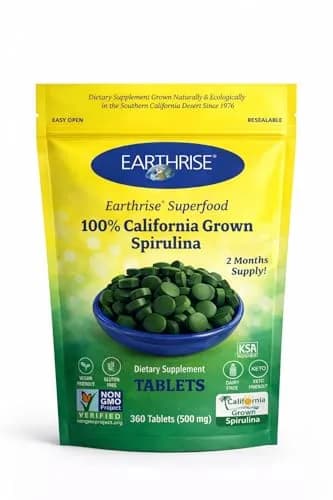
Earthrise Superfood 100% California Grown Spirulina 500mg Tablets (360 Count), Natural Premium Spirulina, Vegan, Gluten Free, Keto Friendly, Non -GMO, High in Vitamins & Minerals
Earthrise
71 Amazon reviews
8.8/10
(71)
VeganGluten-freeNon-GMO
Earthrise operates the world's largest spirulina farm in the Sonoran Desert of California, producing spirulina since 1982. Their ISO 9001:2015 certified facility provides complete traceability from pond to tablet. California's strict agricultural regulations add an extra layer of quality assurance that imported spirulina cannot match.
IngredientCalifornia-Grown Spirulina (Arthrospira platensis)
Dose3g per serving (6 tablets)
FormTablet
TestingGMP + ISO 9001:2015
3g per serving (6 tablets)Clinical range: 1-3g daily
Therapeutic dose
$0.09 / count$31.97 · 360 Count
Ideal for: US-Grown / Traceability
Not ideal for: Budget-conscious buyers — one of the most expensive per serving
Pros
- 100% California-grown with full traceability
- ISO 9001:2015 quality management certification
- 40+ years of spirulina cultivation expertise
- Strict US agricultural oversight and testing standards
Cons
- Most expensive per serving at $0.50
- Not organic certified
- Only 60 servings per bottle
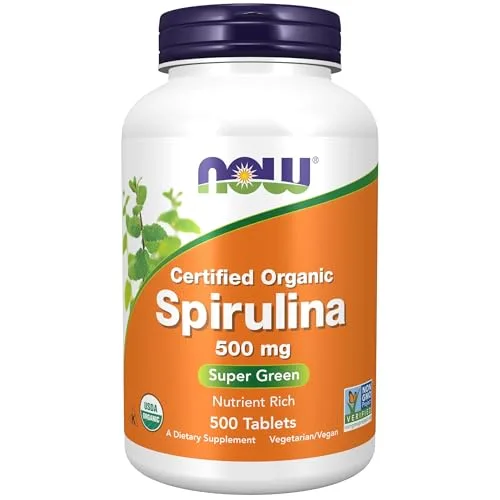
NOW Foods Supplements, Organic Spirulina 500 mg with Vitamins, Minerals and GLA (Gamma-Linolenic Acid), 500 Tablets
NOW
4,868 Amazon reviews
8.6/10
(4,868)
VeganOrganicNon-GMOGluten-free
NOW Foods is one of the most trusted supplement brands in the industry with over 50 years of manufacturing experience and rigorous GMP compliance. Their organic spirulina is Non-GMO Project Verified and USDA Organic certified, offering strong purity assurance at nearly half the price of Hawaiian-grown options.
IngredientOrganic Spirulina (Arthrospira platensis)
Dose3g per serving (6 tablets)
FormTablet
TestingNon-GMO Project Verified
3g per serving (6 tablets)Clinical range: 1-3g daily
Therapeutic dose
$0.04 / count$21.87 · 500 Tablets
Ideal for: Organic / Best mid-range value
Not ideal for: Those who prioritize US-grown sourcing or single-origin traceability
Pros
- USDA Organic and Non-GMO Project Verified
- Excellent value at $0.24/serving for 83 servings
- NOW Foods' 50+ year GMP manufacturing track record
- 500-count bottle is one of the highest counts available
Cons
- Multi-source procurement (India/China) — less traceability than single-origin
- Requires 6 tablets to reach 3g clinical dose
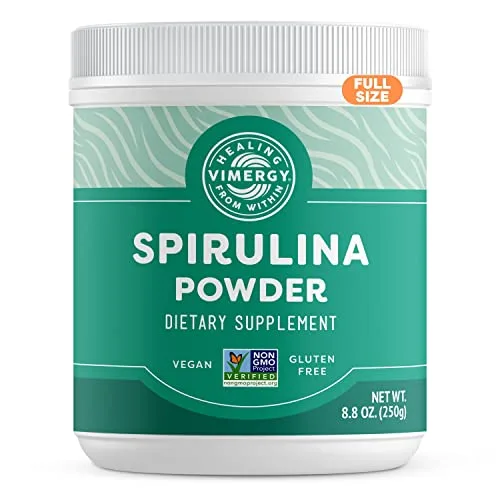
Vimergy Spirulina Powder – Concentrated Plant Protein Supports Immune Health & Cardiovascular Function – Vegan, Kosher, Gluten-Free – 250g
Vimergy
2,709 Amazon reviews
8.4/10
(2,709)
VeganGluten-freeNon-GMONo fillers
The only powder option in our lineup, Vimergy Spirulina contains zero fillers, binders, or excipients — just pure spirulina. Powder form offers the highest bioavailability since there is no tablet compression or capsule shell to dissolve. Ideal for adding to smoothies, juices, or mixing into foods where you control the exact dose.
IngredientSpirulina Powder (Arthrospira platensis)
Dose3g per serving (1 tsp)
FormPowder
TestingThird-Party Tested
3g per serving (1 tsp)Clinical range: 1-3g daily
Therapeutic dose
$4.57 / ounce$40.00 · 83 Servings
Ideal for: Smoothies / Zero fillers
Not ideal for: Those who dislike spirulina's taste or want grab-and-go convenience
Pros
- Zero fillers, binders, or excipients — pure spirulina
- Flexible dosing — easy to adjust up or down
- Best bioavailability (no tablet compression)
- 250g container provides approximately 83 servings
Cons
- Strong algae taste requires mixing into smoothies or juice
- Less convenient than tablets or capsules for on-the-go use
- Premium price for a powder at $0.43/serving
Nutricost Spirulina 3,000mg, 180 Capsules for 30 Servings - CCOF Certified Made with Organic Spirulina, Gluten Free, Vegetarian
Nutricost
320 Amazon reviews
7.8/10
(320)
VeganGluten-freeNon-GMO
At $0.08/serving, Nutricost delivers the lowest cost per clinical dose in our lineup — roughly 6x cheaper than Hawaiian-grown options. Each batch is tested by an ISO-accredited third-party lab for identity and purity. The capsule format avoids the strong taste of spirulina tablets and powder.
IngredientSpirulina (Arthrospira platensis)
Dose3g per serving (6 capsules)
FormCapsule
TestingISO-Accredited Lab Tested
3g per serving (6 capsules)Clinical range: 1-3g daily
Therapeutic dose
$0.08 / count$14.95 · 180 Capsules
Ideal for: Budget / Capsule convenience
Not ideal for: Those who prioritize premium sourcing or want the highest phycocyanin content
Pros
- Lowest cost at $0.08/serving — exceptional value
- ISO-accredited third-party lab testing
- Capsule form masks spirulina taste
- Full 3g clinical dose per serving
Cons
- Undisclosed sourcing origin
- Six capsules per serving is a high pill burden
- Phycocyanin content not specified
Pairs Well With
Frequently taken together based on complementary benefits
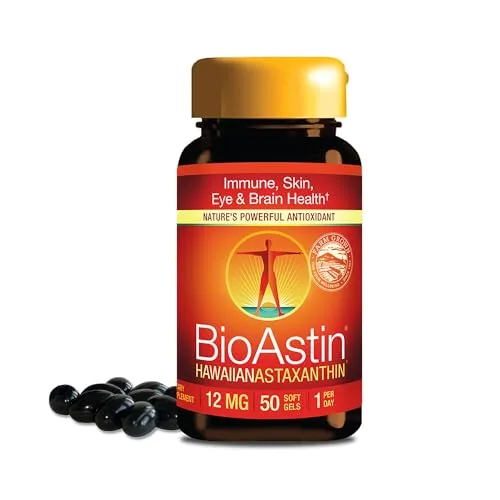
Astaxanthin
BioAstin Hawaiian Astaxanthin 12mg
Staff Pick
12mg astaxanthin per softgel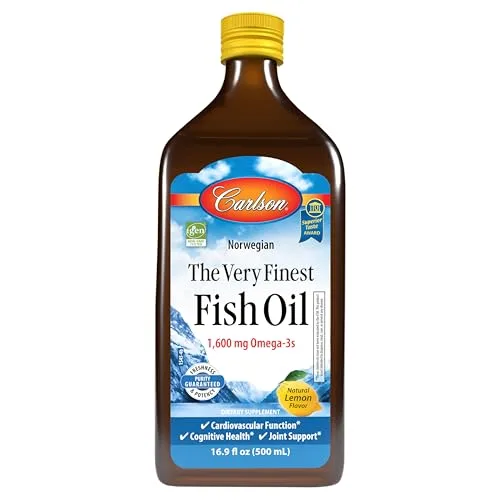
Fish Oil
Carlson The Very Finest Fish Oil Liquid
Staff Pick
1,600mg omega-3s per tsp (EPA 800mg + DHA 600mg + DPA 70mg)How to Choose
Source Matters More Than Brand
Spirulina grown in controlled ponds in Hawaii or California consistently tests lower for heavy metals and higher for phycocyanin than spirulina from open-water farms in China or India. Nutrex Hawaii and Earthrise have been cultivating spirulina for 40+ years in biosecure facilities with mineral-rich water sources. If a product does not disclose where its spirulina is grown, that is a red flag.
Check for Heavy Metal Testing
Spirulina bioaccumulates arsenic, lead, mercury, and cadmium from its environment. A 2013 study in the Saudi Journal of Biological Sciences found heavy metal contamination in multiple spirulina products. Look for products that specifically mention heavy metal testing — not just general 'third-party tested' claims. Products grown in controlled US facilities are less likely to have contamination issues than those from regions with less environmental oversight.
Powder vs Tablets
Powder is the purest form — zero fillers, binders, or excipients. It offers flexible dosing and the highest bioavailability. However, spirulina has a strong algae flavor that many people find unpleasant. Tablets require 6 per serving to reach the clinical 3g dose, but are more convenient and taste-free. Capsules offer the best of both worlds but tend to be more expensive per serving. Choose based on your tolerance for taste and pill burden.
Who Should Avoid Spirulina
People with phenylketonuria (PKU) should avoid spirulina due to its high phenylalanine content. Those with autoimmune conditions (lupus, rheumatoid arthritis, multiple sclerosis) should consult their doctor, as spirulina stimulates immune function and could worsen symptoms. People on blood thinners should use caution, as spirulina has mild anticoagulant properties. Pregnant and breastfeeding women should consult a healthcare provider due to limited safety data.
Ready to Buy?
Nutrex Hawaii Pure Hawaiian Spirulina 500mg
9.2/10$0.08 / countBest for: Overall / Purity
Nutrex Hawaii Pure Hawaiian Spirulina is the best overall pick — Kona-grown for 40+ years with high phycocyanin content and rigorous heavy metal testing.
Evidence:Meta-analysis (2018) · 12 RCTs · high confidence[#1]. See full reference list below.Read Our Full Spirulina Research Guide
Evidence level, dosage, side effects, and more →
Already taking supplements?
Check how Spirulina fits with your current stack — interactions, timing, and optimization →
Related Supplements
AstaxanthinModerate
Bottom line: Astaxanthin is nature's most potent antioxidant — protecting cells from oxidative damage without pro-oxidant risk. Take 4-12mg daily for skin, exercise, and longevity.
Top picks →Fish OilStrong
Bottom line: Fish oil is the omega-3 gold standard — proven to cut triglycerides, reduce inflammation, support brain health, and lower cardiovascular risk.
Top picks →Vitamin B12Strong
Bottom line: B12 deficiency is common in vegans, older adults, and metformin users. Take 1,000mcg methylcobalamin daily if at risk — it resolves fatigue and brain fog from deficiency.
Top picks →Related Conditions
Learn More
Frequently Asked Questions
What is the best spirulina supplement?
What is the best spirulina supplement?
Nutrex Hawaii Pure Hawaiian Spirulina is the best overall spirulina supplement. It is grown in a biosecure facility on the Kona Coast using fresh Hawaiian aquifer water, producing spirulina with consistently high phycocyanin content. Their 40+ year track record and rigorous heavy metal testing make it the gold standard. For budget buyers, Nutricost Spirulina at $0.08/serving offers ISO-accredited lab testing at a fraction of the price.
How much spirulina should I take daily?
How much spirulina should I take daily?
Most clinical studies use 1-3g of spirulina daily, with some studies going up to 8g. A 3g daily dose (the standard serving size across our top picks) is sufficient for cholesterol reduction, immune support, and antioxidant benefits based on published research. Start with 1g daily and increase gradually to assess tolerance, as some people experience digestive discomfort when starting spirulina.
Is spirulina safe to take every day?
Is spirulina safe to take every day?
Yes, spirulina is generally safe for daily use at doses of 1-8g per day based on clinical trial data. It has been consumed as a food source for centuries. The main safety concern is contamination — spirulina can accumulate heavy metals if grown in polluted water, which is why sourcing and third-party testing matter. People with PKU, autoimmune conditions, or those on blood thinners should consult their doctor first.
What is phycocyanin and why does it matter?
What is phycocyanin and why does it matter?
Phycocyanin is the blue pigment unique to spirulina that gives it its blue-green color. It is a potent COX-2 inhibitor with documented anti-inflammatory and antioxidant properties (Romay et al., 2003). Phycocyanin concentration varies significantly by growing conditions — spirulina grown in optimal sunlight and mineral-rich water (like Hawaiian facilities) produces higher levels. It is the primary reason spirulina is studied for inflammation and immune function.
Does spirulina help with weight loss?
Does spirulina help with weight loss?
Spirulina's effect on weight loss is modest and indirect. A meta-analysis by Huang et al. (2018) found small but significant reductions in body weight with spirulina supplementation. The mechanism is likely through improved lipid metabolism and blood sugar regulation rather than direct fat burning. Spirulina should not be relied upon as a primary weight loss intervention, but it may support metabolic health as part of a broader nutrition strategy.
Evidence:Meta-analysis (2018) · 12 RCTs · high confidence[#1]. See full reference list below.Can spirulina replace a multivitamin?
Can spirulina replace a multivitamin?
No. While spirulina is nutrient-dense — containing protein, iron, B vitamins, beta-carotene, and phycocyanin — it does not provide adequate amounts of vitamin D, vitamin C, calcium, or most minerals at standard doses. A 3g serving delivers roughly 2mg of iron (11% DV) and meaningful B12 analogs that are not bioavailable to humans. Spirulina is best used as a targeted supplement for its anti-inflammatory and immune benefits, not as a multivitamin replacement.
Continue Reading
References
- Meta-analysisHuang H, Liao D, Pu R, Cui Y (2018). Quantifying the effects of spirulina supplementation on plasma lipid and glucose concentrations, body weight, and blood pressure. Diabetes, Metabolic Syndrome and Obesity. DOI PubMed
- RCTSelmi C, Leung PS, Fischer L, German B, Yang CY, Kenny TP, Cysewski GR, Gershwin ME (2011). The effects of Spirulina on anemia and immune function in senior citizens. Cellular & Molecular Immunology. DOI PubMed
- RCTCingi C, Conk-Dalay M, Cakli H, Bal C (2008). The effects of spirulina on allergic rhinitis. European Archives of Oto-Rhino-Laryngology. DOI PubMed
- Ou Y, Lin L, Yang X, Pan Q, Cheng X (2013). Antidiabetic potential of phycocyanin: effects on KKAy mice. Pharmaceutical Biology. DOI PubMed
- ReviewFinamore A, Palmery M, Bensehaila S, Peluso I (2017). Antioxidant, immunomodulating, and microbial-modulating activities of the sustainable and ecofriendly spirulina. Oxidative Medicine and Cellular Longevity. DOI PubMed
- ObservationalMazokopakis EE, Papadomanolaki MG, Fousteris AA, Kotsiris DA, Lampadakis IM, Ganotakis ES (2014). The hepatoprotective and hypolipidemic effects of Spirulina (Arthrospira platensis) supplementation in a Cretan population with non-alcoholic fatty liver disease. Turkish Journal of Gastroenterology. PubMed
- ReviewDeng R, Chow TJ (2010). Hypolipidemic, antioxidant, and antiinflammatory activities of microalgae Spirulina. Cardiovascular Therapeutics. DOI PubMed