SupplementScience

Flaxseed Oil — Research Profile

Plant Oil

Reviewed by·PharmD, BCPS

This content is for informational purposes only and does not constitute medical advice. Consult your healthcare provider before starting any supplement. Full disclaimer

Flaxseed oil provides 7.3g ALA omega-3 per tablespoon, the richest plant source.

Flaxseed oil provides 7.3g ALA omega-3 per tablespoon, the richest plant source. At 1-2 tablespoons daily, it modestly reduces blood pressure, improves cholesterol ratios, supports skin hydration, and lowers inflammatory markers — though conversion to EPA/DHA is limited to 5-10%.

Key Facts

What it is
A cold-pressed plant oil from flaxseeds (Linum usitatissimum) providing alpha-linolenic acid (ALA), the essential plant-based omega-3 fatty acid, plus lignans
Primary benefits
  • Richest plant source of ALA omega-3 (7.3g per tablespoon)
  • Reduces systolic blood pressure by 2-5 mmHg
  • Lowers LDL cholesterol and triglycerides
  • Improves skin hydration and barrier function
  • Contains lignans with antioxidant and phytoestrogenic properties
Typical dosage
1-2 tablespoons (15-30 mL) daily or 1-3g softgels
Evidence level
Moderate
Safety profile
Generally Safe

Time to Effect

Hours
Days
Weeks
Months
2-12 weekstypical onset

Inflammatory markers (CRP) may improve within 2-4 weeks. Blood pressure and lipid changes typically require 8-12 weeks of consistent daily use. Skin hydration improvements observed at 6-12 weeks. ALA incorporation into cell membranes is gradual and cumulative.

What the Research Says

Flaxseed oil research centers on its role as the richest plant source of ALA omega-3 and its cardiovascular, anti-inflammatory, and dermatological benefits. Pan et al. (2009) published a comprehensive meta-analysis in The American Journal of Clinical Nutrition analyzing 28 studies, concluding that flaxseed supplementation significantly reduces total cholesterol and LDL, with effects driven primarily by ALA and lignan content. Khalesi et al. (2014) meta-analyzed 11 RCTs and found that flaxseed consumption reduces systolic blood pressure by 2.85 mmHg, with effects more pronounced in longer studies. Neukam et al. (2011) demonstrated in a 12-week RCT that daily flaxseed oil supplementation improved skin hydration, reduced transepidermal water loss, and decreased roughness in women with sensitive skin. Zhao et al. (2004) showed ALA-rich diets reduced CRP and IL-6 in dyslipidemic patients. The key limitation of flaxseed oil is its low conversion rate to EPA (5-10%) and DHA (<1%), as established by Burdge & Calder (2005), making it insufficient as a sole omega-3 source for conditions requiring high EPA/DHA (such as severe hypertriglyceridemia). Nevertheless, for plant-based diets and as a complementary omega-3, the evidence supports meaningful cardiovascular and dermatological benefits.

Benefits of Flaxseed Oil

  • Blood pressure reduction — A 2014 meta-analysis by Khalesi et al. in Clinical Nutrition analyzed 11 RCTs and found that flaxseed supplementation (including flaxseed oil) reduced systolic blood pressure by an average of 2.85 mmHg, with effects most pronounced in studies lasting 12+ weeks and in participants with elevated baseline blood pressure
  • Lipid profile improvement — Pan et al. (2009) published a meta-analysis in The American Journal of Clinical Nutrition showing flaxseed and its derivatives significantly reduced total cholesterol and LDL cholesterol, with whole flaxseed and flaxseed oil producing the largest effects on LDL reduction
  • Skin barrier and hydration — Neukam et al. (2011) conducted a 12-week RCT demonstrating that daily flaxseed oil supplementation significantly increased skin hydration, decreased transepidermal water loss, and reduced skin roughness and scaling in women with sensitive skin
  • Anti-inflammatory effects — Zhao et al. (2004) showed that 8 weeks of ALA-rich flaxseed oil supplementation reduced CRP, IL-6, and serum amyloid A in dyslipidemic patients, with effects comparable to fish oil for CRP reduction
  • Hormonal balance support — Lignans in flaxseed oil have weak phytoestrogenic activity and may modulate estrogen metabolism; Sturgeon et al. (2008) found flaxseed supplementation altered urinary estrogen metabolites in postmenopausal women, suggesting a favorable shift in estrogen balance
Did you know?

Flaxseed oil research centers on its role as the richest plant source of ALA omega-3 and its cardiovascular, anti-inflammatory, and dermatological benefits.

Forms of Flaxseed Oil

Flaxseed Oil supplement forms compared by bioavailability and best use
FormBioavailabilityBest For
Cold-Pressed Liquid OilHighMaximum potency — delivers full ALA payload (7.3g per tablespoon); must be refrigerated, light-sensitive, and consumed within 6-8 weeks of opening
Softgel CapsulesHighConvenience and portability — pre-measured doses avoid taste issues; typically 1g per capsule, so 3-6 capsules needed for therapeutic ALA doses
High-Lignan Flaxseed OilHighCombined ALA + lignan benefits — contains flaxseed particulate for additional phytoestrogenic and antioxidant activity; best for hormonal support

Dosage Recommendations

General recommendation: 1-2 tablespoons (15-30 mL) daily with food, or 2-6g in capsule form

Timing: With meals for best absorption; morning or evening dosing both effective. Add to smoothies, salads, or yogurt — never cook with flaxseed oil as heat destroys ALA • Take with food for best absorption.

Dosage by Condition

General cardiovascular support
1 tablespoon (15 mL) daily providing ~7g ALAModerate
High cholesterol / lipid management
1-2 tablespoons (15-30 mL) dailyModerate
Skin hydration and barrier function
1 tablespoon (15 mL) daily for 12+ weeksModerate
Systemic inflammation
1-2 tablespoons daily (7-14g ALA)Emerging
Hormonal balance (lignan-rich form)
1-2 tablespoons high-lignan flaxseed oil dailyEmerging

Upper limit: 4 tablespoons/day (60 mL); higher doses offer minimal additional benefit and may cause GI discomfort

Our Top Flaxseed Oil Picks

As an Amazon Associate, we earn from qualifying purchases. Some links below are affiliate links — this doesn't affect our editorial independence or product ratings. How we evaluate products

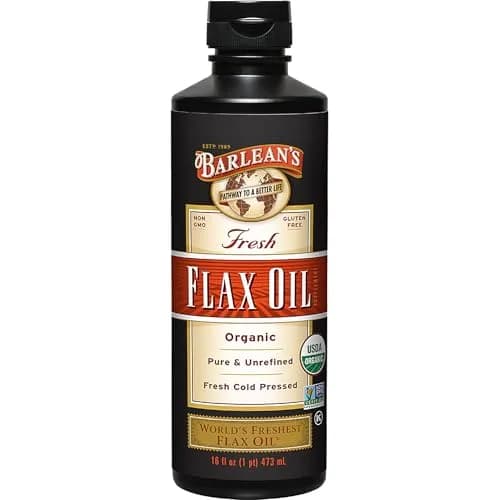
Barlean's Organic Flaxseed Oil Liquid 16oz
Barlean's
OverallForm: LiquidPrice: $0.50/tbsp
Buy Now on Amazon
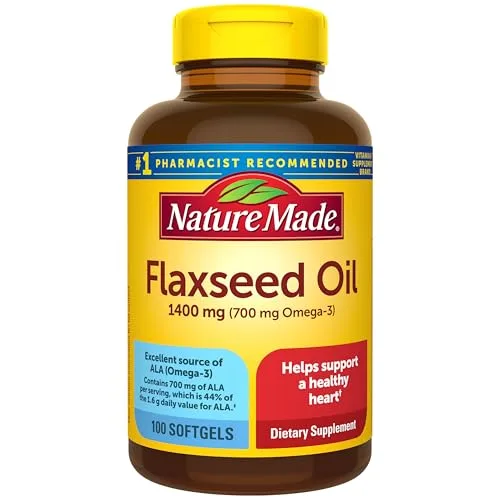
Nature Made Extra Strength Flaxseed Oil 1400mg
Nature Made
BudgetForm: SoftgelPrice: $0.12/softgel
Buy Now on Amazon
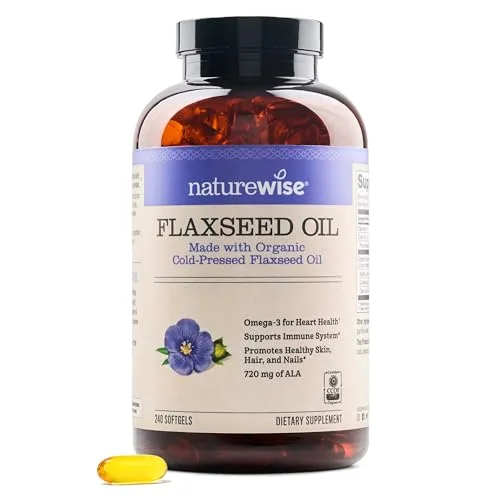
NatureWise Organic Flaxseed Oil 1242mg
NatureWise
Best SoftgelForm: SoftgelPrice: $0.08/softgel
Buy Now on Amazon
Sports Research Vegan Flaxseed Oil 1200mg
Sports Research
VeganForm: Veggie SoftgelPrice: $0.11/softgel
Buy Now on Amazon
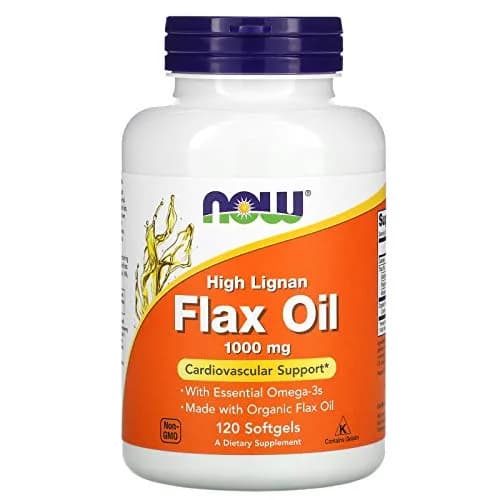
NOW Foods High Lignan Flax Oil 1000mg
NOW Foods
High LignanForm: SoftgelPrice: $0.10/softgel
Buy Now on Amazon

Medication Interactions & Contraindications

Drug Interactions

Warfarin
moderate
Anticoagulant
ALA omega-3s have mild antiplatelet activity. High-dose flaxseed oil may potentiate warfarin's anticoagulant effect. Monitor INR when starting or changing flaxseed oil doses. Consult your prescribing physician.
Aspirin / Clopidogrel
minor
Antiplatelet
Additive antiplatelet effects are possible but generally mild at standard flaxseed oil doses (1-2 tablespoons). Report unusual bruising or prolonged bleeding to your physician.
Lisinopril / Amlodipine
minor
Antihypertensive
Flaxseed oil may modestly lower blood pressure (2-5 mmHg systolic). Monitor for dizziness or hypotension, especially when initiating supplementation.
Tamoxifen / Aromatase Inhibitors
minor
Hormone Therapy
Lignans in high-lignan flaxseed oil have weak phytoestrogenic activity. Clinical evidence generally suggests a protective rather than stimulatory effect, but discuss with your oncologist before combining with estrogen-modulating cancer therapies.

Who Should NOT Take This

Flaxseed or linseed allergy(absolute)
Individuals with confirmed allergy to flaxseed or linseed must avoid flaxseed oil entirely. Cross-reactivity with other seeds is uncommon but possible.
Bleeding disorders(relative)
High-dose ALA may exacerbate bleeding disorders due to antiplatelet activity. Use only under medical supervision with coagulation monitoring.
Hormone-sensitive cancers (active treatment)(relative)
While most evidence suggests lignans are protective, individuals undergoing active treatment for estrogen-receptor-positive breast cancer should consult their oncologist before using high-lignan flaxseed oil.

This information is for educational purposes only. Always consult your healthcare provider before starting or stopping any supplement, especially if you take prescription medications.

Side Effects and Safety

Safety profile: Generally Safe

Potential Side Effects

  • Mild GI discomfort (bloating, loose stools) — most common at higher doses; usually resolves within a few days
  • Allergic reactions — rare but possible in individuals with flaxseed or linseed allergy
  • Increased bleeding tendency at very high doses — due to omega-3 antiplatelet effects
  • Estrogenic effects from lignans — theoretical concern in hormone-sensitive conditions, though clinical evidence suggests protective rather than stimulatory effects
  • Rapid oxidation if improperly stored — rancid flaxseed oil may cause nausea and has reduced nutritional value

Drug & Supplement Interactions

  • Anticoagulants and antiplatelets (warfarin, aspirin, clopidogrel) — ALA omega-3s have mild antiplatelet activity; may increase bleeding risk at high doses
  • Blood pressure medications — flaxseed oil may modestly lower blood pressure; monitor for additive hypotension
  • Blood sugar-lowering medications — some evidence flaxseed may affect glycemic control; monitor blood glucose
  • Hormone therapies and oral contraceptives — lignans have weak phytoestrogenic activity; theoretical interaction with estrogen-modulating drugs
Check Flaxseed Oil interactions with other supplements →
BenefitsDosage GuideSide EffectsTypes & FormsResearchFAQ

Related Conditions

Related Supplements

Frequently Asked Questions

Is flaxseed oil as good as fish oil?

Not for all purposes. Flaxseed oil provides ALA omega-3, which your body must convert to EPA and DHA — the active forms used for anti-inflammatory signaling and brain function. Conversion is only 5-10% for EPA and under 1% for DHA. For cardiovascular support, ALA has its own independent benefits (blood pressure, cholesterol), but for conditions requiring high EPA/DHA (like severe hypertriglyceridemia or depression), fish oil is more effective. Flaxseed oil is an excellent choice for plant-based diets as a baseline omega-3 source.

How should I store flaxseed oil?

Refrigerate flaxseed oil immediately after opening and use within 6-8 weeks. ALA is highly susceptible to oxidation from heat, light, and air. Store in a dark glass bottle, keep the cap tightly sealed, and never cook with flaxseed oil — heat destroys the omega-3s and creates harmful compounds. If the oil smells bitter, paint-like, or rancid, discard it. Capsule forms are more shelf-stable due to sealed encapsulation.

Can flaxseed oil help with hormonal balance?

Possibly, through its lignan content. Lignans are phytoestrogens that can weakly bind to estrogen receptors, potentially modulating estrogen metabolism. Research suggests flaxseed lignans may help with menopausal symptoms and alter estrogen metabolite ratios favorably. However, standard flaxseed oil is low in lignans — you need specifically labeled 'high-lignan' flaxseed oil, which retains flaxseed particulate during pressing, to get meaningful lignan doses.

How much flaxseed oil should I take daily?

Most clinical studies use 1-2 tablespoons (15-30 mL) of liquid flaxseed oil daily, providing approximately 7-14g of ALA. For cardiovascular support, 1 tablespoon is typically sufficient. If using capsules, you'll need 3-6 capsules daily (1g each) to approach liquid oil doses. Take with a meal to improve absorption, and avoid heating the oil.

Does flaxseed oil lower cholesterol?

Yes, modestly. A meta-analysis by Pan et al. found flaxseed supplementation significantly reduced total cholesterol and LDL cholesterol. The effect is driven by both ALA and lignans. Typical reductions are 5-10% for LDL, which is meaningful as part of a broader dietary strategy but unlikely to replace statin therapy in people with significantly elevated cholesterol. Flaxseed oil works best alongside a heart-healthy diet.

Can I cook with flaxseed oil?

No. Flaxseed oil has a very low smoke point and its ALA omega-3 fatty acids are destroyed by heat, producing harmful oxidation products. Use flaxseed oil only cold — in salad dressings, smoothies, drizzled over cooked food, or mixed into yogurt. For cooking, use heat-stable oils like olive oil or avocado oil. This is the single most important rule for flaxseed oil supplementation.

Is flaxseed oil safe during pregnancy?

Flaxseed oil in food amounts is generally considered safe during pregnancy. However, high-lignan flaxseed oil has weak phytoestrogenic activity, and some practitioners recommend caution with supplemental doses during pregnancy due to theoretical hormonal effects. Standard (low-lignan) flaxseed oil at 1 tablespoon daily is unlikely to cause issues, but consult your obstetrician. Pregnant women who need omega-3s for fetal brain development may benefit more from DHA-specific supplements (algal or fish oil).

What is the difference between flaxseed oil and ground flaxseed?

Flaxseed oil is a concentrated source of ALA omega-3 (7.3g per tablespoon) but contains minimal fiber or lignans unless specifically labeled as high-lignan. Ground flaxseed provides ALA plus substantial fiber (2.8g per tablespoon), lignans, and protein. For pure omega-3 supplementation, the oil is more concentrated. For digestive health, hormonal balance, and overall nutrition, ground flaxseed is more versatile. Both are effective; they serve slightly different purposes.

Continue Reading

References

  1. Pan A, Yu D, Demark-Wahnefried W, Franco OH, Lin X (2009). Meta-analysis of the effects of flaxseed interventions on blood lipids. The American Journal of Clinical Nutrition. DOI PubMed
  2. Khalesi S, Irwin C, Schubert M (2015). Flaxseed consumption may reduce blood pressure: a systematic review and meta-analysis of controlled trials. The Journal of Nutrition. DOI PubMed
  3. Neukam K, De Spirt S, Stahl W, Bejot M, Maurette JM, Tronnier H, Heinrich U (2011). Supplementation of flaxseed oil diminishes skin sensitivity and improves skin barrier function and condition. Skin Pharmacology and Physiology. DOI PubMed
  4. Zhao G, Etherton TD, Martin KR, West SG, Gillies PJ, Kris-Etherton PM (2004). Dietary alpha-linolenic acid reduces inflammatory and lipid cardiovascular risk factors in hypercholesterolemic men and women. The Journal of Nutrition. DOI PubMed
  5. Burdge GC, Calder PC (2005). Conversion of alpha-linolenic acid to longer-chain polyunsaturated fatty acids in human adults. Reproduction, Nutrition, Development. DOI PubMed
  6. Rodriguez-Leyva D, Dupasquier CM, McCullough R, Pierce GN (2010). The cardiovascular effects of flaxseed and its omega-3 fatty acid, alpha-linolenic acid. Canadian Journal of Cardiology. DOI PubMed