
We evaluated 38 probiotic supplements across strain diversity, CFU count, survivability, third-party testing, and value. Our recommendations prioritize clinically studied strains and delivery systems that ensure live organisms reach the gut.
Best Probiotic Supplements (2026)
Product pricing and availability checked
Methodology: Evidence-ranked evaluation
·
2,600+Clinical Studies Cited
·6Probiotics products evaluated
This content is for informational purposes only and does not constitute medical advice. Statements about dietary supplements have not been evaluated by the FDA and are not intended to diagnose, treat, cure, or prevent any disease. Individual results may vary — consult your healthcare provider before starting any supplement. Full disclaimer
As an Amazon Associate, we earn from qualifying purchases. Some links below are affiliate links — this doesn't affect our editorial independence or product ratings. How we evaluate products
Our Verdict
The best probiotic delivers 10-50 billion CFU of multi-strain, shelf-stable organisms with delayed-release capsules and third-party testing.
Best By Category
The best probiotic for most people is a multi-strain formula providing 10-50 billion CFU per serving with...
The best probiotic for most people is a multi-strain formula providing 10-50 billion CFU per serving with delayed-release capsules to survive stomach acid. Look for clinically studied strains like Lactobacillus rhamnosus GG and Bifidobacterium lactis.
How We Chose These Products
Products are ranked using our published scoring methodology — evidence strength, dose adequacy, ingredient form, third-party testing signals, value, and clean-label factors are weighted across the 5 criteria below. Commercial relationships do not determine our editorial rankings.
Strain Quality & Evidence
30%Clinically studied, named strains (genus, species, and strain designation) with published human trials score highest.
Survivability
25%Delayed-release capsules, acid-resistant coatings, or spore-forming strains that survive stomach acid and reach the intestines alive.
Third-Party Testing
20%Independent verification that CFU counts match label claims at expiration, not just at manufacture.
CFU Count
15%Most clinical trials use 10-50 billion CFU. Higher is not always better — strain selection matters more than raw CFU count.
Value
10%Cost per serving relative to CFU count, strain quality, and delivery system.
#1 Top Pick
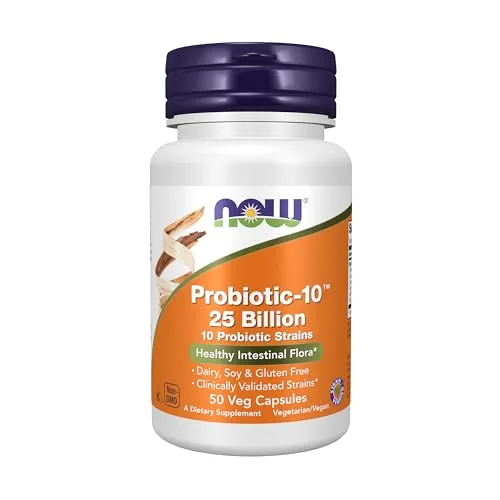
Foods Probiotic-10 25 Billion
NOW
14,563 Amazon reviews
8.8/10
4.6
Exceptional value at $0.18/serving with 10 well-studied probiotic strains delivering 25 billion CFU. NOW Foods operates GMP-certified facilities and conducts extensive in-house and third-party testing. Over 30,000 Amazon reviews with a 4.6-star average.
Ingredient10 Probiotic Strains (Lactobacillus & Bifidobacterium)
Dose25 billion CFU per capsule
FormVegetarian Capsule
TestingGMP Certified, Third-Party Tested
25 billion CFU per capsuleClinical range: 10-50 billion CFU daily (strain-specific)
Blend formula
$0.31 / count$15.73 · 50 Capsules
Pros
- Outstanding value at $0.18/serving
- 10 diverse strains
- 25 billion CFU per capsule
Cons
- Requires refrigeration
- No delayed-release capsule
VeganGluten-freeNon-GMODairy-freeSoy-free
Quick Comparison
#1NOW Foods Probiotic-10 25 Billion
8.8/10
NOW
#1 Top Pick
14,563 Amazon reviews
Best for: value multi-strain probiotic
10 Probiotic Strains (Lactobacillus & Bifidobacterium) · 25 billion CFU per capsule
Vegetarian Capsule · GMP Certified, Third-Party Tested
$15.73
$0.31 / count
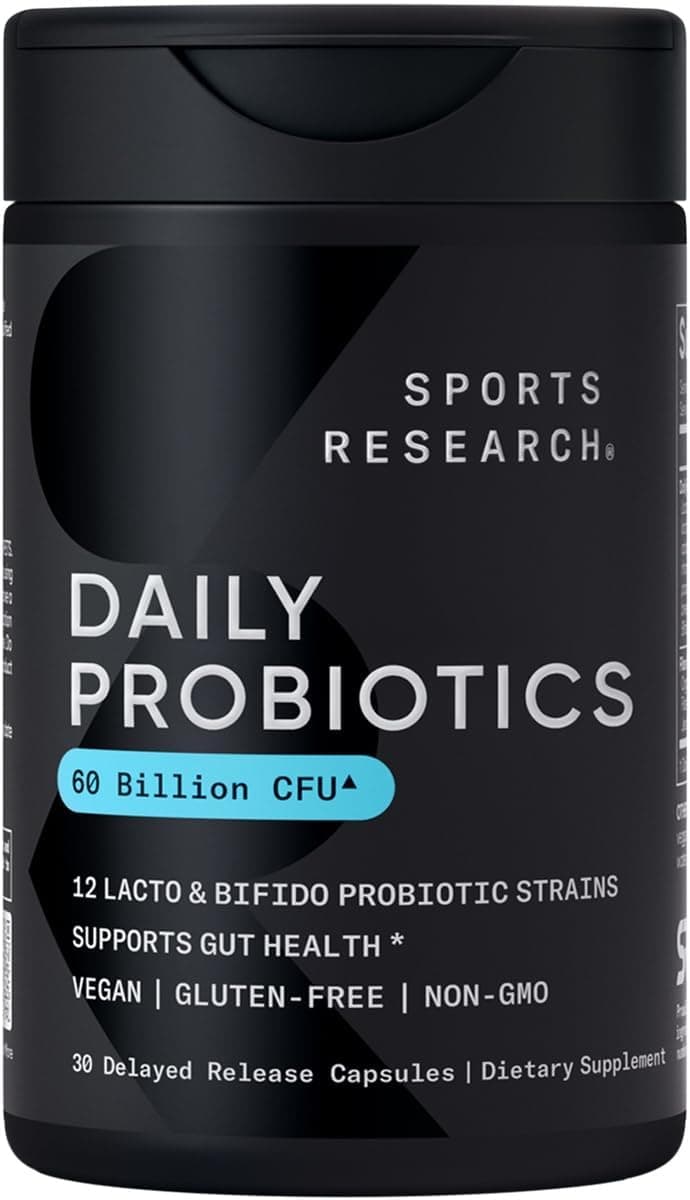
#2Sports Research Daily Probiotics 60 Billion CFU with Prebiotics
8.5/10
Sports Research
3,170 Amazon reviews
Best for: Adults seeking a high-potency, once-daily probiotic with prebiotic inulin in a vegan delayed-release capsule for comprehensive gut health and digestive support
12-Strain Probiotic Blend (60 Billion CFU) + Inulin Prebiotic · 60 Billion CFU (12 strains) + 60mg inulin per capsule
Delayed-Release Veggie Capsule · Yes — manufactured in cGMP-compliant US facility; Non-GMO Project Verified; Vegan Certified
$24.95
$0.83 / count
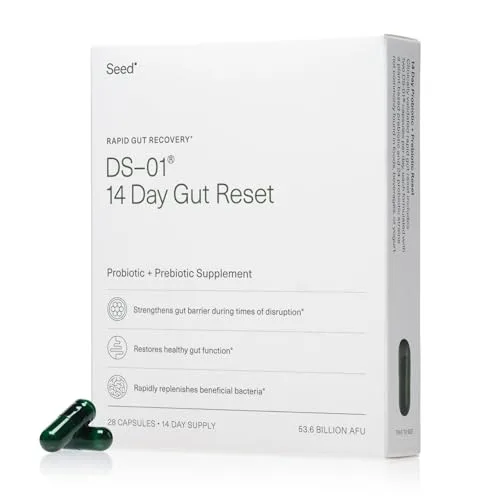
#3Seed 14 Day Gut Reset
8.6/10
Seed
996 Amazon reviews
Best for: Short-term intensive gut reset — bloating and constipation relief in as little as 1 week
Prebiotic + Probiotic (ViaCap Nested Capsule Technology) · 14-day intensive gut reset protocol
Capsules (ViaCap nested technology) · Third-Party Tested, Vegan, Shelf-Stable
$29.99
$1.07 / count
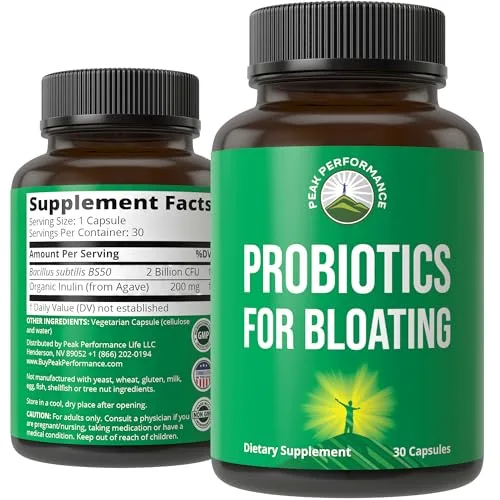
#4Peak Performance Bloat & Gas Probiotic
8.2/10
Peak Performance
—
Best for: Targeted bloating and gas relief with a clinically studied spore-based probiotic
Bacillus Subtilis BS50 + Prebiotic Fiber · Bacillus subtilis BS50 (clinically studied strain) + prebiotic fiber
Capsules · Third-Party Tested
$19.95
$0.67 / count
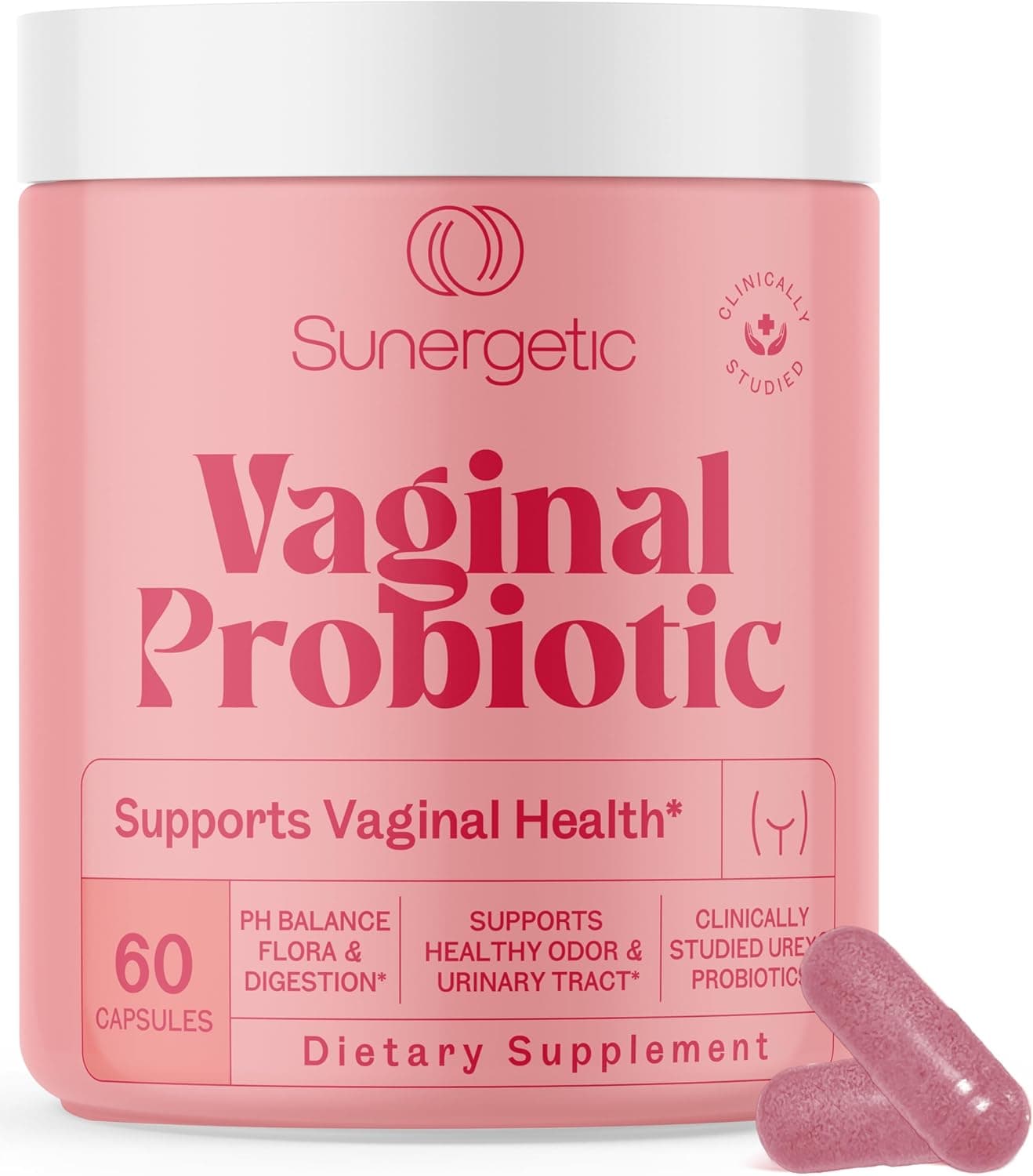
#5Sunergetic Vaginal Probiotic Lactobacillus UREX
7.9/10
Sunergetic
1,089 Amazon reviews
Best for: Women seeking a clinically studied UREX (RC-14 + GR-1) Lactobacillus vaginal probiotic with cranberry and inulin prebiotic for urogenital health
UREX (L. reuteri RC-14 + L. rhamnosus GR-1) + Cranberry + Inulin · 2 capsules daily; 30 servings; UREX strains + cranberry + prebiotic inulin
Capsule · GMP manufactured; third-party testing not publicly disclosed
$19.95
$0.33 / count
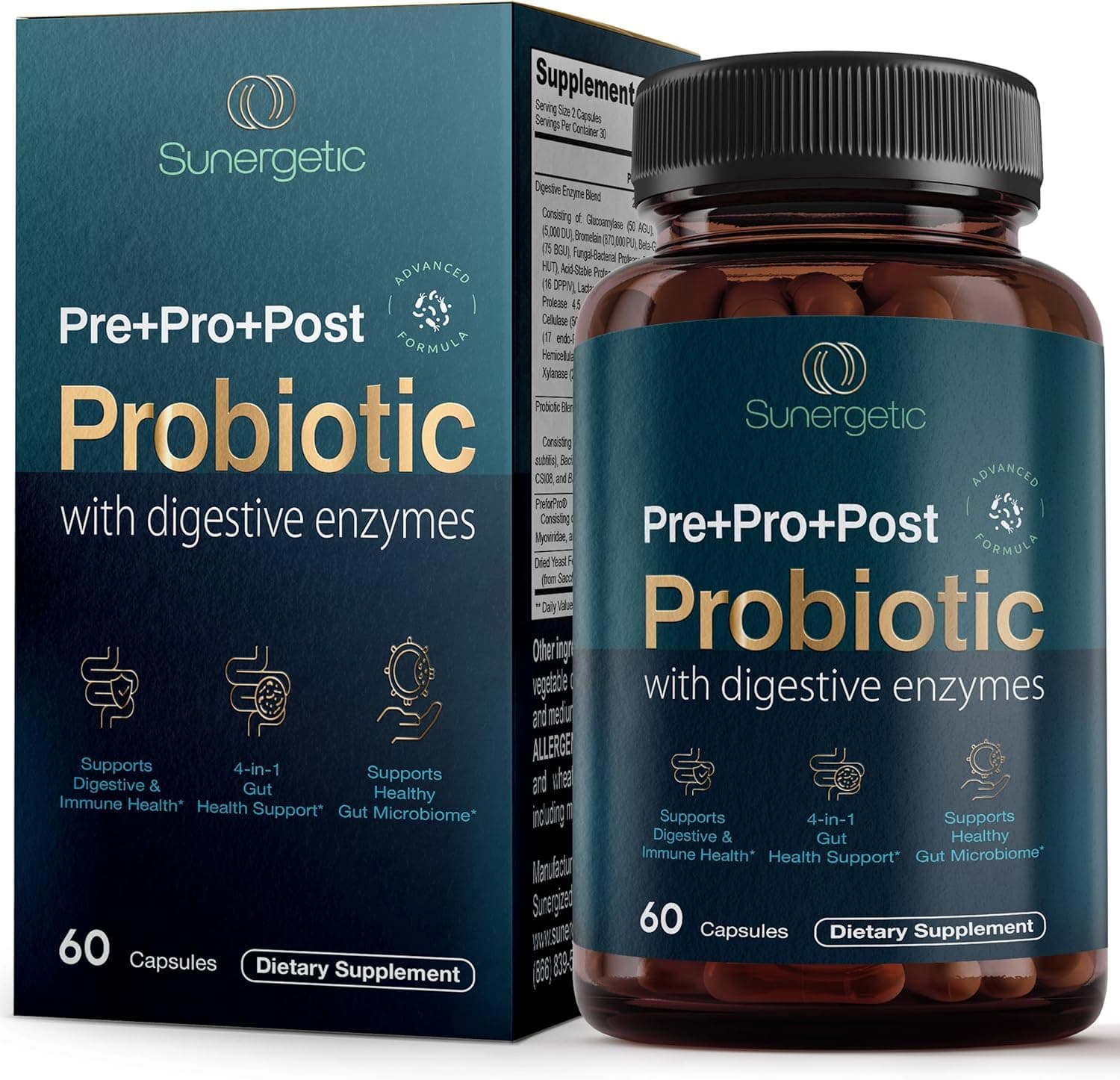
#6Sunergetic 4-in-1 Probiotic Prebiotic Postbiotic Enzymes
7.8/10
Sunergetic
1,434 Amazon reviews
Best for: Users seeking a comprehensive gut health capsule combining probiotics, prebiotics, postbiotics, and digestive enzymes in a single daily dose
Probiotic + Prebiotic + Postbiotic + Digestive Enzymes 4-in-1 · 2 capsules daily; 30 servings; multi-biotic blend with digestive enzymes
Capsule · GMP manufactured; third-party testing not publicly disclosed
$22.95
$0.38 / count
| # | Product | Best For | Ingredient & Dose | Form & Testing | Price | Rating | |
|---|---|---|---|---|---|---|---|
| 1 | NOW Foods Probiotic-10 25 Billion #1 Top Pick 14,563 Amazon reviews | value multi-strain probiotic | 10 Probiotic Strains (Lactobacillus & Bifidobacterium) 25 billion CFU per capsule | Vegetarian Capsule 50 Capsules GMP Certified, Third-Party Tested | $15.73 $0.31 / count | 8.8/10 | |
| 2 | Sports Research Daily Probiotics 60 Billion CFU with Prebiotics 3,170 Amazon reviews | Adults seeking a high-potency, once-daily probiotic with prebiotic inulin in a vegan delayed-release capsule for comprehensive gut health and digestive support | 12-Strain Probiotic Blend (60 Billion CFU) + Inulin Prebiotic 60 Billion CFU (12 strains) + 60mg inulin per capsule | Delayed-Release Veggie Capsule 30.0 Count Yes — manufactured in cGMP-compliant US facility; Non-GMO Project Verified; Vegan Certified | $24.95 $0.83 / count | 8.5/10 | |
| 3 | Seed 14 Day Gut Reset 996 Amazon reviews | Short-term intensive gut reset — bloating and constipation relief in as little as 1 week | Prebiotic + Probiotic (ViaCap Nested Capsule Technology) 14-day intensive gut reset protocol | Capsules (ViaCap nested technology) 28 Capsules Third-Party Tested, Vegan, Shelf-Stable | $29.99 $1.07 / count | 8.6/10 | |
| 4 | Peak Performance Bloat & Gas Probiotic — | Targeted bloating and gas relief with a clinically studied spore-based probiotic | Bacillus Subtilis BS50 + Prebiotic Fiber Bacillus subtilis BS50 (clinically studied strain) + prebiotic fiber | Capsules 30 Capsules Third-Party Tested | $19.95 $0.67 / count | 8.2/10 | |
| 5 | Sunergetic Vaginal Probiotic Lactobacillus UREX 1,089 Amazon reviews | Women seeking a clinically studied UREX (RC-14 + GR-1) Lactobacillus vaginal probiotic with cranberry and inulin prebiotic for urogenital health | UREX (L. reuteri RC-14 + L. rhamnosus GR-1) + Cranberry + Inulin 2 capsules daily; 30 servings; UREX strains + cranberry + prebiotic inulin | Capsule 60 Count GMP manufactured; third-party testing not publicly disclosed | $19.95 $0.33 / count | 7.9/10 | |
| 6 | Sunergetic 4-in-1 Probiotic Prebiotic Postbiotic Enzymes 1,434 Amazon reviews | Users seeking a comprehensive gut health capsule combining probiotics, prebiotics, postbiotics, and digestive enzymes in a single daily dose | Probiotic + Prebiotic + Postbiotic + Digestive Enzymes 4-in-1 2 capsules daily; 30 servings; multi-biotic blend with digestive enzymes | Capsule 60 Count GMP manufactured; third-party testing not publicly disclosed | $22.95 $0.38 / count | 7.8/10 |
Detailed Reviews
#1 Top Pick
NOW Foods Supplements, Probiotic-10™, 25 Billion, with 10 Probiotic Strains, Dairy, Soy and Gluten Free, Strain Verified, 50 Veg Capsules
NOW
14,563 Amazon reviews
8.8/10
(14,563)
VeganGluten-freeNon-GMODairy-freeSoy-free
Exceptional value at $0.18/serving with 10 well-studied probiotic strains delivering 25 billion CFU. NOW Foods operates GMP-certified facilities and conducts extensive in-house and third-party testing. Over 30,000 Amazon reviews with a 4.6-star average.
Ingredient10 Probiotic Strains (Lactobacillus & Bifidobacterium)
Dose25 billion CFU per capsule
FormVegetarian Capsule
TestingGMP Certified, Third-Party Tested
25 billion CFU per capsuleClinical range: 10-50 billion CFU daily (strain-specific)
Blend formula
$0.31 / count$15.73 · 50 Capsules
Ideal for: value multi-strain probiotic
Not ideal for: Travelers or those needing shelf-stable, no-refrigeration convenience
Pros
- Outstanding value at $0.18/serving
- 10 diverse strains
- 25 billion CFU per capsule
- GMP-certified facility
Cons
- Requires refrigeration
- No delayed-release capsule
- CFU guaranteed at manufacture, not expiration
Sports Research Daily Probiotics with Prebiotics, 60 Billion CFU - Vegan Capsules for Gut Health & Digestive Support, Probiotics for Women & Men - Non-GMO Verified & Gluten Free - 30 Count
Sports Research
3,170 Amazon reviews
8.5/10
(3,170)
Gluten-free, soy-free, dairy-free, vegan certifiedNo major allergensContains inulin (chicory fiber) which may cause bloating in individuals with FODMAP sensitivity
A shelf-stable 60B CFU formula in a delayed-release vegan capsule with included prebiotic inulin is a complete, well-constructed daily gut health product. The combination of high-potency dose, acid-resistant delivery, and prebiotic synergy addresses the three most common failure modes of probiotic supplements: potency loss, poor delivery, and lack of prebiotic substrate. At $0.83/serving with 3,170 positive reviews, it represents strong value in the high-CFU probiotic segment.
Ingredient12-Strain Probiotic Blend (60 Billion CFU) + Inulin Prebiotic
Dose60 Billion CFU (12 strains) + 60mg inulin per capsule
FormDelayed-Release Veggie Capsule
TestingYes — manufactured in cGMP-compliant US facility; Non-GMO Project Verified; Vegan Certified
60 Billion CFU (12 strains) + 60mg inulin per capsuleClinical range: 10-50 billion CFU daily (strain-specific)
Blend formula
$0.83 / count$24.95 · 30.0 Count
Ideal for: Adults seeking a high-potency, once-daily probiotic with prebiotic inulin in a vegan delayed-release capsule for comprehensive gut health and digestive support
Not ideal for: Those who need a refrigerated probiotic with live-culture strains, or individuals seeking a lower CFU count for introductory gut health support
Pros
- 60 billion CFU guaranteed through expiration with shelf-stable, no-refrigeration formula
- 12-strain multi-species coverage across both Lactobacillus and Bifidobacterium genera
- Delayed-release veggie capsule protects cultures through stomach acid for effective intestinal delivery
- Includes 60mg inulin prebiotic to feed and sustain probiotic colonies
Cons
- Inulin prebiotic may cause bloating or gas in individuals with IBS or FODMAP sensitivity
- 30-count supply requires monthly repurchase with no Subscribe & Save available
- Strain proportions within the 60B CFU blend are not individually disclosed on the label
Seed 14 Day Gut Reset - Prebiotic and Probiotic for Women & Men - Digestive Health, Gut Health, Rapid Gut Recovery, Bloating & Constipation Relief - Vegan & Shelf-Stable - 28 Capsules (14-Day Supply)
Seed
996 Amazon reviews
8.6/10
(996)
A targeted 14-day protocol designed for rapid gut recovery rather than ongoing supplementation. Uses ViaCap nested capsule technology to protect probiotic strains through stomach acid. With ~1,000 reviews at 4.5 stars, it has strong consumer validation. Ideal as a reset before transitioning to a daily probiotic like DS-01.
IngredientPrebiotic + Probiotic (ViaCap Nested Capsule Technology)
Dose14-day intensive gut reset protocol
FormCapsules (ViaCap nested technology)
TestingThird-Party Tested, Vegan, Shelf-Stable
14-day intensive gut reset protocolClinical range: 10-50 billion CFU daily (strain-specific)
Blend formula
$1.07 / count$29.99 · 28 Capsules
Ideal for: Short-term intensive gut reset — bloating and constipation relief in as little as 1 week
Not ideal for: Those seeking a long-term daily probiotic for maintenance (see DS-01 instead)
Pros
- Targeted 14-day reset protocol
- ViaCap nested capsule technology
- Fast-acting — relief in 1 week
- Strong 4.5-star rating
Cons
- Short-term only (14 days)
- Premium price for 2-week supply
- Not a replacement for daily probiotic
Bloat and Gas Probiotic - Proven Relief with Clinically Studied Bacillus Subtilis BS50 + Prebiotic Fiber - Fast Acting Anti Bloating Pills Supplement - Debloating Capsules for Women and Men
Peak Performance
8.2/10
Takes a targeted approach to bloating with Bacillus subtilis BS50 — a clinically studied spore-based probiotic strain specifically researched for digestive comfort. Combined with prebiotic fiber to feed beneficial bacteria. Spore-based probiotics are shelf-stable and survive stomach acid better than many Lactobacillus strains.
IngredientBacillus Subtilis BS50 + Prebiotic Fiber
DoseBacillus subtilis BS50 (clinically studied strain) + prebiotic fiber
FormCapsules
TestingThird-Party Tested
Bacillus subtilis BS50 (clinically studied strain) + prebiotic fiberClinical range: 10-50 billion CFU daily (strain-specific)
Blend formula
$0.67 / count$19.95 · 30 Capsules
Ideal for: Targeted bloating and gas relief with a clinically studied spore-based probiotic
Not ideal for: Those seeking broad-spectrum multi-strain probiotic coverage for general gut health
Pros
- Clinically studied BS50 strain
- Spore-based — survives stomach acid
- Includes prebiotic fiber
- Targeted for bloating/gas
Cons
- Very new product — limited reviews
- Single-strain (not multi-strain)
- Higher price per strain vs multi-strain options
Premium Vaginal Probiotics for Women - Clinically Studied Lactobacillus Vaginal Probiotic with Prebiotic & Cranberry to Balance PH, Reduce Odor, Urinary Tract Support & Feminine Health - 60 Capsules
Sunergetic
1,089 Amazon reviews
7.9/10
(1,089)
UREX (L. reuteri RC-14 + L. rhamnosus GR-1) is one of the most clinically researched urogenital probiotic pairings, with multiple RCTs supporting vaginal microbiome balance. The addition of cranberry and inulin targets UTI prevention and prebiotic substrate in one capsule.
IngredientUREX (L. reuteri RC-14 + L. rhamnosus GR-1) + Cranberry + Inulin
Dose2 capsules daily; 30 servings; UREX strains + cranberry + prebiotic inulin
FormCapsule
TestingGMP manufactured; third-party testing not publicly disclosed
2 capsules daily; 30 servings; UREX strains + cranberry + prebiotic inulinClinical range: 10-50 billion CFU daily (strain-specific)
Blend formula
$0.33 / count$19.95 · 60 Count
Ideal for: Women seeking a clinically studied UREX (RC-14 + GR-1) Lactobacillus vaginal probiotic with cranberry and inulin prebiotic for urogenital health
Not ideal for: Users wanting shelf-stable generic probiotics — this is a specialty urogenital formula
Pros
- UREX (RC-14 + GR-1) is one of the most clinically studied urogenital probiotic pairings
- Combines probiotic, prebiotic (inulin), and cranberry for multi-mechanism feminine health support
- 1,089 reviews at 4.5 stars signals strong consumer satisfaction for a specialty category
- Capsule format provides shelf stability vs. refrigerated probiotics
Cons
- Third-party testing not publicly disclosed — no published COAs on the brand site
- Specific CFU count not disclosed on product bullets
- Not a substitute for medical management of BV, yeast infections, or recurrent UTI
Premium 4-in-1 Probiotic Prebiotic, Postbiotic & Digestive Enzymes for Men & Women - Supports Gut, Digestion & Immunity - Complete Gut Health with Pre, Post, Probiotics & Digestive Enzymes - 60 Capsules
Sunergetic
1,434 Amazon reviews
7.8/10
(1,434)
The 4-pillar approach — probiotic colonization, prebiotic substrate, postbiotic metabolites, and digestive enzyme digestive support — represents modern gut health thinking. Strong 4.4-star review profile across 1,400+ reviews.
IngredientProbiotic + Prebiotic + Postbiotic + Digestive Enzymes 4-in-1
Dose2 capsules daily; 30 servings; multi-biotic blend with digestive enzymes
FormCapsule
TestingGMP manufactured; third-party testing not publicly disclosed
2 capsules daily; 30 servings; multi-biotic blend with digestive enzymesClinical range: 10-50 billion CFU daily (strain-specific)
Blend formula
$0.38 / count$22.95 · 60 Count
Ideal for: Users seeking a comprehensive gut health capsule combining probiotics, prebiotics, postbiotics, and digestive enzymes in a single daily dose
Not ideal for: Users wanting shelf-stable single-strain probiotics with specific CFU transparency or refrigerator-required medical-grade formulations
Pros
- Comprehensive 4-pillar gut health approach (pro + pre + post + enzymes)
- Capsule format provides shelf stability vs. refrigerated probiotics
- 1,434 reviews at 4.4 stars demonstrates consumer satisfaction
- Made in USA with GMP manufacturing
Cons
- Third-party testing not publicly disclosed — no published COAs on the brand site
- Specific CFU count and strain identities not disclosed on bullets
- Individual component doses not specified — blend-format dosing
Pairs Well With
Frequently taken together based on complementary benefits
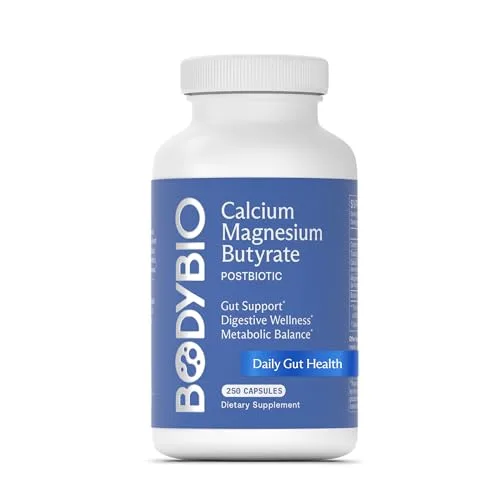
Tributyrin
BodyBio Butyrate
600mg butyrate (as calcium/magnesium salt)
How to Choose
Strain Selection Matters More Than CFU Count
A 10 billion CFU product with clinically studied strains (like LGG or Bifidobacterium lactis BB-12) is more effective than a 100 billion CFU product with unstudied strains. Look for strain designations — products that list only genus and species (e.g., "Lactobacillus acidophilus") without a strain code are less transparent.
Survivability: How to Ensure Probiotics Reach Your Gut
Stomach acid kills up to 99% of probiotics in standard capsules. Delayed-release capsules, enteric coatings, or spore-forming strains (Bacillus coagulans) survive significantly better. Look for products with acid-resistance technology or studies demonstrating survivability.
Refrigerated vs Shelf-Stable
Modern freeze-drying and microencapsulation technology has made many probiotics shelf-stable without compromising viability. Shelf-stable products are more convenient and better for travel. However, some high-CFU formulas still require refrigeration — check the label and store accordingly.
Ready to Buy?
NOW Foods Probiotic-10 25 Billion
8.8/10$0.31 / countBest for: value multi-strain probiotic
The best probiotic delivers 10-50 billion CFU of multi-strain, shelf-stable organisms with delayed-release capsules and third-party testing.
Evidence:Meta-analysis (2014) · 43 RCTs · high confidence[#3]. See full reference list below.Read Our Full Probiotics Research Guide
Evidence level, dosage, side effects, and more →
Already taking supplements?
Check how Probiotics fits with your current stack — interactions, timing, and optimization →
Related Supplements
Related Conditions
Learn More
Frequently Asked Questions
What is the best probiotic supplement?
What is the best probiotic supplement?
The best probiotic for most people is a multi-strain formula with 10-50 billion CFU in a delayed-release capsule, such as Garden of Life Dr. Formulated Probiotics ($0.43/serving). For specific digestive issues, Culturelle with Lactobacillus rhamnosus GG has the strongest clinical evidence.
How many billion CFU should a probiotic have?
How many billion CFU should a probiotic have?
Most clinical trials use 10-50 billion CFU. Higher counts are not necessarily better — strain quality and survivability matter more. For general health, 10-25 billion CFU is sufficient. For active digestive issues or after antibiotics, 25-50 billion CFU may be more appropriate.
Should I take probiotics with food or on an empty stomach?
Should I take probiotics with food or on an empty stomach?
Take probiotics with a meal or within 30 minutes of eating. A 2011 study (Tompkins et al., Beneficial Microbes) found that probiotic survival was best when taken with food containing some fat. The meal buffers stomach acid, improving bacterial survival by up to 100-fold.
Evidence:In-vitro (2011) · moderate confidence[#1]. See full reference list below.Continue Reading
Supplement Guide
Tributyrin
Bottom line: Tributyrin is the most effective way to supplement butyrate for gut barrier repair. Superior to sodium butyrate — take 300-1000mg daily with meals for gut healing.
Condition GuideGut Health & Digestion
ArticleAkkermansia muciniphila Benefits: The Next-Gen Probiotic for Gut and Metabolic Health
References
- In-vitroTompkins TA, Mainville I, Arcand Y (2011). The impact of meals on a probiotic during transit through a model of the human upper gastrointestinal tract. Beneficial Microbes. DOI PubMed
- Meta-analysisFord AC, Quigley EM, Lacy BE, et al. (2014). Efficacy of prebiotics, probiotics, and synbiotics in irritable bowel syndrome and chronic idiopathic constipation. American Journal of Gastroenterology. DOI PubMed